Do You Actually Need a Body Protector for Dojo Training? An Honest Assessment for Clubs and Solo Practitioners
I’ve watched a lot of students make the same mistake with body protectors. They either train without one when they absolutely should have one, or they wear one so thick and rigid that they’ve essentially removed the point of contact training entirely. Neither extreme serves you well, and after fifteen years across multiple dojos, I’ve got a pretty clear view of where the line sits.
Let me be direct about this: a body protector is not a substitute for good technique, and it’s not optional for everyone. Where you fall on that spectrum depends on your experience level, your dojo’s contact rules, and whether you’re honest with yourself about the intensity of your training.
The Problem I Keep Seeing in Beginners’ Classes
The most common mistake I see is beginners training without adequate protection in contact-based kumite before they have the control to justify it. I’ve seen this in multiple dojos, and it usually comes from one of two places - either the club doesn’t want the expense of kitting everyone out, or the instructor assumes that “light contact” means no one needs protecting.
Light contact is a relative term. A white belt with no sense of distancing and a brown belt who misjudges a reverse punch are both capable of delivering something that lands harder than intended. The difference is the brown belt usually knows what went wrong. The white belt often doesn’t even realise they’ve been hit properly until the adrenaline drops.
What I tell new students is this: the body protector isn’t there because your partners are going to hurt you on purpose. It’s there because neither you nor they have the calibration yet to guarantee they won’t hurt you by accident. That’s not an insult to anyone’s control - it’s just the honest reality of early training.
What a Body Protector Actually Does to Your Movement
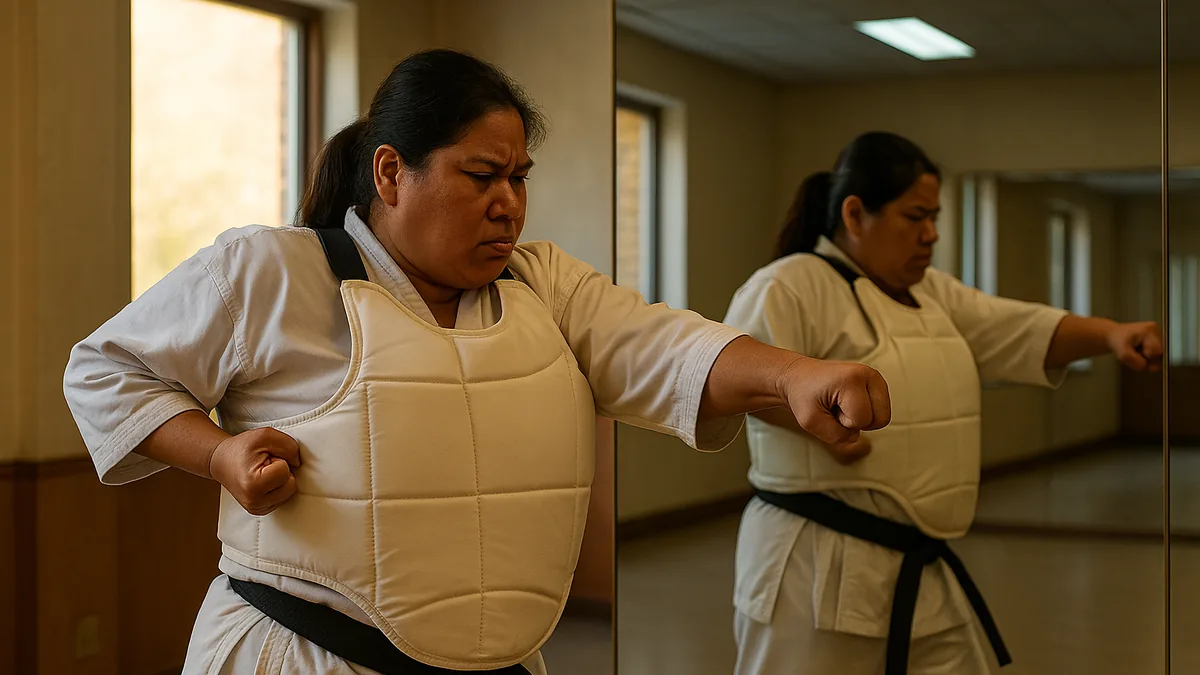
Here’s where I’ll take a position that some instructors won’t: most standard foam body protectors do restrict movement, and if you’re wearing one that’s too thick or poorly fitted, it restricts it significantly.
I used to train in a dojo where we wore heavy WKF-style chest protectors for every sparring session, regardless of contact level. I didn’t question it for about two years. Then I moved to a dojo that used them selectively, and the first time I sparred without one in a controlled setting, I felt the difference immediately. My upper body rotation was freer. I could feel contact more accurately. My defensive reactions were sharper because I wasn’t relying on the padding to absorb what I should have been avoiding.
That’s the thing nobody tells you clearly enough: when you wear a thick body protector, you stop feeling light contact properly. You’ll feel a solid hit, but the glancing touches, the partial blocks, the near-misses - those disappear into the foam. And those are exactly the signals you need to be reading in sparring to develop your sensitivity and your defensive awareness.
This doesn’t mean stop wearing one. It means understand what you’re trading when you put it on.
If you’re thinking about the broader equipment picture, this connects to similar questions about karate chest guards and whether they actually protect you or just slow you down - the overlap between those two pieces of kit is worth understanding before you spend money on both.
When You Absolutely Should Be Wearing One
No ambiguity here. You need a body protector if:
- You’re a beginner in any contact-based kumite, regardless of how light the contact is supposed to be
- You’re training with a partner whose control you haven’t yet assessed
- Your dojo runs semi-contact or full-contact sparring sessions
- You’re preparing for a competition that requires one, because you need to train in it to adapt to the movement restriction
- You’re returning from a rib or abdominal injury and need to continue training carefully
I’ve seen people skip body protection during grading preparation because they thought it would make them look tougher or more advanced. That’s ego, not experience. One unguarded body shot during a grading-prep session that bruises your ribs will cost you two weeks of training. The maths doesn’t work in your favour.
When Advanced Practitioners Can Train Without One
I think experienced practitioners - let’s say brown belt and above, depending on the individual - can and sometimes should train without a body protector in controlled, light-contact drilling. Not in full sparring. Not with unknown partners. But in structured partner work where both people have established control and the purpose is sensitivity, timing, and technique refinement.
My instructor used to say that you can’t develop a feel for distance if you’re always padded. I didn’t fully understand that until I started doing more light-contact work without protection and realised how much more information I was receiving from each exchange. You feel where your guard is actually open. You feel when your hikite is doing nothing. You feel a touch to the ribs that tells you your elbow dropped half a second before you should have let it drop.
That feedback loop is genuinely valuable, and you lose it when you’re padded. The correction that works for advanced students who’ve become over-reliant on protection is to remove it in controlled drilling first - not sparring - and let them experience how much more information their body starts processing.
The Solo Practitioner Question
If you’re training primarily alone - kata, makiwara work, bag work, conditioning drills - a body protector isn’t relevant to most of what you’re doing. You’re not receiving contact, so there’s nothing to protect against.
Where it becomes relevant for solo practitioners is if you attend occasional seminars, open mat sessions, or club visits where you’ll be doing partner work with people who don’t know your level or your body. In those situations, I’d always recommend having one in your bag. You don’t have to wear it for every drill, but having the option matters when you’re working with unfamiliar partners.
The equipment question for solo practitioners is usually better directed at conditioning tools. If you’re serious about solo training, the makiwara assessment is a more relevant starting point than body protection.
Fitting and Quality Actually Matter
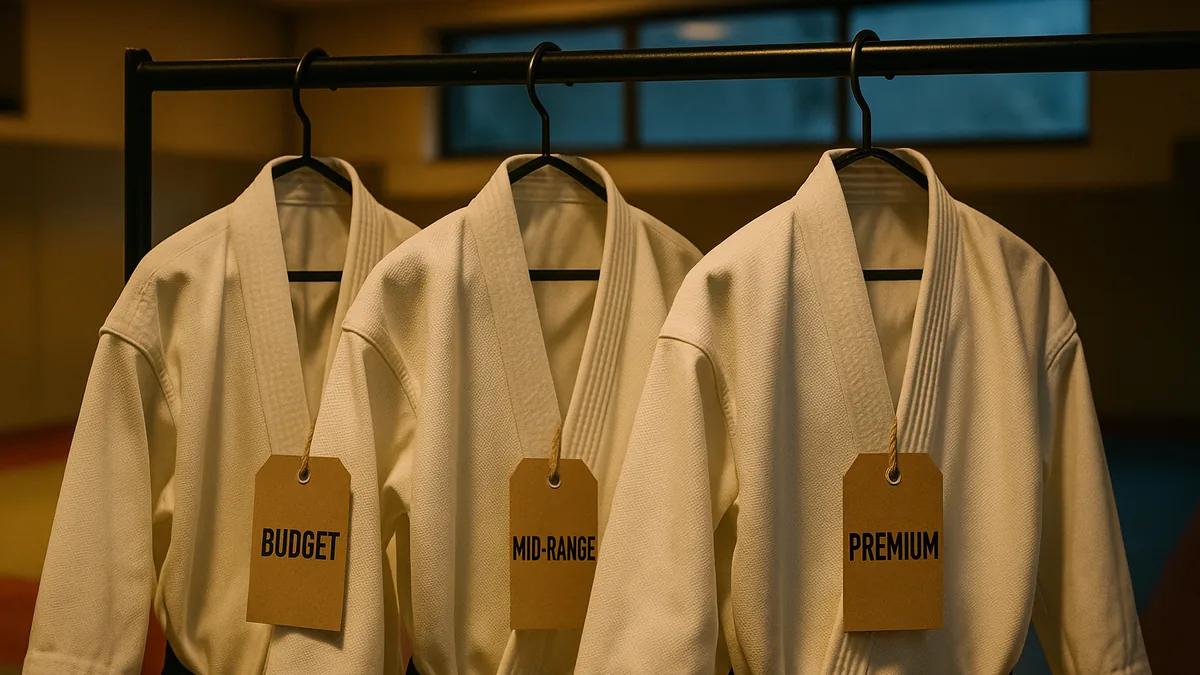
One thing I’ve noticed is that practitioners spend good money on their gi and then buy the cheapest body protector available. The result is a piece of kit that sits wrong, gaps at the sides, rides up during movement, and either protects poorly or restricts movement badly. Both outcomes are avoidable.
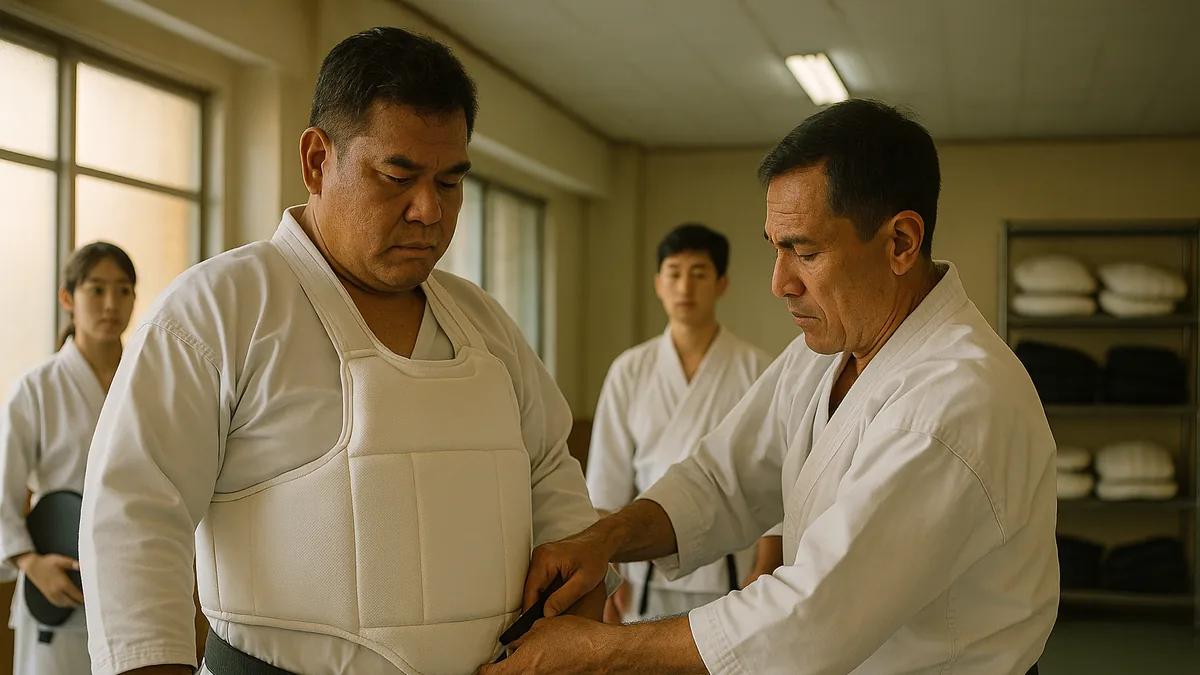
A well-fitted body protector should feel snug without compressing your breathing. When you rotate for a gyaku-zuki, it should move with your torso, not fight against it. If you’re constantly adjusting it between exchanges, it’s the wrong size or the wrong design for your build.
I prefer reversible or flexible-shell designs over rigid foam for anyone doing anything other than full competition sparring. The rigid shells are built for a specific contact level and competition format. For regular dojo training, the flexibility of a softer design gives you better movement without sacrificing meaningful protection.
This is worth reading alongside the karate gloves discussion because the same principle applies - equipment that doesn’t fit properly or isn’t matched to your training context will actively work against you.
Community Perspective
This is genuinely one of those topics where dojos disagree, and the disagreement often reflects deeper philosophical differences about contact training.
Traditional Shotokan and Goju clubs tend to train with less protective equipment overall, operating on the principle that controlled technique and proper distancing are the protection. Competition-oriented clubs, particularly those following WKF rules, will often mandate body protectors for all kumite from early on because it reflects the competition environment.
Neither approach is wrong in isolation. The problem comes when the philosophy isn’t matched to the actual contact level happening in the dojo. I’ve trained in “traditional” dojos where the contact was genuinely heavy and the lack of protection was a real injury risk. I’ve also trained in competition-focused clubs where the mandatory protectors were so thick that nobody was developing any real body awareness.
What I’d say to anyone evaluating their club’s approach is this: look at the injury rate, not the policy. A dojo with sensible contact levels and no body protectors can be safer than one with mandatory kit and sloppy control. The equipment is a tool, not a substitute for good training culture.
Key Takeaways
- Beginners in contact-based kumite should wear a body protector without exception - not because partners are reckless, but because neither party has the calibration yet to guarantee safe contact
- Advanced practitioners benefit from removing protection in controlled, light-contact drilling to restore body awareness and sensitivity - but this is a specific training tool, not a reason to ditch protection entirely in sparring
- A poorly fitted body protector is often worse than a well-fitted one, both for protection and movement - size and design matter more than price
- If you’re training for competition, you need to train in the equipment you’ll wear in competition - movement restriction is something you adapt to, not something that disappears on the day
- Solo practitioners don’t need a body protector for their regular training, but should keep one accessible for partner sessions with unfamiliar training partners
- Assess your dojo’s actual contact level honestly, not just its stated policy - the equipment decision should follow the reality of what’s happening on the mat
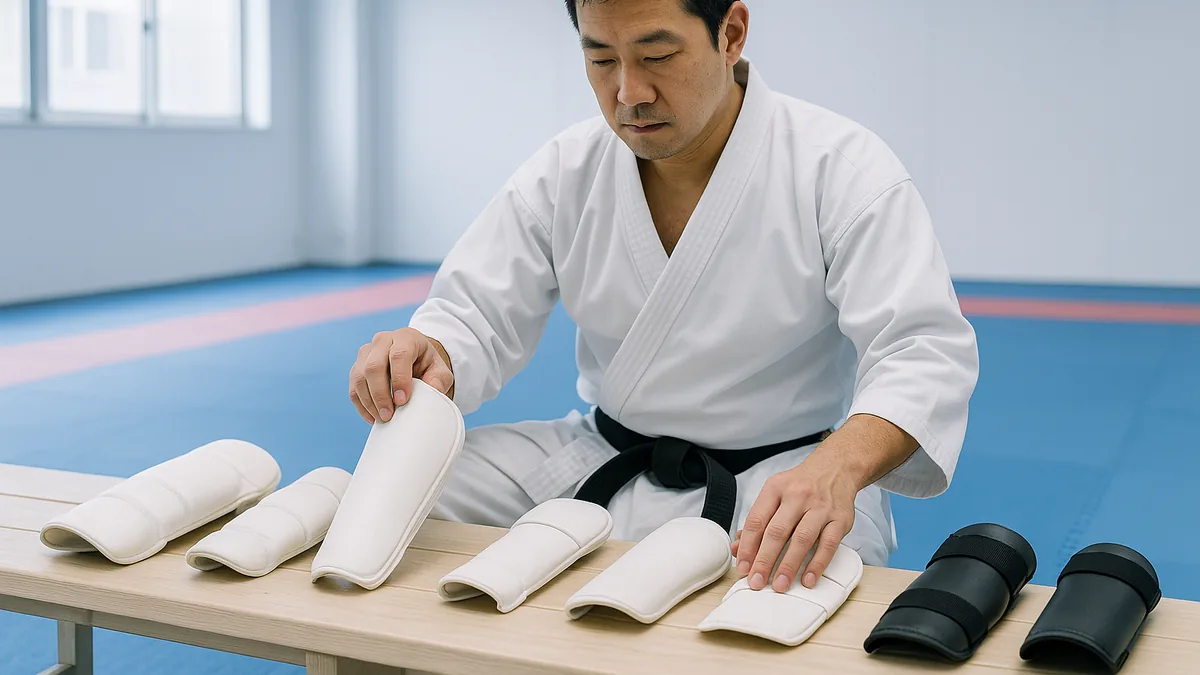
If you’re building out your full kit, the body protector decision sits alongside choices about shin guards, gumshields, and footwear - all of which follow the same principle of matching equipment to training context rather than buying everything or buying nothing.
The weekly digest
New karate articles, once a week
One email every week with everything new on Karate Lifestyle. No spam; unsubscribe in one click.
We'll email you to confirm. See our privacy policy.