Karate Chest Guards: Do They Actually Protect You or Just Slow You Down?
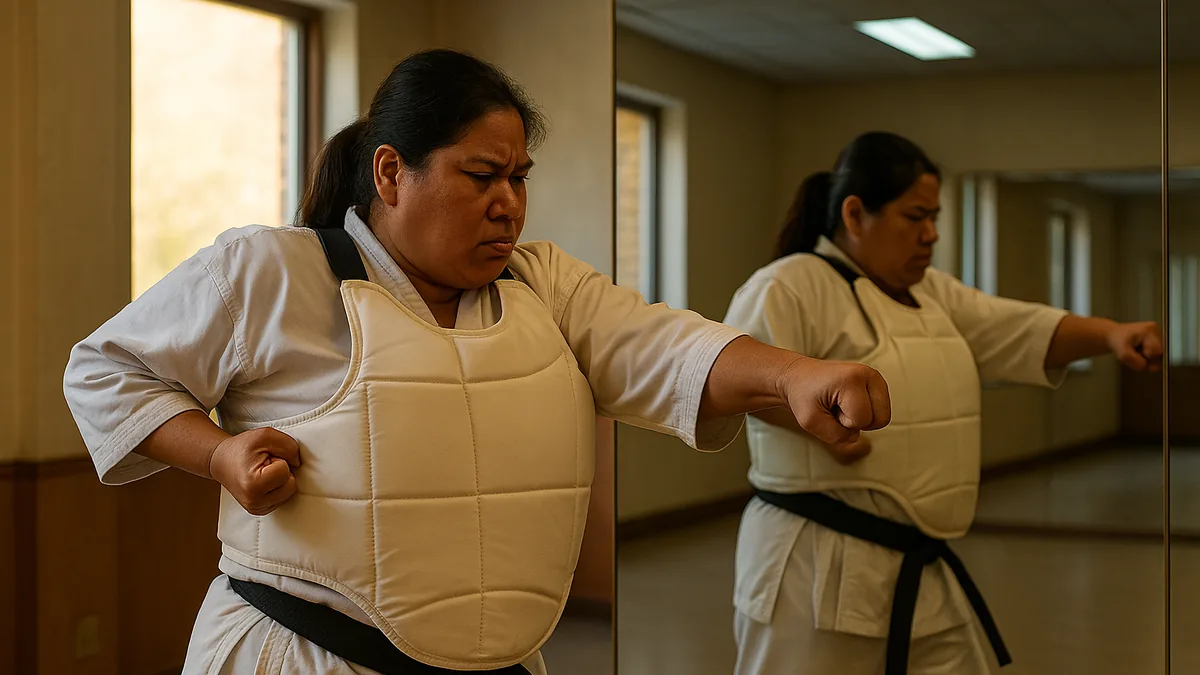
I’ve seen students show up to their first contact sparring session wearing a chest guard that looks like it was designed for ice hockey. Shoulders hunched, arms pinned slightly out from their sides, moving like they’re carrying a toolbox. And the worst part? They think they’re ready. That chest guard gave them confidence they hadn’t earned yet.
That’s the conversation I want to have here. Not whether chest guards exist or what they’re made of - but whether they actually do what most people think they do, and what you give up by wearing one.
The Protection Question Is More Complicated Than It Sounds
The obvious answer is yes, a chest guard protects you. It absorbs impact, reduces bruising, and lets you train harder contact without taking days off to recover. I’m not disputing any of that. A well-placed gyaku-zuki to the sternum without protection will remind you it happened for a week. With a decent chest guard, you walk away fine.
But here’s where I think people get it wrong. Protection from what, exactly?
I’ve noticed that most practitioners treat the chest guard as a substitute for good defensive technique rather than a supplement to it. There’s a difference. When you’re absorbing shots to the chest because the guard is there, you stop learning how to not be there. You stop reading the setup. You stop working your evasion. The guard trains you, quietly and over time, to accept that some punches are going to land - and that’s fine, the gear will handle it.
That’s not fine. That’s a habit that costs you later.
My instructor used to say that protective gear should make you braver, not lazier. I didn’t really understand what he meant until I did a stretch of training without a chest guard during light contact work. Suddenly I was moving. Suddenly my kamae felt important again. The discomfort of an unprotected chest makes you present in a way that padded-up sparring sometimes doesn’t.
What a Chest Guard Actually Does to Your Movement
Put one on and throw a few combinations in the mirror. Then take it off and do the same thing. You’ll feel the difference immediately - not just in how your arms move, but in how your whole upper body rotates.
The problem isn’t just bulk. It’s that most chest guards, even well-fitted ones, create a slight rigidity through the torso. Your hikite gets lazy because the guard is in the way. Your shoulder rotation on a jodan uke feels slightly abbreviated. These are small things individually, but they compound. Over a year of regular training with a chest guard on, those small compromises become default movement patterns.
The biggest difference I’ve seen is in gyaku-zuki. The hip rotation that drives a proper reverse punch relies on a free torso - you’re unwinding through your whole body, not just pushing your arm. When there’s a guard sitting against your chest and ribs, that unwinding feels slightly blocked. Not completely, but enough that most people unconsciously compensate by using more arm and less hip. You’ll feel it as a slight stiffness at the point of rotation, like something’s stopping the movement from completing properly.
Most beginners don’t notice this because they don’t yet know what full hip rotation feels like. Senior students notice it straight away.
The False Security Problem
One mistake I see often is newer students treating the chest guard as armour rather than as a training tool. They’ll take risks in sparring they wouldn’t otherwise take - standing in range, not covering on the way in, not resetting after an attack - because they know they can absorb the counter. The guard is rewarding bad habits with a pain-free outcome.
The correction that actually works here is simple but uncomfortable: take the guard off for some of your sparring. Not all of it, especially if you’re doing full contact or working with someone who hits hard. But for controlled technical sparring with a trusted partner, train without it sometimes. You’ll immediately notice how differently you move when the consequence of being caught is real.
I’d recommend this specifically for intermediate students who’ve been training two to four years. That’s usually when movement habits are solidifying, and it’s worth stress-testing them against reality before they calcify.
This connects to a broader point I make about gear in general. I wrote something similar about karate gloves and whether they compromise your technique, and the same logic applies here. Protective equipment changes the feedback loop. Sometimes that’s useful. Sometimes it removes the feedback you actually need.
When the Chest Guard Is the Right Call
I want to be clear that I’m not anti-chest guard. There are situations where wearing one is the sensible choice, and refusing to wear one out of some kind of traditionalist pride is just ego.
Competition is the obvious one. If you’re competing under WKF rules or similar, you’re wearing the required gear and that’s it. You train with it, you compete with it, you get used to it.
Grading is another. Some associations require chest guards for higher-grade kumite assessments. If that’s your context, train in it regularly so it doesn’t feel foreign on the day.
High-intensity partner drilling is where I think chest guards earn their place most legitimately. When you’re working close-range combinations at pace with a partner who’s responding with real intent, the guard lets you push the intensity without either of you spending the next week recovering. That intensity is valuable. You can’t replicate it at light contact.
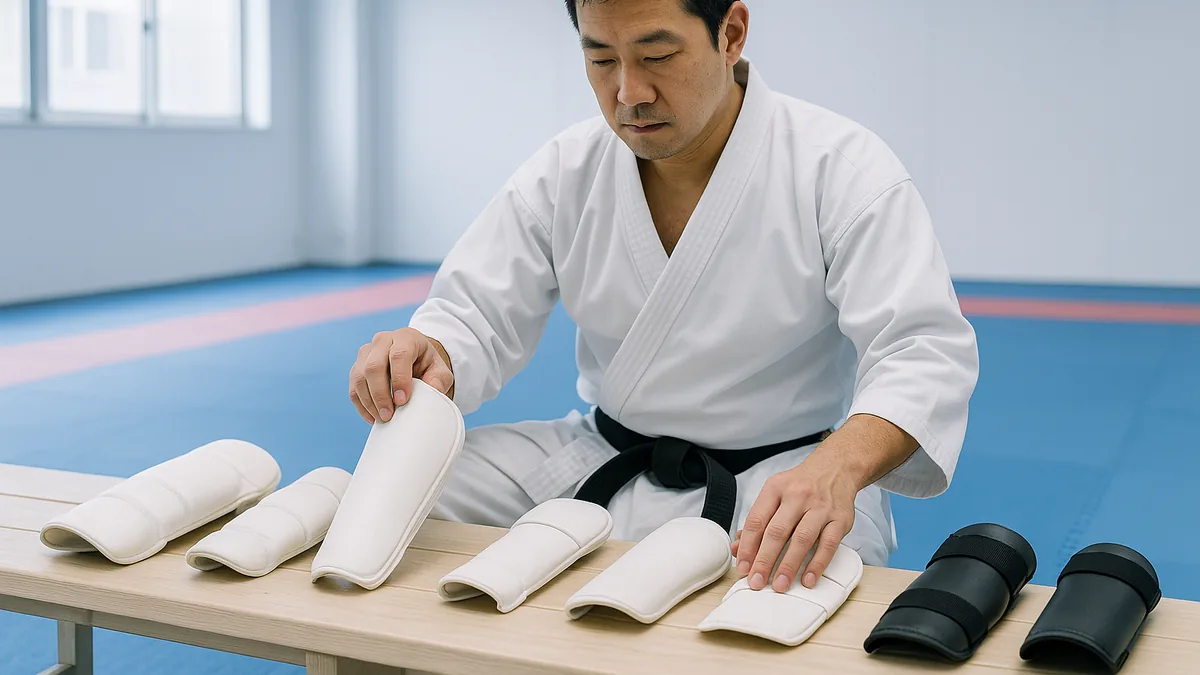
I’ve also found them useful for newer students who are genuinely nervous about contact. A chest guard can lower the psychological barrier enough to let someone engage properly for the first time. Once they’ve got some experience of taking and giving contact, you can gradually reduce the reliance on gear. Similar reasoning applies to shin guards - the protective value is real, but it’s contextual, not universal.
Fit Matters More Than Most People Think
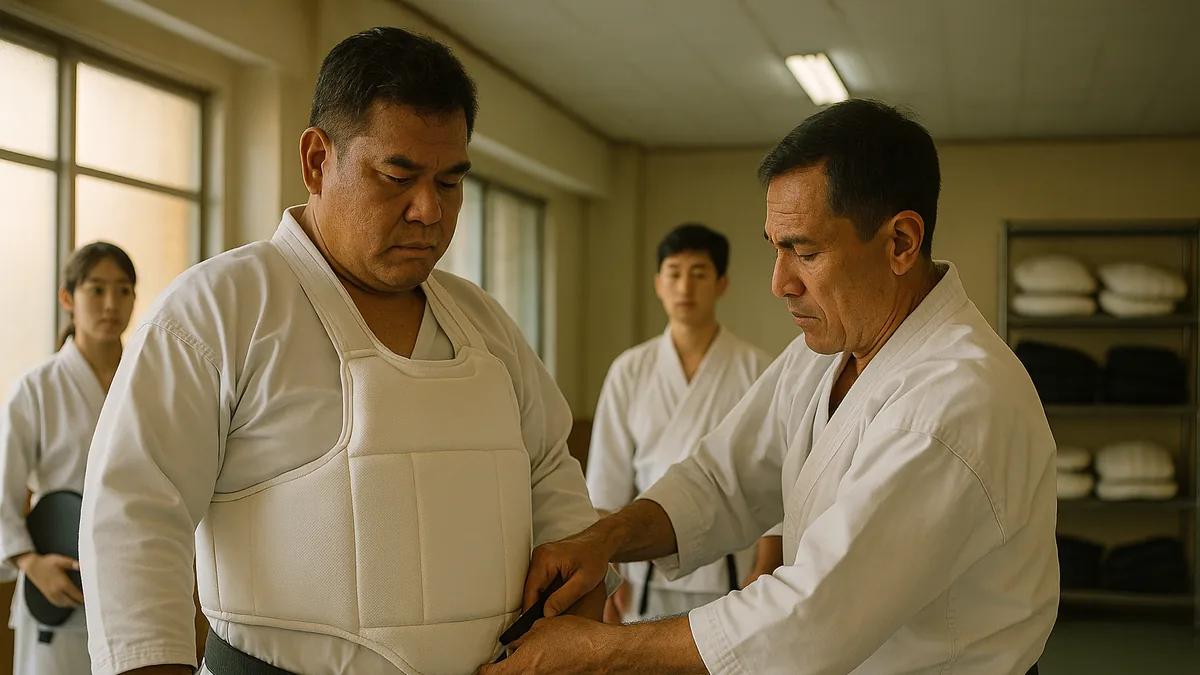
If you’re going to wear one, wear one that actually fits. This sounds obvious but I’ve seen students training in chest guards that are two sizes too large because they grabbed whatever was in the dojo equipment bag. An oversized chest guard doesn’t just protect less - it moves around on you, which is distracting and creates its own interference with technique.
A well-fitted chest guard should sit flush against your torso without restricting your breathing. You should be able to take a full breath and feel your ribcage expand without the guard resisting. When you rotate for a punch, it should move with you, not lag behind. If you’re constantly aware of it, it doesn’t fit right.
The same principle applies to other gear decisions. I’ve seen practitioners agonise over whether karate shoes are worth it, or whether a cheaper gi will hold up to regular training. In every case, the answer is the same: fit and function matter more than brand, and gear that doesn’t fit correctly is actively working against you.
Community Perspective
This is a topic where the karate community genuinely disagrees, and I think it’s worth being honest about that.
Traditional Shotokan dojos often minimise protective equipment, particularly at senior levels. The philosophy is that you learn to control your technique and your partner does the same - the discipline is in the precision, not in the padding. I have a lot of respect for that approach, and I think it produces technically excellent karateka.
Sport karate and competition-focused training goes the other direction. Full protective gear is standard, contact is harder, and the gear is part of the training environment from day one. These practitioners often have excellent fighting instincts and real experience of pressure.
My view is that both approaches have blind spots. Pure traditional training without any contact gear can produce practitioners who’ve never actually tested their technique under real pressure. Heavy gear training can produce fighters who’ve never developed the sensitivity that comes from training without it.
The practitioners I’ve most respected over the years have trained in both contexts and understand what each one gives them. They wear the chest guard when it serves the session, and they take it off when they need honest feedback.
Key Takeaways
- Train without a chest guard regularly, even if you own one. Light contact technical sparring without gear gives you feedback that padded training doesn’t.
- If you’re using the guard to absorb counters you should be evading, it’s reinforcing bad habits. Notice whether your defensive movement gets lazier when you’re wearing it.
- For high-intensity partner drilling, competition training, and grading preparation, the chest guard earns its place. Use it contextually, not habitually.
- Fit matters. A guard that doesn’t sit correctly will interfere with your rotation and your breathing. Try before you buy if at all possible.
- Intermediate students (two to four years in) are the most vulnerable to gear dependency. That’s when movement habits are forming - stress-test them without the guard before they solidify.
- The question isn’t whether chest guards protect you. They do. The question is what you’re giving up by wearing one in every session, and whether that trade-off is worth it for the training you’re doing.
The weekly digest
New karate articles, once a week
One email every week with everything new on Karate Lifestyle. No spam; unsubscribe in one click.
We'll email you to confirm. See our privacy policy.