Heavy Bag vs Free-Standing Bag for Karate Training: Which Is Actually Worth the Space and Money
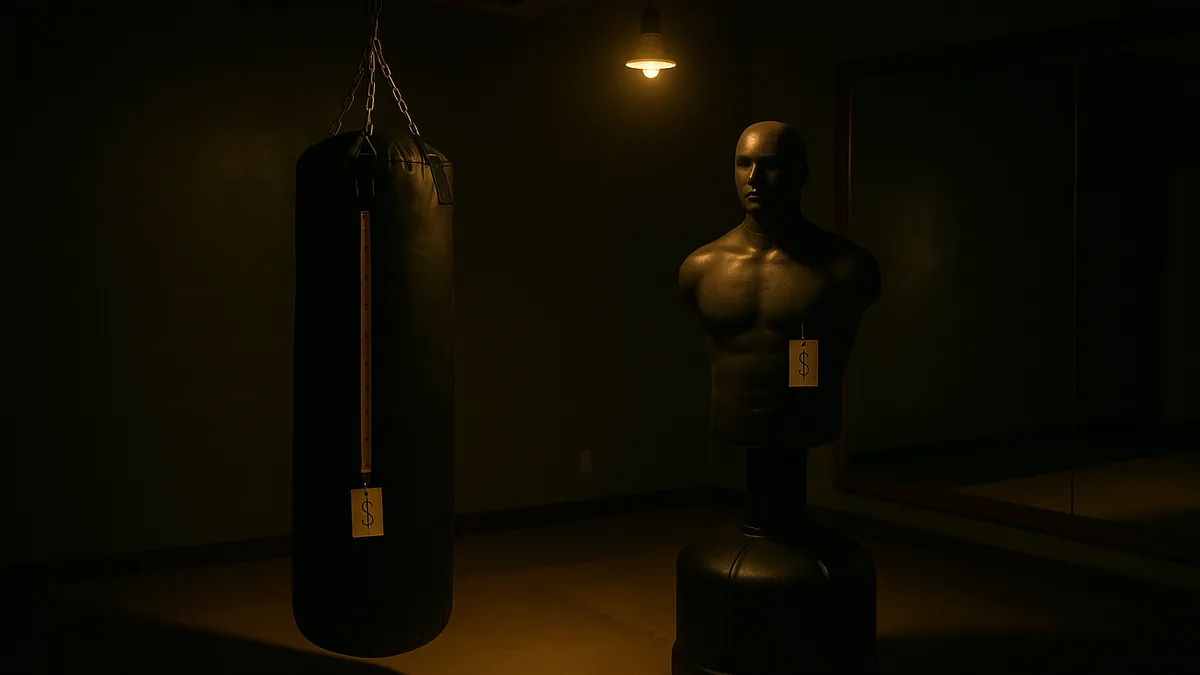
Most people get this decision wrong because they walk into a sports shop, see the free-standing bag looking clean and convenient, and buy it without thinking about what they actually need it to do. I’ve made that mistake myself. Bought a free-standing bag for my garage about eight years in, thought it would be perfect, and within six months I’d stopped using it for anything serious. The movement was wrong. The feel was wrong. It taught me habits I had to undo.
That’s not me saying free-standing bags are useless. It’s me saying the choice matters more than most people realise, and the wrong one will quietly undermine your training without you noticing until the damage is done.
What You’re Actually Trying to Develop
Before you spend money on either, be honest about what your training actually needs. Not what sounds good, not what you saw at your instructor’s dojo - what your specific gaps are right now.
If you’re working on power generation, you need something that absorbs force and gives you honest feedback. If you’re working on combinations, you need movement and rhythm. If you’re in a small flat and training around a partner’s schedule, you need something you can use at 10pm without shaking the walls.
I’ve noticed that most practitioners who ask me about this question are really asking two different questions at once: what’s better for karate specifically, and what’s practical for my situation? Those are both valid questions, but you need to separate them before you can answer either properly.
The Heavy Bag: What It Actually Feels Like to Train On
There’s a reason every serious striking gym has heavy bags and not just free-standing alternatives. When you land a proper gyaku-zuki on a heavy bag with real hip rotation behind it, you feel the energy transfer through your fist, up your arm, and back into your shoulder and core. It’s not a thud. It’s a solid, dense resistance that tells you immediately whether the punch came from your hips or just your arm.
That feedback is the whole point. A heavy bag doesn’t lie. If your elbow drops on a jodan-zuki, you’ll feel the difference in your wrist on impact. If your mae-geri doesn’t have the snap through the hip, the bag tells you by barely moving. You learn to read it over time, and that reading becomes a training tool in itself.
My instructor used to say that the bag is your most honest training partner. I didn’t fully understand that until I spent three months training almost exclusively with partners who were too polite to tell me my middle section was weak. The bag wasn’t polite. It showed me within a week.
The Practical Downsides
Heavy bags require a proper mounting point. That means a beam, a bracket bolted into a joist, or a stand - and the stand option brings its own limitations because a good stand costs almost as much as the bag itself and still moves around if the bag isn’t heavy enough or the stand isn’t weighted properly.
Noise and vibration are real issues if you’re in a flat or semi-detached house. The chain rattling, the bag swinging into the bracket, the thud transmitting through the ceiling - this is not a theoretical concern. I’ve had students who bought heavy bags and couldn’t use them in their home because of it. If you’re in that situation, you need to factor in acoustic matting, chain dampeners, and possibly having an honest conversation with your neighbours before you commit.
Weight matters too. A 4ft bag filled properly sits around 25-30kg. A 5ft bag can hit 40kg. Getting that up and down safely is not a one-person job.
Free-Standing Bags: Where They Earn Their Place
The free-standing bag is not a compromise version of a heavy bag. It’s a different piece of equipment that does different things. Once I stopped comparing them directly and started thinking about what each one is actually good for, the free-standing bag made a lot more sense to me.
What it does well: kicks. Specifically, high kicks. The adjustable height on most free-standing bags means you can set it for jodan targets without having to aim at the top of a hanging bag, which is awkward and teaches you bad targeting habits. For mawashi-geri to the head, ushiro-geri combinations, or working on your yoko-geri height and extension, a free-standing bag at the right height gives you a proper target.
It’s also genuinely useful for movement drills. You can circle it, work angles, practise your tai-sabaki off a strike. A hanging bag swings back at you, which is realistic but limits certain types of footwork practice. The free-standing bag stays roughly where you left it, which lets you reset and re-enter from different angles deliberately.
I’ve seen students make real progress on their kicking combinations using free-standing bags specifically because they could work the full 360 degrees around the target without the bag swinging into their path.
Where Free-Standing Bags Fall Short
The base. That’s the problem. You fill it with water or sand, and it gives the bag stability - but not the same stability as a bag hanging from a fixed point. When you land a committed oi-zuki or a strong gyaku-zuki with proper body weight behind it, the bag moves. Not dramatically, but enough that you lose the solid feedback you need to understand whether your technique actually had power.
The biggest difference I notice between students who train primarily on free-standing bags versus heavy bags is in their punching. The free-standing bag students often have decent form visually but their punches lack penetration. They’ve learned to hit the surface of the target rather than through it, because the bag moves away before they get that feeling of driving into resistance. It’s a subtle habit but it shows up in partner work and in grading.
One mistake I see often is people buying free-standing bags thinking they’ll get the same conditioning work as a heavy bag. You won’t. The knuckle conditioning, the forearm toughening, the core engagement from absorbing the bag’s return - those come from the heavy bag. The free-standing bag is softer on impact, which is fine for technique work but doesn’t build the same physical toughness.
Community Perspective
This is one of those topics where the answer genuinely varies depending on your style and your dojo’s training culture. Kyokushin practitioners I’ve trained with almost universally prefer heavy bags because the emphasis on full-contact body conditioning makes the feedback from a solid bag essential. WKF sport karate practitioners often find free-standing bags more useful for working on their kicking combinations and target height work.
Traditional Shotokan dojos sometimes dismiss bag work entirely, which I think is a mistake, but that’s a separate argument. The point is that what your style emphasises should influence which bag you prioritise.
There’s also a genuine generational split. Older instructors who came up before free-standing bags were widely available tend to be dismissive of them, sometimes unfairly. Younger practitioners who’ve trained in gyms where free-standing bags are standard often don’t know what they’re missing from heavy bag work. Neither position is entirely right.
What I’d say to anyone sitting in the middle of that debate: try both for at least a month each before you form a strong opinion. Your body will tell you things your eyes can’t see.
Which One Should You Actually Buy
If you can only have one and you’re serious about developing real striking power, buy the heavy bag. Find a way to mount it properly. Deal with the installation headache once and then forget about it. The feedback it gives you over years of training is irreplaceable, and there’s a reason it’s the default choice in every serious striking environment.
If you train in a flat, have noise concerns, or genuinely can’t mount a bag safely, the free-standing bag is not a bad option - it’s just a different one. Use it for what it’s good at: kicking practice, combination work, footwork drills, and technique refinement. Don’t expect it to build the same power or conditioning as a heavy bag.
If you have the space and budget for both, that’s the real answer. They complement each other. I use a heavy bag for power work and conditioning, and I use a free-standing bag for kicking height work and movement drills. They’re not competing - they’re doing different jobs.
For anyone still figuring out the broader equipment picture, it’s worth reading the Karate Bag Buyer’s Guide before you commit to anything - there are details about fill weight, material quality, and mounting options that most people overlook until they’ve already bought the wrong thing. And if you’re building out a home training setup more broadly, the comparison of speed bags, double-end bags, and wall targets is worth your time to understand what’s actually useful for karate versus what’s borrowed from boxing with limited crossover.
I’d also suggest thinking about focus mitts and Thai pads alongside your bag work - solo bag training and partner pad work develop different things, and if you have a regular training partner, the combination is more effective than either alone.
Key Takeaways
- Heavy bags give you honest feedback on power and penetration that free-standing bags can’t replicate - if developing real striking force is your priority, this is the one to get
- Free-standing bags earn their place for kicking height work, 360-degree footwork drills, and combination practice - don’t dismiss them as inferior, just understand what they’re actually for
- The biggest mistake is buying a free-standing bag expecting it to do the same job as a heavy bag - you’ll develop surface-contact punching habits that will show up in partner work
- Installation and noise are real constraints, not excuses - if you can’t mount a heavy bag safely or use it without complaints, a free-standing bag used well beats a heavy bag you never use
- Your style matters: if your training emphasises power and conditioning, prioritise heavy bag; if it emphasises kicking technique and combination fluency, the free-standing bag earns more of your time
- If budget allows, buy both and use them for different purposes - they’re not competing pieces of equipment, they’re complementary tools for different aspects of your development
The weekly digest
New karate articles, once a week
One email every week with everything new on Karate Lifestyle. No spam; unsubscribe in one click.
We'll email you to confirm. See our privacy policy.