Karate Focus Mitts vs Thai Pads: Which Are Worth Having for Karate Training?
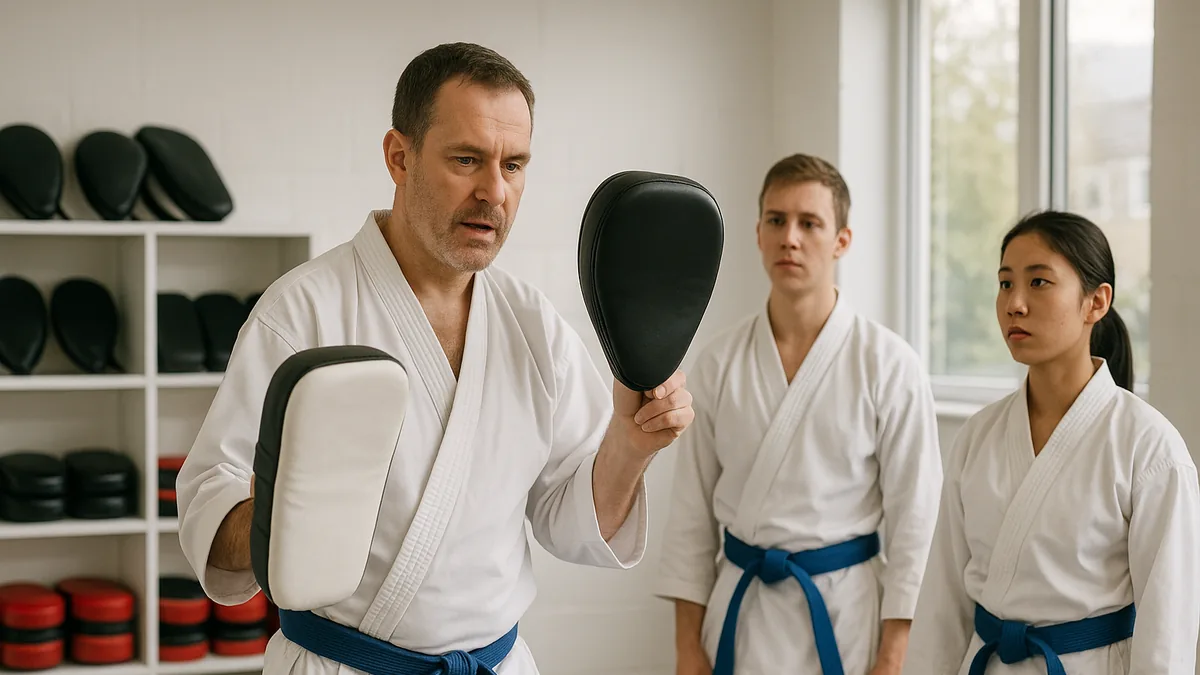
Most karate dojos I’ve trained in have had one or two sets of focus mitts gathering dust in a bag somewhere, and maybe a single pair of Thai pads that everyone fights over during pad rounds. That’s backwards. The problem isn’t that dojos don’t have the equipment - it’s that nobody’s really thought through what each piece of equipment is actually for, and so both end up being used badly or not at all.
I’ve spent time in traditional Shotokan dojos where pad work was almost considered a distraction from kata and kihon, and in more competition-focused environments where Thai pads were used constantly but with zero attention to how the holder was feeding the technique. Neither extreme serves you well. After years of watching what actually improves karate-specific striking, I’ve formed pretty strong opinions about when each tool earns its place in training.
What Focus Mitts Actually Train
The honest answer is that focus mitts train your eye and your timing more than your power. If you’re holding them for a student and they’re loading up to hit hard, you’re both using them wrong.
I’ve noticed that most beginners treat focus mitts like small heavy bags - they wind up, aim, and swing. What that produces is a student who can hit a stationary target that’s been held still for them. That’s not karate. What you actually want from focus mitt work is the student reading the mitt, reacting to its position, and hitting it cleanly without telegraphing. The mitt holder controls the drill. You’re presenting a target, pulling it, angling it, feeding combinations - and the striker has to stay sharp and responsive.
The sensation of a clean, well-timed punch on a focus mitt is different from anything else. When the timing is right and the technique is correct, you feel the snap through your wrist and forearm - not a thud, a crack. The mitt barely moves because the energy transferred cleanly instead of pushing through. When a student starts feeling that difference, it changes how they think about striking. I’ve had students who trained for two years and never understood kime until a focused mitt session made them feel it for the first time.
Where Focus Mitts Shine for Karate
- Oi-zuki and gyaku-zuki combinations - the holder can shift the target between techniques to simulate a moving opponent
- Counter-attack timing - present the mitt, withdraw it, and the striker learns to commit at the right moment rather than chasing
- Kizami-zuki to gyaku-zuki flow - focus mitts let you feel the difference in distance between the two techniques
- Speed development - because the mitt is small, sloppy technique gets punished immediately
One mistake I see constantly is instructors holding focus mitts completely flat and static, directly in front of the student’s face. That creates a drill where the student just punches forward. Angle the mitts, vary the height, move them slightly - make the student work for the target. The correction is simple: the mitt holder needs to be as active as the striker.
What Thai Pads Actually Train
Thai pads are a completely different conversation. The size, the density, the way you hold them - everything about a Thai pad is designed to absorb serious impact. That’s what makes them useful and what makes them potentially misleading for karate training.
I used to think Thai pads were just “better” focus mitts - bigger target, more protection, more power. My understanding shifted when I started paying attention to what my technique actually looked like when I hit them versus when I hit focus mitts. On Thai pads, I was pushing. The pad absorbs so much that you can land a sloppy, arm-heavy punch and it still feels solid. The feedback is forgiving. That forgiveness is useful for some things and actively harmful for others.
Where Thai pads earn their place is power conditioning and body-weapon development. Mawashi-geri on a Thai pad held correctly - angled across the holder’s forearms - gives you genuine resistance that develops hip rotation in a way that kicking air never will. You’ll feel the difference immediately: a properly thrown roundhouse that connects with full hip rotation feels like the power travels from your planted foot, through your hip, and out through your shin in one chain. When that chain breaks anywhere, the pad tells you.
Where Thai Pads Earn Their Place in Karate Training
- Mae-geri power development - the holder absorbs the thrust, which means you can train full commitment without hurting a partner
- Mawashi-geri hip rotation - the resistance of the pad teaches your hip to drive through, not just to the target
- Ushiro-geri - almost impossible to train with full power any other way
- Combination conditioning - punch-kick combinations where the student needs to generate real impact across multiple techniques
The biggest difference I’ve seen between students who train with Thai pads regularly and those who don’t is in their ability to generate power under fatigue. Hitting something that pushes back builds a different kind of strength than drilling in the air. The muscles involved in absorbing your own impact - the stabilisers in your hip and shoulder - develop in a way that kihon alone doesn’t reach.
One mistake I see with Thai pads in karate contexts is holders who don’t brace properly. If the holder absorbs the kick with their arms and body by moving backwards, the striker never learns to generate power from structure - they just learn to push hard. The holder needs to be rooted. Present the pad, absorb the kick through your stance, and let the striker feel what real resistance means.
The Precision vs Power Problem
Here’s where I’ll take a position: most karate training needs more precision work, not more power work.
I’ve seen this pattern dozens of times. A student develops decent power through bag work and Thai pad rounds, then gets into jiyu-kumite and can’t land anything cleanly because their timing is off and their targeting is vague. They’re strong but imprecise. Focus mitt work - done properly - addresses that gap directly.
Power without precision is sparring noise. You’re throwing hard techniques that aren’t landing because you haven’t trained your eye to read the target and commit at the right moment. In jiyu-kumite, the moment when a counter is available is usually half a second or less. If you’ve only trained to hit hard, you’ll miss it. If you’ve trained your timing on focus mitts, you start to see those windows and move into them.
That said, precision without any power conditioning produces a different problem - students who are technically clean but who pull everything because they’ve never felt what it’s like to actually drive through resistance. For gradings and competition, that reads as tentative technique. The examiner or judge sees hesitation even if the student thinks they’re being controlled.
The answer isn’t to pick one. It’s to understand what you’re working on in a given session and use the right tool for it.
Community Perspective
This is genuinely one of those topics where you’ll get different answers depending on who you ask and what style they came up in. Traditional Shotokan and Goju-ryu dojos often push back on pad work in general, treating it as a contamination from kickboxing or Muay Thai. The argument is that karate already has makiwara for power development - and if you haven’t looked at the case for that, the honest assessment of makiwara training is worth reading - and that partner drilling with controlled technique is enough for timing.
I understand that position but I don’t fully agree with it. Makiwara develops a specific kind of impact conditioning that pads don’t replicate, but it doesn’t develop timing or the ability to read a moving target. Those are different skills.
On the other side, you get sport karate and knockdown practitioners who use Thai pads constantly and sometimes neglect the precision work entirely. Their students hit hard and often. They also sometimes telegraph badly and struggle with the kind of clean, fast single-technique execution that traditional karate prioritises.
What I’ve noticed across different dojos is that the instructors who produce the most complete strikers tend to use both tools deliberately - focus mitts when the session is about sharpening technique and timing, Thai pads when the goal is power conditioning and commitment. The equipment serves the session goal, not the other way around.
Which One to Buy First
If you’re equipping a dojo or deciding what to invest in personally, I’d recommend starting with a quality set of focus mitts. The reason is simple: you can use them in more of your training. They work for punching, they work for timing drills, they work for combination flow, and they’re easier to hold correctly without specialist knowledge. Thai pads require a competent holder who knows how to brace and angle them for different techniques - use them badly and you’re either not getting the benefit or you’re risking the holder’s wrists.
The same logic applies to other equipment decisions, actually. Just like you’d think carefully about whether cheap karate gi fall apart under regular training before committing to a budget option, it’s worth thinking about whether you have the training environment to use Thai pads properly before prioritising them over more versatile gear.
Once you have focus mitts and someone in the dojo who knows how to hold them properly, add Thai pads for the power and kicking sessions. Used together, they cover most of what you need from impact training equipment.
Key Takeaways
- Focus mitts train timing and precision - use them for combination drills, counter-attack timing, and developing kime. The striker should be reading the target, not just hitting it.
- Thai pads train power and commitment - particularly useful for kick development where you need genuine resistance to build hip rotation and follow-through.
- The holder’s job is active, not passive - a static pad holder is wasting both people’s time. The holder controls the drill, and that requires as much skill as the striking.
- Most karate students need more precision work, not more power work - if your students hit hard in drills but can’t land in sparring, the gap is timing, not strength.
- Buy focus mitts first - they’re more versatile and easier to use correctly. Add Thai pads once you have someone who can hold them properly.
- Match the tool to the session goal - decide what you’re training before you pick up the pads, not after. Power session or precision session. Both have value, and mixing them without intention produces neither.
The weekly digest
New karate articles, once a week
One email every week with everything new on Karate Lifestyle. No spam; unsubscribe in one click.
We'll email you to confirm. See our privacy policy.