Kick Shields vs Curved Kick Pads for Karate Training: Which Gives You Better Feedback and Which Is Worth Buying First
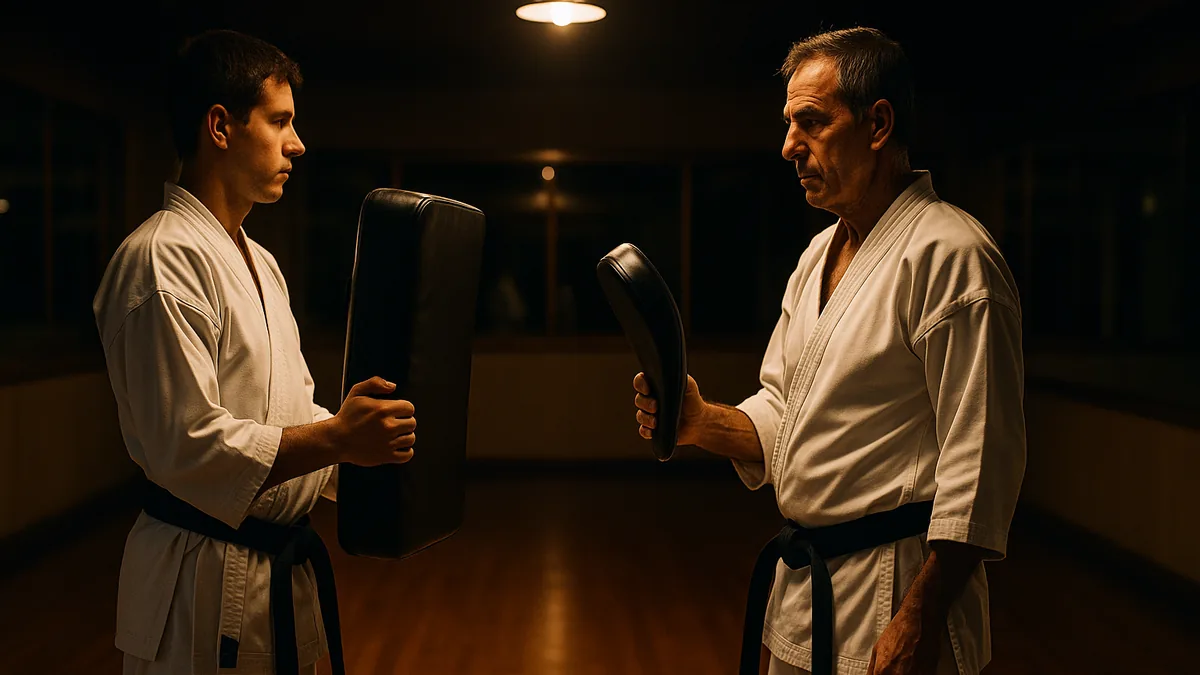
Most karate practitioners buying their first piece of pad equipment make the same mistake: they buy whichever is cheaper, use it for six months, and then buy the other one anyway. Save yourself the detour. The choice between kick shields and curved kick pads is not just a budget question - it is a training philosophy question, and getting it wrong means you spend months drilling poor habits into your technique without realising it.
What Each Piece of Equipment Actually Does
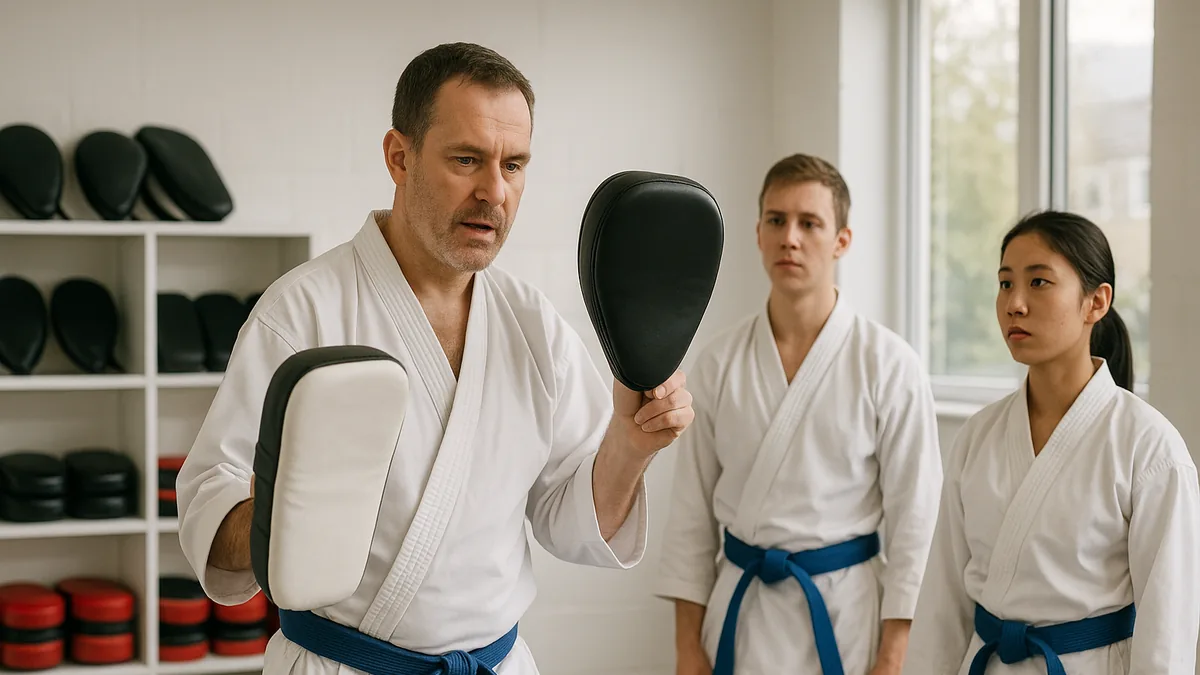
A kick shield is a large, flat or slightly contoured pad, typically rectangular, designed to absorb significant impact. The holder carries it against their body or holds it at arm’s length. The striking surface is generous - usually 30 to 45cm wide - which means you can throw kicks with minimal precision and still make contact. That forgiveness is the shield’s biggest strength and its biggest weakness simultaneously.
A curved kick pad (sometimes called a curved Thai pad or crescent pad) is smaller, shaped to follow the arc of a kick or knee strike, and designed to be held in a specific position so that the kicker’s technique meets the pad at the correct angle. The curvature is not decorative - it is functional feedback. When your technique is right, the pad absorbs the kick cleanly. When your technique is off, you feel it immediately.
This distinction matters more than most people appreciate when they are first buying equipment.
The Case for Kick Shields
Kick shields earn their place in serious training for specific reasons, and power development is the main one. When you are working on mae geri or mawashi geri and you want to develop genuine striking power - not just the appearance of it - a kick shield held firmly by a training partner gives you a target you can commit to fully. You will feel the difference between a kick that transfers force through the pad and one that lands but does not drive. That sensation, the feeling of your hip coming through the kick and the pad moving rather than just absorbing, is hard to replicate on a bag. Biomechanical research confirms that hip rotation is a primary driver of mawashi geri power, making that sensation of the hip driving through the pad a genuinely meaningful indicator of technique quality.1, 2
Kick shields are also the right tool for:
- Combination drilling where the sequence matters more than individual technique refinement
- Conditioning work where volume and intensity are the goals
- Teaching beginners where a forgiving target reduces the risk of discouragement from missed pads
- Clinch and close-range work where the shield doubles as a pushing surface
The size of the striking surface means less cognitive load on the holder, which matters when you are running a class and cannot give every pair your full attention. The holder does not need precise pad placement skills for the drill to work.
One honest limitation: kick shields do not tell you much about your technique. You can land a technically poor roundhouse on a kick shield and feel nothing wrong. The pad absorbs it, your partner says “good”, and you have just reinforced a mistake. This is not a minor issue - it is the central problem with relying on shields too heavily in technical training.
The Case for Curved Kick Pads
Curved kick pads are the better diagnostic tool, and we will take that position clearly. If your goal is technical improvement - if you want to know whether your mawashi geri is actually landing with the correct part of the foot at the correct angle with the hip driving through - curved pads tell you things that shields cannot.
The feedback mechanism is simple but effective. When you land correctly on a curved pad, the kick follows the arc of the pad and the impact is clean. You will feel a solid, satisfying connection through your shin or foot, and the holder will absorb it without strain. When your technique is off - hip not through, foot angle wrong, knee not chambered correctly - the kick skids, the pad twists in the holder’s hands, or the contact point is wrong and you feel it in your ankle or instep rather than through the leg. That immediate, physical feedback is what makes curved pads valuable for technical drilling.
A common cue for mawashi geri is “hip through, not just leg around.” Research into the kick’s biomechanics supports this: effective performance requires rapid pelvic rotation, hip flexion and knee extension velocities working together, not leg swing alone.1, 2 On a kick shield, you can fake that hip rotation and still land. On a curved pad held correctly, you cannot. The pad exposes the shortcut.
Curved pads also develop better targeting. Because the surface is smaller and the correct angle is specific, you have to be precise. That precision transfers. Practitioners who do the majority of their pad work on curved pads tend to have better kick placement in jiyu-kumite, because they have trained to a smaller, moving target held at a specific angle - which is closer to what an opponent actually presents.
The limitation is holder skill. Curved pads require the holder to present the pad correctly - at the right angle, height and distance - or the feedback becomes noise. A poorly held curved pad teaches the kicker to adjust to bad presentation rather than to throw correct technique. This is a real problem in classes where pad-holding is not explicitly taught.
Common Mistakes With Each
Kick Shield Mistakes
The most common mistake with kick shields is using them for everything. Shields become the default because they are easy to hold and forgiving to kick. The result is practitioners who develop power but cannot place their kicks accurately under pressure.
A related mistake is holding the shield too loosely or at the wrong angle, which absorbs the kick without giving the kicker any resistance feedback. The shield should be braced, not floated. The holder should feel the kick properly - that resistance is part of what tells the kicker they have generated real force.
Curved Pad Mistakes
The most common mistake with curved pads is poor presentation by the holder. The pad needs to be held so that the curve matches the arc of the incoming technique. A flat presentation on a curved pad defeats the purpose entirely - you are just using an expensive flat surface.
A second mistake is kicking too hard too soon. Curved pads reward precision over power. Many practitioners, accustomed to shields, try to drive through a curved pad and find their technique falling apart. The correction that usually works is dropping the power to around 60% and focusing on the quality of contact - feeling the kick land cleanly through the correct surface - before building power back up.
Which to Buy First
We recommend curved kick pads as the first purchase for most karate practitioners focused on technical development, with one important caveat: you need a training partner who can learn to hold them correctly.
The reasoning is straightforward. Technical habits formed early are the hardest to correct later. A white or orange belt who trains primarily on curved pads develops accuracy and correct technique from the beginning. The power will come - it always does as technique improves and body mechanics become efficient. But a practitioner who trains primarily on shields and develops power without precision has a harder correction to make later.
If you are training primarily alone, or your training partner is not yet reliable at pad holding, a kick shield is the more practical first choice. It is also the right choice if your primary goal is conditioning and power development rather than technique refinement.
For clubs and dojos buying equipment to outfit a class, the practical answer is both - but if the budget forces a priority, curved pads for senior grades and shields for beginners is a defensible split.
If you are building a home training setup and thinking about how pad work fits alongside bag work, the comparison in our Heavy Bag vs Free-Standing Bag for Karate Training article is worth reading alongside this one - the three tools serve different purposes and the combination you choose should reflect your actual training priorities.
Community Perspective
There is a genuine split in the karate community on this, and it roughly follows style lines. Kyokushin and full-contact practitioners tend to favour shields heavily, for understandable reasons - power and conditioning are central to that training culture, and the feedback they want is whether the technique moved the holder.3 Point-fighting and WKF sport-karate competitors often prefer curved pads or focus mitts because accuracy and speed matter more than raw power in that context.4
The debate also shifts with experience. A common observation among more senior practitioners is that as white and yellow belts they found curved pads frustrating - missing the pad, getting poor feedback, feeling as though something was wrong. By the time they reached brown belt level, many had come to understand that the frustration was the point: the pad was telling them something their technique was not yet doing correctly. That shift in perspective is worth naming explicitly: if curved pads feel difficult at first, that is information, not failure.
There is also ongoing disagreement about whether Thai-style curved pads are appropriate for karate training at all, given the difference in kick mechanics between Muay Thai and karate. The honest answer is that the pad does not care about the style - what matters is whether the holder presents it correctly for the technique being drilled. For karate mawashi geri, a curved pad held at the right angle gives good feedback regardless of what sport it was originally designed for. For more on how equipment crosses over between disciplines, the Karate Focus Mitts vs Thai Pads comparison covers similar ground for hand techniques.
Key Takeaways
- Kick shields develop power and suit combination drilling; curved pads develop precision and diagnose technical errors. You need both functions in training - the question is which gap to fill first.
- The biggest difference between the two is the quality of feedback. A kick shield tells you whether you hit it. A curved pad tells you whether you kicked correctly.
- Curved pads require a competent holder. If your training partner cannot present the pad correctly, the feedback is misleading. Teach pad-holding as a skill, not an afterthought.
- Buy curved pads first if technical development is your priority. Buy shields first if conditioning, power, or training with inexperienced partners is the immediate need.
- The correction that works on curved pads is reducing power and prioritising clean contact. Once the technique lands correctly at 60% power, build intensity from there.
- If you are setting up a home dojo, consider how pads fit alongside other striking surfaces. The Wall-Mounted Punch Shields and Striking Pads article covers fixed target options that complement pad work without requiring a partner.
References
Checked by the KarateLifestyle editorial team against peer-reviewed biomechanics literature (PubMed/ResearchGate), WKF official rules documents, and strength-and-conditioning research on Kyokushin karate in October 2026. The biomechanics evidence on mawashi geri is based on relatively small sample studies; the practical coaching inferences drawn are consistent with the literature but go slightly beyond what any single study proves.
- Biomechanical Analysis of Mawashi-Geri Technique in Karate: Review Article. Review article, ResearchGate/journal, approximately 2018. Confirms that effective mawashi geri is characterised by rapid pelvic axial rotation, hip flexion and knee extension velocities.
- Whole-Body Vibration (WBV) as a Conditioning Activity for Roundhouse Kick (mawashi geri) Performance in Karate. Peer-reviewed study, PubMed Central, 2024. Confirms hip rotation as a key biomechanical component of mawashi geri performance; 16 male karate athletes studied on a force platform.
- Strength and Conditioning Considerations for Kyokushin Karate Athletes. ResearchGate, 2022. Confirms that power, conditioning and full-contact sparring are central to Kyokushin karate training culture.
- World Karate Federation Kumite Competition Rules, Version 2026.01. Official rules document, World Karate Federation, effective January 2026. Primary source for WKF competition structure and equipment requirements.
The weekly digest
New karate articles, once a week
One email every week with everything new on Karate Lifestyle. No spam; unsubscribe in one click.
We'll email you to confirm. See our privacy policy.