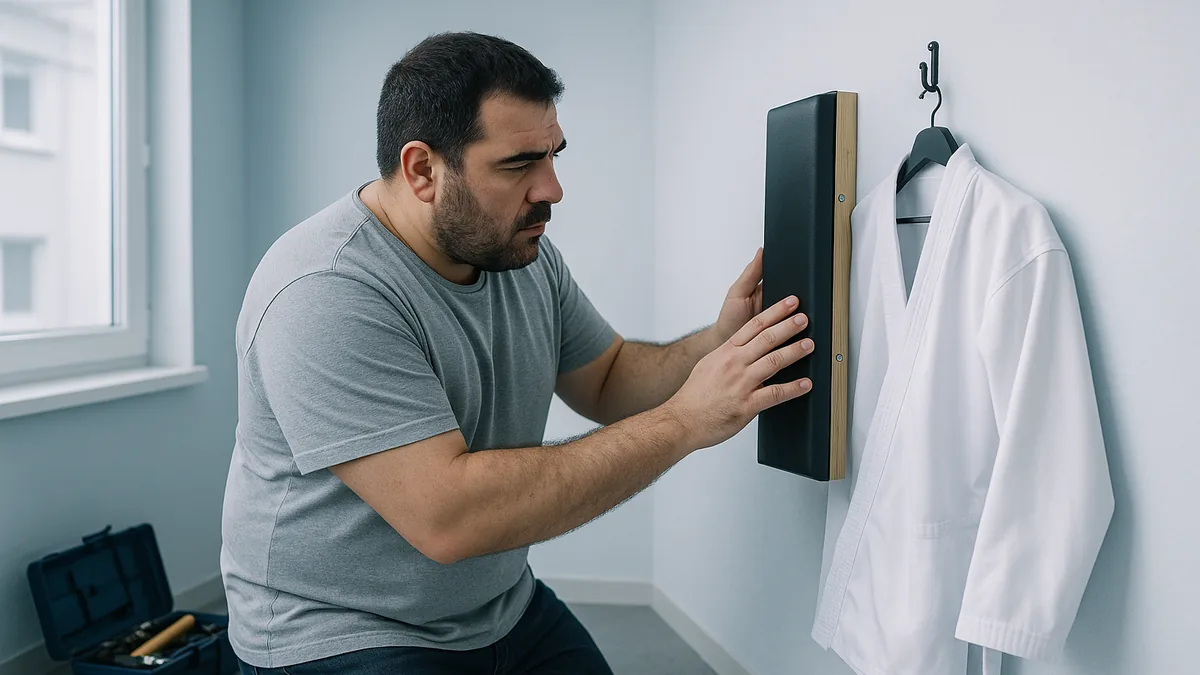
Do You Need a Makiwara? An Honest Assessment for Modern Karateka
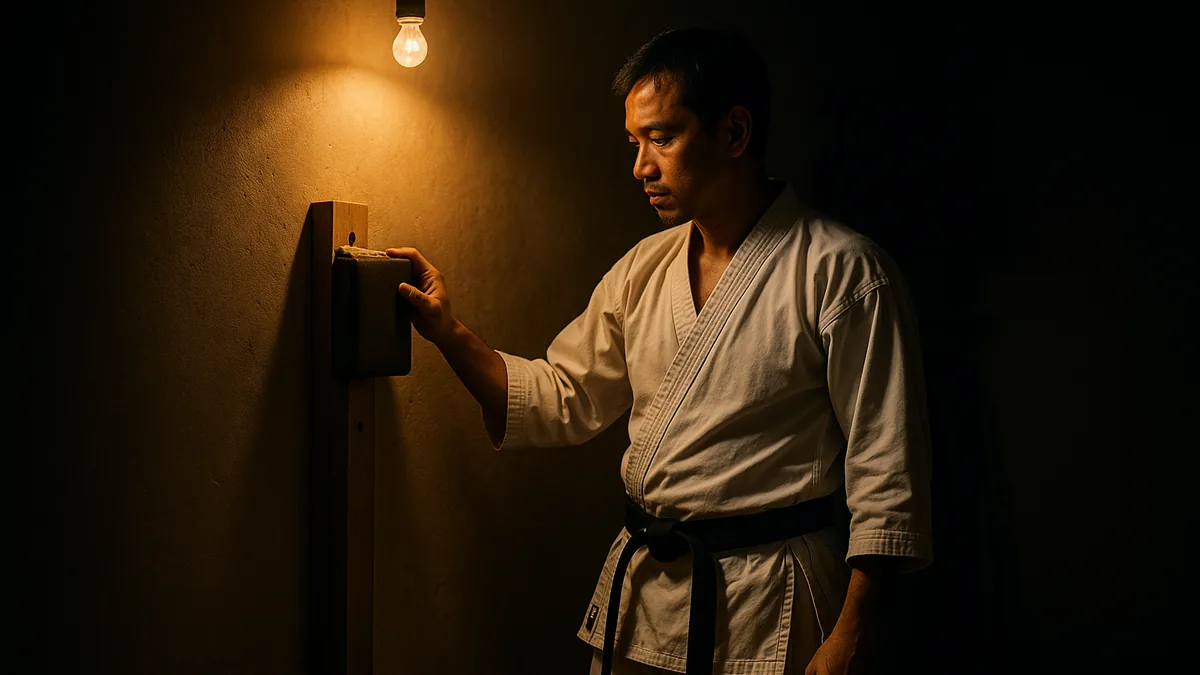
I’ve watched a lot of students get excited about the makiwara, buy one or build one, use it for three weeks, and then never touch it again. I’ve also watched a handful of serious practitioners completely transform their striking through consistent makiwara work over years. The difference wasn’t the tool. It was whether they actually understood what the makiwara is for and whether that matched what they needed to develop.
So here’s my honest take, based on years of training across different dojos and watching what actually produces better karateka.
What the Makiwara Actually Teaches You (That Nothing Else Does Quite the Same Way)
The makiwara gives you immediate, unforgiving feedback on contact. Not impact - contact. That distinction matters more than most beginners realise.
When you hit a heavy bag, you can get away with a lot. The bag moves, absorbs, and forgives sloppy alignment. Hit a makiwara with your wrist out of line and you’ll know instantly. Hit it without your elbow tracking correctly and you’ll feel it through the whole arm. The board doesn’t lie. That’s the core value.
I used to think the makiwara was primarily about toughening the knuckles. That’s what everyone says early on. By the time I was training for my brown belt, I realised the knuckle conditioning is almost a side effect. The real thing the makiwara teaches is commitment to the strike. You can’t pull back at the last second. You can’t flinch. You have to drive through the board with intention, and that requires your whole structure to be aligned - hip, shoulder, elbow, wrist, knuckles - all stacked and moving together.
What correct contact on a makiwara feels like is hard to describe until you’ve felt it. When everything is right, the rebound comes back through your body cleanly, almost like a pulse. When it’s wrong, it feels like the force scatters - you get a jarring sensation in the wrist or elbow, or the board just pushes you back rather than giving you that sharp return. You’ll feel the difference before you understand it intellectually.
The Mistake I See Most Often With Makiwara Training
The biggest mistake I see is people hitting the makiwara the same way they hit air. They’re throwing their technique and expecting the board to confirm it. That’s backwards.
The makiwara should slow you down, not speed you up. What I tell students who are starting makiwara work is this: hit it at about 60% speed, hold the contact for a second, and pay attention to what’s happening in your hand, wrist, and forearm. If you’re smashing into it fast and bouncing off, you’re just practising impact. That has some value, but it’s not the primary lesson.
The correction that actually works is to think about pressing through the board rather than hitting it. Not slow - just intentional. That shift in mental focus changes everything about how the technique lands.
I’ve also seen people develop genuinely bad habits from makiwara training when they haven’t been shown how to use it properly. Overextending the elbow trying to get more reach. Locking out the shoulder. Tilting the whole torso forward into the strike rather than driving from the hips. The board will accept all of these if you let it. An instructor won’t.
So Do You Actually Need One?
Honestly - it depends entirely on what you’re trying to develop, and I’d rather give you a straight answer than hedge.
If your goal is competition sport karate, tournament kumite, or you’re primarily training for fitness and self-defence awareness, the makiwara is probably not the highest-priority piece of equipment for you. A good heavy bag, focus mitts, and a solid partner will serve you better. You can build striking power and accuracy through pad work and controlled kumite without ever touching a makiwara.
If you’re training in a traditional style and you want to develop the kind of striking that serious kata bunkai requires - the short, penetrating power that doesn’t rely on a full swing - the makiwara is genuinely hard to replace. I’ve noticed that practitioners who do consistent makiwara work tend to develop a different quality of contact in their technique. Not necessarily harder in the obvious sense, but more focused. The force goes somewhere specific rather than dispersing across the surface.
I’d also say that if you’re training at home and building out your own setup, the makiwara is worth considering as part of a broader home training environment. If you’re putting together karate training equipment for home, it’s one of the more space-efficient options for developing striking quality.
The Alternatives Are Better Than They Used to Be
I want to be fair here. The alternatives to makiwara training have improved significantly, and some of them address the same core problems.
Focus mitts held by a skilled partner - probably the most underrated tool for developing real striking quality. You get resistance, feedback, and the added variable of a moving target. The limitation is that you need a partner who knows how to hold them properly, which is its own skill.
Wall-mounted pad targets - a decent middle ground. More forgiving than a makiwara but less forgiving than a heavy bag. Good for developing targeting accuracy and commitment without the joint stress of a traditional board.
Resistance band striking drills - I was sceptical for years, but I’ve seen these used well for developing hip-to-hand connection. They don’t replace contact training but they’re useful for isolating the mechanics.
Heavy bag with a focus on short-range power - if you position yourself correctly and commit to not using the bag’s movement as feedback, you can approximate some of what the makiwara teaches. Most people don’t train it this way, though.
None of these are identical to the makiwara. But none of them require you to condition your knuckles over months or risk wrist strain from bad alignment, which matters if you’re training around an existing injury or just getting started.
Community Perspective
This is genuinely one of those topics where traditional and modern practitioners often talk past each other. Practitioners from Okinawan lineages and old-school Shotokan backgrounds tend to treat the makiwara as non-negotiable - a core part of what it means to develop real striking. I’ve trained with people who consider it almost a spiritual practice, the daily ritual of honest feedback.
Modern sport karate coaches, especially those working with competition-focused athletes, often dismiss it entirely or see it as a relic with a high injury risk relative to its benefit. Their athletes hit mitts, bags, and each other, and they’re producing fast, accurate, powerful strikers. Hard to argue with results.
Where I’ve landed after training in both environments is this: the makiwara teaches something specific about commitment and structural integrity that other tools don’t quite replicate. But it’s a tool with a specific purpose, not a universal requirement. Whether it belongs in your training depends on what you’re building toward.
The practitioners I’ve seen change their minds most often are those who trained sport karate for years, then started going deeper into kata and bunkai in their thirties. Several of them came back to the makiwara later and said they finally understood why their seniors had always insisted on it. That shift in perspective is worth paying attention to.
Practical Considerations Before You Buy or Build
If you’ve decided you want to try makiwara training, a few things I’d want you to know before you start:
- Get someone to watch your first sessions. The feedback the board gives you is useful, but you need an experienced eye to tell you if you’re compensating in ways you can’t feel yet.
- Start with a flexible board, not a rigid post. The spring in the board is part of the feedback mechanism. A post that barely moves is harder on the joints and teaches less.
- Your knuckles will need time to adapt. Don’t rush this. Bruised and swollen knuckles from training too hard too fast will set you back weeks.
- Makiwara training is not a substitute for partner work. I’ve seen students disappear into solo equipment training and come back with powerful techniques they can’t land on a moving person. Use it to develop quality, then test that quality in kumite.
If you’re still building out your training setup, it’s worth thinking about this alongside other gear decisions. Equipment like a well-fitted gi matters more than most beginners think for how freely you can move - the best karate gi for beginners guide covers that side of things if you’re still sorting your basics.
Key Takeaways
- The makiwara’s primary value is structural feedback on contact, not knuckle conditioning - if you’re using it just to toughen your hands, you’re missing most of the lesson.
- Hit it with intention, not speed. Pressing through the board at 60% teaches more than smashing it at full power.
- If your training is primarily sport-focused, pad work and partner drills will likely serve you better and carry lower injury risk.
- If you’re training traditional kata and bunkai seriously, consistent makiwara work develops a quality of short-range power that’s genuinely hard to build any other way.
- Get instruction before you start - bad makiwara habits are real, and the board will reinforce them just as readily as good ones.
- Use it as one tool among several, not as a standalone training method. The makiwara develops something specific. Sparring, kata, and partner work develop everything else.
The weekly digest
New karate articles, once a week
One email every week with everything new on Karate Lifestyle. No spam; unsubscribe in one click.
We'll email you to confirm. See our privacy policy.