Speed Bags, Double-End Bags, and Wall Targets: Which Karate Practitioners Actually Benefit From and Which Are Just Borrowed from Boxing
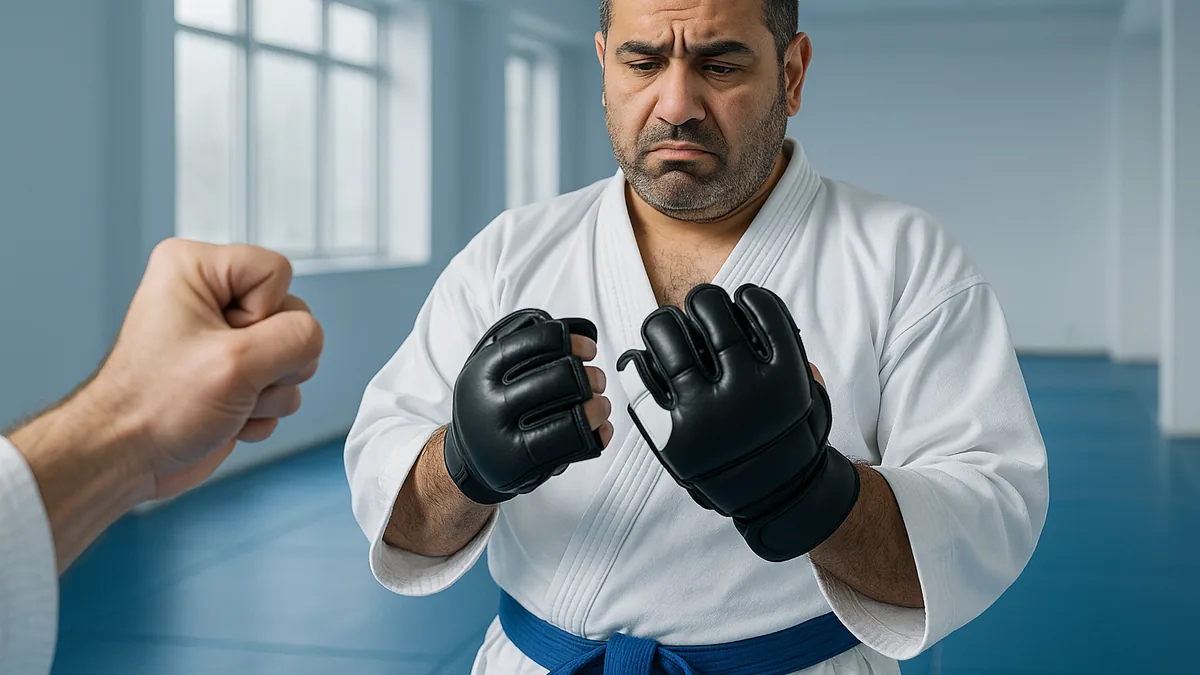
Most of the boxing equipment that ends up in karate dojos gets there through a familiar path: someone watches a combat sports video, buys a piece of kit, and starts using it without thinking hard about whether it fits what they’re actually training for. Speed bags, double-end bags, and wall targets have all made that journey. Some of them earned their place. Some of them are just decoration that makes the training space look serious.
I’ve spent time in dojos that ran very traditional setups - makiwara, heavy bag, partner work, nothing else - and dojos that looked like hybrid boxing gyms. What I noticed is that the equipment itself isn’t the issue. The issue is whether the practitioner understands what problem each piece of kit is solving, and whether that problem is actually a karate problem.
Speed Bags: Good for One Thing, Overrated for Everything Else
The speed bag has a specific job. It trains hand-eye coordination and rhythm. That’s it. If you’re honest about it, that’s a fairly narrow application, and in karate, rhythm is actually something you want to be careful about.
Here’s what I mean. In boxing, rhythm is a tool. You establish it, break it, use it to set up combinations. The speed bag helps you develop that rhythmic sensitivity. In karate, particularly in the kind of karate that emphasises explosive single technique or sen-no-sen timing, predictable rhythm is a liability. I’ve seen students who spent a lot of time on the speed bag start to develop a slight bounce or sway in their kamae that wasn’t there before. It’s subtle, but it telegraphs. Senior practitioners pick it up immediately in jiyu-kumite.
That said, I’d be dishonest if I said the speed bag has no value for karateka. The hand-eye coordination it builds is real, and for practitioners who struggle with defensive reactions - particularly those who flinch or lose visual tracking when attacks come in fast - the speed bag is genuinely useful as a corrective tool. What I tell students is to use it for a specific training block with a specific goal, not as a permanent fixture in their routine.
The biggest mistake I see with speed bags in karate training is that people use them as a warm-up or a filler activity without any intentional focus. You end up with someone rhythmically tapping away for five minutes, heart rate up, feeling like they did something, but not actually ingraining anything useful. The correction that works is to bring the same intentionality you’d bring to kihon - pick a specific hand, a specific tempo, a specific goal for the session. Then stop when you’ve hit it.
One more thing: the striking mechanics on a speed bag are not karate mechanics. The wrist positioning, the angle of contact, the rebound timing - none of it maps directly to tsuki or uchi. If you’re a newer practitioner still ingraining your basic technique, I’d actually hold off on the speed bag entirely and spend that time on the makiwara or a wall target instead.
Double-End Bags: The One Piece of Boxing Equipment That Actually Transfers
I’ll be direct about this one. The double-end bag is probably the most underused piece of equipment in karate training, and I think it’s because it looks like a boxing tool so people assume it is one.
What the double-end bag actually trains is timing and accuracy against a moving target - and that is absolutely a karate problem. The moment the bag returns from a strike, it’s testing whether you’ve recovered your kamae, whether you’re tracking the movement, and whether you can find the target again quickly. That’s not different from what you need in jiyu-kumite when your first attack misses and the opponent counters.
My instructor at the time had us doing double-end bag work specifically to address a problem he kept seeing in our sparring: we were committing too hard to single attacks and getting caught on the return. He didn’t explain it that way at first. He just put us on the double-end bag and told us to work gyaku-zuki combinations. I didn’t understand why until about three weeks in, when I noticed my recovery after a failed attack in sparring had changed. The bag had been training me to expect the return without my realising it.
The physical sensation of good double-end bag work is worth describing. When you’re timing it well, the bag feels like it’s cooperating - you’re reading its movement before it arrives and placing your technique into the space it’s travelling toward. When you’re off, it hits your guard or your extended arm and the whole thing goes chaotic. That chaos is the feedback. You’ll feel the difference between being reactive and being anticipatory, and that distinction matters enormously in karate.
What transfers directly to karate training:
- Accuracy under movement - you can’t muscle the bag into position
- Recovery timing - the bag punishes slow kamae return
- Visual tracking - your eyes have to lead your hands
- Combination flow - useful for practitioners working on ren-zuki or sanbon-zuki timing
The common mistake I see is people treating it like a heavy bag - loading up and swinging. The double-end bag is not for power development. If you’re hitting it hard enough to send it into irregular orbit, you’re using it wrong. Light, accurate, fast contact. Think of it as a timing instrument, not a target.
If you’re thinking about other equipment that develops accuracy and partner-applicable timing, it’s worth comparing this against what focus mitts and Thai pads can offer - they solve a related but different problem, and having both in your setup gives you options depending on whether you’re training solo or with a partner.
Wall Targets: Underrated, Simple, and Actually Karate-Specific
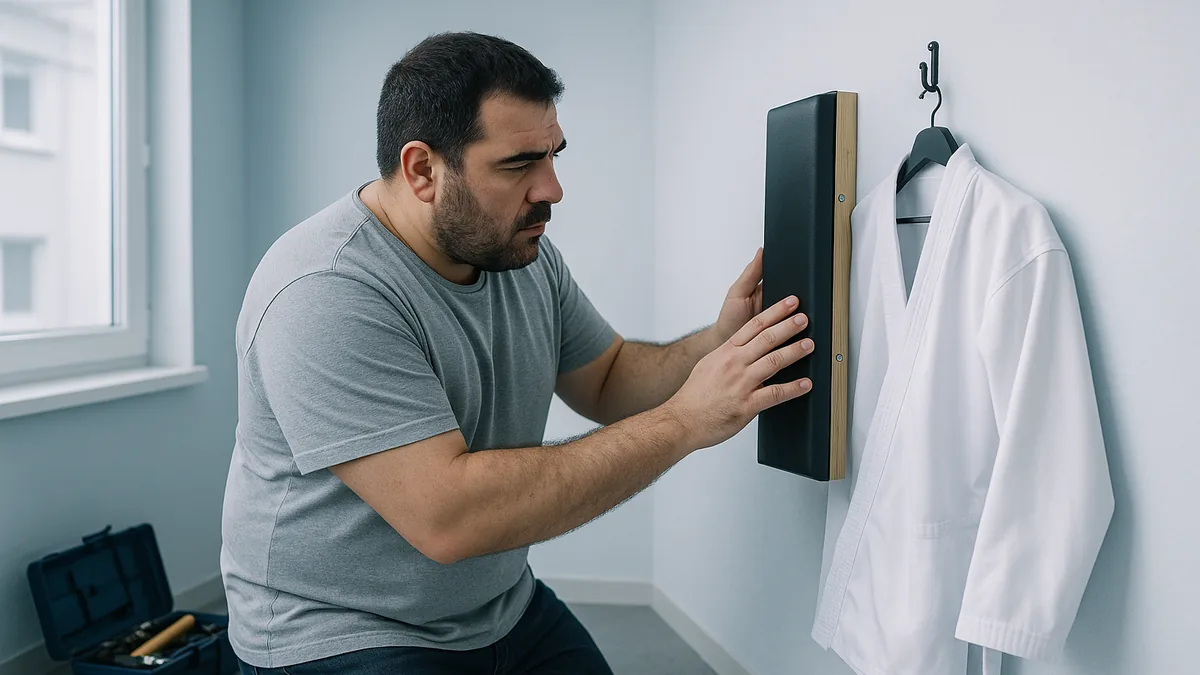
Wall targets - whether that’s a foam striking pad mounted to the wall, a makiwara-style board setup, or a commercial striking surface - don’t get discussed much because they’re not exciting. There’s no rebound, no rhythm, no movement. Just a fixed point that either you hit accurately or you don’t.
That simplicity is exactly why I think they’re more valuable for most karateka than either of the other two options, particularly for practitioners working on precision rather than power.
I’ve noticed that the practitioners who develop genuinely accurate technique - the ones where you watch their kihon and every technique lands exactly where it’s aimed - almost always have some form of wall target work in their training. It’s not the only factor, but there’s a correlation. Fixed targets force you to aim. You can’t fudge it the way you can with a heavy bag that moves when you hit it off-centre.
Wall targets are also where I’d direct anyone working on their knife-hand strikes, ridge-hand, or haito - techniques that are harder to develop on a swinging bag because the angle and surface contact matter more. When you do a shuto-uchi correctly on a firm wall target, you’ll feel the contact run through your forearm and into your shoulder in a specific way. When the wrist breaks slightly or the angle is off, you feel that too, immediately. The wall target gives you honest feedback without the forgiveness of a heavy bag.
Where wall targets are most useful:
- Precision drilling for grading - if you have a specific technique being assessed, drilling it against a fixed target ingrains the exact distance and angle
- Recovering accuracy after injury - the controlled, predictable surface reduces variables while you rebuild
- Yoko-geri and mae-geri height and angle work - you can mark the target and check consistency
- Slow-work drilling - you can move at 30% speed and still get meaningful feedback
The mistake I see most often with wall targets is that people use them for power work and end up reinforcing bad habits at the wrist and elbow. If you’re slamming into a fixed surface trying to feel impact, you’re going to start bracing in ways that compromise your technique. Use the wall target for accuracy and position, use the heavy bag for conditioning and power.
Community Perspective
This is genuinely a topic where opinions split, and it usually comes down to what style you’re training and what your instructor’s background is.
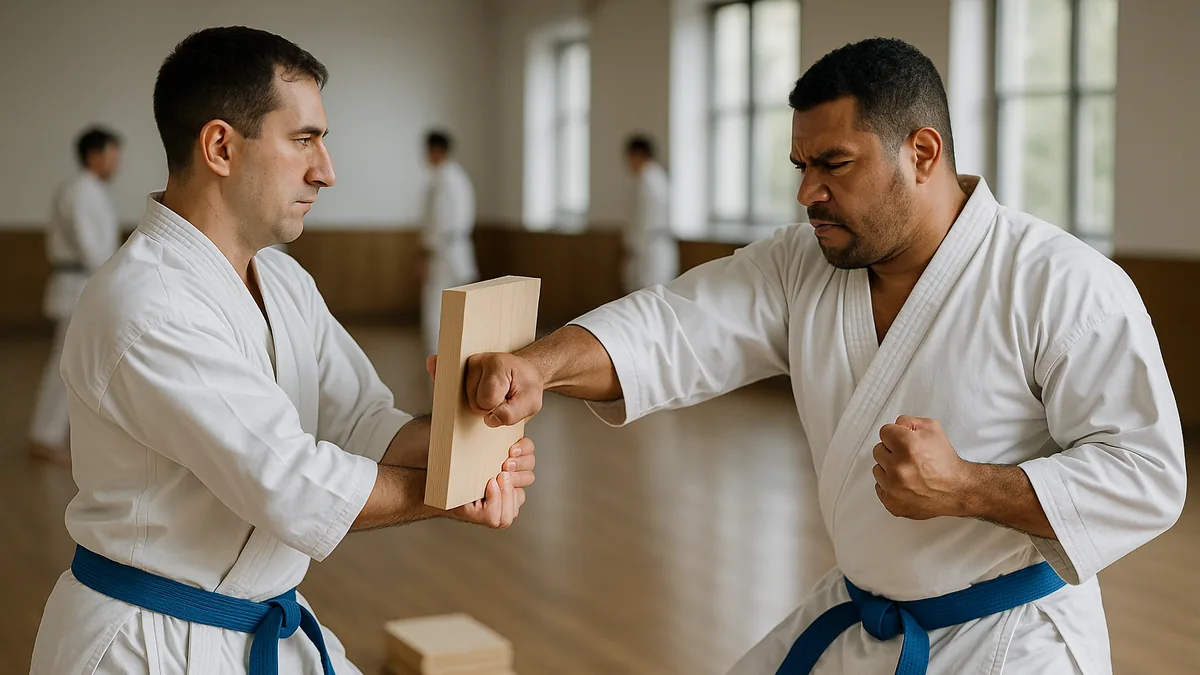
In Shotokan and Wado-ryu circles, I’ve heard plenty of senior practitioners dismiss all three of these as boxing imports with no place in karate training. The argument is that none of them replicate the specific distancing, timing, or targeting demands of karate, and that time spent on them is time taken away from partner work, kata, and makiwara. That’s a position I respect, even if I don’t fully agree with it.
In more competition-focused dojos, particularly those training for WKF-style kumite, the double-end bag has started appearing more regularly because the movement patterns in sport kumite have shifted toward boxing-influenced combination work. Whether that’s good or bad for karate as a whole is a separate argument, but the equipment is being used because practitioners find it useful for what they’re actually competing in.
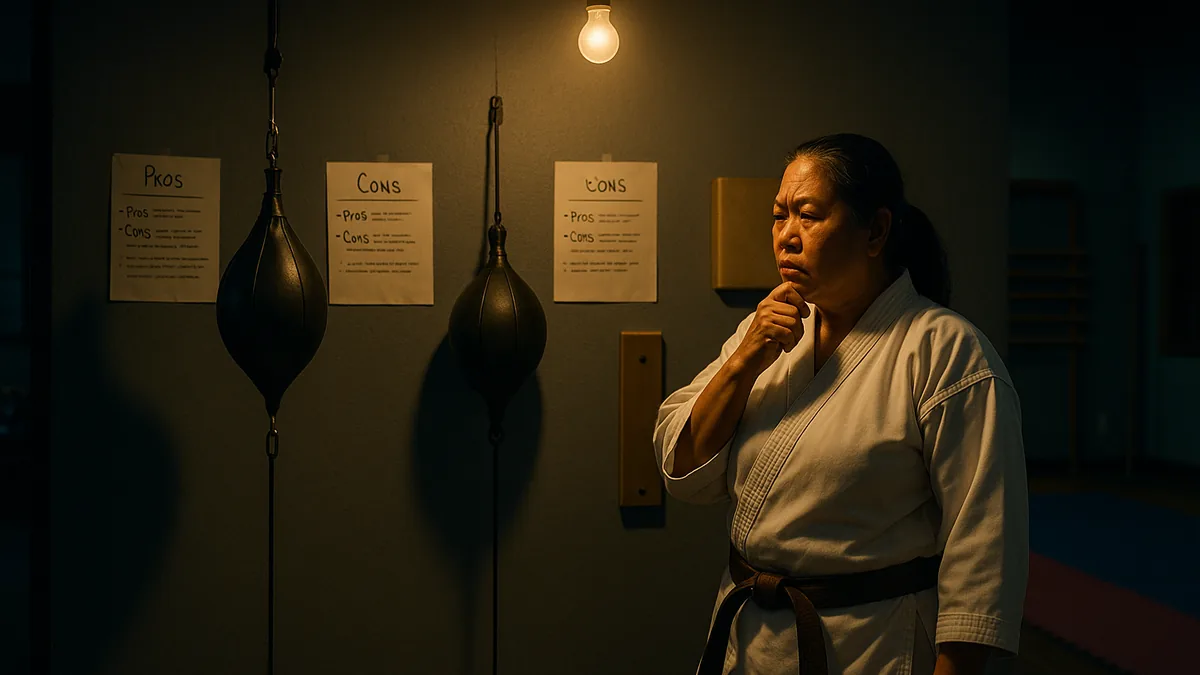
Where I’ve changed my own view over the years is on the question of transfer. I used to think any coordination or timing work was broadly useful. I’m more sceptical now. I think the transfer from boxing-specific equipment to karate-specific technique is real but limited, and you have to be intentional about it. If you’re using a speed bag to feel like you’re training hard, you’re probably not getting much out of it. If you’re using a double-end bag to solve a specific timing problem you’ve identified in your sparring, that’s a different story.
Key Takeaways
- Use the speed bag for a specific corrective purpose - hand-eye coordination or visual tracking - not as a general warm-up. Set a goal, hit it, move on.
- The double-end bag is the most transferable of the three for karate. If you only add one piece of solo equipment to your training, this is the one I’d recommend.
- Wall targets are underrated for precision work. If your technique is accurate in the air but inconsistent on contact, a fixed wall target will show you exactly where the problem is.
- None of these replace partner work or makiwara. They’re supplementary tools for specific problems, not substitutes for the core of karate training.
- If you’re still developing your basic technique, prioritise fixed targets over moving ones. The feedback is cleaner and you won’t reinforce timing patterns that don’t match karate mechanics.
- Know what problem you’re solving before you buy anything. Equipment that doesn’t address a real gap in your training is just clutter - and it’s worth applying that same logic to everything else in your kit, from training gloves to the bag you carry to the dojo.
The weekly digest
New karate articles, once a week
One email every week with everything new on Karate Lifestyle. No spam; unsubscribe in one click.
We'll email you to confirm. See our privacy policy.