Gumshields for Karate: Custom vs Boil-and-Bite and Why the Difference Matters More Than Most Clubs Tell You
Most clubs hand you a boil-and-bite gumshield at your first grading and never mention the subject again. I’ve been in enough dojos to know that’s just how it goes - the mouthguard gets lumped in with the list of mandatory kit, nobody explains why it matters beyond “the rules say you need one,” and students spend years training with something that fits badly, gets spat out mid-sparring, and gives them false confidence about the protection they’re actually getting.
I want to change that, because I’ve seen what happens when people treat gumshields as an afterthought. And I’ve also seen what a difference the right one makes when someone finally takes it seriously.
Why This Conversation Doesn’t Happen Enough in Dojos
Part of the problem is that mouth injuries in karate are underreported. A chipped tooth, a cut lip, a bruised jaw - these things get shrugged off. “Part of training.” And they are, to a degree. But a lot of those injuries are preventable, or at least reducible in severity, with better protection.
I’ve noticed that the students who train through contact-heavy periods - tournament prep, regular jiyu-kumite, grading cycles where everyone’s a bit more tense and a bit less controlled - are the ones who start asking questions about gumshields. Not because they’ve read about it, but because they’ve had a close call. Taken a punch to the face that rattled something. Felt their mouthguard shift at the wrong moment.
That’s usually when the conversation starts. I’d rather it started earlier.
What You’re Actually Protecting Against
Before getting into the custom vs boil-and-bite comparison, it helps to understand what a gumshield is actually doing, because most people think it’s just about stopping a tooth from getting knocked out. That’s part of it, but it’s not the whole picture.
A properly fitted gumshield cushions impact across the jaw. When you take a hit to the chin or the side of the face, the force travels through the jaw and up into the skull. A gumshield that fits well distributes that force more evenly and reduces the transmission. A gumshield that’s loose, or too thin, or poorly shaped for your bite, does significantly less of that work.
It also protects your teeth from each other. A hard impact can make your jaw snap shut with real force - and your own teeth are more than capable of causing damage when that happens. The gumshield acts as a buffer between upper and lower jaw.
And then there’s the soft tissue. Lips, cheeks, the inside of your mouth - a well-fitted guard keeps those surfaces away from the edges of your teeth under impact.
Boil-and-Bite: What It Actually Does and Where It Falls Short
I used boil-and-bite gumshields for the first eight years of my training. I’m not dismissing them. For a lot of practitioners - especially those training in a non-contact or light-contact environment - they’re a reasonable option. But I want to be honest about their limitations, because I don’t think clubs are.
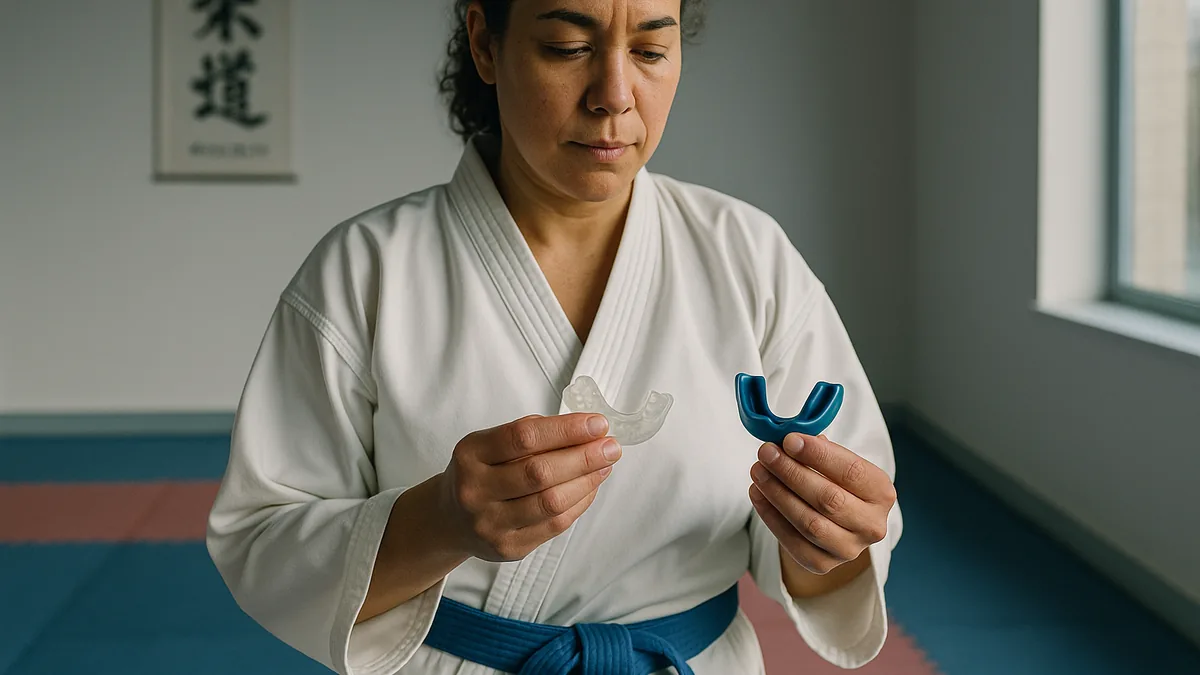
The boil-and-bite process works by softening a thermoplastic material in hot water, then biting into it to create an impression of your teeth. In theory, this gives you a personalised fit. In practice, the fit is only as good as the impression you make in the moment, and most people - especially first-timers - don’t do it particularly well.
I’ve seen students bite too hard and create a guard that’s too thin in the impact zones. I’ve seen people not push the material far enough into the gaps between teeth, leaving air pockets that make the guard feel loose within a few sessions. And the material itself, even when the impression is done correctly, degrades faster than custom material does. After a few months of regular training, a boil-and-bite guard starts to feel different from how it did on day one.
The biggest issue I see with boil-and-bite guards is that students keep them in their bag for years without replacing them. The material compresses, the fit loosens, and they’re essentially training with a piece of plastic that’s doing a fraction of what it should. If you’re going to use a boil-and-bite, replace it regularly - every six months is a reasonable guideline for anyone training two or more times a week.
One mistake I see often is students who complain that their gumshield “falls out” during sparring, then either train without one or clench their jaw to hold it in. Clenching to hold a guard in place is genuinely counterproductive. It creates tension through your jaw and neck, affects your breathing, and - this is the part that took me a while to really feel for myself - it changes the way you receive impact. You want your jaw to be relaxed but protected, not braced. If you’re clenching, your guard doesn’t fit properly.
Custom Gumshields: What the Difference Actually Feels Like
I got my first custom gumshield made about seven years into my training, and the immediate reaction was something like embarrassment that I’d waited so long. The fit is genuinely different. It sits in place without any effort. You don’t think about it. And that matters more than it sounds.
When you’re not thinking about your gumshield, you’re thinking about your sparring. You’re breathing properly through your nose. You’re not adjusting it between combinations or fishing it off the floor after a clash. The mental overhead disappears.
The process involves taking an impression at a dental practice - either your regular dentist or a sports dentist - which is then sent to a lab. The resulting guard is made from a laminated material that’s denser and more durable than boil-and-bite thermoplastic, and it’s shaped precisely to your teeth and gum line. When it’s in, it feels like it belongs there. A boil-and-bite, even a well-fitted one, feels like something you’re wearing. A custom guard, after the first couple of sessions, you barely notice.
The protection level is also meaningfully better. The material is thicker where it needs to be - typically across the front and at the sides - without being bulky in a way that makes it hard to breathe or speak. I’ve trained in custom guards at around 3-4mm thickness and they don’t interfere with calling out techniques or communicating with a partner. Some of the bulkier boil-and-bite options are thicker overall but inconsistently so, which gives you less protection in the areas that matter.
You’ll feel the difference most clearly if you take any kind of contact to the face. With a well-fitted custom guard, there’s a sense of the impact being absorbed rather than just blocked. It’s hard to describe precisely, but it’s a more distributed feeling - less of a sharp jolt, more of a cushioned thud. With a loose boil-and-bite, you feel the hit and then you feel the guard shift, which is its own unpleasant sensation.
The Cost Argument - And Why I Think It’s Weaker Than People Claim
Custom gumshields cost more. That’s real. Depending on where you go, you’re looking at somewhere between £40 and £150 for a custom guard versus £5 to £25 for a decent boil-and-bite. For a junior student whose jaw is still growing, or someone who’s just started and isn’t sure how committed they are, the cost argument has genuine weight.
But I’d push back on it for anyone who’s been training for more than a year and is doing regular contact work. You’re going to replace a boil-and-bite two or three times a year if you’re training properly. Over two years, the cost difference narrows considerably. And one dental injury - a chipped tooth, a root canal, anything structural - will cost you more than a custom guard ever would.
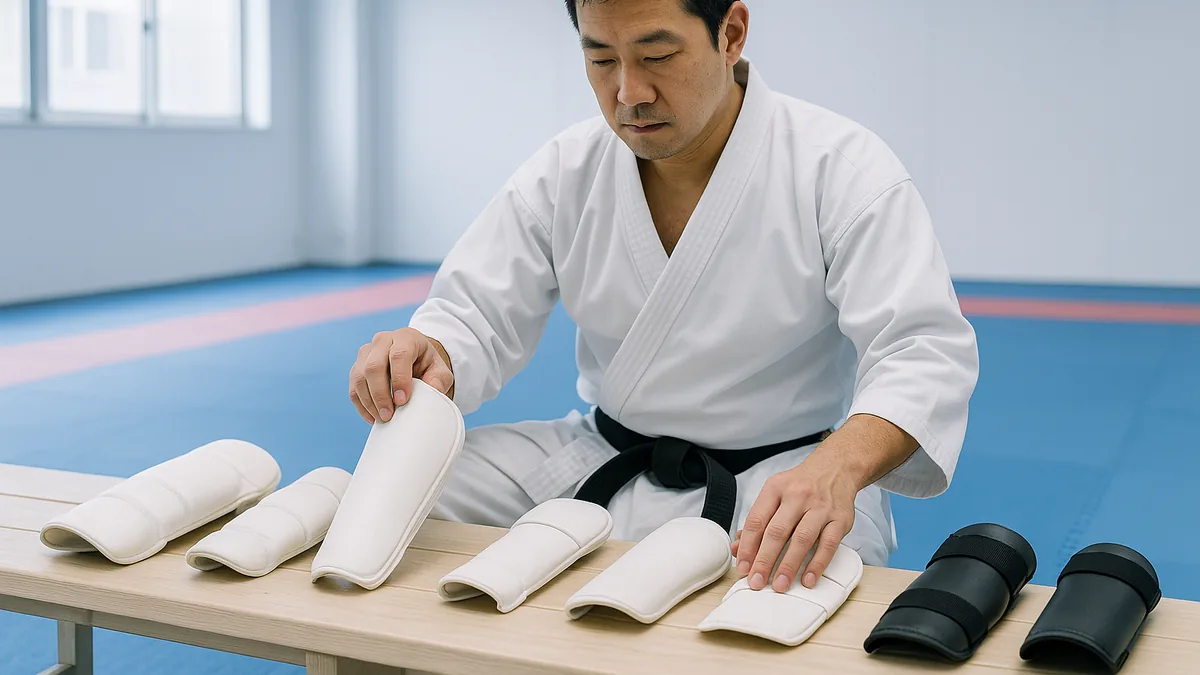
What I tell students is this: if you’re serious enough about karate to be thinking carefully about your training gloves or your shin guards, you should be serious about your gumshield. It protects something you can’t replace. Your teeth aren’t like a piece of equipment you can upgrade later.
When Boil-and-Bite Is the Right Call
I want to be fair here, because I’ve seen the opposite mistake too - practitioners who feel they need to spend money on the best of everything before they’ve established a consistent training habit.
Boil-and-bite is fine for:
- Beginners in the first six to twelve months of training who are doing minimal or no contact sparring
- Junior students whose jaw and teeth are still developing (custom guards need to be remade as the jaw changes)
- Students training in a kata-focused environment where contact is very limited
- Anyone who needs a temporary option while waiting for a custom guard to be made
If you’re in any of those categories, buy a mid-range boil-and-bite from a reputable brand, follow the fitting instructions carefully, and replace it when it starts to feel loose. Don’t buy the cheapest one you can find - there’s a meaningful quality difference even within the boil-and-bite category, and the very cheap options are barely better than nothing.
Getting the Most Out of Either Type
Regardless of which you’re using, fit matters more than brand. A well-fitted boil-and-bite will outperform a badly fitted custom guard, though a badly fitted custom guard is rare if you’ve used a proper dental impression.
A few things I’ve noticed over the years that apply to both:
- Clean your gumshield after every session. This sounds obvious but I’ve seen guards that are genuinely grim. Bacteria build up fast, and a guard you’re reluctant to put in because of how it smells is a guard you’re not going to wear consistently.
- Store it in a case with ventilation. Sealing a wet guard in an airtight container is a good way to grow things you don’t want near your mouth.
- Don’t leave it in direct heat. Car dashboards in summer, hot water - these will warp the material and ruin the fit.
- Check the fit regularly. If it feels different from how it did when new, it probably needs replacing or remaking.
The same applies to the rest of your protective kit. I’d encourage you to think about your gumshield the same way you’d think about any other piece of protective equipment - your target pads need to be in good condition to work properly, and so does your mouthguard.
Community Perspective
There’s a genuine split on this in most dojos I’ve trained in. Traditionalist instructors sometimes push back on the idea of spending money on custom equipment, treating it as overcautious or unnecessary for the level of contact in most karate training. I understand that view - karate isn’t boxing, and most club sparring isn’t designed to produce the kind of impact that would test a gumshield to its limits.
But I’ve also trained in clubs where the contact is real and consistent, where grading panels expect you to hold your ground under pressure, and where tournament prep involves proper full-contact rounds. In those environments, the traditionalist argument gets thin quickly.
The other split is between instructors who treat gumshields as mandatory kit and those who treat them as optional for non-contact sessions. I’m firmly in the mandatory camp for anything involving a partner and any possibility of face contact. The problem with “optional for light contact” is that light contact has a way of becoming less light when adrenaline is involved or when someone misjudges a technique. I’ve seen it happen in what were supposed to be controlled drills.
I’ve also noticed that senior practitioners who’ve trained for decades tend to take gumshields more seriously than intermediate-level students, not less. The people who’ve been around long enough to have had or witnessed a significant mouth injury don’t take chances. That pattern tells you something.
Key Takeaways
- If you’re doing regular contact sparring and you’re still using a boil-and-bite you bought years ago, replace it now. A degraded gumshield is not meaningfully better than no gumshield.
- Custom gumshields are worth the investment for anyone training consistently in a contact environment. The fit difference is real, the protection difference is real, and the mental overhead of not thinking about your gumshield during sparring is more valuable than it sounds.
- If you’re using boil-and-bite, the fitting process matters. Take your time with it, follow the instructions, and if the result feels loose, redo it or buy another one and try again.
- Never train with a gumshield you have to clench your jaw to hold in place. If you’re doing that, your guard doesn’t fit and you’re creating tension that affects your technique and your ability to absorb impact properly.
- Replace boil-and-bite guards every six months if you’re training two or more times a week. The material compresses and the fit degrades faster than most people expect.
- Think about your gumshield the same way you’d think about the rest of your protective kit. Just as you’d choose your gi or your shin guards with some care, apply the same thinking here. Your teeth are the one piece of equipment you genuinely cannot replace.
The weekly digest
New karate articles, once a week
One email every week with everything new on Karate Lifestyle. No spam; unsubscribe in one click.
We'll email you to confirm. See our privacy policy.