Karate Gi Shrinkage: How Much to Expect, How to Minimise It, and Whether to Size Up When Buying
Most karateka get their first gi, throw it straight on, train in it for a few sessions, then wash it and discover it now fits like a crop top. The shrinkage was always going to happen. It just was not flagged at the point of purchase, and now you are either squeezing into it or shopping for a replacement. This guide exists to stop that from happening to you.
Gi shrinkage is not a defect. It is a predictable property of the fabrics used, and once you understand how it works, you can account for it before you spend your money rather than after.
Why Gi Fabric Shrinks in the First Place
The vast majority of karate gi are made from cotton, cotton-polyester blends, or canvas-weight cotton. Pure cotton is the main culprit for shrinkage, and the reason comes down to how the fibres behave when exposed to heat and moisture.
Cotton fibres are twisted and stretched under tension during the weaving process. When the finished fabric is washed in warm or hot water - and especially when it goes through a tumble dryer - those fibres relax back toward their natural, shorter state. The result is a garment that is measurably shorter and narrower than it was before washing. This is not poor quality control. It is just what cotton does.
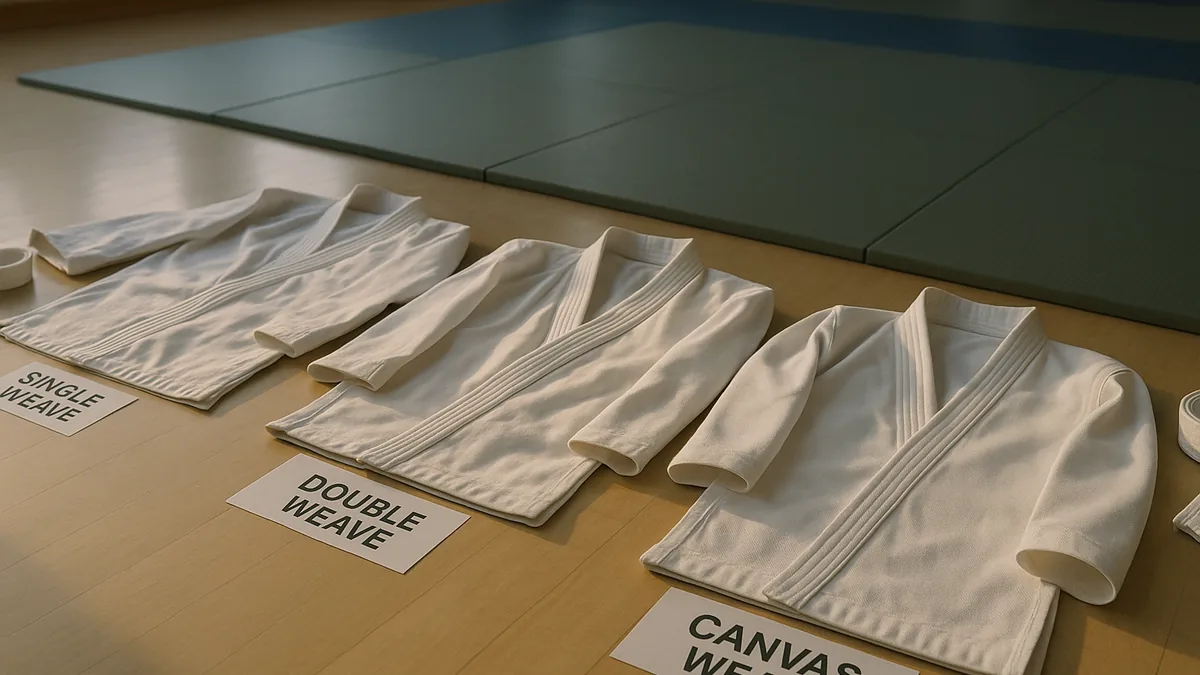
The weave type affects how much this matters in practice. A lightweight single-weave gi has less material to shrink and will often come out of the wash feeling significantly different from how it went in. A heavier double-weave or canvas-weave gi shrinks by a similar percentage, but because there is more material overall, the absolute change in fit can feel less dramatic. If you are weighing up weave types, our guide to karate gi tops: single weave vs double weave vs canvas weave covers how the construction affects not just shrinkage but durability and performance in training.
Polyester content reduces shrinkage noticeably. A gi that is 35% polyester will shrink considerably less than a 100% cotton equivalent. Competition-focused gi from brands like Tokaido, Shureido, and Hirota are typically high-cotton or full-cotton for the weight, feel, and sound of movement that tournament judges and experienced practitioners prefer - but that comes with greater shrinkage to manage.
How Much Shrinkage to Actually Expect
The typical figure for a standard cotton karate gi washed at 40 degrees Celsius and line-dried is 3 to 5 percent in the first wash.1 For comparison, common cotton fabric (depending on weave and treatment) can shrink anywhere from 4 to 10 percent under less controlled conditions, and untreated cotton can exceed that.1 The 3 to 5 percent figure is a reasonable working estimate for a moderate-temperature wash with no tumble drying, but it is not a hard ceiling.
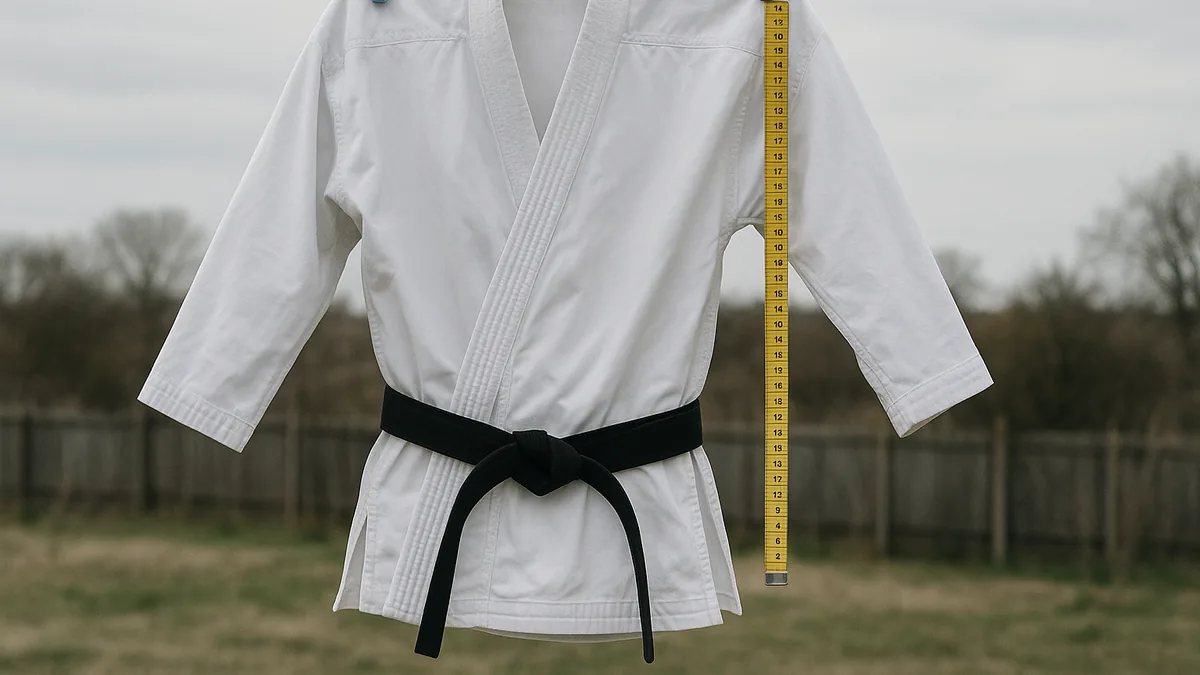
What does 3 to 5 percent mean in practice? On a gi jacket with a sleeve length of 65cm, a 5% shrink means losing around 3.25cm. On a trouser leg of 95cm, the same percentage takes off nearly 5cm. That is the difference between a correctly fitting gi and one that looks like you borrowed it from a smaller training partner.
The first wash produces the most dramatic change.1 Subsequent washes continue to shrink the fabric slightly, but the rate drops off quickly. By the third or fourth wash, most of the shrinkage potential has been exhausted, and the gi stabilises. This is why the first wash matters so much - and why what you do in that first wash determines the final fit.
Higher wash temperatures accelerate and increase shrinkage.1 Tumble drying adds further shrinkage on top of whatever the wash produced. The combination of a hot wash and a tumble dryer is the fastest way to turn a correctly fitting gi into something unwearable.
Pre-Washing Before First Use: The Step Most People Skip
The single most useful thing you can do when a new gi arrives is wash it before you ever train in it.
The logic is straightforward: if shrinkage is going to happen, you want it to happen before you have committed to a fit. Pre-washing lets the fabric do most of its shrinking in a controlled situation, so when you try the gi on after that first wash, what you are feeling is close to the settled, stable fit you will have from that point forward.
The correction that makes the biggest difference here is temperature control. Wash the gi at 30 to 40 degrees Celsius, inside out, with no other garments that might cause friction damage. Do not use a hot wash for the pre-wash thinking you will get all the shrinkage done at once - you will, but you will also stress the fabric and potentially damage the stitching prematurely. A moderate temperature wash achieves most of the shrinkage without the additional wear.
After washing, line-dry rather than tumble-dry. The fabric will have a slightly stiffer, denser quality compared to a tumble-dried gi, and it will hold its shape better over time. Tumble drying is faster, but it continues to shrink and stress the cotton fibres with every cycle. If you tumble-dry a gi repeatedly, you are shortening its lifespan as well as its dimensions.
Some practitioners pre-wash twice before training in a new gi. This is not excessive if you are particularly concerned about fit, especially with a higher-end gi where the investment justifies extra care. By the second wash, the fabric has usually settled close to its final dimensions.
Should You Size Up When Buying?
This is where the answer depends on what you actually want from your gi.
The standard advice - size up to account for shrinkage - is reasonable but incomplete. Whether you should size up depends on three things: the fabric composition of the gi, how you intend to wash and dry it, and whether you prefer a fitted or a relaxed cut.
We would recommend this approach: check whether the gi you are buying is described as pre-shrunk. Some manufacturers, particularly at the budget end, pre-wash their fabric before cutting and sewing, which significantly reduces post-purchase shrinkage. Note that “pre-shrunk” does not mean zero subsequent shrinkage - a residual 2 to 5 percent after the first few home washes is still common with pre-treated fabric. If the gi is pre-shrunk, buying your standard size and pre-washing at home should give you a stable fit without needing to go up a size.
If the gi is not pre-shrunk - and most mid-range to high-end cotton gi are not - then sizing up by one size is a sensible default, particularly for jackets, where sleeve length is the most unforgiving dimension. Trouser lengths are easier to manage because most gi trousers use a drawstring waist that accommodates some variation, and many practitioners hem their trousers anyway.
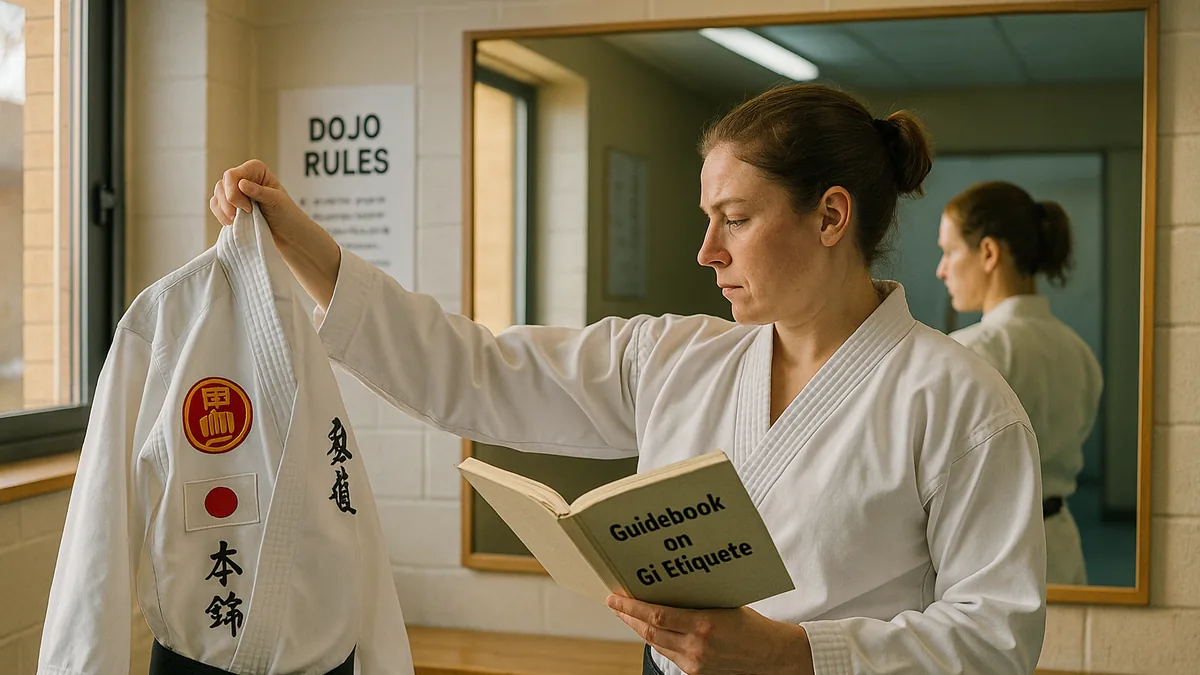
A common mistake is buying a gi that fits perfectly straight out of the bag and then being surprised when it no longer fits after washing. This happens because the fit before washing is not the fit you will have in training. The gi you try on in the shop or assess from a size chart has not yet shrunk. You are buying a pre-shrink gi, and you need to account for what comes next.
The counterargument to always sizing up is that a gi that is too large looks sloppy and can actually interfere with technique. Excess fabric around the sleeves and collar can bunch during grabs in kumite, and a jacket that is too wide across the shoulders sits awkwardly and does not move cleanly. Fit matters for function as well as appearance - and if you are competing, presentation is part of the picture. Under the WKF Kumite Competition Rules 2026, the jacket sleeves must be no longer than the bend of the wrist and no shorter than halfway down the forearm; trousers must cover at least two-thirds of the shin and must not reach below the anklebone. The same requirements apply under the WKF Kata Competition Rules.2 A gi that is slightly too large after pre-washing can therefore become a compliance issue at a graded competition. If you are considering embroidery or club patches on your gi, our guide to karate gi patches and embroidery is worth reading before you commit to a size, since alterations after embroidery are more complicated.
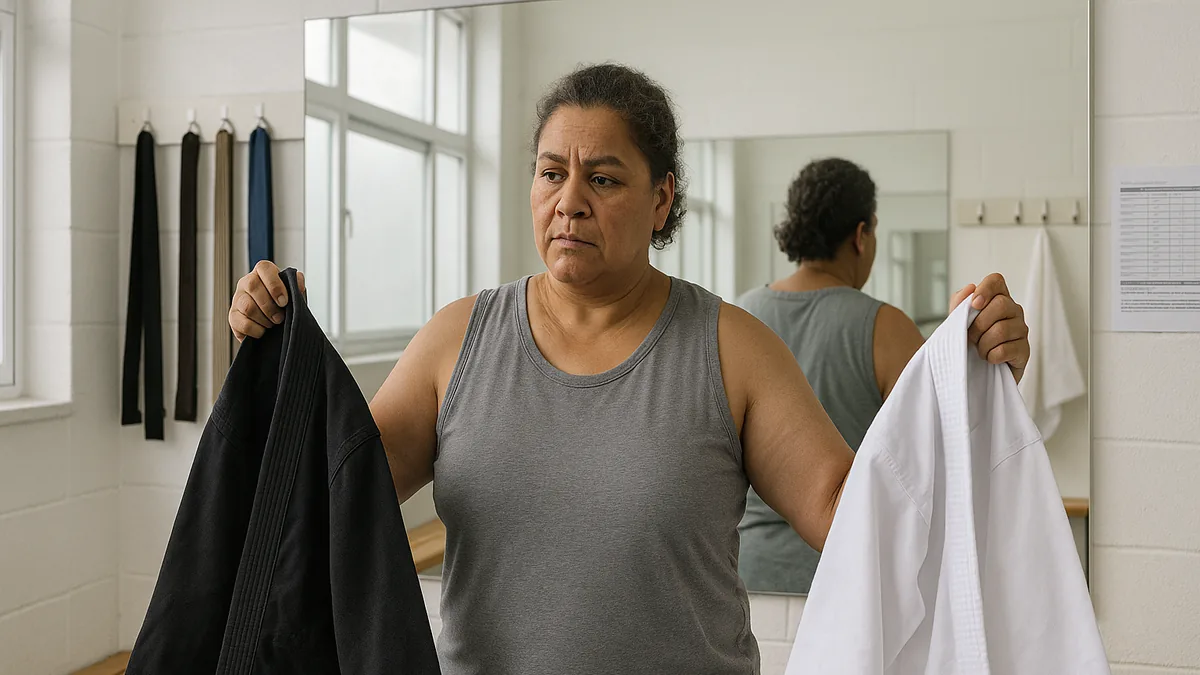
The practical answer: pre-wash first, then assess the fit. If you are ordering online without trying first, size up by one, pre-wash before training in it, and assess. If it is slightly large after washing, that is manageable. If it is too small, you are replacing it.
Washing Habits That Protect Your Gi Long-Term
Once the gi has been pre-washed and the initial shrinkage has occurred, the goal shifts to maintaining the fit and fabric quality through consistent washing habits.
- Wash at 30 to 40 degrees Celsius as standard. Reserve higher temperatures for hygiene concerns, not routine washes.
- Line-dry wherever possible. If you must use a tumble dryer, use a low heat setting and remove the gi while it is still slightly damp, then allow it to finish drying on a hanger.
- Wash inside out to protect the outer surface of the fabric and reduce pilling.
- Avoid fabric softener on a gi. Research from Virginia Tech found that rinse-cycle fabric softener significantly decreased both water vapour transmission and air permeability in 100% cotton test fabrics.3 The effect on a heavy gi weave may be less pronounced, but reduced breathability is not what you want from a training garment.
- Wash after every session. Bacteria metabolising sweat residue on unwashed fabric produce odour compounds that are very difficult to remove once established.4
Community Perspective
One genuinely contested area is whether a gi should fit snugly from the start or be bought with room to spare. Practitioners who come from a sport karate background - particularly those competing under WKF rules - often prefer a closer fit for aesthetic reasons and because the rules specify precise sleeve and trouser dimensions.2 A gi that ends up slightly too large after pre-washing can put you outside those tolerances at a graded competition.
Traditional dojo practitioners often take the opposite view: a slightly roomier gi allows freer movement through the full range of kata technique, particularly in the shoulder and hip. There is something to this. A gi that pulls across the back when you execute a full gedan barai is a fit problem, not a technique problem - but it is easy to confuse the two.
The disagreement about tumble drying is also real. Some practitioners deliberately tumble-dry a new gi to force the maximum shrinkage upfront, then size up to account for it. This works, but it does accelerate fabric wear. Whether that trade-off is worth it depends on how long you expect the gi to last and whether you are prepared to replace it sooner. For a training gi you will use five days a week, fabric longevity matters. For a competition gi used sparingly, the approach is more defensible.
Key Takeaways
- Expect 3 to 5 percent shrinkage from an unwashed cotton gi washed at moderate temperature and line-dried.1 On a standard adult gi, that translates to several centimetres across the sleeves and trouser legs - enough to change the fit significantly. Hotter washes or tumble drying can push shrinkage higher.
- Pre-wash your gi before the first training session. Wash at 30 to 40 degrees and line-dry. This exhausts most of the shrinkage potential before you commit to the fit.
- If buying online without trying first, size up by one - particularly for the jacket. After pre-washing, assess the fit before deciding whether it works.
- Avoid hot washes and tumble drying as a routine. Both accelerate shrinkage and degrade the fabric faster than necessary.
- Check whether the gi is described as pre-shrunk before deciding whether to size up. Pre-shrunk gi still retain some shrinkage potential - typically 2 to 5 percent after home washing.
- The fit that matters is the post-wash fit, not the fit straight out of the bag. Do not be reassured by a gi that feels perfect before its first wash.
References
Checked by the KarateLifestyle editorial team against WKF official competition rules documents (2026 editions), textile science sources, and a peer-reviewed university thesis on fabric softener effects in October 2026. Shrinkage percentages vary with weave, treatment, and laundering conditions; the 3 to 5 percent figure cited is the consensus first-wash estimate under moderate conditions, not an absolute ceiling.
- Does Cotton Shrink? (FAQ: Does 100% cotton shrink every time you wash it?). Sino Silk, 2025. Textile manufacturer knowledge base. Cited for the 3 to 5 percent first-wash shrinkage figure and the observation that subsequent washes produce less shrinkage.
- WKF Kata Competition Rules, Version 2026.0. World Karate Federation, 2026. Official rules document. Cited for the same gi dimension requirements applying in kata competition.
- The Effects of Household Fabric Softeners on the Thermal Comfort and Flammability of 100% Cotton and 100% Polyester Fabrics. Virginia Polytechnic Institute and State University (Virginia Tech), thesis. Cited for the finding that rinse-cycle fabric softener significantly decreased water vapour transmission and air permeability of cotton fabrics.
- The Bacterial Life Cycle in Textiles is Governed by Fiber Hydrophobicity. Callewaert et al., mBio / PubMed Central, 2021. Peer-reviewed research. Cited for the finding that bacterial metabolisation of sweat and sebum residue on unwashed fabric produces odour compounds.
The weekly digest
New karate articles, once a week
One email every week with everything new on Karate Lifestyle. No spam; unsubscribe in one click.
We'll email you to confirm. See our privacy policy.