Karate Gi Patches and Embroidery: What Is Acceptable, What Looks Amateur, and How to Get It Done Properly
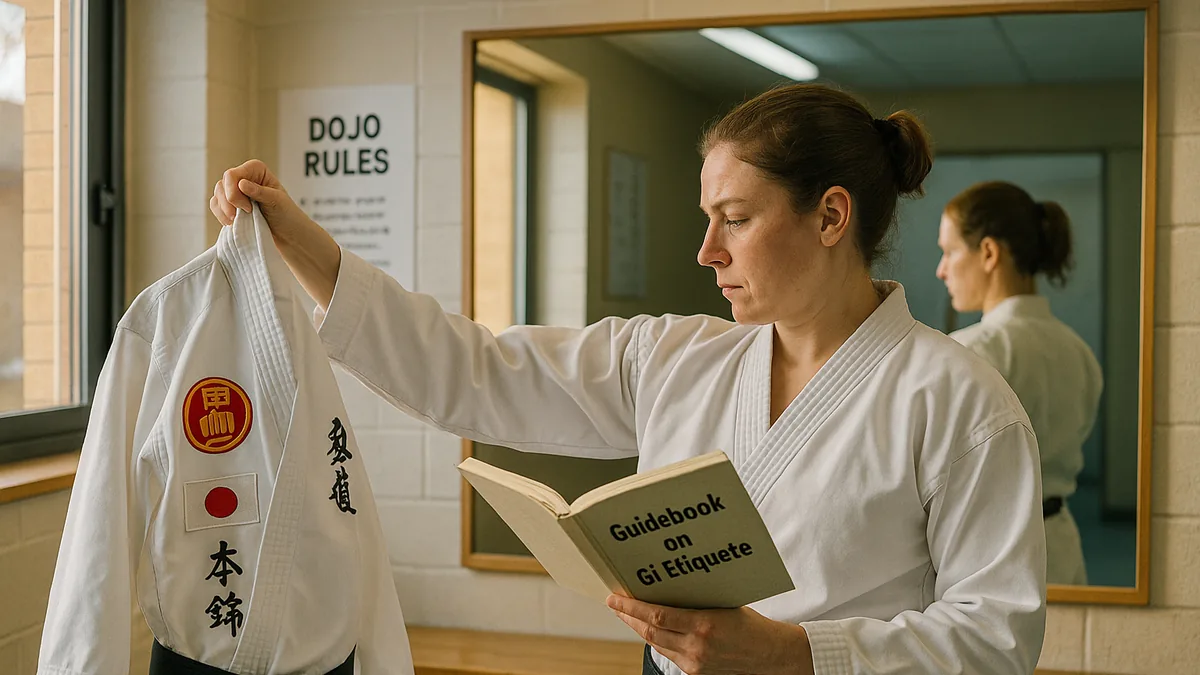
I’ve seen grown adults turn up to a national squad training day with a gi that looked like a NASCAR sponsorship deal. Flag patch on the shoulder, association badge on the chest, club badge on the lapel, and - I’m not making this up - a dragon embroidered across the back in gold thread. The instructor running the session didn’t say a word about it directly. He just kept glancing over, and by the third session that gi had been quietly retired to the bag. That practitioner was embarrassed, and they should have been - not because patches are wrong, but because nobody had ever told them what acceptable actually looks like, and they’d made their own rules up.
That’s what this is about. Not a rulebook. What I’ve actually seen work, what I’ve seen go badly wrong, and what I tell students when they ask.
Your Dojo Rules Come First, Always
This should be obvious, but I’ve noticed it isn’t. Students - especially those who’ve trained at multiple clubs or come in from another style - often assume that what was acceptable at their last dojo carries over. It doesn’t. Patch and embroidery rules are set at dojo level, association level, or both, and they vary enormously.
Some associations are rigid. Shotokan organisations affiliated with major national bodies often specify exactly what can appear on the gi, where it sits, and what dimensions it can be. I’ve graded under panels where an incorrectly positioned badge would get you a quiet word before you even bowed in. Other clubs are relaxed - a Kyokushin gym I trained at for a spell didn’t care what you put on your gi as long as you showed up and worked hard.
What I tell students is: before you spend money on embroidery, ask your instructor. Not “is it okay to have patches?” but specifically “what does the association allow, and where?” Get the answer in writing if you can, because instructors sometimes say yes and then the chief instructor says no at a grading.
The questions worth asking:
- Does the association have an approved logo, and must it appear on the gi?
- Are there restrictions on which lapel or sleeve patches can go on?
- Is there a size limit for embroidery?
- Are custom personal emblems permitted at your grade?
- What happens at interclub events or competitions - do different rules apply?
If you’re competing under a national association, check their rulebook directly. I’ve seen competitors turned away from the mat because their gi didn’t comply with competition regulations, and that’s a horrible feeling after months of preparation. The karate gi colours article covers related territory on what associations permit visually - worth reading alongside this.
What Actually Looks Good Versus What Looks Like a Mistake
Here’s my honest opinion: less is almost always better. A clean white gi with one well-placed embroidered club badge and your name on the other lapel looks professional. It looks like you’ve been doing this long enough to know you don’t need to advertise it.
The mistake I see constantly - and it comes from a genuine place, usually enthusiasm - is treating the gi like a canvas. New practitioners who’ve just found a style they love, or who’ve come from a background where customisation was the norm, want the gi to express something. I understand that impulse. But the gi is already expressing something. It’s expressing that you belong to a tradition, you respect the dojo, and you’re here to train. Every patch you add that isn’t sanctioned by your instructor is quietly saying something else.
Placement That Works
The standard positions that most associations accept, and that look clean:
- Left chest lapel - club or association badge, embroidered or sewn patch
- Right chest lapel - your name, in English or Japanese
- Left sleeve, upper - national flag, if your association uses them
- Right sleeve, upper - style or federation logo
That’s it. That’s the full gi in most traditional contexts. Anything beyond that needs a very specific reason - usually a competition requirement or a senior instructor’s explicit instruction.
What Looks Amateur
I’m going to be direct here because I’ve had to have this conversation with students and it’s always awkward.
Anything on the back of the gi looks wrong in a traditional context. Full stop. I don’t care how good the embroidery is. The back of a karate gi is not a billboard. I’ve seen club names embroidered across the shoulder blades in six-inch lettering, and it looks like a football kit that wandered into the wrong sport.
Coloured thread that doesn’t match the gi or the badge palette looks cheap even when it isn’t. Gold thread on a white gi can work for a single badge. Gold thread on three separate patches starts to look like you’re auditioning for a Vegas show.
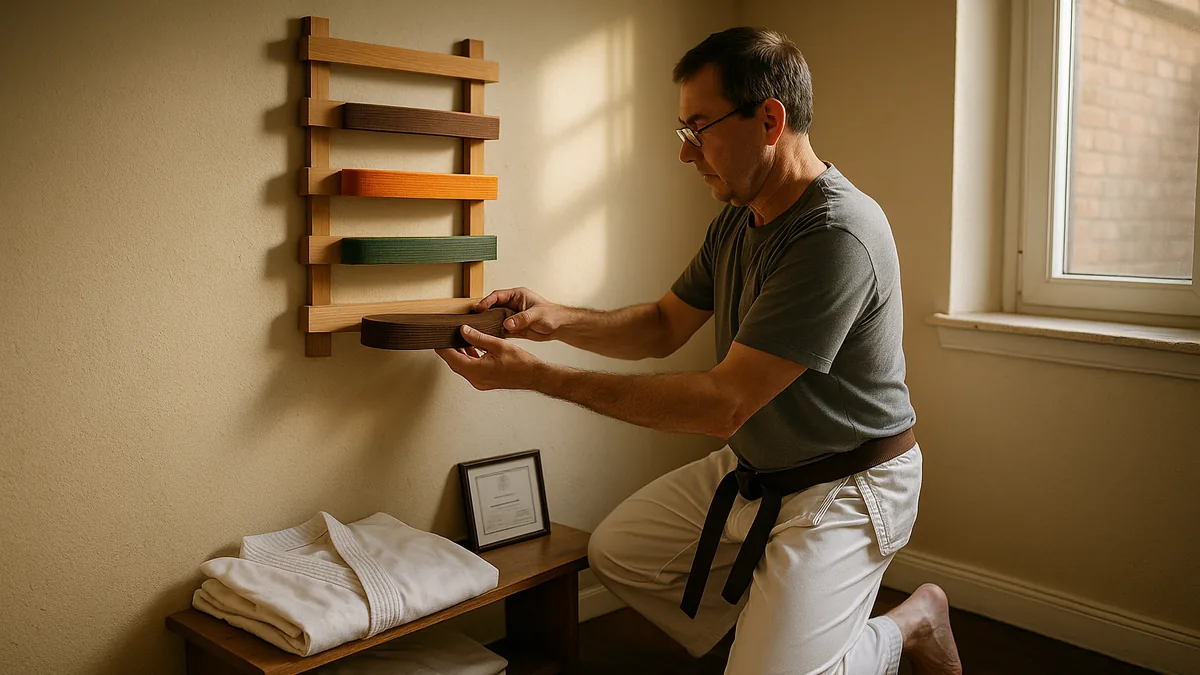
Rank-based embroidery is a specific area where people go wrong. I’ve seen students embroider their current kyu rank onto their gi, which is a peculiar choice - your rank changes, the embroidery doesn’t, and you’ll be explaining to everyone why your gi says 4th kyu when you’re about to grade for brown belt. If you want to acknowledge rank on the gi, the belt does that job. The belt is the whole point of the belt. If you’re interested in how rank is treated with respect outside of training, the article on karate belt display and storage covers that well.
Choosing Designs That Actually Reflect Your Training
I used to think personalising your gi was about standing out. By the time I was approaching black belt, I understood it was about fitting in correctly - belonging to something specific, representing it accurately, and not putting anything on the gi that you haven’t earned or that your instructor hasn’t sanctioned.
If your club has an official badge, use that. If the badge has a specific thread colour specified by the manufacturer or the association, use that colour. Don’t approximate it. I’ve seen club badges embroidered in slightly-off colours because the embroiderer “matched it by eye” and the result looks wrong next to the official woven patch on the instructor’s gi. It’s a small thing that registers immediately to anyone paying attention.
For name embroidery - which I think is perfectly appropriate and looks good when done right - keep it simple. Your surname in block capitals on the right lapel, in black thread on a white gi, is clean and readable. Some styles use Japanese script for names, which looks excellent when done by someone who knows what they’re doing and looks catastrophic when they don’t. I’ve seen names in katakana that were phonetically wrong, which is the kind of thing a Japanese instructor will notice and quietly wince at every time they look at you.
If you’re a senior practitioner with the authority to have a personal emblem - a calligraphic character, a style-specific symbol - that’s a different conversation. But that’s not a beginner’s question, and if you’re asking whether you’re senior enough to have one, you probably aren’t yet.
Finding Embroidery Services That Won’t Let You Down
This is where I’ve made actual mistakes, so I’ll save you the same experience.
The cheapest option is almost never the right option for gi embroidery specifically. A standard embroiderer who works on workwear and sports kits isn’t necessarily equipped for the fabric weight and weave of a karate gi, especially a heavier competition gi. I’ve had embroidery done on a 14oz gi where the backing material puckered the fabric around the badge because the machine tension wasn’t adjusted correctly. It looked fine hanging up. The moment you moved, you could feel the stiffness and see the distortion. That gi was expensive and the embroidery ruined it.
What actually works:
Use martial arts specialists where possible. Several UK suppliers who sell gi also offer embroidery services calibrated for the fabric. They know the placement standards, they often have association logos on file, and they understand what “left lapel, 3cm from the edge” means without you having to explain it.
Get a sample or reference image before committing. Any reputable service will show you a digital proof before they run the job. If they won’t, find someone who will. Embroidery is permanent. A proof costs them five minutes and saves you a ruined gi.
Ask specifically about thread quality and backing. The backing material used on the underside of embroidery affects how the gi feels and how the fabric moves. A quality backing is thin and flexible. A cheap backing is stiff and you’ll feel it against your skin in a clinch or when you’re working on the ground.
Check turnaround time before a grading. I’ve seen students order embroidered gis two weeks before a grading and receive them the day after. If a grading or competition is coming up, build in at least three weeks and confirm the timeline explicitly.
If you’re still in the process of choosing your gi and haven’t committed to one yet, the best karate gi for beginners guide and the budget vs mid-range vs premium comparison are worth reading first - because the quality of the base gi matters as much as the quality of the embroidery on top of it.
Community Perspective
This is genuinely an area where dojos disagree, and I think it’s worth acknowledging that honestly.
Traditional Shotokan and Wado-Ryu clubs tend to be strict. The gi is a uniform, not a personal statement, and that view is enforced consistently. I’ve trained in dojos where even a flag patch required explicit permission from the chief instructor.
Kyokushin and some sport karate environments are more relaxed about this. Patches from tournaments attended, federation logos, sponsor patches at elite level - these are all accepted without much friction. The culture is different and the gi reflects that.
Where I’ve seen the sharpest disagreement is around junior practitioners wearing personalised gi. Some instructors feel strongly that children should be in plain association-standard gi until they’re senior enough to have earned personalisation. Others think it builds connection to the art early. I’ve changed my view on this over the years. I used to think it didn’t matter for juniors. Now I think the discipline of wearing a clean, standard gi teaches something that’s hard to teach any other way - that the training is the point, not how you look while you’re doing it.
Key Takeaways
- Ask your instructor and check your association rulebook before spending a penny on embroidery - rules vary and ignorance isn’t an excuse at a grading
- One or two well-placed, correctly specified badges will always look better than a gi covered in patches, regardless of how good the individual patches are
- Use martial arts specialist embroiderers who understand gi fabric weights and placement conventions - a general embroiderer can damage an expensive gi
- Name embroidery is almost always acceptable and looks professional when done in the right thread colour and font - keep it simple
- Never embroider your current kyu rank onto the gi; your belt communicates rank, the gi communicates affiliation
- If you’re unsure whether something is appropriate, the answer is to wait and ask a senior - the gi you train in says something about your understanding of the art before you throw a single technique
The weekly digest
New karate articles, once a week
One email every week with everything new on Karate Lifestyle. No spam; unsubscribe in one click.
We'll email you to confirm. See our privacy policy.