Karate Gi Tops: Single Weave vs Double Weave vs Canvas Weave Explained for Practitioners Who Actually Train in Them
Most people pick their first gi based on price. That’s fine - nobody knows what they’re doing yet. But I’ve watched students train for two, three, four years in the wrong fabric weight for what they’re actually doing, and it holds them back in ways they don’t even notice. The gi isn’t just a uniform. The weight, the weave, the way it moves when you throw a technique - it all feeds back into how you train. Get it wrong and you’re fighting your own kit.
I’ve been through single weave, double weave, canvas, and a few oddities in between. I’ve worn them for gradings, competition, hard sweat sessions, and the kind of slow kata work where you’re moving at half speed for an hour. My opinions on them have changed significantly over the years, and I’ll tell you exactly where I landed and why.
Single Weave: What It Actually Feels Like to Train In
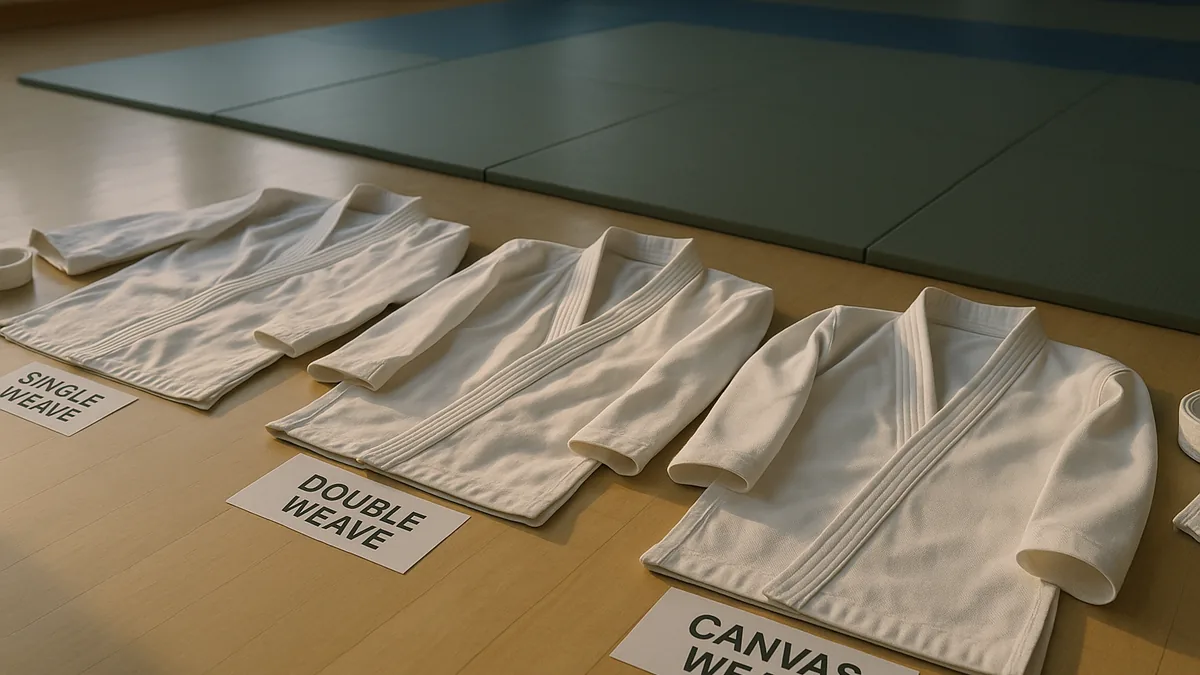
The single weave is the standard entry point, and there’s a reason for that. It’s lighter, it dries faster, and in a beginner class where you’re still figuring out how to stand correctly, it gets out of the way. You don’t notice it. That’s both its strength and its limitation.
I’ve noticed that most students who train in single weave for their first year don’t really register the gi at all - which is fine. But when they switch to something heavier later, there’s often a moment of genuine surprise. They feel the fabric resist slightly when they snap a punch, feel it pull when the sleeve catches air on a fast technique. That feedback is actually useful. The single weave doesn’t give you much of it.
What single weave does well:
- Comfortable in warm weather and poorly ventilated dojos
- Light enough that it doesn’t fatigue you during long sessions
- Affordable enough that replacing it when it wears out isn’t painful
- Packs small, which matters if you’re travelling to seminars
What it doesn’t do well is hold its shape under pressure. After a year of regular training, most single weave jackets start to stretch and distort around the collar, the sleeve cuffs, the lapel. I’ve seen students turn up to gradings in a gi that looks like it’s been through a tumble dryer for a decade - collar splayed, sleeves twisted - and it’s almost always a well-worn single weave. That matters more than people think. How your gi looks at a grading is part of the impression you make. If you want to read more about how kit presentation affects how you’re perceived, the article on Karate Gi Patches and Embroidery: What Is Acceptable, What Looks Amateur, and How to Get It Done Properly covers the visual side of this well.
Where Single Weave Makes Sense
For children, for beginners in their first six months, and for practitioners training in very hot conditions - single weave is the honest answer. I’d also say it’s fine for style-specific contexts where the gi isn’t a central part of the practice. But if you’re doing serious kata work, grading regularly, or training more than twice a week, you’ll outgrow it faster than you expect.
Double Weave: The One I Keep Coming Back To
I’ll be direct: double weave is my preference for regular training. It took me a few years to get there, but once I understood what I was actually looking for in a gi, the double weave answered most of the questions.
The weight is the first thing you notice. It’s heavier - noticeably so - and when you first put one on after training in single weave for a while, it feels like wearing a coat. That’s a common reaction from students I’ve moved up to double weave. They look slightly alarmed for the first five minutes. By the end of the class, most of them don’t want to go back.
Here’s what the weight actually does: it creates resistance. When you execute a clean, sharp technique, the fabric snaps with it. When you’re sloppy, it doesn’t. That snap - that crack of a clean kizami-zuki or a properly chambered gyaku-zuki - is partly technique and partly the gi responding to technique. In a single weave, a mediocre punch can still sound acceptable. In a double weave, the gi is honest with you.
The thing that actually changed my understanding was watching a senior student I respected at a regional seminar. His kata looked different to everyone else’s. Not flashier - more settled. And a big part of what I was seeing was the way his gi moved with him rather than around him. The fabric had enough weight to track the movement properly, to show where the energy was going. I started paying attention to gi weight after that.
Double weave also holds its shape far better. I’ve had the same double weave jacket for six years. The collar is still firm, the sleeves still sit correctly, and it looks presentable at gradings without special preparation. That’s not nothing when you’re turning up to assess students and you want your kit to reflect the seriousness with which you approach the practice.
The Downsides You Need to Know
Double weave is hot. In summer, in a dojo without airflow, wearing a double weave jacket is genuinely uncomfortable in a way that becomes distracting. I’ve trained through it and I’d do it again, but I won’t pretend it’s pleasant. If your dojo runs hot year-round, factor that in.
It also takes longer to dry. If you’re training three or four times a week, you need to plan for that - or have two gi. Which I’d recommend anyway, but that’s a separate conversation.
The weight also means it’s harder on beginners who are still building the conditioning to train properly. I don’t put new students in double weave. The extra physical demand isn’t worth it when they’re still learning to breathe correctly through a session.
Canvas Weave: Honest Assessment of an Underrated Option
Canvas weave sits in an interesting position that I think most practitioners don’t fully understand. It’s not simply a middle ground between single and double - it has its own character, and it suits a specific type of training very well.
The fabric is stiffer than either single or double weave, at least initially. When you first wear a canvas gi, it feels almost board-like. That stiffness softens with washing and use, but it never becomes as fluid as a double weave jacket. What you’re left with is something that has real structure - the kind of structure that holds its shape during grappling, throwing, or any practice where someone else has their hands on your lapels.
I’ve noticed that canvas weave tends to be underappreciated in purely striking-based styles and genuinely valued in anything that involves grab-and-throw elements. If your training includes ippon-kumite with grabs, or you cross-train with any judo or jujutsu elements, canvas handles that stress better than either single or double weave in my experience. The fibres are tighter and the fabric resists tearing more effectively when someone is pulling on your sleeve or lapel.
The snap on a canvas gi is different to a double weave - it’s crisper, almost sharper. Some practitioners prefer it. I find it slightly less satisfying than a well-broken-in double weave, but that’s personal preference. What I tell students who ask is to try both if they can before committing.
Canvas gi also tend to run heavier than double weave in some constructions, which compounds the heat issue. In a hot dojo, canvas is the most demanding option to train in from a pure comfort standpoint.
The Mistakes I See Practitioners Make
One mistake I see constantly is buying a gi based on what looks good in a product photo rather than what matches the training they’re actually doing. A student who trains primarily kata twice a week in a warm dojo doesn’t need a 14oz canvas gi. A competitor doing hard kumite sessions four times a week in a double weave that’s falling apart isn’t doing themselves any favours either.
The second mistake - and this one is more subtle - is buying cheap and then being surprised when the gi fails. There’s a real difference in how different price points perform over time, and if you’re training seriously, the cost per session on a quality gi is lower than you’d think. The article on Do Cheap Karate Gi Fall Apart? Budget vs Mid-Range vs Premium Brands Compared goes into this in detail and I think it’s worth reading before you make a decision purely on price.
The third mistake is treating all gi of the same weave type as equivalent. I’ve worn single weave gi from three different manufacturers that felt completely different in training. The thread count, the cotton quality, the construction of the collar - all of it varies. Weave type is a starting point for your decision, not the whole answer.
Community Perspective
This is a topic where practitioners genuinely disagree, and where opinions shift significantly with experience. Most people start in single weave and assume that’s the standard. By mid-kyu grades, many have moved to double weave and won’t go back. But there’s a real contingent of experienced practitioners - particularly in styles with strong competition traditions - who return to single weave or lightweight options for kumite training specifically, valuing speed and comfort over the feedback that heavier fabric provides.
Style also matters here. Shotokan dojos tend to favour heavier gi. Styles with stronger competition focus often train in lighter kit. Neither is wrong - they reflect different priorities in training.
What I’ve seen change most consistently over time is that practitioners who start caring about their gi are usually practitioners who are starting to care about the details of their technique. The two tend to go together. When you’re still figuring out the basics, the gi is irrelevant. When you’re refining, it starts to matter.
There’s also a reasonable argument that the best gi is the one you’ll actually train in consistently. If a single weave keeps you comfortable enough to show up four times a week, that’s worth more than a premium double weave that makes you dread summer sessions. I’ve changed my mind on this over the years. I used to think commitment to the heavier option was part of the discipline. Now I think that’s slightly dogmatic. Train in what lets you train well.
If you’re also thinking about other kit decisions alongside your gi choice, the guides on Hand and Wrist Protection for Karate: Wraps, Guards, and When to Use Them and Groin Guards for Karate: What Men and Women Actually Need and What Most Clubs Get Wrong are worth your time - the same principle applies across all of it. Get the kit that matches how you actually train, not how you imagine you train.
Key Takeaways
- Single weave suits beginners, children, and hot training environments - it gets out of the way, which is exactly what you need when you’re learning fundamentals
- Double weave is the best general-purpose choice for regular training; the weight creates honest feedback that lighter fabrics don’t give you, and it holds its shape over years of use
- Canvas weave earns its place in training that involves grabs and throws, or anywhere fabric durability under stress is a genuine concern - don’t dismiss it as a novelty
- The snap of a technique is partly gi and partly skill; if you’ve never trained in a heavier weave, try it before deciding the sound doesn’t matter to you
- Buy for how you train three times a week, not for how you train when you’re fresh and motivated - the gi that survives your hardest sessions and your laziest ones is the right gi
- If you’re training seriously enough to be reading articles about gi weave, you’re probably ready to move up from whatever you started in - trust that instinct
The weekly digest
New karate articles, once a week
One email every week with everything new on Karate Lifestyle. No spam; unsubscribe in one click.
We'll email you to confirm. See our privacy policy.