Karate Gi Colours Beyond White: When Black, Blue, or Red Gi Are Acceptable and When They Are Not
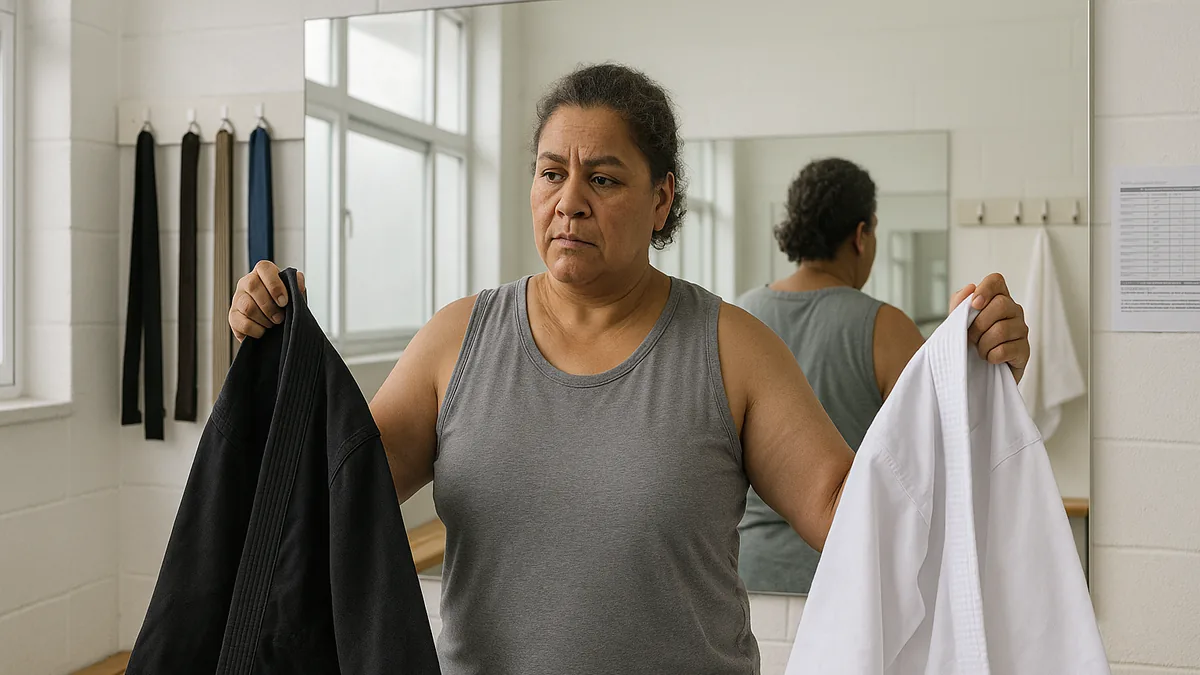
I walked into a competition a few years back wearing my standard white gi, and the guy warming up next to me had on a sharp black Tokaido. Same association, same division, same ruleset. I asked the table official if that was allowed. She looked at me like I’d asked if punching was legal. “Of course it is - it’s an open tournament.” I’d been training for over a decade at that point and genuinely didn’t know.
That’s the thing about gi colour rules: nobody sits you down and explains them properly. You absorb fragments over years - someone gets sent off the floor to change, someone gets a comment from a judge, an instructor mentions it once before a grading and never again. You piece it together slowly, and you get it wrong in the meantime.
So here’s what I’ve actually learned, from training across multiple dojos, judging at club and regional level, and grading students who showed up in completely the wrong kit.
Why White Became the Default (and Why It Still Is)
White isn’t just tradition for tradition’s sake, even though it often gets dismissed that way. There’s a practical reason it became standard: it’s visible, neutral, and tells you nothing about the person wearing it. When you’re watching technique in a grading or a kata competition, you want to see the body move. A well-cut white gi shows lines, posture, sleeve position on a block - all the things a judge or instructor needs to see clearly.
I’ve noticed that students in dark gi during gradings sometimes look technically cleaner than they are, because the contrast between limb and torso is lower. It’s a small thing, but it’s real. White removes that ambiguity.
That said, white as an absolute rule is largely a dojo and association-specific standard, not some universal law handed down from Funakoshi. Different organisations have different rules, and the further you get from traditional club training - into competition, into specialist roles, into senior grades - the more the colour conversation opens up.
If you’re still figuring out what gi to buy in the first place, I’d point you toward the best karate gi for beginners guide before worrying about colour - get the fit and weight right first. Colour questions come later.
Black Gi: Where They Actually Belong
Black gi are probably the most common non-white gi you’ll see, and they carry more baggage than they deserve.
I used to think black gi were just a style choice - something advanced students wore because they could get away with it, or because they wanted to look serious. By the time I was training at brown belt level, I started understanding it differently. Black gi in competitive karate often serve a functional purpose: in certain tournament formats, particularly those using the WKF (World Karate Federation) dual-competitor system, one fighter wears red (aka) and one wears blue (ao). But at open events and some national-level competitions, black gi are permitted and sometimes preferred by competitors who want a neutral, non-assigned colour that still signals they’re not a beginner in a plain white club gi.
More practically: black gi are common in disciplines adjacent to sport karate - kobudo, certain Okinawan styles, and some Kyokushin-affiliated organisations where black gi are a recognised part of the uniform culture. I’ve trained with Kyokushin practitioners who wear black as a matter of course, not as a statement, because their organisation normalises it.
When Black Gi Cause Problems
Here’s the mistake I see constantly: a student earns their shodan, decides a black gi is now appropriate because they’re a black belt, and shows up to a grading panel in one. Nine times out of ten, nobody says anything in the moment - but the instructor notices, and it creates an impression of someone who prioritises appearance over protocol.
What I tell students is this: your association’s rules override your personal sense of what feels right for your rank. If your organisation requires white gi for all gradings, a black gi at shodan is still wrong. Check before you assume.
The correction that actually works here is to ask your instructor directly before any formal event - not a training partner, not a forum, your instructor. The answer will be specific to your organisation, and that’s the answer that matters.
Blue Gi: Tournament Logic, Not Rank Symbolism
Blue gi exist almost entirely because of competitive karate, and they make more sense once you understand the scoring table’s perspective.
In WKF-format tournaments, fighters are assigned aka (red) or ao (blue) designations. These used to be indicated purely by a coloured belt or armband, but at higher levels of competition, some organisations moved toward full coloured gi to make identification faster for judges and spectators. Blue gi, in this context, is a functional tool - it tells the table and the corner judges which fighter they’re watching without requiring them to track a wristband during a fast exchange.
I’ve seen this cause genuine confusion at mixed-format events. A competitor shows up in a blue gi expecting it to be accepted because they wore it at a WKF-affiliated event last month, and the host organisation runs a different ruleset where coloured gi aren’t permitted. They get flagged at registration and have to borrow a white gi that doesn’t fit properly. It’s a small logistical disaster that costs them mentally before they’ve even stepped on the mat.
The practical rule: blue gi are competition-specific and organisation-specific. They are not a general-purpose alternative to white. If you’re competing regularly in WKF-format events, owning one makes sense. Otherwise, it’s a niche piece of kit.
Red Gi: The Most Misunderstood Colour
Red gi are the ones that generate the most confused questions from students, and honestly, the rules around them are the least consistent.
In some traditional organisations, red gi or red-accented gi are associated with specific senior ranks - typically above fifth or sixth dan - or with instructors who hold a particular certification. I’ve trained under a senior who wore a gi with red stitching and a red-trimmed collar, and it wasn’t a fashion choice. Within that organisation, it was a recognised indicator of their rank and teaching authority. It felt strange the first time I saw it, but after a while it made complete sense - the same way a heavily worn gi on a senior says something without anyone having to say it out loud.
The mistake I see here is students assuming red gi are a competition colour the way blue is. They’re not, in most contexts. Red in competition refers to the aka designation - which is typically a belt or armband, not a full gi - and red gi as a full uniform are rare enough that wearing one without understanding your organisation’s specific conventions will almost always create the wrong impression.
What I tell students who ask about red gi: unless your instructor has specifically told you that your organisation uses red gi for a particular rank or role, and you hold that rank or role, leave it alone.
The Mistakes I’ve Seen (and Made)
Let me be direct about the patterns I’ve watched repeat themselves over fifteen years.
Assuming competition rules transfer to dojo rules. They don’t. A blue gi that’s legal at a regional open tournament is not automatically acceptable for your Thursday night club session. Your instructor sets the standard for the dojo, and that standard often has nothing to do with what WKF permits.
Treating gi colour as a rank signal when it isn’t. I’ve seen white belts show up in black gi because they thought it looked more serious. I’ve seen shodans wear red-trimmed gi because they saw a senior wearing one and assumed it was a general option. Neither understood that colour, in most organisations, is either prescribed or neutral - it’s not a personal statement you get to make.
Buying a coloured gi before checking with your association. This one costs people money. I’d rather you spend that money on a quality white gi that will last - if you’re comparing options, the budget vs mid-range vs premium gi comparison is worth reading before you commit. A coloured gi that you can’t wear to 90% of your training and events is a waste.
Neglecting gi care because it’s a darker colour. You’ll feel this one eventually - a black gi that’s been through a hundred sessions and hasn’t been properly maintained starts to fade, pill, and smell in ways a white gi makes obvious earlier. The care requirements are actually higher, not lower. How to care for your karate gi covers this properly, but the short version is: dark gi need cold washes, inside-out, away from direct sunlight, or they deteriorate faster than white.
Community Perspective
This is a topic where dojos and styles genuinely disagree, and I think it’s worth being honest about that rather than pretending there’s one correct answer.
Traditional Shotokan clubs affiliated with JKA or similar bodies tend to be strict: white gi, always, for training and grading. Coloured gi are for competition only, and even then, only if the event specifically requires them. This isn’t stubbornness - it’s a coherent position that treats uniform uniformity as part of the discipline.
Kyokushin and some full-contact styles are much more relaxed about black gi as a general training uniform. Several Okinawan styles have their own colour conventions that don’t map neatly onto sport karate norms. WKF-affiliated sport karate clubs are practical about blue gi for competitors but often still require white for kata.
I’ve changed my view on this over the years. I used to think coloured gi were a slippery slope toward losing the discipline of uniform standards. I don’t think that anymore. What I think now is that the colour matters far less than the practitioner’s understanding of why the rule exists in their specific context. Someone who knows exactly why their organisation permits black gi for senior grades and wears one accordingly is showing more respect for the tradition than someone who wears white without ever thinking about it.
That said - and I’ll be direct here - if you’re below shodan and training in a traditional club, just wear white. You can have the philosophical conversation about gi colour when you’ve earned the rank that makes it relevant.
Key Takeaways
- Check your specific association’s rules before buying or wearing any non-white gi - dojo rules, competition rules, and organisation rules are three different things and they don’t always align
- Black gi are most legitimately used in competition contexts or within organisations (like Kyokushin) where they’re a recognised part of the uniform culture - wearing one as a personal rank statement is usually the wrong call
- Blue gi are almost exclusively a competition tool for WKF-format events - owning one only makes sense if you compete regularly in that format
- Red gi, where they appear, typically indicate specific senior rank or instructor status within an organisation - they are not a general alternative to white and should never be worn without explicit understanding of what they signify in your context
- The physical condition and fit of your gi matters more than the colour - a well-maintained white gi is always appropriate; a faded, ill-fitting coloured gi is never a good look regardless of whether it’s technically permitted
- When in doubt, ask your instructor directly before any formal event - not a training partner, not an online forum, your instructor, because the answer is organisation-specific