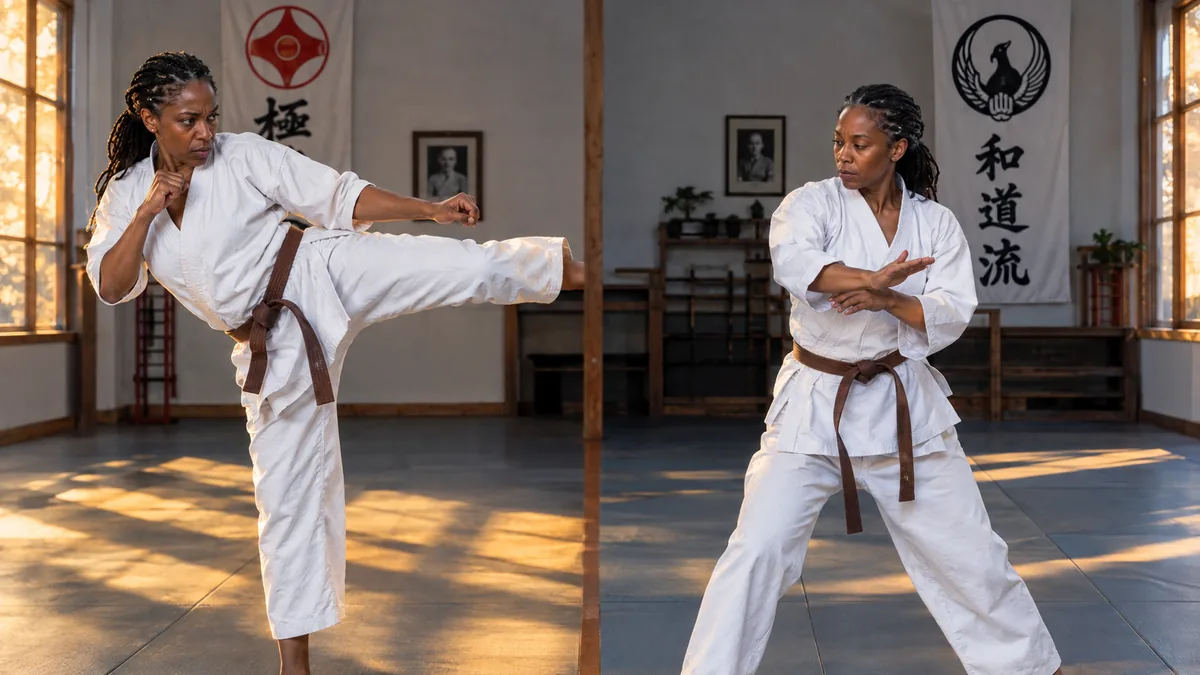
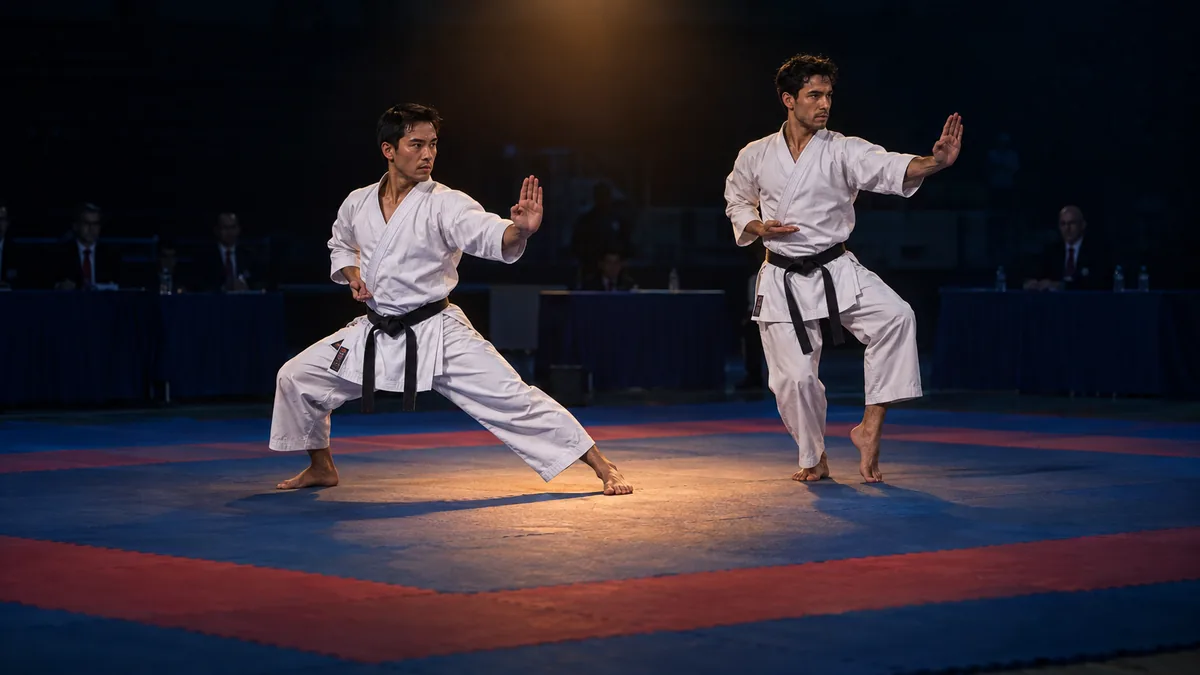
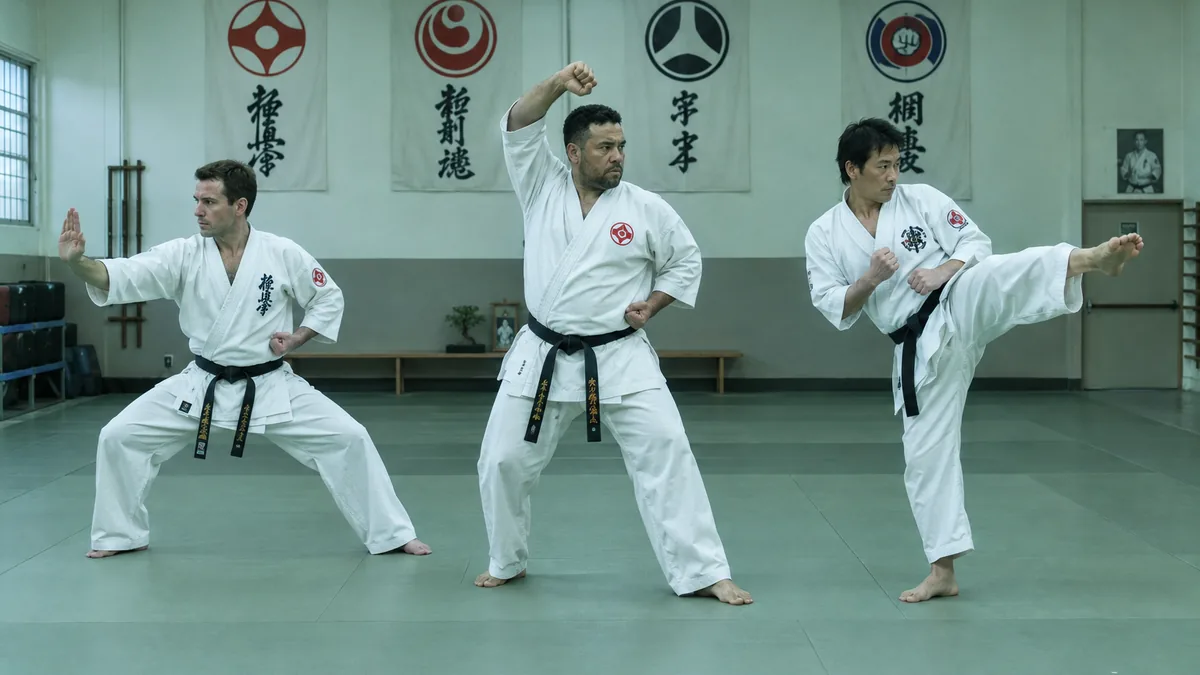
Kyokushin vs Shitō-ryū: Why a Full-Contact Style and a Technically Diverse Competition Style Attract Completely Different Practitioners
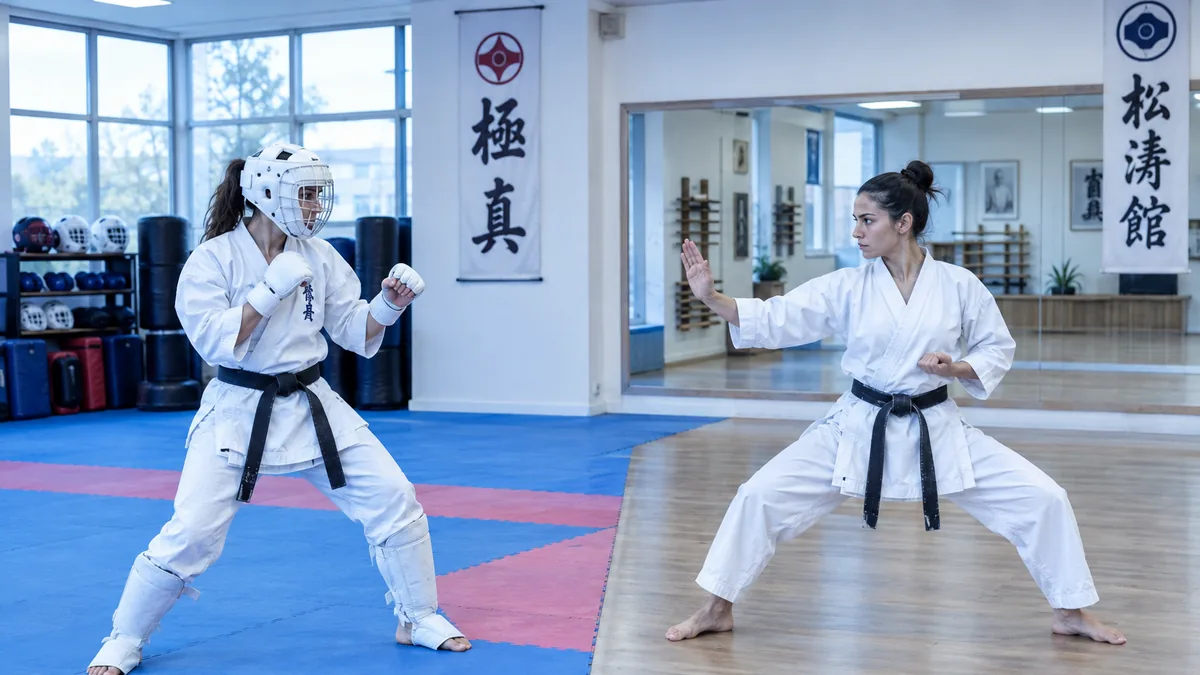
Most people who walk into a Kyokushin dojo and most people who walk into a Shito-ryu dojo are looking for fundamentally different things. That is not a criticism of either group. It is worth being honest about, because choosing between these two styles is less about which one is “better karate” and more about what kind of practitioner you want to become - and what kind of training environment you are actually prepared to commit to.
These two styles sit at genuinely different points on the karate spectrum. Kyokushin is built around full-contact knockdown competition and the physical and psychological toughness that produces. Shito-ryu is built around technical breadth - a large kata syllabus, diverse bunkai, and competition formats that reward precision and control. Neither is soft, but they develop different qualities, attract different personalities, and produce fighters who look almost nothing alike.
What Kyokushin Actually Demands of You
Kyokushin was founded by Masutatsu Oyama, who formally established the International Karate Organisation Kyokushinkaikan in 1964. The style’s competition format - full-contact body strikes, no punches to the head, no protective gear beyond a mouthguard and groin guard - is not incidental. It is the whole point. Everything in Kyokushin training is oriented around the question: can you take a hard body shot, keep moving, and hit back?
That shapes the training culture in ways that go beyond just sparring hard. Conditioning work in Kyokushin is typically more physically demanding than in most other karate styles. Makiwara training, body hardening, and extended kumite rounds are standard. The 100-man kumite (hyakunin kumite) - a test in which a practitioner fights 100 consecutive full-contact matches, each around two minutes long, against fresh opponents - is extreme by any measure, but it reflects the style’s values clearly: endurance and resilience are treated as technical qualities, not just athletic ones. The competitor must win at least 50 per cent of the fights, and if knocked down, must rise within five seconds.
What this means in practice is that Kyokushin training will hurt. Not recklessly, and not without structure, but the discomfort is built in. A common mistake for newcomers is treating the physical hardship as something to endure until it stops. It does not stop. The adaptation Kyokushin training is actually producing is the ability to stay technically functional under pressure and pain - to keep your guard up, keep your footwork active, and keep generating power when your body is telling you to stop. That is the real curriculum.
The no-head-punch rule is a significant limitation and worth naming plainly. It means Kyokushin fighters can develop habits - dropping the guard, relying on forward pressure - that create problems in formats where punches to the head are permitted. This is a known criticism of the style, and serious Kyokushin practitioners are aware of it. Some branches of the style have introduced gloved head-punch competition to address this. For more on how the style has evolved and split, Kyokushin Branching: Shinkyokushin, Enshin, and Ashihara Explained covers the main organisational and technical divergences in detail.
What Shito-ryu Actually Demands of You
Shito-ryu was founded by Kenwa Mabuni, who moved to Osaka in 1929 and established his style there in the early 1930s. Mabuni had studied under both Anko Itosu and Kanryo Higaonna - the two dominant Okinawan karate lineages of the period.1 The style’s very name reflects that dual inheritance: “shi” is taken from Itosu’s name and “to” from Higaonna’s.1 Shito-ryu carries one of the largest kata syllabuses in karate, with 53 kata in the standard curriculum, drawing from both Shuri-te and Naha-te traditions.
That breadth is the defining feature. Shito-ryu practitioners work with hard linear techniques, circular Naha-te movements, close-range grappling entries, and long-range striking - often within the same grading syllabus. The expectation is that you develop genuine competence across all of it, not just the techniques that suit your body type or preferred fighting range.
This creates a different kind of difficulty from Kyokushin. The challenge in Shito-ryu is not primarily physical tolerance - it is technical absorption. Learning to execute techniques from multiple traditions with genuine precision, understanding how the body mechanics differ between a Shuri-te punch and a Naha-te technique, and being able to apply those differences in kumite rather than just demonstrate them in kata - that takes years of careful attention.
Many instructors teaching Shito-ryu kata cue the distinction between traditions this way: Shuri-te-derived kata should feel crisp and direct, with power generated through hip snap and linear drive. Naha-te-derived kata should feel rooted and circular, with power coming from the whole body settling into a technique rather than driving through it. Getting that distinction right in your body - not just intellectually understanding it - is one of the clearest markers of advancing competence in Shito-ryu.
Shito-ryu is a major presence in World Karate Federation competition, and its kata and kumite competitors are well represented at international level. For a closer look at how Shito-ryu compares with the other dominant competition style, Shotokan vs Shito-ryu: Why the Two Largest Competition Styles Produce Such Different Fighters and Kata Performers is worth reading alongside this.
The Sparring Culture Gap
This is where the two styles diverge most sharply in day-to-day training, and it is worth being direct about it.
Kyokushin kumite is designed to test you. You will get hit. The scoring system rewards effective, impactful techniques to the body and legs, and the culture expects you to absorb those hits and respond. There is no protective gear to soften the experience. What you learn from this is not primarily technical - it is psychological. You learn what your reactions are when you are genuinely hurt mid-fight, and you learn to override the instinct to back off or hesitate. That lesson is very hard to replicate in a controlled sparring format.
Shito-ryu kumite, particularly in WKF-format competition, operates under controlled contact rules with full protective equipment. Techniques are scored on six criteria laid out in the WKF Competition Rules: good form, sporting attitude, vigorous application, awareness of the opponent (zanshin), good timing, and correct distance.2 A technique that lands but fails any of these criteria will not score. This places a premium on technical quality under pressure, which is a genuine athletic demand, but a different one from Kyokushin.
A common mistake Shito-ryu practitioners make when first encountering full-contact sparring is over-relying on the scoring instinct - pulling techniques slightly, looking to the referee, breaking rhythm after a clean hit. Those habits are rational in WKF competition. They are liabilities in knockdown format. Equally, Kyokushin fighters stepping into WKF-format kumite often struggle with the precision requirements and the head-punch game they have largely trained without.
Neither adaptation is quick. Both represent genuine skill gaps, not just rule differences.
Who Chooses Which Style, and Why
We would be doing a disservice to frame this purely as “tough people choose Kyokushin, technical people choose Shito-ryu.” It is more nuanced than that. But the self-selection is real.
Practitioners drawn to Kyokushin tend to share a specific motivation: they want to know that their training is real. They want the feedback loop of full contact to confirm that what they are doing works. Many arrive already athletic or physically confident and are looking for a training environment that matches that. The style rewards those qualities but also develops them - the practitioner who starts Kyokushin with average fitness and mental resilience will have considerably more of both within a year, if they stay.
Practitioners drawn to Shito-ryu often arrive with a different question: they want to understand karate as a complete system. The large kata syllabus, the dual lineage, the technical variety - these are attractive to people who find depth and complexity motivating. Competition in Shito-ryu is genuinely demanding, but the aspiration is often as much about mastery of form as it is about winning matches.
Neither motivation is superior. The honest position is that the style you choose should match the question you are actually trying to answer about yourself through training.
Community Perspective
One debate that runs through both communities - and particularly between them - is the question of what makes karate “effective.” Kyokushin practitioners sometimes argue that without full-contact pressure testing, technical training is essentially theoretical. Shito-ryu practitioners, and traditional karateka more broadly, sometimes respond that the no-head-punch rule creates its own theoretical gap, and that kata bunkai contains combat applications that knockdown competition simply does not test.
Both positions have merit, and both have limits. The more experienced a practitioner gets in either style, the more likely they are to acknowledge what their own training does not cover. Kyokushin practitioners who have trained seriously in the style for a decade tend to be more nuanced about the head-punch limitation than beginners are. Shito-ryu practitioners with genuine competition experience tend to be more honest about the gap between controlled sparring and genuine pressure than those who have only trained kata.
This is a debate worth having rather than avoiding. If you are choosing between styles, you should be clear-eyed about what each one does not give you, not just what it does.
For context on where Kyokushin sits relative to another style with very different values, Kyokushin vs Wado-ryu: Why the Two Styles Represent Opposite Ends of What Karate Training Can Look Like makes the contrast even sharper. And for a broader picture of Kyokushin’s relationship with its Goju-ryu roots, Kyokushin vs Goju-ryu: Why a Style Born from Goju-ryu Ended Up Looking So Different From Its Parent is directly relevant.
Key Takeaways
- Kyokushin’s core curriculum is resilience under real pressure. The physical conditioning and full-contact sparring are not supplementary - they are the point. If you are not prepared to train in genuine discomfort consistently, the style will not work for you.
- Shito-ryu’s core curriculum is technical breadth across two lineages. The challenge is absorbing and correctly applying techniques from both Shuri-te and Naha-te traditions. Most beginners underestimate how long this takes to feel right in the body rather than just look correct on the surface.
- The no-head-punch rule in Kyokushin is a real limitation, not a minor caveat. Be aware of it, especially if you have any interest in cross-training or mixed-format competition.
- Controlled-contact kumite and knockdown kumite develop different psychological skills. Shito-ryu competition trains precision and technical execution under stress. Kyokushin competition trains the ability to function after absorbing genuine impact. Both are valuable. Neither replaces the other.
- Choose based on the question you are trying to answer. If you want to test your physical limits and build toughness through direct feedback, Kyokushin is the honest choice. If you want to develop technical mastery across a wide and historically rich system, Shito-ryu is the better fit.
- Cross-training between styles is more common than either community sometimes admits. Serious practitioners in both styles often seek what their own training lacks. That is not disloyalty - it is good sense.
References
Checked by the KarateLifestyle editorial team against the official IKO Kyokushinkaikan website, the WKF Kumite Competition Rules (2026 edition), primary organisational sources for Shito-ryu, and multiple corroborating historical sources in November 2026. The founding date of Shito-ryu as a named style is disputed across sources (ranging from 1929 to the early 1930s to 1934); the article uses the defensible formulation 'moved to Osaka in 1929 and established his style there in the early 1930s.'
- Shitokai Founder and Leaders. Shitokai Europe (primary organisational source), accessed November 2026
- WKF Kumite Competition Rules 2026 (Version 2026.01). World Karate Federation, official rules document, 2026
The weekly digest
New karate articles, once a week
One email every week with everything new on Karate Lifestyle. No spam; unsubscribe in one click.
We'll email you to confirm. See our privacy policy.