Shotokan vs Shitō-ryū: Why the Two Largest Competition Styles Produce Such Different Fighters and Kata Performers
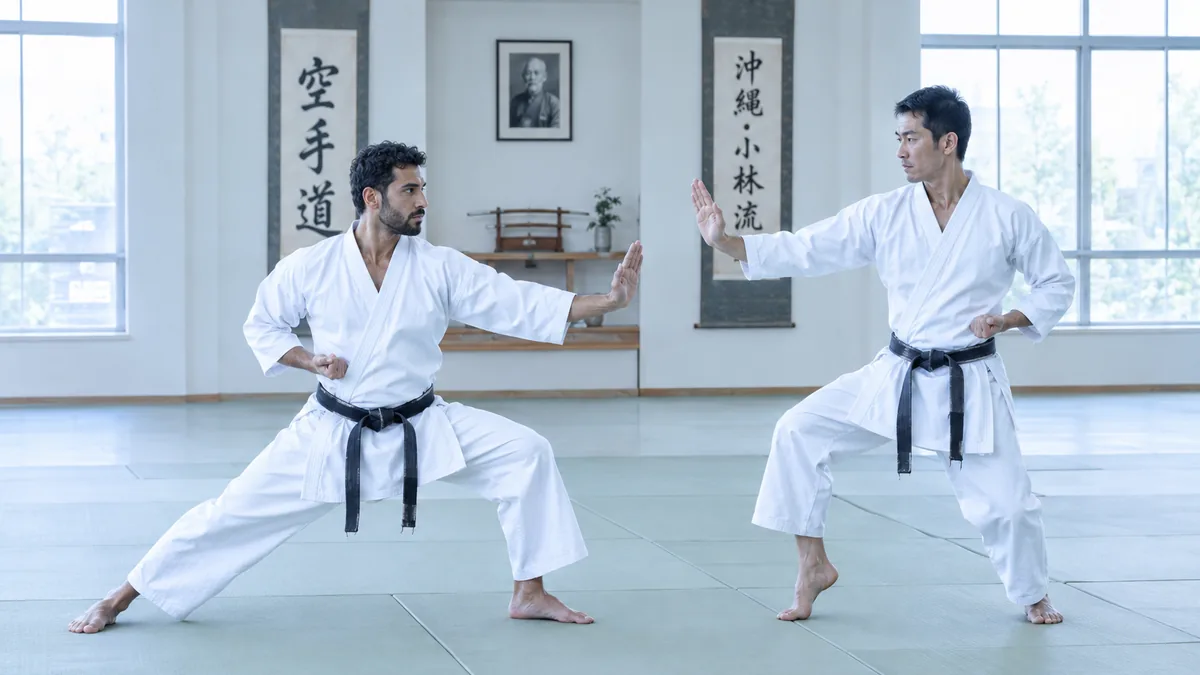
Put a Shotokan fighter and a Shitō-ryū fighter side by side in a competition warm-up, and you’ll see the difference before either of them throws a technique. The Shotokan practitioner moves in deliberate, weighted steps. The Shitō-ryū practitioner is already shifting weight, adjusting angles, cycling through transitions that look almost restless by comparison. Both are doing karate. Both compete under the same World Karate Federation ruleset. But the athletes they produce, and the kata performers they develop, are shaped by philosophies that diverge at almost every level of training.
This is worth understanding properly, not just as trivia about two large organisations, but because it changes how you train, what you prioritise at grading, and how you read a competition kata performance. If you have only trained in one of these styles, you are probably missing something the other does better.
For the deeper story of how these two styles came to exist at all, see our piece on Funakoshi vs Mabuni: How Two Students of the Same Masters Built Completely Different Styles.
The Core Difference Is Not Power vs Speed - It Is Commitment vs Adaptability
The usual shorthand is that Shotokan is powerful and linear while Shitō-ryū is fluid and adaptable. That is accurate as far as it goes, but it misses the more important training philosophy underneath.
Shotokan asks you to commit. A gyaku-zuki in Shotokan is not just a reverse punch - it is a full-body event. The stance is long and low, the hip drives through completely, the supporting leg pushes hard against the floor, and the technique arrives with the practitioner’s full mass behind it. The cost of that commitment is time. You are planted when you fire, and you are recovering from the effort afterwards. Shotokan training builds the habit of making each technique count, which is why senior Shotokan practitioners often describe a well-executed technique as something that travels through the body rather than from it - you feel the floor, the hip, the shoulder and the fist as one connected chain.
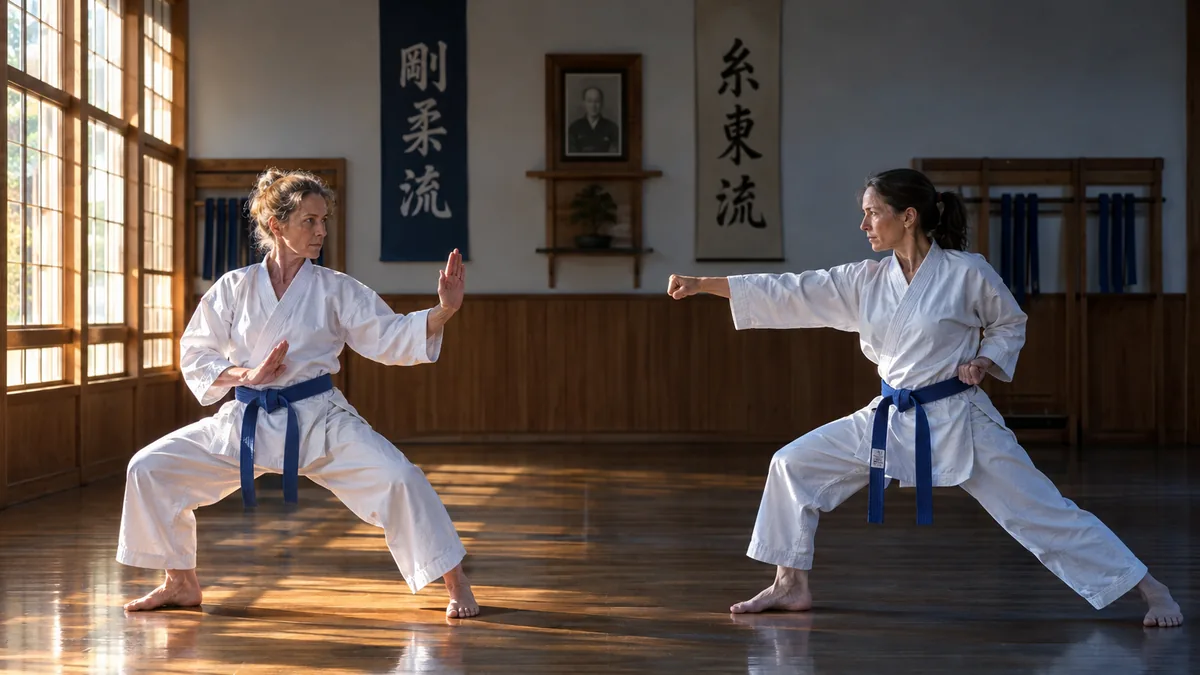
Shitō-ryū asks something different. The stances are shorter and higher on average, the transitions between positions are faster, and the style’s extensive kata syllabus - drawing from both Shuri-te and Naha-te lineages - demands that practitioners move fluently between very different movement qualities.1 Where Shotokan builds depth of commitment in a narrower range of motion, Shitō-ryū builds breadth of adaptability across a wider one.
Neither is better overall. But they produce different athletes, and knowing which qualities you are developing matters.
What Shotokan Does Better - and Where It Creates Problems
The Strength of Linear Power
Shotokan’s emphasis on long, deep stances - particularly zenkutsu-dachi - builds exceptional lower body strength and rooting. When a Shotokan practitioner lands a clean oi-zuki in jiyu-kumite, the contact quality is different from a shorter-stance punch. There is genuine mass transfer. WKF competition kata judging evaluates performers across ten criteria covering technical performance (stances, techniques, transitional movements, timing, correct breathing, focus and conformance with the kihon of the style) and athletic performance (strength, speed and balance), and Shotokan’s methodology is specifically designed to develop kime and conformance.2
The kata Bassai Dai, which appears in both Shotokan and Shitō-ryū syllabuses, illustrates the difference clearly.3 In Shotokan performance, the opening sequence carries a sense of weight and inevitability - each technique lands, settles, and drives into the floor. The pauses between sequences are not hesitation; they are the practitioner demonstrating that the technique was complete.
The Common Mistakes in Shotokan
The biggest mistake Shotokan practitioners make is confusing tension with power. A common cue in Shotokan training is to “squeeze” at the point of impact, meaning to tighten the whole body at kime. Beginners interpret this as staying tense throughout the technique, which kills speed and produces arm-punching - the hip stops rotating early, the shoulder takes over, and what arrives is a fast arm movement with no body weight behind it.
The correction that works is to practise the technique slowly enough to feel the hip rotation complete before the fist arrives. You should feel the floor push back through your rear leg as the punch lands. If you cannot feel that floor contact, the hip has not driven through.
The second common problem is stance depth becoming a liability in kumite. Shotokan’s long zenkutsu-dachi is a training tool for building strength and rooting. Treating it as a fighting stance leads to slow footwork and predictable attacks. Most experienced Shotokan competitors fight in a higher, more mobile position and only drop into deep stances when they commit to an attack - not as their default posture.
What Shitō-ryū Does Better - and Where It Creates Problems
Fluidity Across Kata Families
Shitō-ryū’s kata syllabus is one of the largest of any style. Its founder, Kenwa Mabuni (1889 to 1952), trained under Anko Itosu in Shuri-te and under Kanryo Higaonna in Naha-te, and he was known for collecting and preserving kata from multiple Okinawan lineages throughout his career.1 The result is a syllabus that spans hard, linear kata alongside circular, close-range kata requiring completely different movement qualities. A Shitō-ryū practitioner who has trained Matsukaze and Seienchin properly has been forced to develop both explosive linear power and circular, close-range sensitivity. That breadth is genuinely valuable.
In competition kata, Shitō-ryū practitioners often score well on embusen (performance line) accuracy and transition smoothness. The style’s shorter stances allow faster directional changes, and the emphasis on fluid connection between techniques - rather than clear pauses at kime - produces performances that read as dynamic and confident to judges.
The Common Mistakes in Shitō-ryū
The fluidity that is Shitō-ryū’s strength becomes a problem when it is mistaken for looseness. A common mistake is rushing transitions to demonstrate speed, with the result that individual techniques lose definition. In competition, judges are looking for clear technique within the flow - not just movement that looks fast. If the transitions are smooth but the actual strikes have no snap, the performance scores lower than it should.
The correction that instructors return to repeatedly is to treat each technique as a complete unit before the transition begins. The flow comes from connecting complete techniques efficiently, not from blurring the boundaries between them. You should feel each technique finish - a brief, sharp arrival - before the body begins moving to the next position. When Shitō-ryū is performed well, that sensation is almost rhythmic, like a clean pulse running through the sequence.
In kumite, Shitō-ryū’s adaptability can produce practitioners who are good at reacting but hesitant to commit. The habit of staying mobile and keeping options open sometimes prevents the full commitment a scoring technique requires. In jiyu-kumite, this becomes visible when a practitioner lands a technique with good timing but insufficient kime - the contact is there, but the judges do not score it because the technique did not arrive with enough conviction.
How the Difference Shows Up in Competition
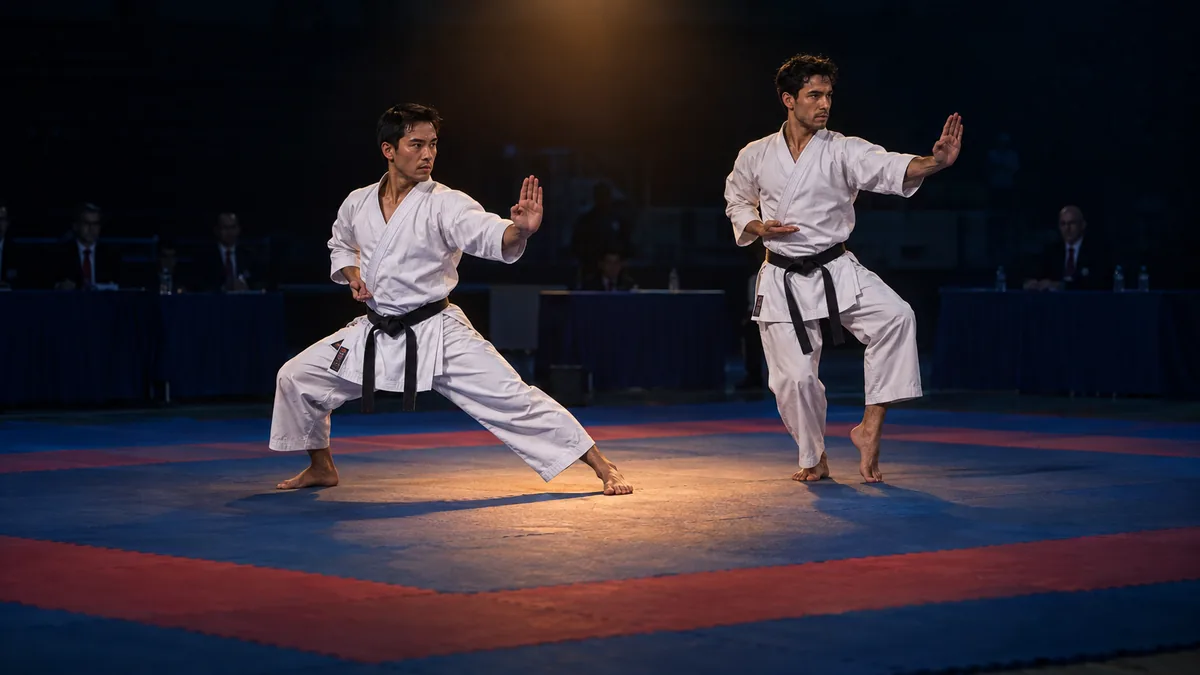
At WKF World Championships and European Championships, both styles are well represented, and watching them side by side is instructive. Shotokan kata performers tend to draw attention through sharpness and impact - the moments of stillness after a strong technique feel deliberate and controlled. Shitō-ryū performers often draw attention through the quality of their movement between techniques - the way the body flows from one position to the next without losing energy.
Neither approach guarantees a win. WKF kata judging assesses technical performance and athletic performance across ten criteria: stances, techniques, transitional movements, timing, correct breathing, focus (kime), conformance with the kihon of the style, strength, speed and balance.2 A Shotokan performance that is sharp but mechanical will score lower than a Shitō-ryū performance that is fluid and precise. The reverse is equally true.
In kumite, the style differences are less obvious at high level because elite competitors adapt their fighting style to the opponent and the moment. But the tendencies are there: Shotokan fighters often prefer to draw the attack and counter with a committed single technique, while Shitō-ryū fighters more often work in combinations and use angles to create openings.
Community Perspective
This is one of those comparisons where the conversation changes significantly depending on who is having it. Practitioners who have trained only in one style tend to see the other through a fairly narrow lens - Shotokan people sometimes describe Shitō-ryū as “lacking power,” while Shitō-ryū people sometimes describe Shotokan as “rigid.” Neither characterisation is accurate at a high level of practice, but both reflect real tendencies in how the styles are taught at club level.
The more interesting disagreement is about which approach transfers better to WKF competition. Shitō-ryū has historically produced elite kata competitors - Rika Usami, who won the WKF World Championship kata gold medal at the 2012 World Championships in Paris with one of the most celebrated performances in the sport’s history, is the clearest example.4 Shotokan has produced dominant kumite fighters at international level over many decades. Whether that reflects the styles themselves or the depth of competitive infrastructure behind each style is genuinely debated.
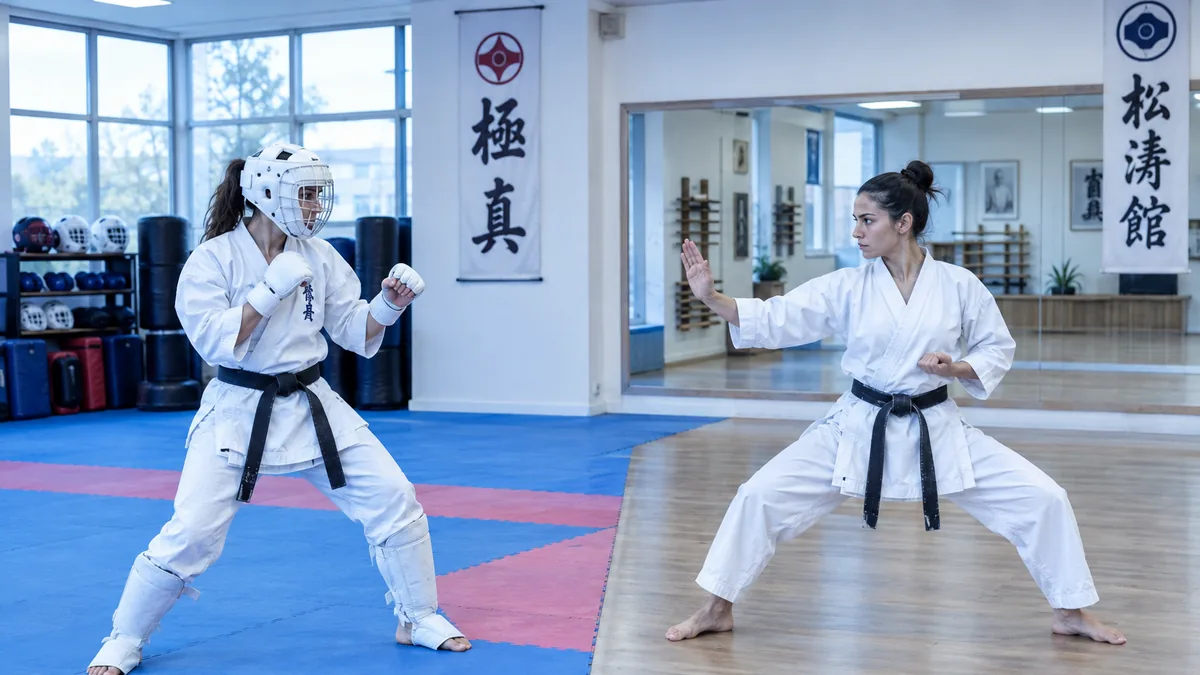
There is also a real discussion within both styles about whether competition training pulls practitioners away from the traditional intent of the kata. This is not unique to Shotokan or Shitō-ryū - it runs through most competition styles. For a related perspective on how a style can diverge from its roots under competitive pressure, the Shotokan vs Kyokushin comparison covers some of the same ground.
Key Takeaways
-
If you train Shotokan, practise your punches slowly enough to feel the floor pushing back through your rear leg at the moment of impact. If you cannot feel that, the hip has not finished its rotation and you are arm-punching.
-
If you train Shitō-ryū, each technique needs to arrive before the transition begins. Flow is the connection between complete techniques, not the blurring of them. You should feel a brief, clear finish point before the body moves on.
-
In Shotokan kata, deep stances are a training tool, not a fighting template. Senior practitioners in kumite fight higher and more mobile than their kihon suggests - and that is correct.
-
In Shitō-ryū kata, speed without definition is the most common scoring problem. If the transitions are smooth but the strikes have no snap, you are demonstrating movement, not technique.
-
Both styles compete under the same WKF rules, which means both need kime, correct embusen, and clear technique. The route to those qualities is different, but the destination is the same.2
-
Training in both is worth considering if you compete seriously in kata. Understanding how Shitō-ryū approaches kata from a Naha-te lineage will change how you perform Seienchin even if you train Shotokan - and vice versa. The Goju-Ryu kata syllabus offers useful context for the Naha-te side of that equation.
References
Checked by the KarateLifestyle editorial team against WKF official competition rules documents, the WKF World Championships results database, official governing body news archives, and primary biographical sources for Kenwa Mabuni in November 2026. The 70/30 technical/athletic scoring split cited in some older sources has been superseded by the current WKF Kata Competition Rules (2024 onwards), which use a bout-based judging system; the article has been edited to describe the judging criteria accurately without asserting the now-outdated weighting formula.
- Shito-ryu Style Description and Kata Syllabus. Jissen Karate, undated. Primary factual summary of Mabuni's training lineage and the founding of Shito-ryu.
- WKF Kata Competition Rules, Version 2024.0. World Karate Federation, 2024. Official rules document specifying the ten judging criteria for kata: stances, techniques, transitional movements, timing, correct breathing, focus (kime), conformance, strength, speed and balance.
- WKF World Championships Results. World Karate Federation, official results database. Confirms Rika Usami won gold (female kata) at the 21st WKF World Championships, Paris 2012, and bronze at Belgrade 2010.
- WKF World Championships Flashback: Paris 2012 - Rika Usami. World Karate Federation, official news archive. Confirms Usami's gold medal performance at Paris 2012 performing Chatanyara Kushanku.
The weekly digest
New karate articles, once a week
One email every week with everything new on Karate Lifestyle. No spam; unsubscribe in one click.
We'll email you to confirm. See our privacy policy.