Shotokan vs Kyokushin: Why Two of the World's Biggest Styles Disagree on Almost Everything That Matters
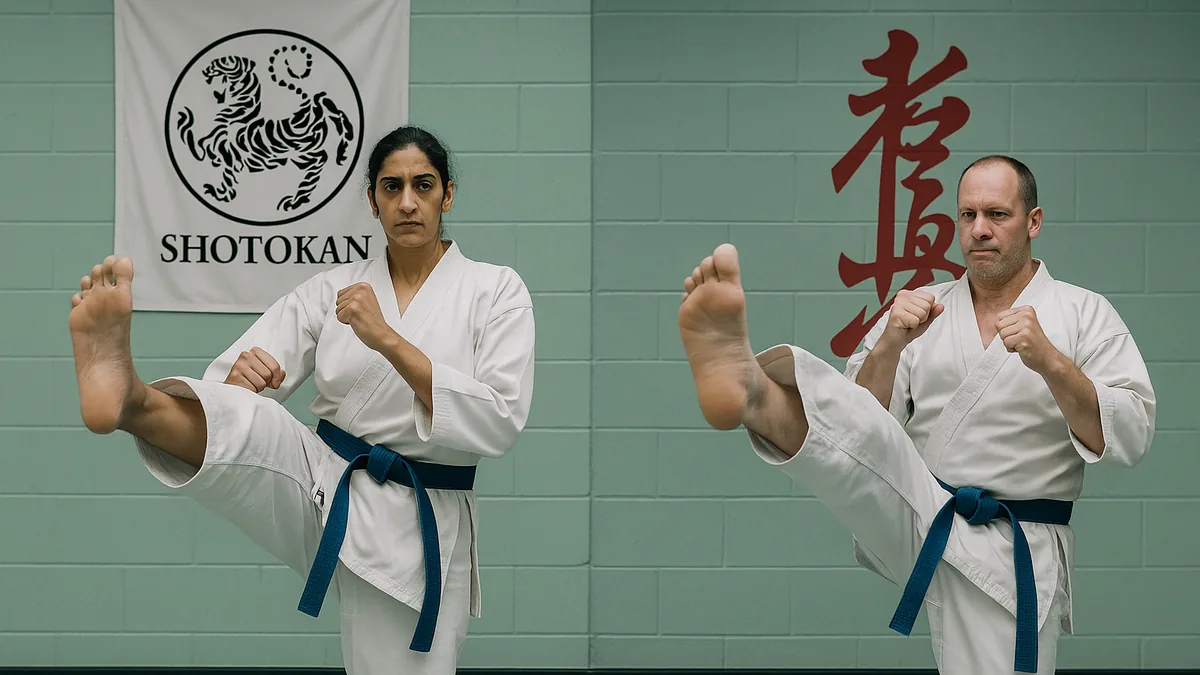
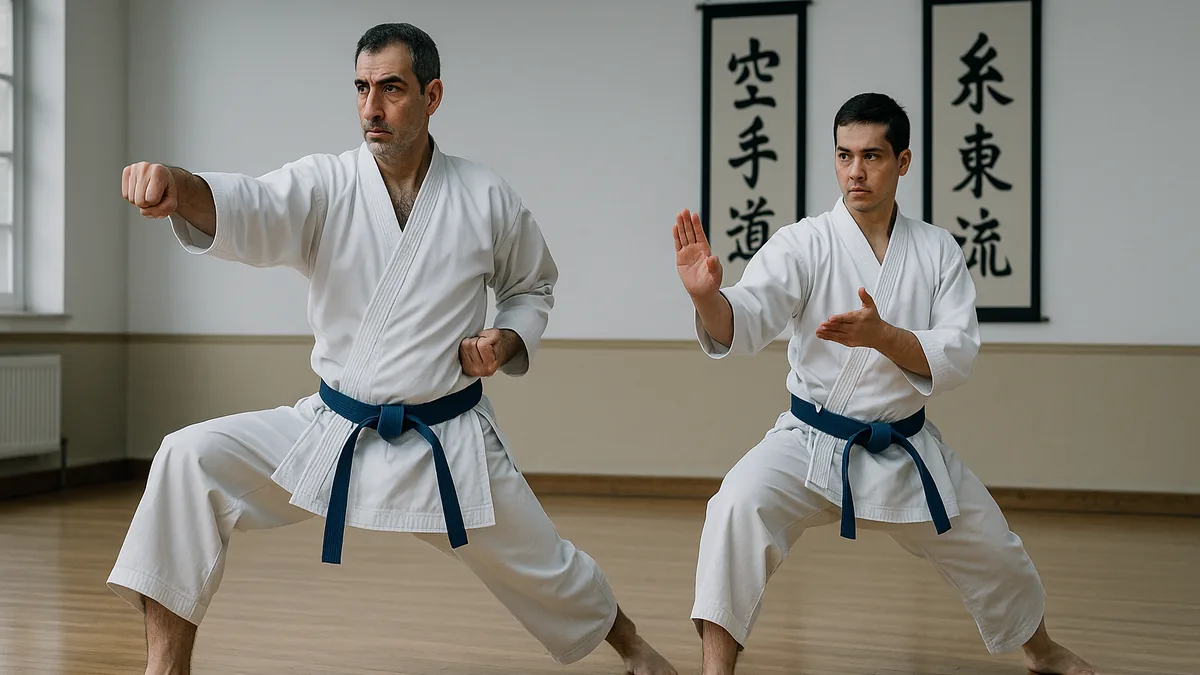
If you put a Shotokan practitioner and a Kyokushin practitioner side by side and ask them both to demonstrate a front kick, you will almost certainly see two different techniques, two different body positions, and two different ideas about what the kick is actually for. That is not a coincidence. It reflects a genuine philosophical split that runs through every aspect of how these styles train, compete, and think about karate.
This is worth understanding properly, not just as trivia about style differences, but because the disagreements between Shotokan and Kyokushin cut to questions every serious karateka eventually has to answer: What does effective striking actually require? How do you test whether your technique works? What is the point of kata? The two styles have arrived at very different answers.
Where They Come From - and Why It Matters
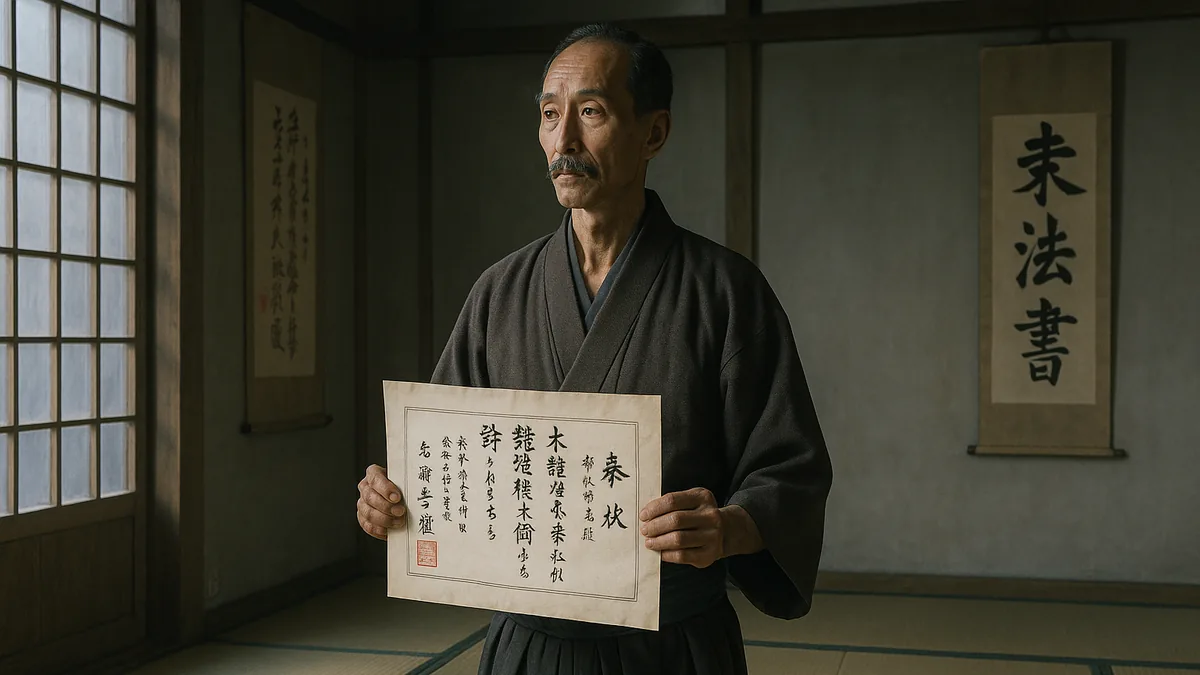
Shotokan was systematised by Gichin Funakoshi, who brought karate from Okinawa to mainland Japan in 1922.1 Funakoshi adapted the art considerably for Japanese audiences, emphasising formal structure, kata, and a philosophical framework influenced by Japanese budo. The style that bears his pen name (Shoto, meaning “pine waves”2) became the dominant form of karate taught in Japanese universities and later spread globally through the Japan Karate Association, founded in November 1948.3
Kyokushin was founded by Masutatsu Oyama, who had trained in Shotokan under the Funakoshi family and in Goju-Ryu under Nei-Chu So.4 Oyama was dissatisfied with what he saw as a drift toward sport and performance over genuine fighting ability. He formally established the International Karate Organization Kyokushinkaikan in 1964 with a deliberately confrontational training philosophy: full-contact sparring with no face punches, but hard body and leg strikes fully landed. The name translates as “the ultimate truth” - which tells you something about Oyama’s attitude toward what he was building.
Both styles are now among the most widely practised forms of karate worldwide. For a deeper look at how style politics and lineage shape what gets taught, the article on Pinan vs Heian: Why the Same Kata Have Different Names and What That Tells You About Style Politics covers related ground.
Stance and Structure: The Foundation of the Disagreement
Shotokan is built on long, low stances - particularly zenkutsu-dachi (front stance) and kiba-dachi (horse stance). The logic is that a long stance creates a stable base for generating power through hip rotation and body mass. When you drop into a deep Shotokan zenkutsu-dachi and drive a gyaku-zuki, you should feel your whole body loading into the punch - the rear leg pushing, the hip rotating, the shoulder following, the fist arriving as the endpoint of a chain that starts in the floor. Done correctly, it feels less like throwing your arm and more like the punch is being delivered through your arm.
A common mistake for beginners here is not to punch harder - it is to stop punching with the arm at all. The hip rotation is the whole punch. Without it, you are just throwing your arm at someone from a distance.
Kyokushin uses shorter, higher stances in sparring. This is not a stylistic preference - it is a direct consequence of training full contact. In Kyokushin kumite, you need to move. You need to check leg kicks, step off lines, and throw combinations to the body while staying mobile. A deep Shotokan zenkutsu-dachi in Kyokushin sparring would leave you rooted to the spot while someone hammered your thigh or drove a knee into your midsection.
This is the core structural disagreement: Shotokan prioritises power generation from a stable base; Kyokushin prioritises mobility under pressure. Both are legitimate engineering decisions, but they produce different bodies and different instincts.
Sparring: The Biggest Practical Divide
This is where the two styles diverge most sharply, and where opinions in the karate community tend to get heated.
Shotokan competition is predominantly point-based, governed by the World Karate Federation (WKF) ruleset for Olympic and international competition. Techniques are controlled - you are required to demonstrate power and accuracy without full impact.5 Under WKF rules, a clean jodan (head-level) kick scores the maximum three points (ippon), while punches to any scoring area score the minimum one point (yuko).6 The premium is on speed, timing, and distance management, and the ability to land the first clean technique.
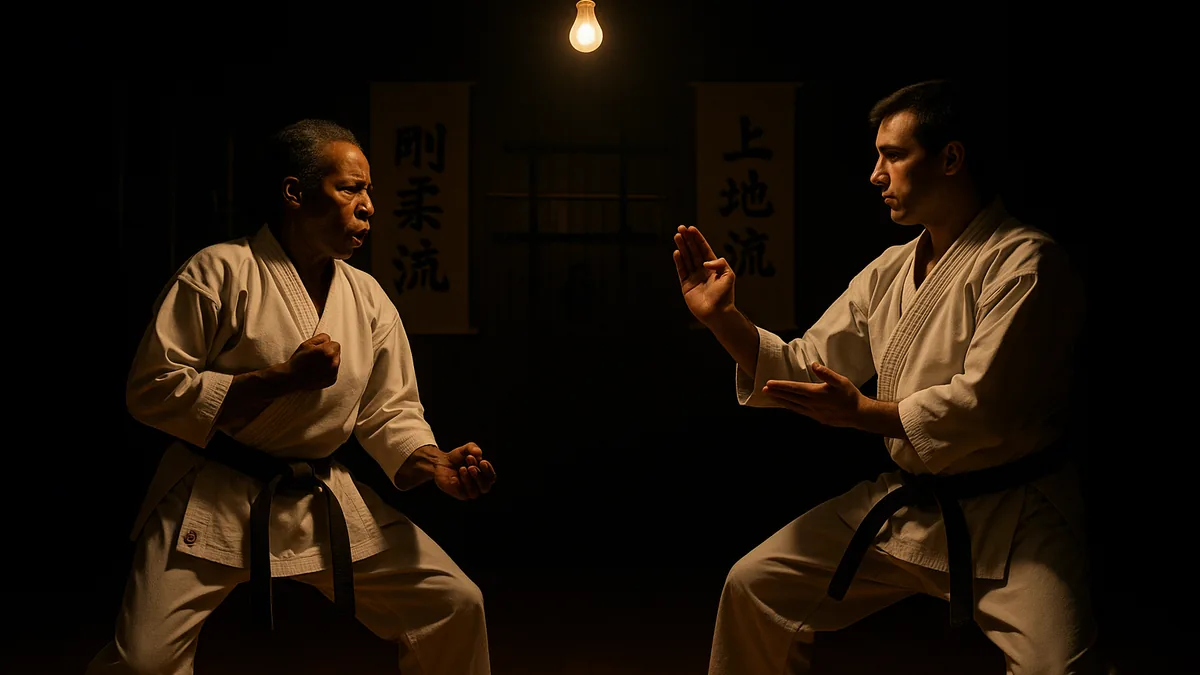
Kyokushin tournament rules are the opposite in almost every meaningful way. No face punches are allowed (because there is no protective headgear and strikes are full contact), but body punches, body kicks, and leg kicks are landed with full power. Competitors absorb genuine strikes. A Kyokushin fighter who cannot take a hard body kick and keep moving is not going to last long in competition.
The most common criticism of Shotokan sparring from Kyokushin practitioners is that controlled contact produces techniques that are trained to stop short - and that this habit is nearly impossible to undo under pressure. There is something to this. Many Shotokan practitioners who cross-train in full-contact environments find their punches arrive at the surface rather than driving through it. The correction that usually helps is pad work with genuine follow-through - not pulling the strike, but training the arm to accelerate through the target rather than to it. The article on Line Work vs Pad Work vs Partner Drilling: How to Balance Your Kihon Time for Maximum Transfer covers how to structure that kind of training.
The most common criticism of Kyokushin sparring from Shotokan practitioners is the no-face-punch rule. The argument is that removing head punches from competition creates fighters who are comfortable taking body shots but who have no realistic defence against punches to the head - because they never have to deal with them in sparring. This is also a fair point. Kyokushin’s response has historically been that the full-contact body work produces genuine toughness that point sparring cannot replicate. Both arguments are correct, which is why neither side has entirely won the debate.
We think the honest position is this: Kyokushin produces fighters who are better conditioned to absorb and deliver full-power strikes; Shotokan produces fighters who are better at distance management and timing in a controlled environment. Neither is complete on its own. The question of how much sparring any serious karateka actually needs - and what kind - is worth reading about separately at Drilling vs Sparring: How Much of Each Does a Serious Karateka Actually Need?
Kata: Shared Heritage, Different Emphasis
Both styles practice kata, and they share some of the same forms - Bassai Dai, Kanku Dai, and others appear in both curricula. But the attitude toward kata differs considerably.
In Shotokan, kata is central. Grading syllabuses are structured around it. The JKA has produced standardised performance criteria for each kata, and competitive kata is a major event at WKF tournaments. The expectation is that kata practice develops the qualities that underpin all technique: timing, focus, power generation, and understanding of application (bunkai).
In Kyokushin, kata is present but sits further down the priority list than in Shotokan. The emphasis is on kumite. Kata is taught and graded, but the culture of most Kyokushin dojos is built around the sparring floor. Oyama himself was explicit that the test of karate was whether it worked against a resisting opponent.7
A common mistake in both styles is treating kata and sparring as separate subjects. The practitioner who trains kata beautifully but cannot apply any of it under pressure has learned a performance skill, not a fighting skill. The practitioner who spars hard but never works kata is missing a structured way to develop individual technique. The two are supposed to inform each other.
What Each Style Develops - and What It Doesn’t
It is worth being direct about this, because the answer affects which style suits which practitioner.
Shotokan, trained seriously, develops exceptional technique precision, powerful single strikes, and sophisticated understanding of distance (ma-ai). The long stances and formal kihon build a particular kind of structural strength. Senior Shotokan practitioners often have a stillness and economy of movement that is difficult to develop any other way.
What Shotokan does not automatically develop - unless the dojo specifically addresses it - is the ability to function under genuine physical pressure. Point sparring can produce excellent timing without ever requiring you to be hit hard. That is a significant gap if your interest in karate extends beyond competition.
Kyokushin, trained seriously, develops genuine toughness, conditioning, and the ability to keep functioning when you are hurt. The full-contact sparring culture means that by the time a Kyokushin practitioner reaches black belt, they have been hit hard many times and learned to manage it. That is not nothing - it is arguably the most important quality in any combative context.
What Kyokushin does not automatically develop is defence against head strikes. The no-face-punch rule is a structural limitation of the competition format, and it shapes training habits whether practitioners acknowledge it or not.
Community Perspective
The online debate between Shotokan and Kyokushin practitioners is one of the more reliably heated discussions in karate forums. A few patterns are worth noting.
Many practitioners who start in Shotokan and later cross-train in Kyokushin report that the full-contact experience was clarifying - it exposed habits (pulling punches, relying on point-scoring distance) that they had not realised they had developed. The opposite journey - Kyokushin to Shotokan - often produces practitioners who find controlled sparring frustrating but who benefit from the technical precision that Shotokan kihon demands.
The more experienced the practitioner, the more likely they are to acknowledge what their own style does not cover. White and blue belts tend to be the most tribal. Black belts with twenty years of training tend to be considerably more pragmatic.
There is also a generational shift happening. Karate made its Olympic debut at the Tokyo 2020 Games under WKF rules. Kyokushin remains outside Olympic competition, which some see as a limitation and others see as a point of pride - that the style has not compromised its contact rules to fit a sport format.
If you are choosing between styles as a new practitioner, the club matters more than the style. A well-run Kyokushin dojo with good coaching will develop you better than a poorly-run Shotokan dojo, and vice versa. The article on How to Choose a Karate Club is worth reading before you commit.
For comparison with two styles that share a common origin but diverge in similar ways, the piece on Goju-Ryu vs Uechi-Ryu: Two Naha-te Styles That Look Similar and Train Very Differently covers comparable territory.
Key Takeaways
-
Shotokan’s long stances are a power-generation tool, not a performance choice. If you train Shotokan, the rear leg drive and hip rotation are the whole technique. Beginners who focus on the arm are missing the point entirely.
-
Kyokushin’s full-contact format develops qualities that controlled sparring cannot replicate - specifically, the ability to keep functioning after absorbing a hard strike. If you train Shotokan only, find ways to train with genuine impact, even if it is just structured pad work with follow-through.
-
The no-face-punch rule in Kyokushin is a real limitation. Acknowledging it is not a criticism of the style - it is just accurate. Serious Kyokushin practitioners should supplement their sparring with training that addresses head-strike defence.
-
Kata and kumite should inform each other. In both styles, the practitioner who treats them as separate disciplines is getting less than half the benefit of either.
-
The club culture matters more than the style badge. A dojo that trains Shotokan with genuine contact work and a dojo that trains Kyokushin with serious technical coaching will produce better practitioners than the average version of either style.
-
Your opinion on which style is better will probably change as you progress. The most experienced practitioners in both camps tend to focus on what their own style does not cover, rather than defending it against the other. That shift in perspective is usually a sign of genuine development.
References
Checked by the KarateLifestyle editorial team against the official Japan Karate Association website, the official International Karate Organization Kyokushinkaikan website, WKF competition rules documents (2024 and 2026 editions), and the Tokyo 2020 host-city government page in October 2026. WKF scoring point values cited are from the current official rules and supersede earlier editions referenced in the original article.
- A Brief History of the Japan Karate Association - History (Early Years). Official JKA website, Japan Karate Association, accessed October 2026
- About the Japan Karate Association. Official JKA website, Japan Karate Association, accessed October 2026
- History of the Japan Karate Association (Chronology). Official JKA website, Japan Karate Association, accessed October 2026
- Sosai Masutatsu Oyama - I.K.O. KYOKUSHINKAIKAN. Official International Karate Organization Kyokushinkaikan website, accessed October 2026
- WKF Kumite Competition Rules 2026. World Karate Federation, Rules Version 2026.01, official governing body rules document
- WKF Kumite Competition Rules 2024. World Karate Federation, Rules Version 2024.00, official governing body rules document
- JKA Columbia University - History. Japan Karate Association at Columbia University, accessed October 2026
The weekly digest
New karate articles, once a week
One email every week with everything new on Karate Lifestyle. No spam; unsubscribe in one click.
We'll email you to confirm. See our privacy policy.