Who Was Hironori Otsuka? The Founder of Wado-Ryu and Why His Jujutsu Background Still Defines the Style
Most practitioners who cross-train in Wado-Ryu after years in another style report the same observation: the style feels evasive in a way that seems almost counterintuitive at first. You expect to block. Instead, you move. You expect to stand your ground. Instead, the instruction is to not be where the attack lands. That quality - that instinct to redirect rather than resist - did not come from karate. It came from jujutsu, and understanding that changes how you read everything about Wado-Ryu.
Who Was Hironori Otsuka?
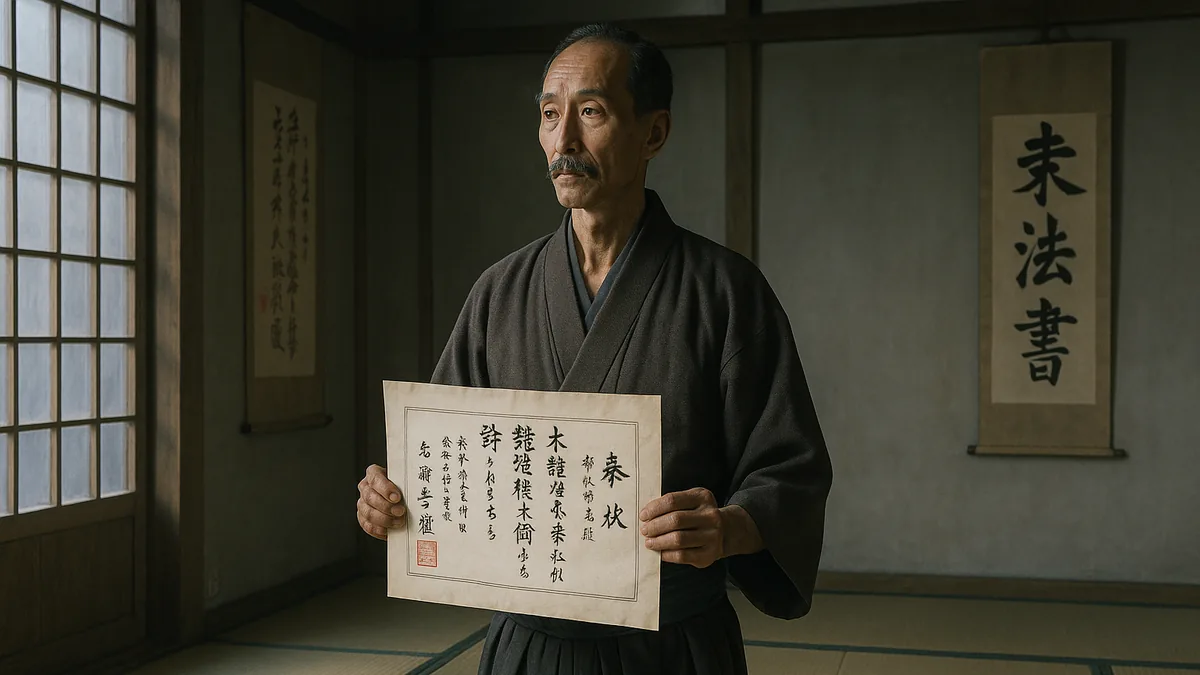
Hironori Otsuka was born in Shimodate, Ibaraki Prefecture, Japan on 1 June 1892. He was introduced to jujutsu at a young age by his great-uncle Chojiro Ebashi. He later studied Shindo Yoshin-ryu jujutsu formally under Tatsusaburo Nakayama, a licensed instructor of that school. By 1921, Otsuka had received a Menkyo Kaiden certificate of full proficiency in Shindo Yoshin-ryu from Nakayama. Shindo Yoshin-ryu places strong emphasis on atemi (strikes to vital points), joint manipulation and body displacement rather than brute resistance.
In 1922, Otsuka attended a demonstration by Gichin Funakoshi, who had been invited by Japan’s Ministry of Education to demonstrate karate at the first National Athletic Exhibition in Tokyo, having recently settled on the mainland. Otsuka became one of Funakoshi’s senior students and was instrumental in spreading karate during its formative years on the mainland. He also trained under Kenwa Mabuni, founder of Shito-Ryu, and Choki Motobu, a fighter known for his practical, combative approach.
The founding date of Wado-Ryu is a matter with more than one defensible answer. By May 1934, Otsuka’s karate had been officially recognised as an independent style. In 1938, he registered it with the Dai Nippon Butoku Kai under the name “Shinshu Wadoryu Karate-Jujutsu.” In March 1939, the Dai Nippon Butoku Kai required all styles to formally register their names, and Otsuka registered his system as “Wado-Ryu.” Many histories cite 1939 as the founding year on the basis of that formal name registration; others use 1934. Both dates appear in reputable accounts, and the article uses 1934/1939 to reflect the genuine ambiguity.
In 1966, Emperor Hirohito awarded Otsuka the Order of the Rising Sun, Fifth Class, for his contributions to the introduction and teaching of karate. In 1972, the International Martial Arts Federation awarded him the title of Meijin and the rank of 10th Dan - the first time this honour had been given to a karateka. He died on 29 January 1982 at the age of 89.
His son, Jiro Otsuka, succeeded him as head of Wado-Ryu, later adopting the name Hironori Otsuka II in honour of his father. The style has since developed several distinct organisational branches. The main ones are Wado-Ryu (under the Wado-Ryu Karate-do Renmei) and Wado-Kai (under the Japan Karate-do Federation Wado-Kai). These organisations have different lineages and some differences in emphasis, though the core technical identity remains recognisable across both.
The Jujutsu Foundation: Why It Matters More Than You Think
Here is the thing that gets lost in introductory descriptions of Wado-Ryu: calling it “a blend of jujutsu and karate” undersells how deeply the jujutsu logic runs through the style. This is not a style where a few throwing techniques were grafted onto a karate curriculum. The jujutsu thinking shapes the fundamental movement principles.
Shindo Yoshin-ryu, the specific school Otsuka trained in, is a koryu (classical Japanese) jujutsu system. Its approach to combat is built around the idea that you should not meet force with force directly. The practitioner is expected to move in a way that takes them off the line of attack while simultaneously setting up a counter. This principle - described in Wado as “tai sabaki” (body management) - is not a supplementary skill in Wado-Ryu. It is the central concept.1
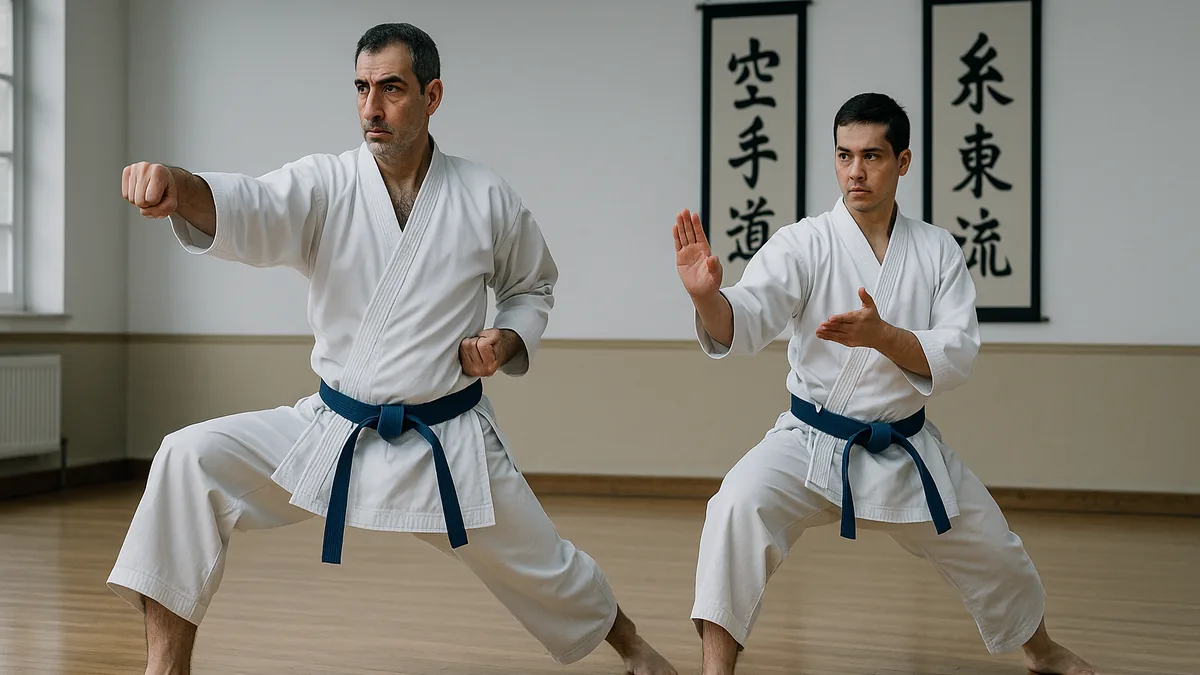
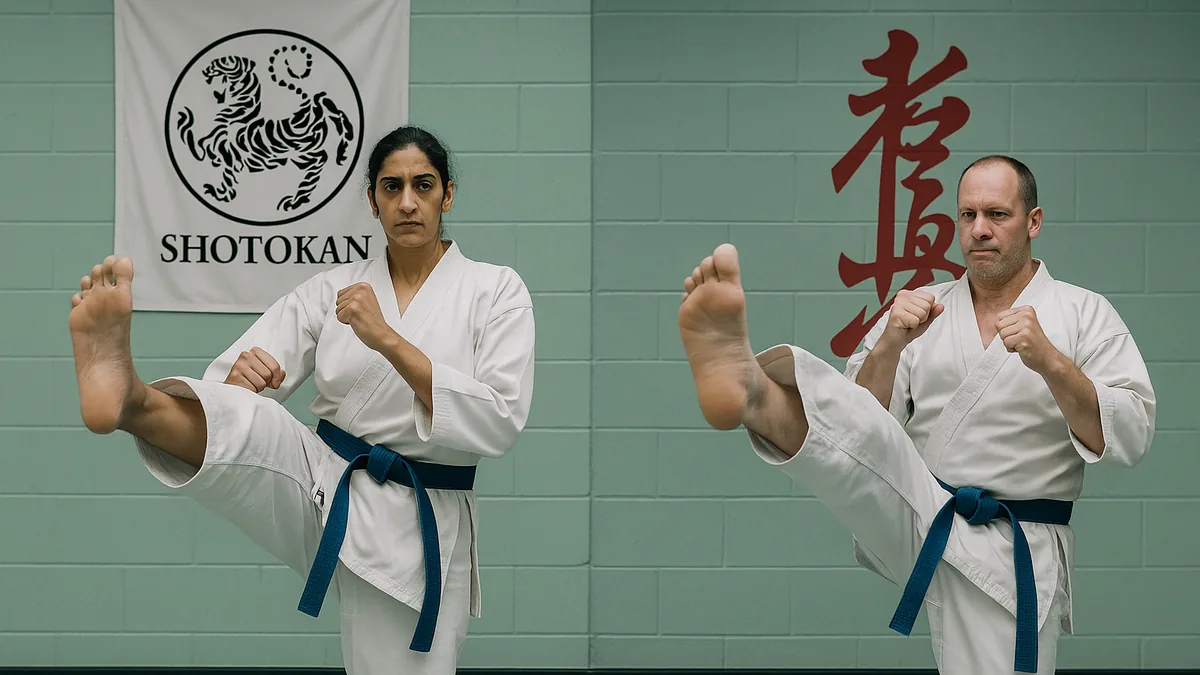
A common mistake among practitioners new to Wado-Ryu, particularly those coming from Shotokan, is treating the blocks as static interceptions. The correction that instructors consistently return to is that the block and the body movement are one action. You are not blocking and then moving. You are moving in a way that makes the block work. When this connects properly, you will feel the difference immediately - the incoming force seems to pass by rather than land against you, and your counter is already set up by the position your movement has put you in. When it is done wrong, it feels like you are fighting the technique. When it is done right, it feels like the attacker has walked past you.
That sensation - of the attack almost missing you even when you are still in range - is the jujutsu logic expressing itself through karate technique. As one analysis of the style puts it, while a Wado block may look much like a Shotokan block, they are performed from a completely different perspective.
Evasion as a Principle, Not a Tactic
White belts in Wado-Ryu are often told to move. By the time they reach brown belt, most practitioners begin to understand that “move” is a far more specific instruction than it sounds. The direction, timing and degree of movement are all governed by the principle of not creating unnecessary resistance.
Otsuka’s approach, as documented in Wado-Ryu literature, was that the ideal response to an attack is one where you expend the minimum necessary energy to neutralise it. This is directly inherited from jujutsu thinking.1 In practice, it produces a style that looks lighter and more fluid than Shotokan or Kyokushin - but that lightness is not softness. It is precision. For a direct comparison of how different styles approach these foundational questions, the Shotokan vs Kyokushin article covers how two very different philosophies of force and contact developed from similar roots.
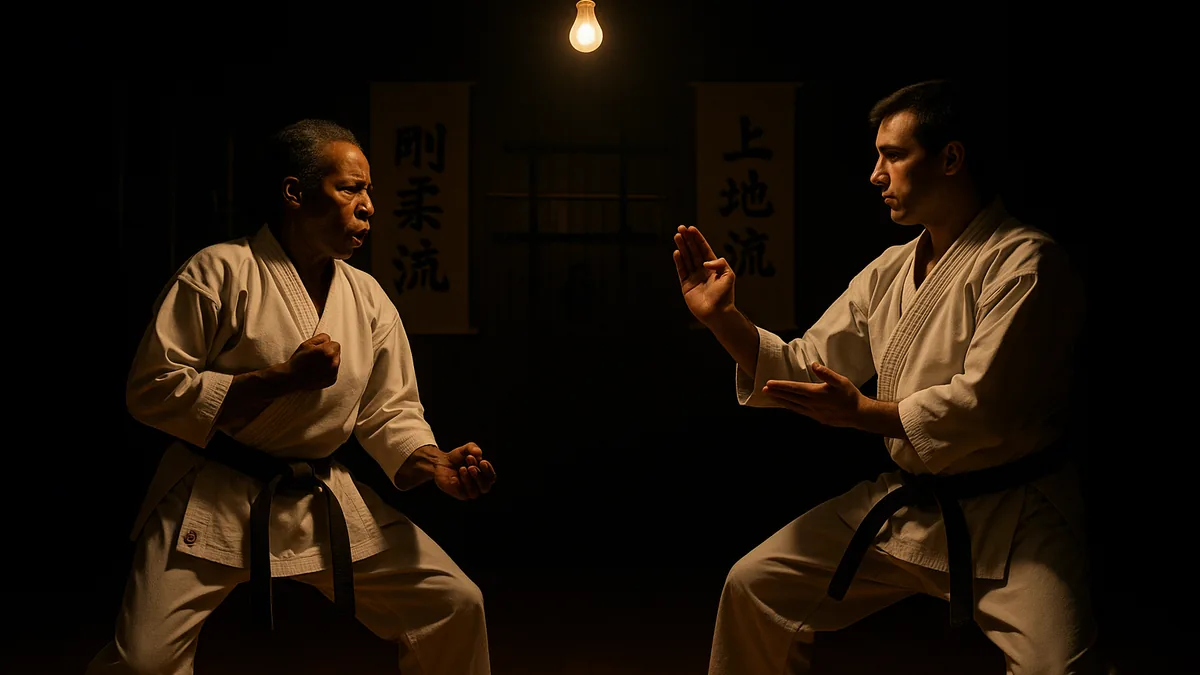
The practical consequence of this in jiyu-kumite is significant. In Wado-Ryu sparring, the evasion is your first counter. If you move correctly off an opponent’s committed lunge punch, you are already in position to counter without having absorbed any of the force. The counter is not a separate decision - it is built into the evasion. This is where Wado-Ryu practitioners who have trained the principle properly have a genuine timing advantage: their defence and offence are the same movement.
The Kata Syllabus and Its Roots
Wado-Ryu’s kata syllabus reflects Otsuka’s dual background clearly. The style retained several kata from Okinawan karate - Pinan (the five forms known in Shotokan as Heian), Kushanku, Naihanchi, Seishan, Chinto, Bassai, Wanshu, Rohai and Jion are all part of the standard syllabus. If you want to understand why the same kata carry different names in different styles, the Pinan vs Heian article addresses that directly.
What distinguishes the Wado-Ryu versions of these kata is not always immediately visible to an outside observer. The stances tend to be higher and more natural than in Shotokan. The transitions between techniques carry more of the evasive quality - you are moving between positions rather than planting in them. Many instructors describe the feeling as “moving through” the kata rather than “stopping at” each technique.
The style also includes a set of paired drills called “ohyo kumite” and more formalised partner exercises called “kihon kumite” (basic sparring forms). These are not supplementary - they are central to how Wado-Ryu transmits its technical principles. The kihon kumite in particular encode the jujutsu logic in a way that becomes clearer with each repetition: the response to each attack involves movement that redirects rather than meets force head-on.1
Common Misconceptions That Hold Practitioners Back
Misconception 1: Wado-Ryu is “soft” karate.
This comes up constantly, usually from practitioners who have trained primarily in hard-style systems. The misunderstanding is understandable - the style does not emphasise the kind of visible muscular tension that signals power in Shotokan or Kyokushin. But softness and fluidity are not the same thing. The evasive movement in Wado-Ryu requires precise timing and body control that is genuinely difficult to develop. The correction here is not technical - it is conceptual. Think of it less as “soft” and more as “efficient.”
Misconception 2: The jujutsu elements are historical footnotes.
A significant number of practitioners treat the jujutsu background as interesting trivia rather than a living technical influence. This is where understanding breaks down. The throwing and joint-locking elements in Wado-Ryu - present in the kihon kumite and in some kata applications - are not decorative. They represent the style’s answer to what happens after the evasion.1 If you are only training the striking, you are training half the system.
Misconception 3: Wado-Ryu and Shotokan are basically the same style with minor differences.
Both styles trace a lineage connection through training with Funakoshi, which leads some practitioners to assume they are close cousins. They are not. The jujutsu influence on Otsuka’s thinking produced a fundamentally different movement philosophy. The surface similarities - shared kata names, Japanese mainland origin - obscure the depth of the difference. For a broader picture of how the four major JKF styles relate to and differ from each other, the Karate Styles Compared guide is a useful reference point.
How Understanding Develops Over Time
The pattern that emerges across Wado-Ryu training is consistent: beginners focus on the techniques, intermediate practitioners focus on the timing, and experienced practitioners focus on the movement. That progression is not accidental - it reflects the depth of what Otsuka built into the system.
Most beginners think the style is about blocking and countering. By brown belt, most practitioners realise it is about positioning. The block and the counter are almost secondary - the primary skill is being somewhere that makes the attack ineffective. That realisation tends to come from kumite rather than kata, and it usually arrives as a physical sensation before it becomes an intellectual understanding. You do not think your way to the evasion. You train until the movement happens before you decide to move.
This is where Otsuka’s jujutsu background is most clearly felt. Classical jujutsu does not teach you to be reactive. It teaches you to move in patterns that make your position advantageous before the attack arrives.1 That principle - trained through the kata, the kihon kumite, and the sparring - is the core of what Wado-Ryu transmits.
Community Perspective
There is a genuine disagreement within Wado-Ryu circles about how much the jujutsu elements should be emphasised in modern training. Some instructors - particularly those aligned with competition-focused associations - have moved toward a curriculum that prioritises the striking and sparring elements, treating the joint-locking and throwing techniques as supplementary or grading requirements rather than central principles. Others argue that removing those elements changes the technical logic of the style in ways that eventually degrade even the striking.
This is not a trivial debate. The evasive movement in Wado-Ryu makes most sense when you understand what it is setting up - and what it is often setting up is a throw or a lock, not just a counter-strike.1 If practitioners train the evasion without understanding its destination, they tend to develop movement that looks right but lacks the decisive quality that makes it effective. This point recurs consistently in instructors’ descriptions of the style, and it usually makes sense once you have tried to apply the evasion in free sparring and found that you have moved beautifully into a position where you have no follow-up.
The organisational split between Wado-Ryu and Wado-Kai also means that practitioners in different associations sometimes train noticeably different interpretations of the same techniques. If you are moving clubs or exploring the style for the first time, the How to Find a New Karate Club When You Move or Change Styles guide has practical advice on navigating those differences.
It is also worth comparing how other styles handle the question of mixed influences. Goju-Ryu and Uechi-Ryu, for example, both draw on Chinese martial arts but produce very different technical results - as covered in the Goju-Ryu vs Uechi-Ryu article. Shito-Ryu, similarly, draws on multiple lineages and carries a correspondingly large kata syllabus - detailed in the Shito-Ryu kata list. Wado-Ryu’s case is distinctive because the secondary influence - Shindo Yoshin-ryu jujutsu - was not a distant historical source. It was Otsuka’s primary training identity before he encountered karate at all.1
That is the detail that matters. Otsuka was not a karateka who added jujutsu. He was a jujutsuka who found karate and rebuilt it according to principles he already understood deeply. Everything that makes Wado-Ryu distinctive follows from that.
Key Takeaways
- The evasive movement in Wado-Ryu is not a stylistic preference - it is the application of jujutsu body management principles. Train it as a principle, not as a supplementary skill.
- If you are coming from Shotokan or another hard style, the biggest adjustment is conceptual: the block and the body movement are one action. The correction that usually works is to stop thinking of the block as the primary response and start thinking of the movement as the response.
- The kihon kumite (basic sparring forms) are not grading formalities. They are the most direct transmission of the style’s technical logic. Treat them accordingly.
- When the evasion feels right, you will feel the attack pass rather than land. That sensation is the benchmark. If it feels like you are absorbing or resisting, the movement is not working yet.
- The throwing and joint-locking elements are not decorative. They explain where the evasion is going. Training without them means training without the destination.
- Wado-Ryu and Shotokan share kata names and a lineage connection, but the movement philosophy is genuinely different. Do not assume familiarity with one transfers directly to the other.
References
Checked by the KarateLifestyle editorial team against Wado-Ryu association histories, a koryu jujutsu practitioner organisation (TSYR), an SKIF federation biography of Funakoshi, and multiple UK and international Wado organisation pages in October 2026. The founding date of Wado-Ryu is genuinely contested across reputable sources, and the article reflects that ambiguity rather than asserting a single year.
- Wado Ryu & Jujutsu (Shikukai Wado Ryu Karate in Essex - wadoryu.org.uk). UK Wado association technical article; cited for tai sabaki as body management and Nakayama's role
The weekly digest
New karate articles, once a week
One email every week with everything new on Karate Lifestyle. No spam; unsubscribe in one click.
We'll email you to confirm. See our privacy policy.