Goju-Ryu vs Uechi-Ryu: Two Naha-te Styles That Look Similar and Train Very Differently
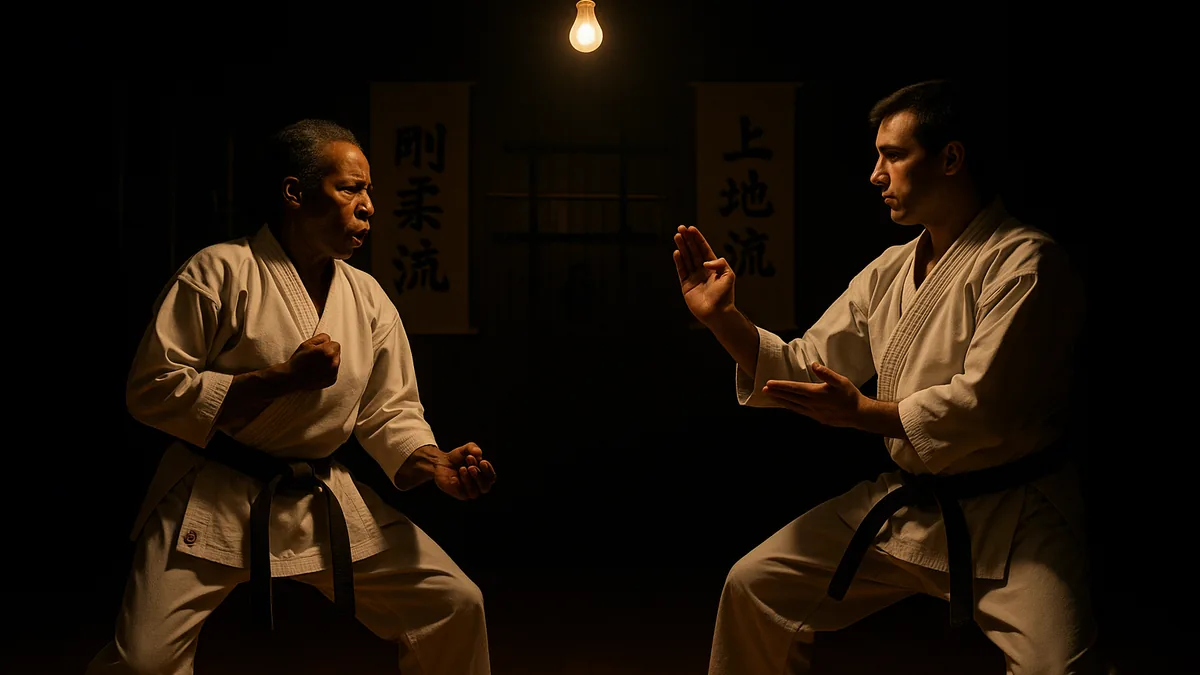
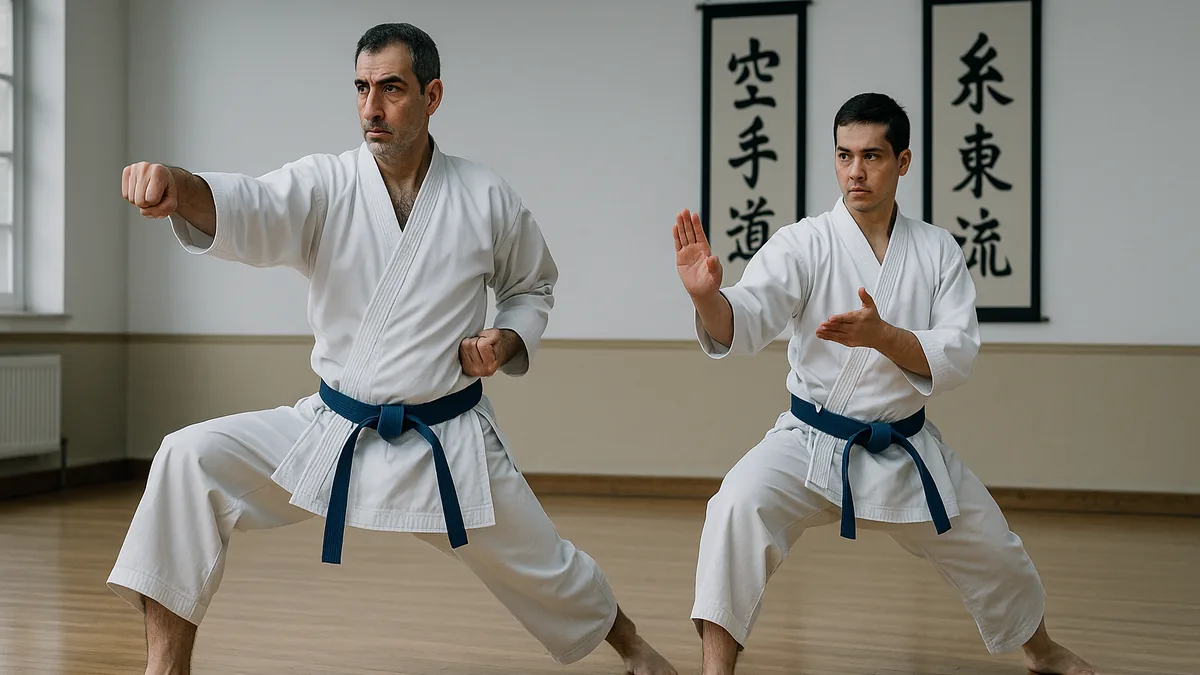
If you ask most people to describe Goju-Ryu and Uechi-Ryu, they’ll say something like “they’re both Okinawan, both from the Naha-te tradition, both hard-soft styles.” That is broadly fair, but it gets you only so far. Train in one for a year, then step into a class of the other, and the differences hit you immediately: in how the body is used, how breathing is treated, what a “good” technique feels like, and what the training is actually trying to build. These are not two versions of the same thing. They are distinct approaches that happen to share a common geography and some overlapping kata names.
Understanding where they diverge is genuinely useful, whether you’re choosing a style, cross-training, or trying to understand why a technique that works in one system doesn’t translate cleanly into the other.
The Naha-te Connection - and Why It Only Gets You So Far
Both Goju-Ryu and Uechi-Ryu trace roots to Okinawa and to Chinese martial arts influence from Fujian province. Goju-Ryu was founded by Chojun Miyagi (1888 to 1953), who studied under Kanryo Higaonna, the leading authority of the Naha-te tradition.1 Uechi-Ryu was founded by Kanbun Uechi (1877 to 1948), who travelled to Fuzhou in Fujian Province and trained under a teacher remembered in Japanese sources as Shushiwa, identified with the Chinese name Zhou Zihe. Both men brought back Chinese methods and both systems emphasise close-range fighting, but their Chinese sources were separate: the connection between the two styles is one of parallel Fujian origin rather than a shared lineage through Higaonna’s Naha-te. As one summary of Uechi-Ryu puts it, the style “shares a similar foundation with Naha-Te despite their separate development.”
That shared geography and parallel ancestry means you will find surface-level similarities: low, rooted stances; emphasis on close-range technique; kata that look nothing like Shotokan. But the training philosophies that grew from those separate roots are meaningfully different, and those differences matter more than the origin story.
The Goju-Ryu name tells you something: “Go” means hard, “Ju” means soft. Miyagi named the style in 1930, taking the phrase from a line in the Bubishi, a Chinese martial arts text revered by Okinawan masters - “the way of inhaling and exhaling is hardness and softness.” Miyagi formalised this as a principle: the interplay of tension and relaxation, hardness and yielding. Uechi-Ryu’s Chinese source, Pangai-noon, also translates as “half-hard, half-soft,” but the two systems arrived at that principle through different routes and express it in different ways.
How Goju-Ryu Trains the Body
Breathing as a Technical Skill, Not a Background Process
The biggest difference most practitioners notice when they first encounter Goju-Ryu seriously is how much time is spent on breathing. This isn’t motivational talk about “breathing through the technique.” In Goju-Ryu, ibuki breathing - the forceful, audible exhalation used in kata like Sanchin - is a structural element of how the body generates and receives force.2
When you perform ibuki correctly, you will feel the entire torso contract and stabilise, almost as if the core becomes a single rigid unit. The breath drives that tension, and the tension supports the technique.3 Many instructors cue this as “breathing into the technique rather than alongside it.” It takes time to feel the difference, and most beginners do not get it from explanation alone: they get it the first time a senior practitioner checks their Sanchin by applying pressure to the body mid-kata, and they discover they have nowhere near the stability they thought they had.
The correction that usually works is to stop thinking about the exhalation as something you do at the end of a technique and start treating it as what makes the technique possible. The sound is a byproduct of the pressure, not a performance.
Circular Movement and Close-Range Control
Goju-Ryu techniques frequently redirect rather than simply block. The circular hand movements - nagashi-uke, mawashi-uke and others - are designed to deflect and control an incoming attack while simultaneously setting up a counter. This is not the same as a standard age-uke or gedan-barai. The motion wraps around the attack rather than meeting it at a fixed angle.
In partner drills, this feels very different from linear blocking. A good circular deflection doesn’t feel like stopping force: it feels like redirecting it, as if the attack passes around you. Getting there takes repetition, because the instinct under pressure is to tense and push back rather than redirect and follow.
The kata Tensho is central to developing this quality. Created by Miyagi from Chinese source material he encountered in Fujian, Tensho is slow and controlled, and demands that the hands move with continuous, connected tension rather than in isolated segments. Treating Tensho as a relaxation exercise is a common mistake: it is a precision exercise in maintaining connected tension through a full range of hand and wrist positions.
How Uechi-Ryu Trains the Body
Linear Power and Structural Conditioning
Uechi-Ryu’s approach to technique is more direct. The characteristic strikes - the nukite (spear hand), the boshiken (thumb knuckle strike), and the sokusen (toe kick) - are linear, penetrating weapons aimed at specific anatomical targets. The training philosophy is built around developing the body’s capacity to deliver and receive these techniques without injury.
This is where Uechi-Ryu’s conditioning work becomes significant. Body conditioning - kotekitae (forearm conditioning) and general body hardening - is a standard part of Uechi-Ryu training in a way that it isn’t in most Goju-Ryu dojos. The reasoning is straightforward: if your system uses the thumb knuckle as a primary striking tool, you need that thumb knuckle to be structurally capable of doing the job. This isn’t about toughness as an end in itself; it’s preparation for the actual techniques the style uses.
The stances in Uechi-Ryu tend to be more upright than Goju-Ryu’s, with a characteristic weight distribution that allows for rapid forward movement. The sanchin dachi (hourglass stance) appears in both styles, but Uechi-Ryu’s version is generally described as slightly more upright and mobile. The feeling is of being coiled and ready to drive forward, rather than rooted and braced against incoming force.
Sanchin Kata - Same Name, Different Emphasis
Both styles have a Sanchin kata, and comparing them directly is instructive. Goju-Ryu’s Sanchin, as revised and standardised by Miyagi, is performed with closed fists and tested by the instructor applying pressure (the shime test) to check structural integrity and breathing coordination.1, 2 The kata is slow and the emphasis is on the internal state: breath, tension and stability together.
Uechi-Ryu’s Sanchin is also slow and structural, but the emphasis shifts toward correct body alignment and the delivery of technique to specific targets. A checking method exists in Uechi-Ryu too, but the diagnostic focus is different - less on breath management as the primary skill and more on whether the body is structurally aligned to deliver force through the intended weapon.
A practitioner moving from one system to the other will perform Sanchin recognisably, but will feel immediately that something is off. The correction that works is to stop trying to map one system’s priorities onto the other’s kata and instead ask what this version is actually trying to build.
Community Perspective
The question of which style is “more practical” comes up regularly in online discussions and dojo conversations, and it’s worth addressing honestly rather than dodging it.
Uechi-Ryu practitioners often argue that their system’s conditioning and linear weapons are more immediately applicable in a real confrontation - that a nukite to the throat or a sokusen to the knee doesn’t require elaborate setup. Goju-Ryu practitioners counter that the breathing and circular movement principles give you a more adaptable toolkit, particularly for close-range control and grappling transitions.
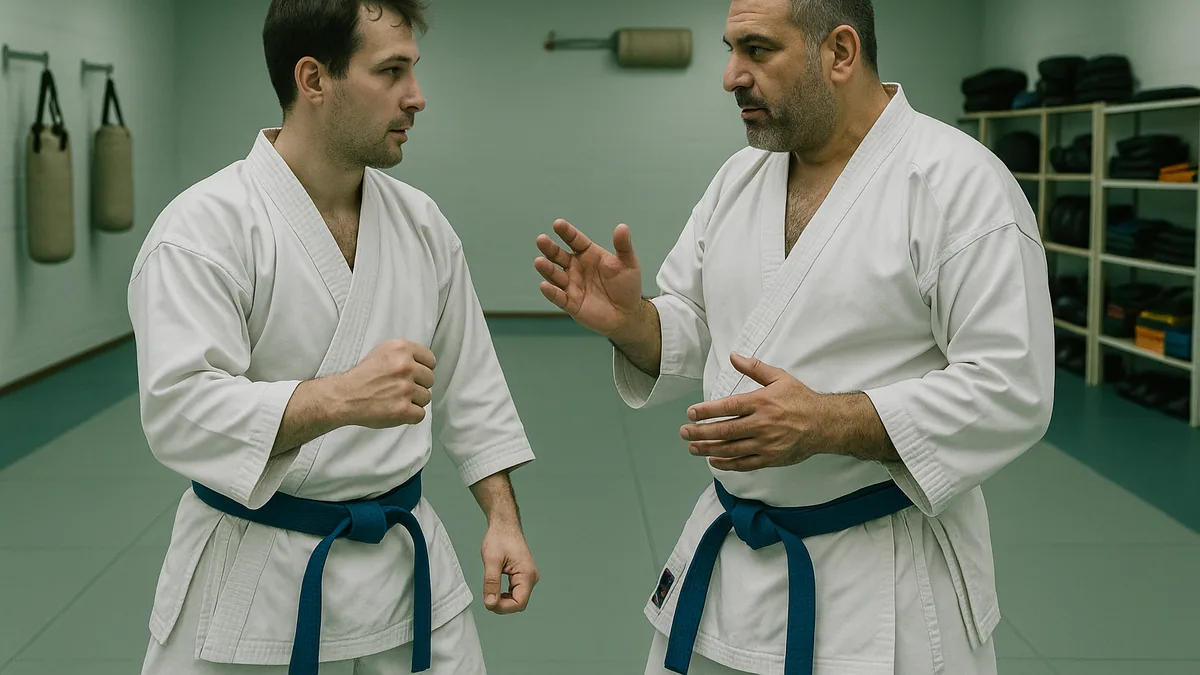
We’d suggest this debate is less useful than it looks. Both systems were designed for close-range fighting, and both produce capable practitioners. The more honest question is what kind of training suits you - and that depends on your body type, your existing background, and how much you enjoy conditioning work versus technical refinement.
What does change with experience is how practitioners within each style think about their own system. A common shift in Goju-Ryu is that beginners focus on the hard techniques - the punches, the blocks - and only later start to understand that the soft elements are where the system’s sophistication lives. In Uechi-Ryu, beginners often focus on the conditioning and only later appreciate how precise the targeting and body mechanics need to be for the techniques to work as intended.
If you’re considering switching styles or training alongside your current practice, How to Find a New Karate Club When You Move or Change Styles has practical guidance on navigating that process without losing what you’ve already built.
What Cross-Training Between These Styles Actually Reveals
Practitioners who have trained seriously in both styles - and there are more of these than you might expect, particularly in Okinawa and in the United States where both styles have established communities - tend to report the same things.
Goju-Ryu training improves Uechi-Ryu practitioners’ breath control and their ability to use circular deflection rather than meeting force with force. Uechi-Ryu training improves Goju-Ryu practitioners’ structural conditioning and their comfort with penetrating linear strikes to specific targets.
The kata overlap helps here. Sanchin and Seisan appear in both systems, and Sanseiryu (spelled Sanseiryu or Sanseru depending on lineage) also appears in both, which gives cross-training practitioners a common reference point. But the differences in how those kata are performed make the comparison genuinely educational rather than just repetitive.
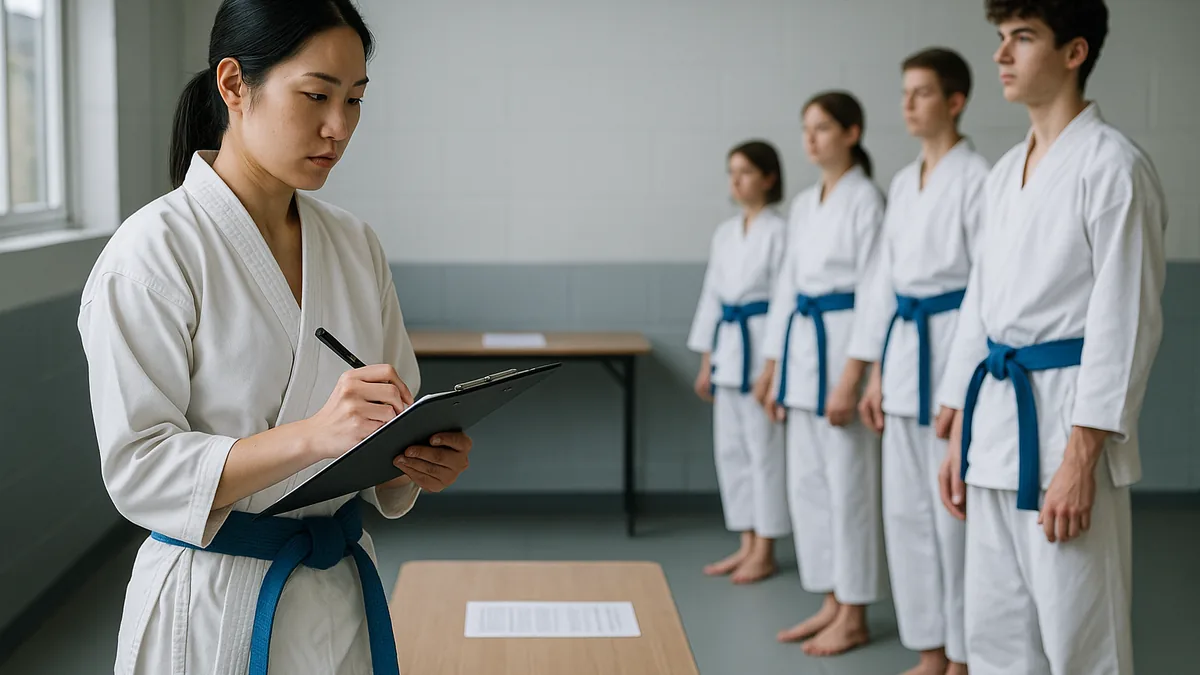
If you’re grading in either system and cross-training in the other, be clear with your examiner about your background. A Goju-Ryu Sanchin performed with Uechi-Ryu emphasis will look wrong to a Goju-Ryu examiner even if the movements are technically similar. For more on how grading systems handle stylistic nuance, What Makes a Good Karate Grading System? is worth reading before you sit your next exam.
Who Each Style Suits
We’d rather give you a direct answer here than hedge. Goju-Ryu works better than Uechi-Ryu for practitioners who are drawn to technical complexity in close-range control, who want to develop breathing as a genuine structural skill, and who are interested in the interplay between tension and relaxation as a fighting principle. The style rewards patience and internal focus.
Uechi-Ryu works better for practitioners who want a clear, direct physical development path, who respond well to conditioning work, and who prefer a system where the techniques are anatomically specific and the training logic is relatively transparent. The style rewards consistency and physical commitment.
Neither is a shortcut. Both require serious time investment before the principles become usable. If you’re returning to karate after time away and considering which direction to go, Returning to Karate After a Long Break: What to Expect covers the practical realities of rebuilding in a new context.
Key Takeaways
-
Breathing in Goju-Ryu is structural, not supplementary. If your ibuki isn’t driving tension through the whole torso, you haven’t got it yet. Treat the exhalation as the technique’s foundation, not its accompaniment.
-
Uechi-Ryu’s conditioning work is preparation, not performance. Kotekitae and body hardening exist because the style’s primary weapons require a conditioned body to work safely. Skipping it isn’t toughness - it’s avoiding the training.
-
Sanchin kata means different things in each system. Performing one system’s Sanchin with the other system’s priorities will feel right to you and look wrong to your instructor. Learn what each version is actually testing before you perform it.
-
Circular technique in Goju-Ryu requires you to stop fighting incoming force. The instinct is to push back. The correction is to redirect. You’ll feel the difference the first time a deflection actually works.
-
Cross-training between these styles is genuinely productive - but only if you’re clear about which system’s principles you’re applying at any given moment. Blending them unconsciously produces technique that satisfies neither.
-
Both styles have serious competition and grading traditions. If you’re competing for the first time in either system, Competing in Karate for the First Time: What Nobody Tells You covers what the ruleset and environment will actually demand of you.
References
Checked by the KarateLifestyle editorial team against official governing body pages (IOGKF, IUKF, Goju-Ryu Bujutsukan), primary organisational histories (Uechi-Ryu Butokukai, Uechi-Ryu.com), and technical sources including a ResearchGate paper on karate breathing mechanics, in October 2026. Early lineage details for both styles involve some historical uncertainty, particularly around Higaonna's Chinese teacher and the precise duration and nature of Kanbun Uechi's training; claims have been worded accordingly.
- Goju Ryu History. International Okinawan Goju-Ryu Karate-Do Federation (IOGKF). Organisational history page, primary source for the IOGKF lineage.
- A Short History of Okinawan Goju-Ryu Karate-Do. Seishinkan Karate on Main. Covers Miyagi's revision of Sanchin and the shime testing method.
- Body Dynamics and Breathing Mechanism in Karate. ResearchGate hosted paper on karate biomechanics, ibuki breathing and Sanchin kata.
The weekly digest
New karate articles, once a week
One email every week with everything new on Karate Lifestyle. No spam; unsubscribe in one click.
We'll email you to confirm. See our privacy policy.