Shitō-ryū Kata List: Every Form, Its Origin Style, and Why the Syllabus Is So Large
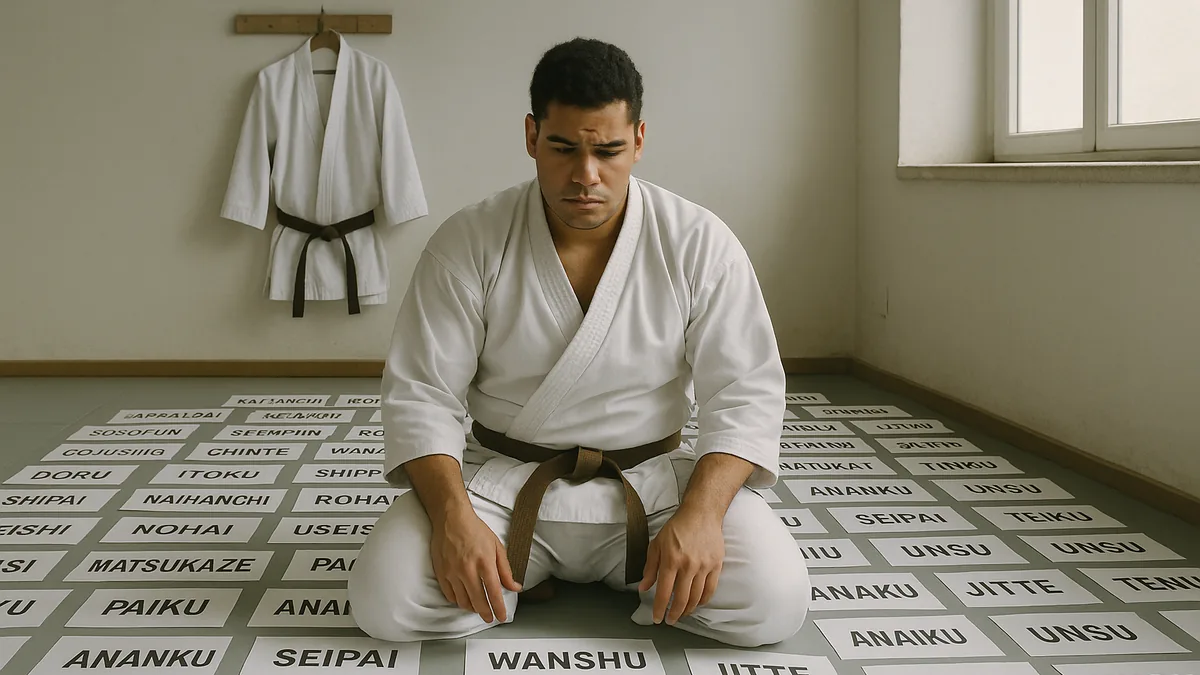
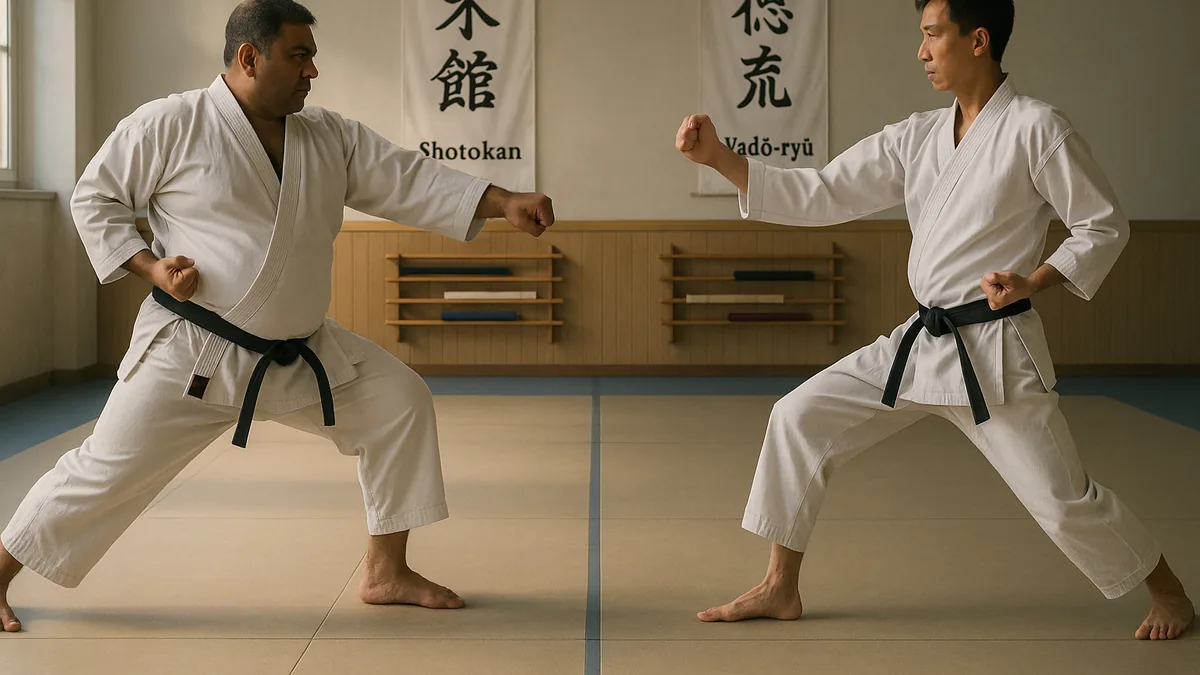
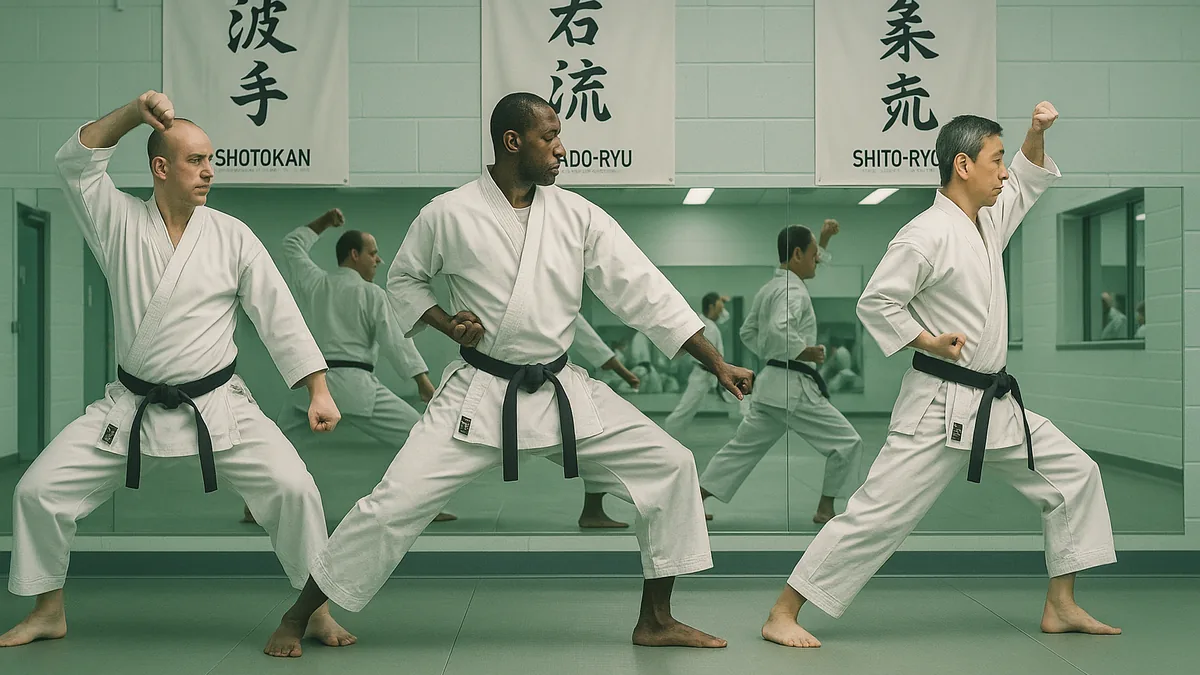
Most karate styles have a manageable kata syllabus. Shotokan practitioners typically work through 26 forms over a lifetime. Goju-ryu has 12.1 Wado-ryu formally recognised nine core kata by its founder Hironori Ohtsuka, though many schools practise a wider syllabus of around 15. Then there is Shito-ryu, which asks its students to eventually engage with somewhere between 50 and over 100 kata, depending on the lineage and organisation. That number stops most people in their tracks the first time they hear it.
The question worth asking is not “how is that possible?” but “why was it built that way, and what does that mean for how you train?”
Why the Syllabus Is So Large
Shito-ryu was founded by Kenwa Mabuni (1889 to 1952), who trained under two of Okinawa’s most influential karateka: Anko Itosu, the Shuri-te master responsible for systematising much of what became modern karate, and Kanryo Higaonna, the Naha-te master whose influence runs through every Goju-ryu and Naha-derived system. That dual lineage is the entire explanation for the syllabus size. The style’s very name reflects it: “Shi” is taken from Itosu, “To” from Higaonna (written Higashionna in some lineages), and “ryu” means school.
Itosu’s Shuri-te was characterised by powerful stances, linear technique, and the Pinan series he developed for introduction to the Okinawan school physical education system from around 1904 to 1907. Higaonna’s Naha-te brought close-range power, circular technique, tension-breathing methods, and kata like Sanchin and Seisan that demand a completely different physical understanding. Mabuni did not merge these two traditions into a single hybrid style. He preserved both, largely intact, and added further kata from other sources including Aragaki Seisho and Gokenki. The result is a syllabus that functions as a living archive of pre-war Okinawan karate.
That is not a criticism. It is a design choice with real consequences for training.
The Kata and Their Origins
The Shito-ryu syllabus is typically divided by lineage. Understanding which tradition a kata comes from tells you what to look for technically - and what will feel wrong if you bring the wrong body mechanics to it.
Shuri-te and Tomari-te Derived Kata
These form the backbone of most students’ early grading syllabus:
- Pinan Shodan through Godan - developed by Anko Itosu and introduced into the Okinawan school district karate programme from around 1904 to 1907. They are introductory kata, but do not mistake “introductory” for “simple.” The hip mechanics required in Pinan Godan’s jump are technically demanding.
- Bassai Dai and Bassai Sho - Shuri-te forms emphasising powerful transitions and directional changes. The name is commonly interpreted as “to penetrate a fortress.”
- Kosokun Dai, Kosokun Sho, and Kosokun Shiho - the Okinawan precursors to Shotokan’s Kanku series. Shiho in particular is rarely seen outside Shito-ryu.
- Rohai (Shodan, Nidan, Sandan) - Tomari-te origin, associated with Matsumora Kosaku. Shito-ryu preserves all three versions; most other styles kept only one.
- Wanshu - Tomari-te origin, known as Enpi in Shotokan. The flying movement sequence appears here in a slightly different context.
- Chinto - Tomari-te, known as Gankaku in Shotokan. The single-leg stance sequences are technically precise and unforgiving.
- Jion, Jitte, Jiin - Shuri/Tomari origin. Shito-ryu preserves all three where many styles dropped Jiin entirely.
- Matsukaze, Wankan, Useishi (Gojushiho) - less commonly taught in other styles, these appear in the Shito-ryu syllabus as senior forms.
Naha-te Derived Kata
These require a different physical approach entirely. If you train Shuri-te forms with relaxed, snapping technique and then pick up a Naha-te kata without adjusting, it will feel wrong at first - and it should. The tension-release cycle in Naha-te kata is built on sustained muscular engagement, not the ballistic relaxation of Shuri-te.
- Sanchin - the foundational Naha-te kata. Every repetition should feel like an isometric exercise; the pressure through the floor, the tension across the lats, the controlled breathing are the whole point.
- Tensho - developed by Miyagi Chojun from Sanchin, emphasising circular hand techniques.1 Shito-ryu inherited it through Mabuni’s relationship with the Naha-te tradition.
- Seisan - one of the oldest kata in the Okinawan canon. The Shito-ryu version differs from the Goju-ryu version in structure and emphasis.
- Seienchin - a powerful, low-stance kata with no kicks. The sustained tension required makes it physically exhausting when done properly.
- Saifa, Shisochin, Sanseiru, Seipai, Kururunfa, Suparinpei - the full Goju-ryu derived series, preserved in Shito-ryu’s syllabus. Suparinpei, whose name translates as “108,” contains 108 techniques and is one of the most demanding kata in the Okinawan canon.
Aragaki-derived and Other Sources
Mabuni also trained with Aragaki Seisho, and several kata in the Shito-ryu syllabus trace their lineage through him:
- Niseishi (Nijushiho) - 24 techniques, powerful and direct. Shotokan inherited a version of this.
- Sochin - a strong, rooted kata emphasising fudo-dachi (immovable stance). The Shito-ryu version differs structurally from the Shotokan version.
- Unshu - one of the more unusual kata in the syllabus, with distinctive low techniques and complex transitions.
Mabuni also received kata from Gokenki, a Chinese tea merchant and White Crane practitioner who lived and taught in Okinawa. Nipaipo, Haffa, and Rokkishu are among the forms attributed to this connection.
The Mistake Most Students Make With This Syllabus
The biggest mistake is treating every kata in the syllabus as something to be learned and checked off. That instinct is understandable - the syllabus is large, gradings require specific forms, and there is a natural pressure to accumulate.
The correction that actually changes how you progress is this: treat each lineage group as a separate technical education, not a collection of individual forms. When you begin a Naha-te kata after years of Shuri-te training, you are not learning new sequences. You are learning a different way of using your body. The kata is the vehicle; the body mechanics are the destination.
A common mistake is applying Shuri-te timing to Naha-te kata - executing techniques with the snap-and-relax pattern when the kata demands sustained tension. The result looks superficially correct but feels hollow, and any instructor who knows both traditions will spot it immediately. The correction is to spend time on Sanchin before attempting any other Naha-te form. Once you understand what Sanchin is asking of your body, the other Naha-te kata start to make sense.
We would also point you toward our article on how to learn a new kata fast without ingraining bad habits - the principles there apply directly to navigating a syllabus this size.
What the Breadth Actually Develops
There is a real argument - and we think it holds up - that training across both Shuri-te and Naha-te traditions develops a more complete physical vocabulary than specialising in one. Shuri-te develops speed, distance management, and sharp linear power. Naha-te develops rooted stability, close-range structural strength, and the ability to absorb as well as deliver force. A practitioner who genuinely understands both has access to technical tools that a single-tradition stylist does not.
The counterargument is that depth beats breadth, and that spending a lifetime on 12 kata will produce a more refined practitioner than spreading attention across 50. That argument is not wrong either. The honest position is that it depends what you are training for. If kata performance and technical range matter to you, the Shito-ryu syllabus is genuinely valuable. If you want to develop one or two kata to an exceptional level, a smaller syllabus serves that goal better. We have a longer discussion of this tension in How Many Kata Should You Actually Know? The Case Against Collecting Forms.
How Understanding Changes Across the Syllabus
Most beginners in Shito-ryu encounter the Pinan series first and assume the style is similar to Shotokan. By the time they reach the Naha-te forms, that assumption has usually been thoroughly dismantled. The physical experience of Sanchin - the floor pressure, the braced core, the deliberate breathing - is unlike anything in the Pinan series. That contrast is the point.
Senior Shito-ryu practitioners tend to describe the syllabus not as 50-plus separate things to know, but as a map of different physical principles. Each kata group represents a question: how does power work at long range? How does it work at close range? What happens when you remove kicks entirely? What does a kata built around single-leg balance teach you that a two-legged kata cannot?
Understanding the embusen - the floor pattern of different kata also reveals a great deal about their original purpose. Shuri-te kata tend toward expansive, multi-directional patterns. Naha-te kata are often more compact and linear. That difference in spatial design reflects a difference in the range and context each tradition was built around.
Community Perspective
One genuine disagreement within Shito-ryu is how many kata actually belong in the canonical syllabus. Different organisations - the World Shito-ryu Karate-do Federation, the Shito-ryu Kai, and various national bodies - maintain slightly different lists. Some include kata that others consider peripheral or unverified in their Mabuni lineage. The numbers you see cited in different places (“50 kata,” “94 kata,” “over 100 kata”) reflect these organisational differences rather than any single authoritative count.
This matters practically because if you train under one Shito-ryu organisation and grade under another, you may encounter kata that are unfamiliar, or find that forms you know are performed differently. The style’s diversity of sources, which is its greatest technical strength, also means there is no single agreed-upon definitive version of the syllabus. Most experienced Shito-ryu practitioners accept this as a feature of the style rather than a problem to be solved.
Key Takeaways
- Treat the Shuri-te and Naha-te sections of the syllabus as separate technical educations, not a single long list. The body mechanics are different enough that you need to consciously switch approach between them.
- Before attempting any Naha-te kata seriously, spend real time on Sanchin. The tension-breathing structure underpins everything else in that lineage. Without it, the other forms are just sequences.
- The size of the syllabus is a reason to go deeper into each kata, not faster through them. Kata transitions and overall kata quality matter far more than the number of forms you can perform from memory.
- When you encounter a kata from an unfamiliar lineage, ask which tradition it comes from before you start learning it. That single question will tell you what physical principles to look for.
- The organisational variation in Shito-ryu’s syllabus is real. If you are preparing for a grading or competition under a specific body, verify which version of each kata they require.
- The breadth of the syllabus is genuinely valuable - but only if you understand why each kata group exists. Collecting sequences without understanding their technical context is the one thing the syllabus was never designed to reward.
References
Checked by the KarateLifestyle editorial team against karate association primary sources, an official WKF competition kata document, and multiple corroborating lineage histories in October 2026. The precise creation date of the Pinan kata and the canonical count of some style syllabuses vary across sources; ranges and qualifications have been applied where appropriate.
- A Complete List of Goju Ryu Karate Katas with Videos. Karate Philosophy. Lists all 12 Goju-ryu kata with notes on Suparinpei's 108-technique name.
The weekly digest
New karate articles, once a week
One email every week with everything new on Karate Lifestyle. No spam; unsubscribe in one click.
We'll email you to confirm. See our privacy policy.