Line Work vs Pad Work vs Partner Drilling: How to Balance Your Kihon Time for Maximum Transfer
Most karateka I’ve trained with have a strong opinion about one of these three methods and quietly neglect the other two. The line worker who can throw a perfect gyaku-zuki into thin air but falls apart the moment someone throws back. The pad enthusiast who hits hard but has no idea what to do when the target isn’t being held for them. The partner driller who understands distance in isolation but can’t replicate it when the pressure is real. I’ve been all three of those people at different points, which is why I feel qualified to say: you need all of them, but you need them in the right proportion and for the right reasons.
The question isn’t which one is best. The question is what each one actually trains - and whether you’re honest with yourself about what you’re getting from each session.
Line Work: The Foundation You Never Finish Building
I used to think line work was for beginners. By the time I was mid-kyu, I was mentally checked out during kihon lines, going through the motions while waiting for the interesting stuff. My instructor at the time - a Shotokan 4th dan who had been training for over 30 years - pulled me aside after class and said something I didn’t fully understand until years later: “You’re practising the shape. You haven’t started practising the technique yet.”
What he meant was that I was replicating the external form without building anything underneath it. My zanshin was disconnected. My transitions between techniques were lazy. I was moving through the drill rather than using the drill to burn in something real.
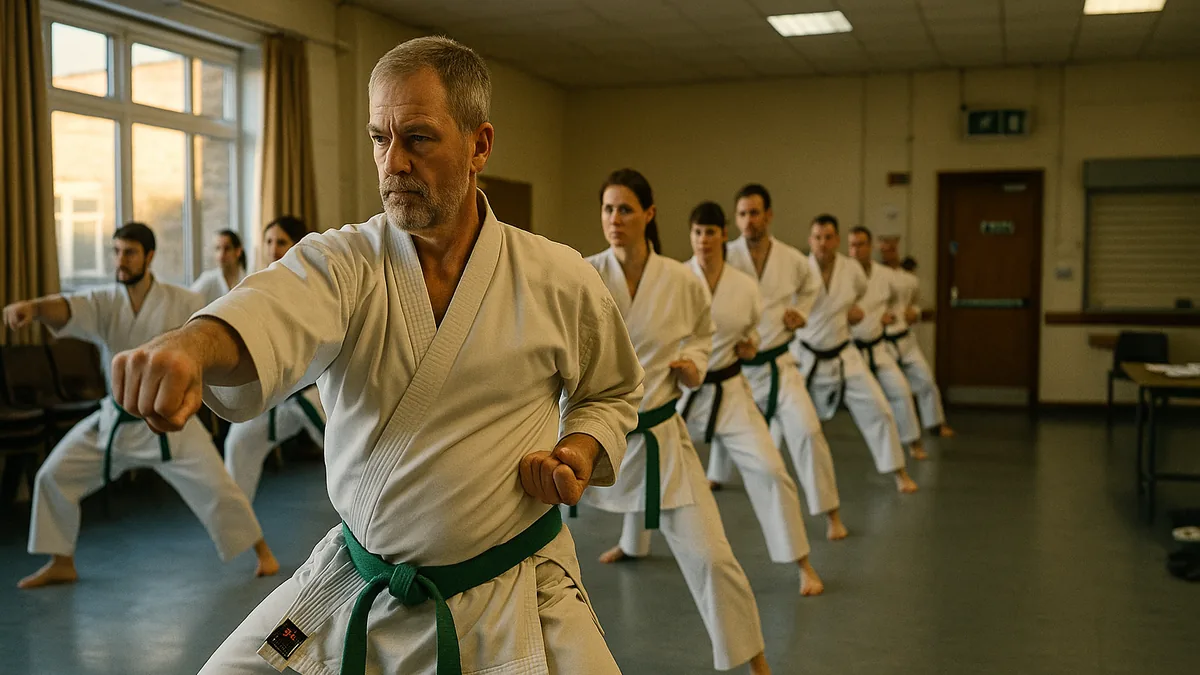
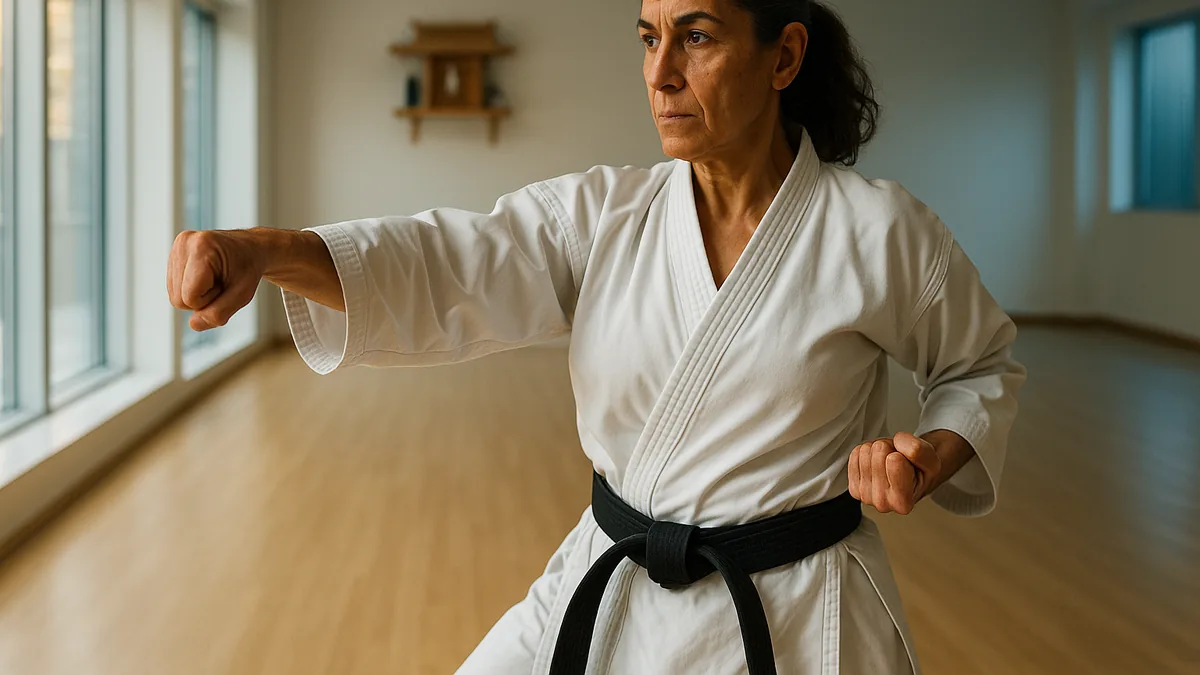
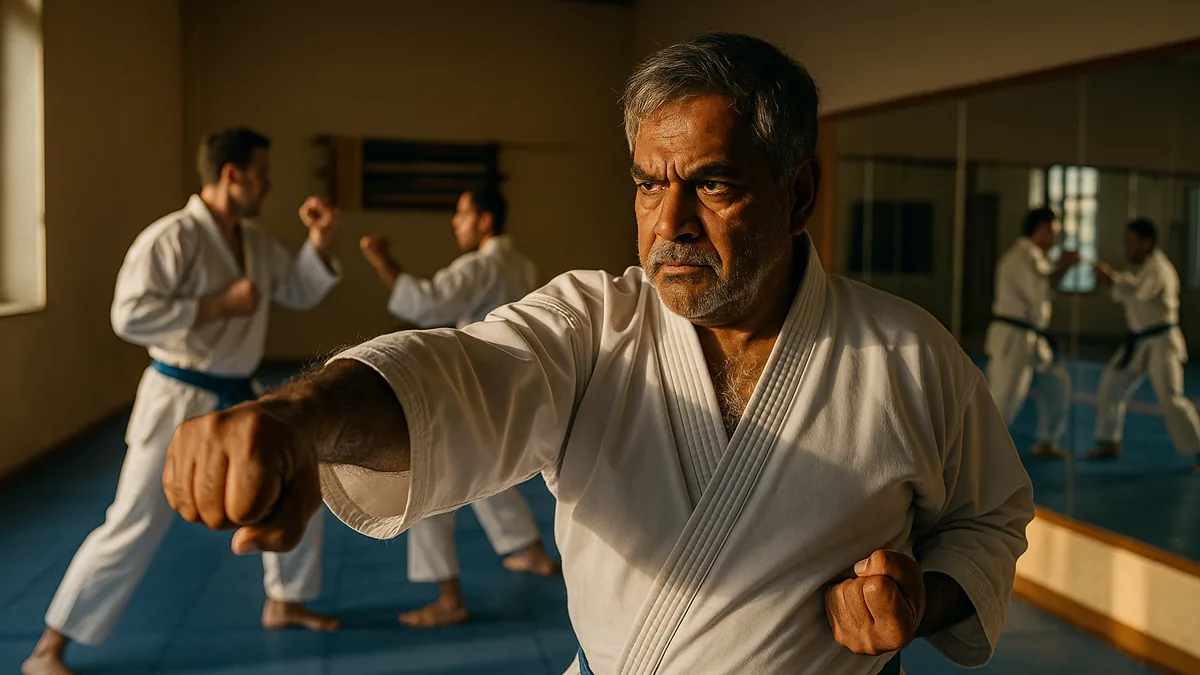
Line work is where you build the motor pattern. That’s its job and it does that job well. When you’re doing oi-zuki down the hall for the hundredth time, you’re not practising punching - you’re practising the body coordination that makes punching possible. The hip rotation, the synchronisation of the arm extension with the hip drive, the grounding through the front foot as you land in zenkutsu. You’ll feel it when it’s right: there’s a moment where the whole body arrives together, and the punch doesn’t feel like it came from your arm. It feels like it came from your centre and your arm just happened to be in the way.
Most beginners never feel that. They’re too busy thinking about their hands.
One mistake I see constantly in line work is that students treat each rep as a separate event. They reset between techniques, lose the flow, and never build the transition. What I tell students is that the technique you’re practising isn’t the punch - it’s the punch plus the recovery plus the setup for the next one. The moment you land gyaku-zuki, your weight is already shifting. If you’re pausing to think about what comes next, you’ve already failed the rep.
The other thing line work gives you that nothing else can replicate is volume under fatigue. By the time you’re 40 minutes into a kihon session and your thighs are burning from low stances, you find out what your technique actually looks like when it’s stressed. That’s useful information.
The limitation of line work is obvious: there’s no feedback. You’re punching air, and air doesn’t lie but it doesn’t teach either. You can develop beautiful form that falls apart completely the moment someone moves.
Pad Work: Where Power and Accuracy Get Honest
The first time I hit pads with a properly experienced holder, I realised how much I’d been pulling my techniques. You don’t know you’re doing it until there’s something to hit. The pad gives you honest feedback in a way that line work simply cannot.
What I prefer about pad work over the other two methods - and I’ll take a position here - is that it’s the fastest way to fix specific mechanical problems. If your mae-geri is landing with your toes instead of the ball of your foot, you’ll know immediately. If your gyaku-zuki is arriving with arm before hip, the pad tells you by absorbing the technique without any real impact. A good pad holder can diagnose your problems in two minutes by watching where the technique dies.
I’ve noticed that most students underestimate the role of the pad holder. They think the job is to hold the target still. The job is actually to create the right conditions for the technique - the right angle, the right distance, the right timing. A bad pad holder teaches you to hit a static target at a comfortable distance. A good pad holder is teaching you to close distance, adjust angle, and commit. If you want to understand how to use pad work to actually fix your kumite problems rather than just build fitness, this goes much deeper into the specifics.
The mistake I see most often with pad work is students slowing down to be accurate. They’re so focused on landing the technique cleanly that they telegraph everything and lose the snap. The correction that works for this is removing the accuracy requirement temporarily - give them a moving target, tell them to hit it fast and not to worry about where it lands. Once the speed is there, accuracy can be layered back in. Trying to build accuracy first and speed second almost never works.
Pad work also builds something that line work can’t: the psychological experience of committing. There’s a difference between throwing a technique into air and throwing it into something that resists. Your body learns to commit differently. You’ll feel it in your shoulder and through your core when you land a proper punch on a pad - it’s not the arm stopping, it’s the whole structure absorbing the impact.
The limitation here is that pad work is still a cooperative environment. The pad holder is, to some extent, helping you succeed. Nobody in jiyu-kumite is going to hold still and offer you a clean target.
Partner Drilling: The Bridge to Reality
This is where timing and distance management actually get trained, and it’s the most underused of the three in most dojos I’ve visited. Partner drilling - structured exchanges where both practitioners have defined roles and the drill has a specific purpose - sits between the safety of line work and the chaos of free sparring.
The thing that changed my understanding of partner drilling was realising that it’s not about the technique being drilled. It’s about the relationship between two bodies in space. When you’re drilling a jodan block and counter, you’re not practising the block. You’re practising reading the moment when the attack is committed enough to respond to. That’s a completely different skill to anything you develop alone.
I’ve noticed that students who skip straight from line work to sparring almost always have the same problem: they either react too early (because they’re reading intention rather than movement) or too late (because they’re waiting for certainty that never comes in time). Partner drilling is the only method that trains you to find the actual moment. For more on why reaction timing is its own trainable skill separate from technique, this breaks it down in detail.
The mistake I see in partner drilling is students who drill the script rather than the principle. They know the sequence so well that they stop responding to their partner and start responding to their memory of the drill. You can spot this immediately: they’re moving before the attack has actually happened. What I tell students when I see this is to deliberately break the pattern - pause unexpectedly, change the timing, do nothing. If your partner is drilling the principle, they’ll adjust. If they’re drilling the script, they’ll keep going regardless.
Partner drilling is also where you learn what your techniques feel like against a real body. A block that works in line work sometimes completely fails against a moving arm because the angle is slightly different. A sweep that looks clean in isolation doesn’t work if your distance is off by six inches. You only discover these things when there’s another person involved.
The relationship between partner drilling and sparring is worth being honest about. Drilling doesn’t replace sparring and sparring doesn’t replace drilling. They train different things. If you’re trying to figure out how much of each you actually need, this covers that question directly.
How to Actually Balance Them
My honest recommendation, based on what I’ve seen work across different dojos and different students: if your session is an hour of kihon time, spend roughly 40% in line work, 30% on pads, and 30% in partner drilling. That’s not a formula - it’s a starting point. Adjust based on what you’re actually weak at.
If you’re preparing for grading, shift toward line work. The examiner is watching form and precision in isolation.
If you’re preparing for competition or your kumite is falling apart, shift toward partner drilling. The problem is almost always timing and distance, not technique.
If your power and accuracy are genuinely underdeveloped - if your techniques feel weak even when the form looks right - shift toward pad work. You need the honest feedback.
One thing I’d add: don’t use line work as rest time. I’ve seen students coast through kihon lines at 60% effort because it feels like the warm-up before the real training. Those are usually the same students who wonder why their techniques don’t transfer. Every rep in line work should be as committed as every rep on pads. If you’re too tired to do that, you’ve done enough reps.
If you’re training at home without a partner or pads, these approaches help you maintain quality across all three principles with limited equipment.
Community Perspective
There’s a genuine divide between traditional dojos and more competition-focused clubs on how much pad work belongs in kihon training at all. Some traditional instructors I’ve trained under view pads as a shortcut that encourages bad habits - they argue that the discipline of performing technique without external feedback is itself the point. Others, particularly instructors with a competition background, see pad work as essential from early on because it builds the commitment and accuracy that line work alone never produces.
I think both positions have something real behind them. The traditional view is right that pads can become a crutch if students only learn to perform when there’s a target. The competition view is right that line work alone produces karateka who look good in a mirror and fall apart in kumite. Where you land probably depends on what you’re training for, and being honest about that is more useful than pretending there’s one correct answer.
What I’ve noticed is that practitioners who train seriously for long enough usually arrive at a similar place regardless of where they started: they value all three methods and get frustrated when their dojo over-commits to any one of them.
Key Takeaways
- Line work builds the motor pattern and trains technique under fatigue - but only if you’re actually committed on every rep, not going through the motions.
- Pad work gives you honest feedback about power, accuracy and commitment that no amount of air-punching can replicate - invest in training with a good pad holder, not just any available partner.
- Partner drilling is the only method that trains timing and distance against a real body - if you’re skipping it, your sparring will always feel like a different skill from your kihon.
- The correction that works for students who drill the script instead of the principle: deliberately break the pattern and watch whether they respond to you or to their memory.
- Adjust your balance based on what you’re preparing for - grading, competition and general development each pull the ratio in a different direction.
- Training with a more experienced partner during partner drilling accelerates all of this - the gap in timing and distance awareness is itself the lesson.
The weekly digest
New karate articles, once a week
One email every week with everything new on Karate Lifestyle. No spam; unsubscribe in one click.
We'll email you to confirm. See our privacy policy.