Kime: What It Actually Is, Why Most Practitioners Don't Have It, and How to Develop It Beyond Just Tensing at the End
The Muscle Twitch That Isn’t Kime
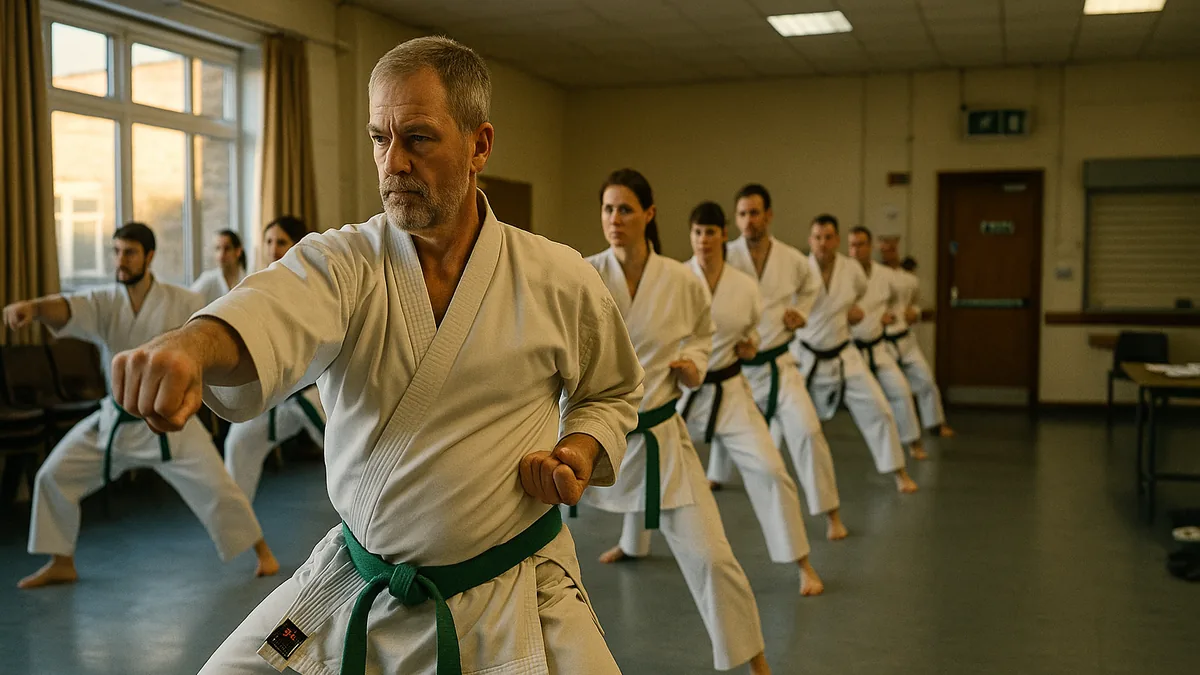
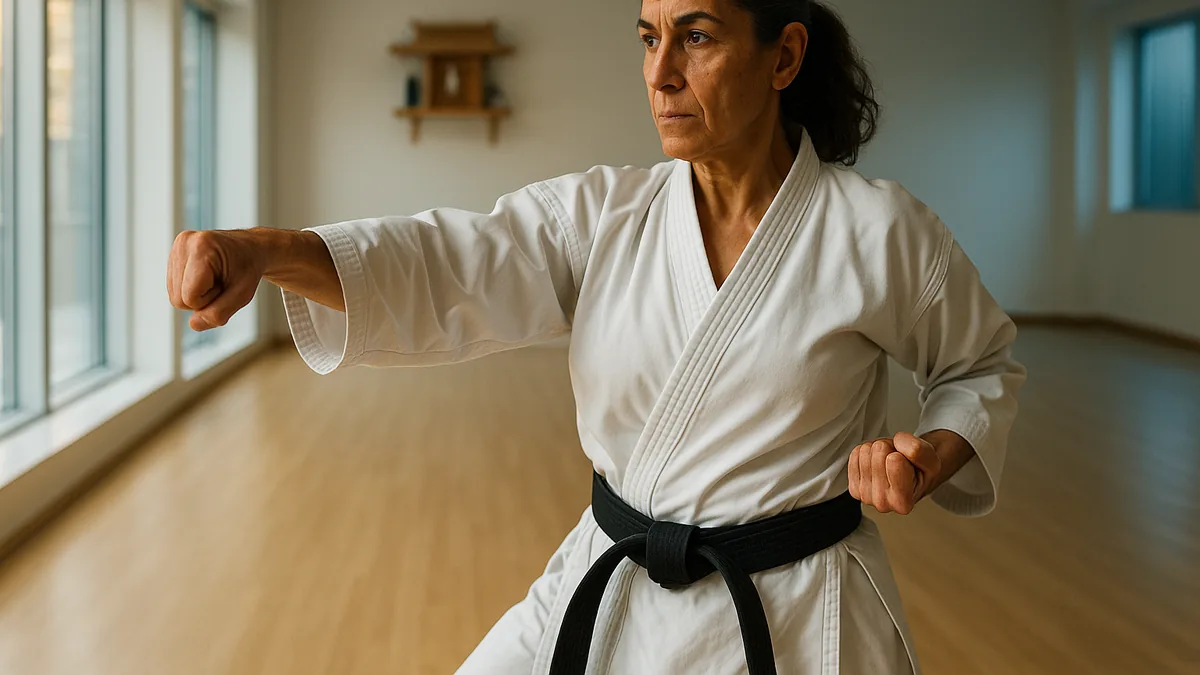
Watch a room full of intermediate-level karateka doing gyaku-zuki in line work. Most of them will look fine. Decent chamber, hip rotation, extension. Then watch what happens at the end of the technique. You’ll see a little flinch - a sudden shoulder-and-arm contraction that has nothing to do with the target and everything to do with the student’s idea of what kime looks like. That flinch is the most common misunderstanding in karate training, and I’ve been watching it happen for fifteen years.
The frustrating part is that those students are trying. They’ve been told “focus at the point of impact” and they’ve interpreted that as “contract everything at the end.” So they do. And it looks like kime from a distance, and it feels like kime to them, and it isn’t kime at all.
I was doing the same thing until about my third year of training. My instructor at the time - a blunt man who did not enjoy repeating himself - watched me do twenty punches and then said, “You’re braking, not stopping.” I nodded like I understood. I didn’t understand. It took me another two years to understand what he meant, and the thing that finally made it click wasn’t a correction. It was hitting a pad correctly for the first time and feeling the difference.
What Kime Actually Is (and Isn’t)
Kime is not a tense. That’s the short version, and it’s the one that most practitioners need to hear before anything else.
Kime is the momentary unification of your entire body at the point of impact - the instant where everything that has been moving stops together, transfers everything into the target, and then releases. The operative word is momentary. If you’re holding tension before impact, you’ve already lost it. If you’re still tense after impact, you’ve wasted energy and slowed your recovery.
What you’re looking for is something closer to a crack than a clench. Think of a whip. The handle moves, the shaft follows, and at the tip there’s a single explosive moment of speed and focus. The whip doesn’t stay tense. It snaps and releases. That’s the physical model I come back to with students, because it separates the concept of focus from the concept of sustained tension.
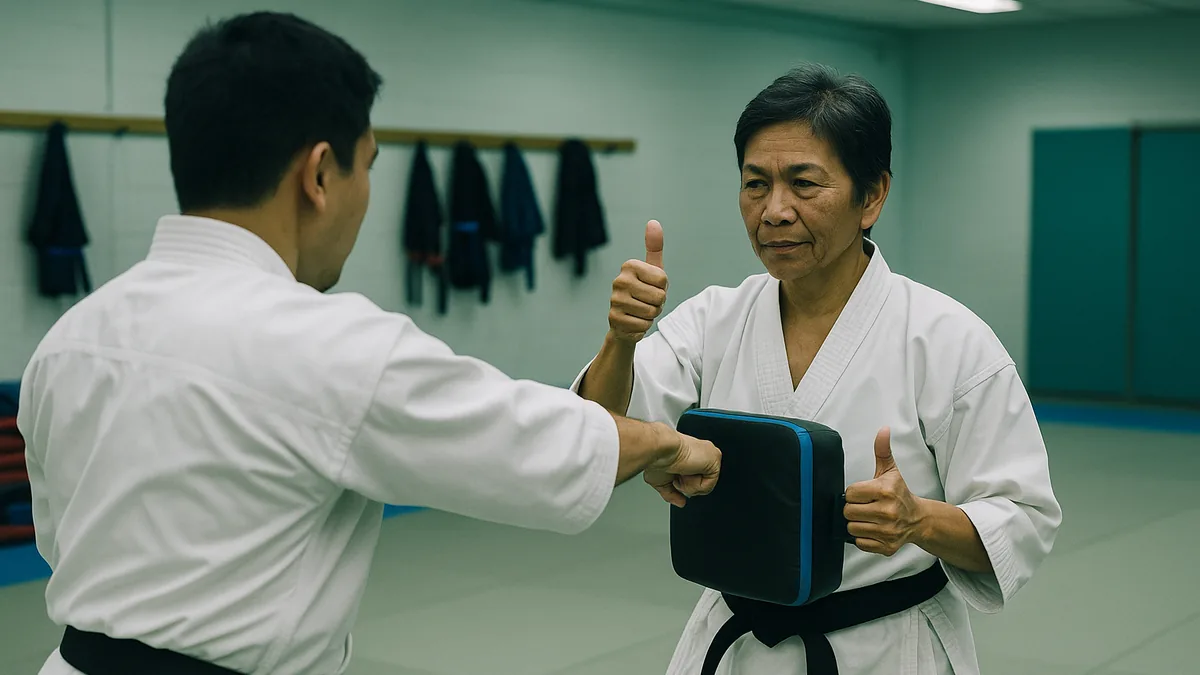
The thing that actually changed my understanding was a session where my instructor had me do gyaku-zuki against a suspended pad - one that would swing away on impact rather than absorb. If you push the pad, it moves slowly and far. If you have actual kime, it snaps back sharply and returns fast. That difference - push versus snap - is the most useful physical demonstration of kime I’ve ever encountered. I now use it with every intermediate student who thinks they have kime but doesn’t.
Kime also has a targeting component that gets ignored constantly. Focus is not just about timing - it’s about where your energy is directed. A punch that arrives with good timing but is aimed through the surface of a pad rather than into it will feel hollow. When the hip rotation connects properly and your intent is directed into the target rather than at its surface, you feel the impact transfer through your whole body, not just your arm. It’s a completely different sensation, and once you’ve felt it, you recognise the absence of it immediately.
Why Most Practitioners Don’t Have It
The honest answer is that most training environments don’t create the conditions where kime actually develops. Line work is the biggest culprit - not because line work is bad, but because punching air gives you no feedback. You can execute a technically beautiful air punch with zero kime and nobody, including you, will know.
I’ve noticed that the practitioners who develop kime fastest are the ones who spend the most time on pads and makiwara, because those tools give you immediate feedback. The pad tells you whether you pushed or snapped. The makiwara tells you whether your alignment held on impact. Air work tells you almost nothing about kime specifically.
The second reason is the way kime gets taught. “Focus at the point of impact” is accurate but insufficient. Most students hear this and interpret it as a timing cue - tense at the right moment. What they miss is the relaxation that has to precede it. If your arm is tense during delivery, you can’t snap at the end. You can only continue the tension you already had. Real kime requires that the delivery is genuinely relaxed, almost loose, and that the contraction at impact is a sudden event rather than a gradual one.
One mistake I see constantly is what I’d call pre-loading. The student tenses through the hip rotation, through the extension, and then adds a little extra contraction at the end. The technique looks powerful. It has no kime. The energy has been bled out across the whole movement instead of concentrated at a single point. The correction that makes the biggest difference here is counterintuitive: I tell them to make the delivery softer, not harder. Relax the arm completely during extension, then snap. Most students look at me like I’ve suggested something dangerous. Then they try it, and the pad reacts differently, and they feel the difference.
The third reason is that kime requires intent, and intent is hard to train deliberately. You can train mechanics. You can train timing. But if you’re throwing techniques without genuinely committing to where the strike is going and what it’s doing, the kime will be mechanical at best - technically present, but without the quality that separates competent technique from excellent technique.
This connects to something worth reading alongside this: Why Your Oi-Zuki and Gyaku-Zuki Look the Same Speed and What to Do About It. A lot of the speed problems described there have kime at their root - techniques that look the same speed often feel the same because neither has genuine focus.
How Understanding Changes With Experience
As a white belt, I thought kime was about power. The harder you hit, the better the kime. By brown belt I realised it’s about precision - that kime and raw power are almost unrelated, and that a light, well-focused technique will penetrate further than a heavy, unfocused one.
By shodan I started to understand that kime has a psychological dimension. There’s a difference between executing a technique and committing to it. When you’re genuinely committed - when your intent is fully behind the strike - something changes in the body that isn’t entirely mechanical. I’ve watched senior practitioners demonstrate this on pads and the difference is visible and audible. Same mechanics, different intent, different result.
What I tell students now is that kime is the physical expression of commitment. The technique goes where your mind goes. If your mind is somewhere else - thinking about the next technique, thinking about whether you look correct, thinking about anything other than the target - the kime will be absent or shallow. This is why zanshin and kime are closely linked - both require full presence in the moment of execution.
Developing It: What Actually Works
I think slow practice is underrated for kime development, and I’d recommend it over fast repetitions at any stage below brown belt. Here’s why: at speed, you can fake kime. You can time a contraction, you can create the appearance of focus, and the movement will hide the deficiencies. At very slow speed, you cannot fake anything. Every moment of the technique is visible and feelable. You’ll notice exactly when you’re pre-loading, exactly when your intent drifts, exactly when the snap becomes a push.
The drill I use most often with students who are struggling is this: execute the technique at roughly twenty percent of full speed, but with one hundred percent of the mental focus. Every part of the delivery is deliberate. The chamber, the hip, the extension - all of it controlled and intentional. Then at the point of impact, the contraction is still sudden. Not fast in terms of speed, but sudden in terms of the shift from relaxed to focused. What you’re training is the pattern, not the speed. Speed comes later and the pattern stays.
Visualisation is not something I used to take seriously. I thought it was for sports psychologists and people who didn’t train enough. I’ve changed my mind on this completely. What I do now, and what I encourage students to do, is spend time before training visualising the technique making contact - not just moving through the air, but actually arriving at a target with full intent. The quality of the kime in that visualisation matters. If you’re imagining a push, you’ll produce a push. If you’re imagining a snap, the body has a reference point.
Pad work is essential and I’d say it’s non-negotiable for anyone serious about kime. Balancing your kihon time across line work, pad work, and partner drilling matters here because line work alone will not develop kime in most practitioners. You need the feedback of something that responds.
The makiwara is worth mentioning separately. I know it’s not available to everyone and not universally used outside of traditional dojos, but if you have access to one, use it. The makiwara rewards correct kime and punishes incorrect technique in ways that pads don’t, because there’s no give. Your alignment has to be right, your focus has to be precise, and the feedback is immediate. I’ve corrected more wrist alignment issues on the makiwara in ten minutes than I could in months of air work.
In Sparring
Kime in jiyu-kumite feels different from kime in kihon, and I think this catches a lot of practitioners off guard. In kihon you have time, distance, and a known target. In sparring, none of those are fixed. What I’ve found is that kime in sparring is less about deliberate focus and more about having trained the pattern so thoroughly that it executes automatically. The intent is there because you’re genuinely trying to hit someone who doesn’t want to be hit.
In jiyu-kumite, kime becomes most obvious in counter-attacking. When your opponent overcommits to a chudan attack and you slip and counter with gyaku-zuki, the kime in that counter is either there or it isn’t - and if it isn’t, you’ll feel the punch arrive without transferring anything. The target will move but you won’t feel the connection. When it’s right, you feel it from the floor up through your hip and into your fist. That’s the whole body stopping together.
Training kizami-zuki with genuine kime is worth specific attention here, because the jab is the technique where practitioners most often sacrifice kime for speed. A kizami-zuki with real focus is a different weapon entirely.
Community Perspective
There’s a genuine split in how different dojos and styles approach kime, and I think it’s worth being honest about it. Traditional Shotokan training tends to emphasise a very pronounced, visible kime - the full-body contraction at impact that you see in kata and kihon. Some JKA-lineage instructors I’ve trained with treat this as non-negotiable.
Other styles - and some modern Shotokan practitioners too - argue that the visible contraction is partly theatrical, and that real fighting kime is subtler and faster. I’ve heard this argument from some very experienced practitioners and I don’t dismiss it. There’s probably truth on both sides. My own view is that the pronounced kime of traditional training is a teaching tool as much as it is the finished product - it trains the pattern of relaxation-then-focus in an exaggerated way, and over time that pattern compresses into something faster and less visible.
What I’d push back on is the idea that kime is style-specific. Every effective strike in every martial art has some version of this - the moment where everything commits. The terminology and the training method differ. The underlying physical event is the same.
Key Takeaways
- Kime is a snap, not a sustained clench - the delivery must be relaxed for the focus at impact to be genuine. If you’re tense throughout the technique, you have no kime, only continuous tension.
- Train slow before you train fast. At twenty percent speed with full intent, you cannot hide deficiencies. This is where the pattern gets built.
- Pad work is not optional for kime development. Line work gives you no feedback. You need something that responds to know whether you’re pushing or snapping.
- The correction that works for pre-loading is counterintuitive: make the delivery softer, not harder. Relax the arm during extension, then snap at impact. Most students resist this and then feel the difference immediately.
- Intent is not separate from technique - it is part of the technique. Throwing techniques without full commitment to the target produces mechanical kime at best, and nothing at all at worst.
- If you have access to a makiwara, use it regularly. It rewards correct kime and exposes alignment problems faster than any other training tool I’ve used.
The weekly digest
New karate articles, once a week
One email every week with everything new on Karate Lifestyle. No spam; unsubscribe in one click.
We'll email you to confirm. See our privacy policy.