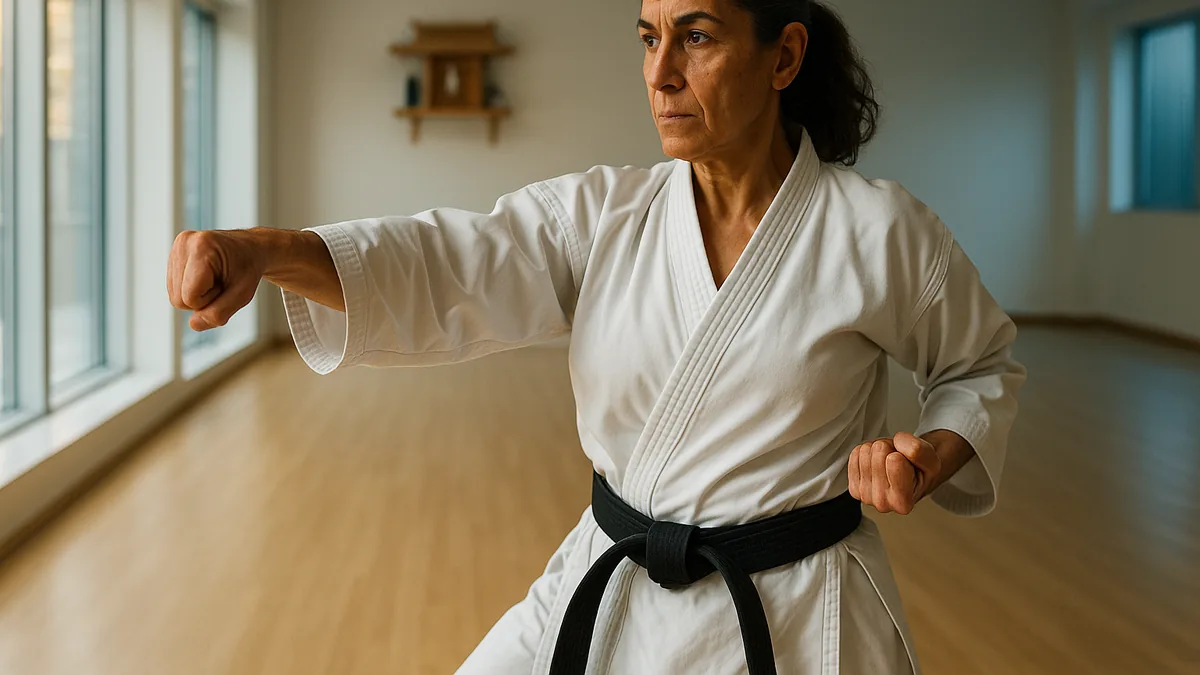
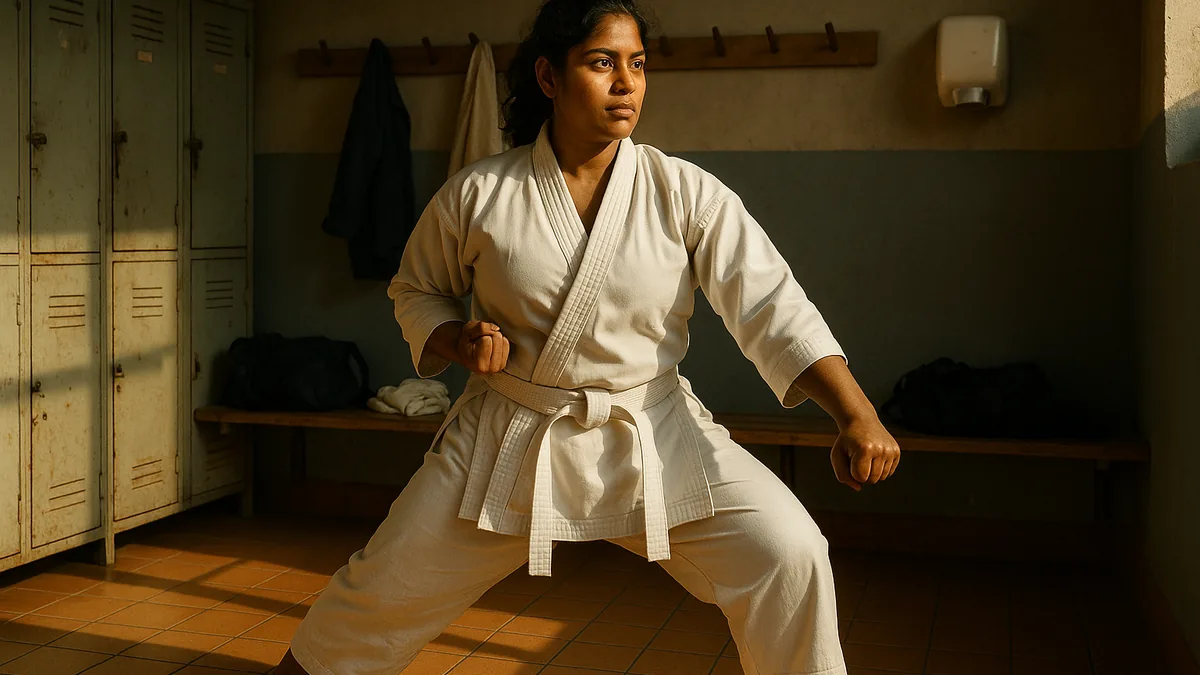
Why Your Oi-Zuki and Gyaku-Zuki Look the Same Speed and What to Do About It
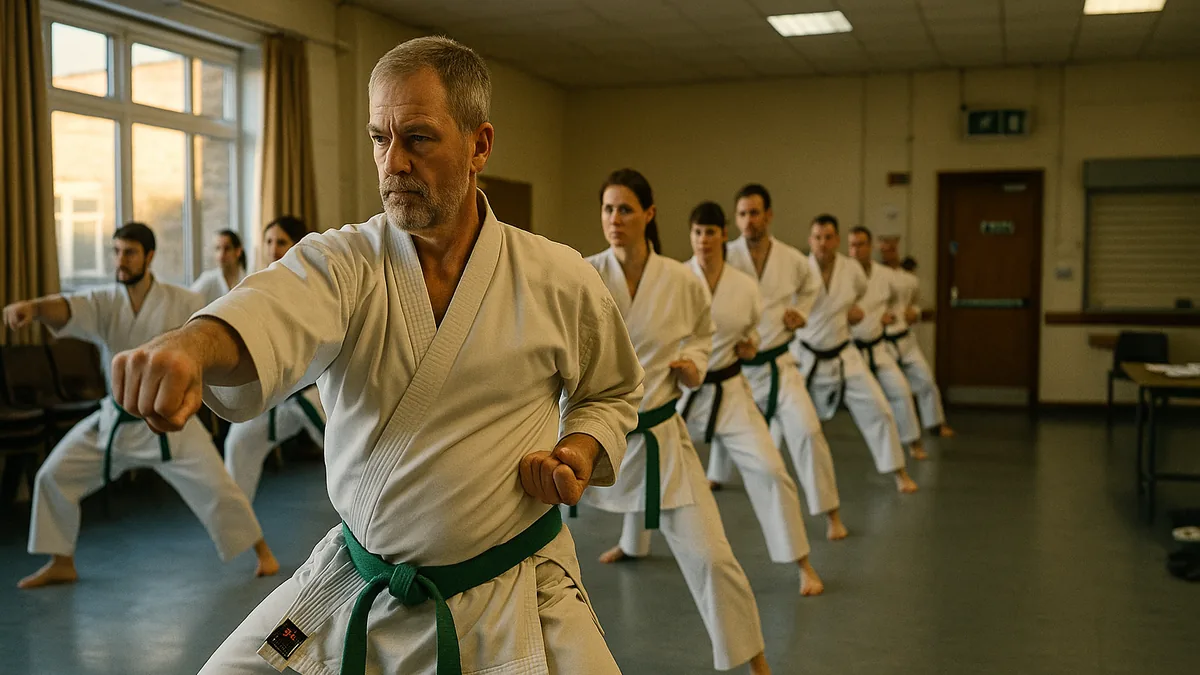
Most people watching from the side can’t tell the difference between your oi-zuki and your gyaku-zuki. Same speed. Same shape. Same energy. If that’s your situation, you’re not alone - I’ve seen it in nearly every dojo I’ve trained in, across different styles, different associations, different instructors. It’s one of those problems that gets papered over with volume. Do more reps, they say. It’ll come. Sometimes it does. Often it doesn’t.
Here’s what I actually think is happening, and what you can do about it.
The Problem Isn’t What Most Instructors Point To
The common correction I hear is “drive from the back leg more.” And yes, hip drive matters. But that’s not the root of why oi-zuki looks flat. The root is that most practitioners have learned both punches through the same drill format - stationary or slow-advance repetitions in line work - and so their nervous system has essentially filed them under the same motor pattern. Same setup, same feel, same output.
I used to think the difference between oi-zuki and gyaku-zuki was just about which side punches and whether you step. By brown belt I’d completely revised that. The real difference is in the initiation. Gyaku-zuki initiates from hip rotation against a planted stance. Oi-zuki, done properly, initiates from forward momentum - the body is already moving, and the punch arrives as a consequence of that movement, not a separate action layered on top of it.
When it clicks, oi-zuki doesn’t feel like stepping and then punching. It feels like your whole body is a projectile and the fist is just the tip. The impact travels up through your body from the floor rather than forward from your shoulder. That’s a completely different physical sensation, and if you’ve never felt it, no amount of repetition in slow line work will get you there.
Why the Patterns Collapse Together
I’ve noticed that students who struggle with this almost always have the same training history: lots of kihon, not much application. And I don’t mean that as a criticism - that’s just what most traditional dojo training looks like. The issue is that kihon, done in long lines at moderate pace, tends to smooth out the differences between techniques. You’re not generating real forward momentum in a stationary drill. You’re simulating it. So oi-zuki becomes a step-plus-punch rather than a committed forward strike.
Gyaku-zuki in line work is actually fine, because the conditions of the drill match the conditions of the technique. You’re planted, you rotate, you punch. That’s what gyaku-zuki is.
But oi-zuki needs genuine forward movement to express itself correctly. The step has to be real. The commitment has to be real. And you can’t really do that in a line without running into the person in front of you.
What I tell students is: if you’ve been drilling oi-zuki for years and it still doesn’t feel different from gyaku-zuki, the drill isn’t the problem. The context is. You need to find a training format where the technique can actually be what it’s supposed to be.
This is part of a bigger conversation about how you balance your kihon time across line work, pad work, and partner drilling - and honestly, oi-zuki is one of the clearest examples of a technique that needs pad work or partner resistance to develop properly.
What Video Actually Shows You
I started using phone video in training about six years ago, initially just out of curiosity. What it showed me was uncomfortable. My oi-zuki looked like a slightly longer gyaku-zuki. The step was there. The punch was there. But the relationship between them was wrong - there was a visible pause, a reset, between the step landing and the punch firing. That pause kills everything.
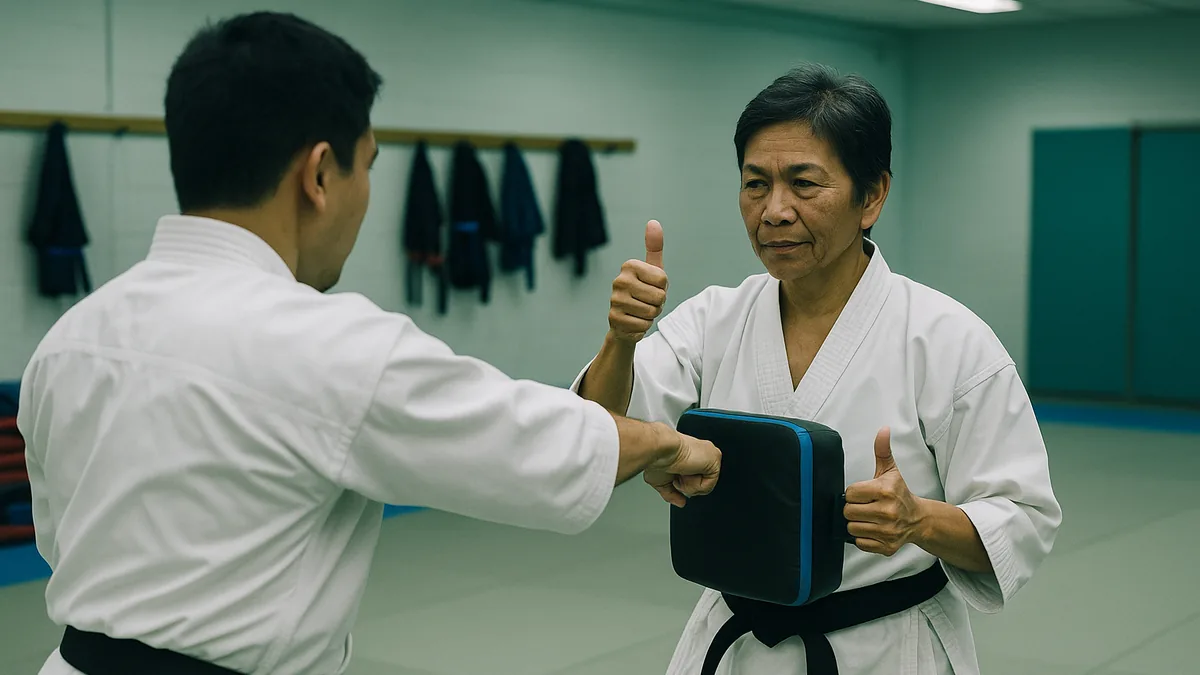
The correction that worked for me was being forced to close a real distance. Not a symbolic step in line work - an actual gap between me and a pad holder who was standing at oi-zuki range. When the target is real and the distance is real, your body figures out that the punch has to travel with the step, not after it. You’ll feel the difference immediately. The punch starts to feel heavier without feeling slower, because the body mass behind it has increased.
Video is useful here not to critique your form in isolation, but to check whether that pause exists. Watch for the moment your front foot lands. If your fist isn’t already moving - already committed - before that foot hits the floor, you’ve got the sequencing wrong. The arm shouldn’t wait for the step to complete.
The Feedback Loop Most Practitioners Skip
One mistake I see often is treating these two punches as separate skills to be improved separately. They’re not. They’re expressions of the same principle applied under different conditions. If your gyaku-zuki is good and your oi-zuki isn’t, the problem is almost certainly that you haven’t created conditions in training where oi-zuki has to work.
That means partner work. Specifically, partner work where someone is at oi-zuki range and you have to cover ground to reach them. Not pad work where you shuffle up and then hit - actual committed entry from distance. A good training partner who is better than you will expose this immediately, because they’ll see the telegraph in your step and move before you arrive. If you want to understand that dynamic better, there’s a useful breakdown of how to get the most from training with a more experienced partner.
The feedback loop I’d recommend is simple: drill oi-zuki on pads with a partner who gives you honest feedback on whether the punch felt committed or telegraphed. Not “good” or “bad” - specifically whether the impact felt like it came with the entry or after it. That distinction is everything.
Community Perspective
There’s genuine disagreement in traditional karate circles about how much oi-zuki matters in practical terms. Some instructors - particularly those from competition backgrounds - will tell you that in modern kumite, oi-zuki as a committed lunge punch is largely obsolete. You’re more likely to use a kizami-zuki off the front hand as your entry tool. There’s something to that, and if you want to develop your front-hand entry, the thinking around how to train kizami-zuki so it actually lands is worth your time.
But I think dismissing oi-zuki as a competition relic misses the point. The skill being developed isn’t just the punch - it’s the ability to commit your whole body to a single explosive movement while maintaining structure. That quality transfers everywhere. The practitioners I’ve trained with who had genuinely dangerous oi-zuki all had something in common: they could close distance faster than you expected and their first technique was always their best technique. That’s not nothing.
The other debate I hear is whether this should be fixed through more kihon or through more kumite. My position is that kihon got you into this problem and more kihon alone won’t get you out. You need the balance between drilling and sparring to shift toward live application until the pattern is re-established, then you can go back to kihon to refine it.
What Actually Fixes It
In my experience, the practitioners who solve this problem fastest do three things differently from those who don’t.
First, they stop treating repetition as the solution. Doing 200 oi-zuki in line work when the sequencing is wrong just ingrains the wrong pattern more deeply. Quality of execution matters more than volume, and you can’t assess quality without feedback.
Second, they use video not to admire their technique but to find the pause. That moment between foot landing and punch firing is the diagnostic. Once you see it, you can’t unsee it, and your body starts self-correcting.
Third, they change the drill conditions. Oi-zuki needs real distance and real targets. That usually means pad work or partner drilling where the gap is genuine and the commitment has to be genuine.
If your reactions in kumite are also suffering - and they often do when your entry techniques aren’t sharp - there’s a separate but related conversation worth having about what actually causes slow reactions and how to train them out.
Key Takeaways
- The pause is the problem. If your fist isn’t moving before your front foot lands in oi-zuki, the sequencing is wrong. Video yourself from the side to find it.
- Line work can’t fix this alone. Oi-zuki needs real forward momentum to express correctly. Pad work and partner drilling with genuine distance are non-negotiable.
- Volume without feedback makes it worse. Drilling incorrect sequencing 200 times a session deepens the wrong pattern. Reduce volume, increase feedback quality.
- Use your training partner as a diagnostic tool. Ask them whether your punch felt like it came with your entry or after it. That single piece of feedback is more useful than most formal corrections.
- Don’t separate oi-zuki from gyaku-zuki improvement. If one is good and the other isn’t, the issue is the training context, not the technique itself.
- Commit to the entry. The difference between an oi-zuki that works and one that doesn’t is almost always confidence in the commitment. Hesitation shows up in the sequencing before it shows up in the speed.
The weekly digest
New karate articles, once a week
One email every week with everything new on Karate Lifestyle. No spam; unsubscribe in one click.
We'll email you to confirm. See our privacy policy.