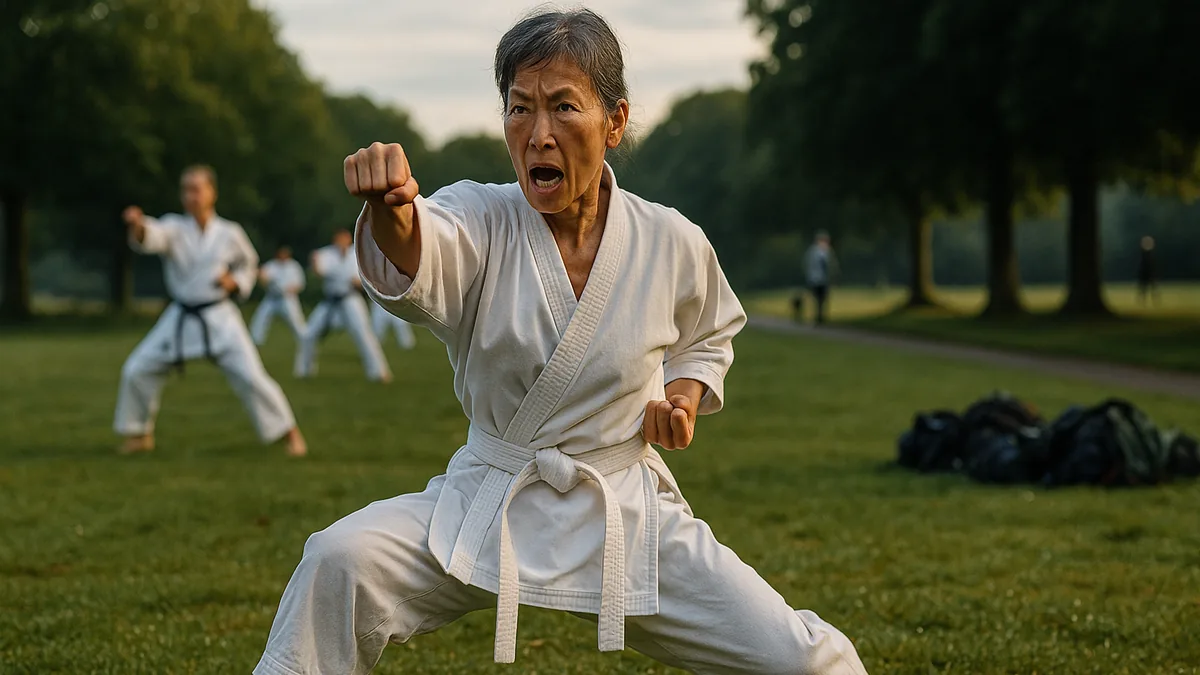
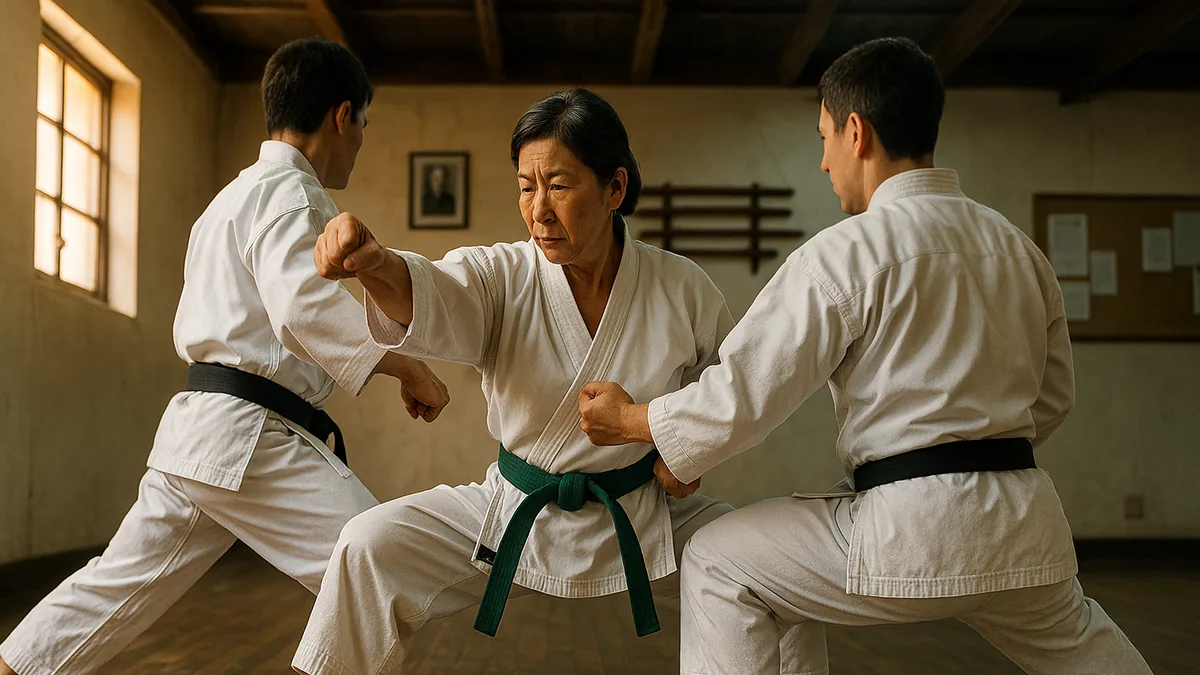
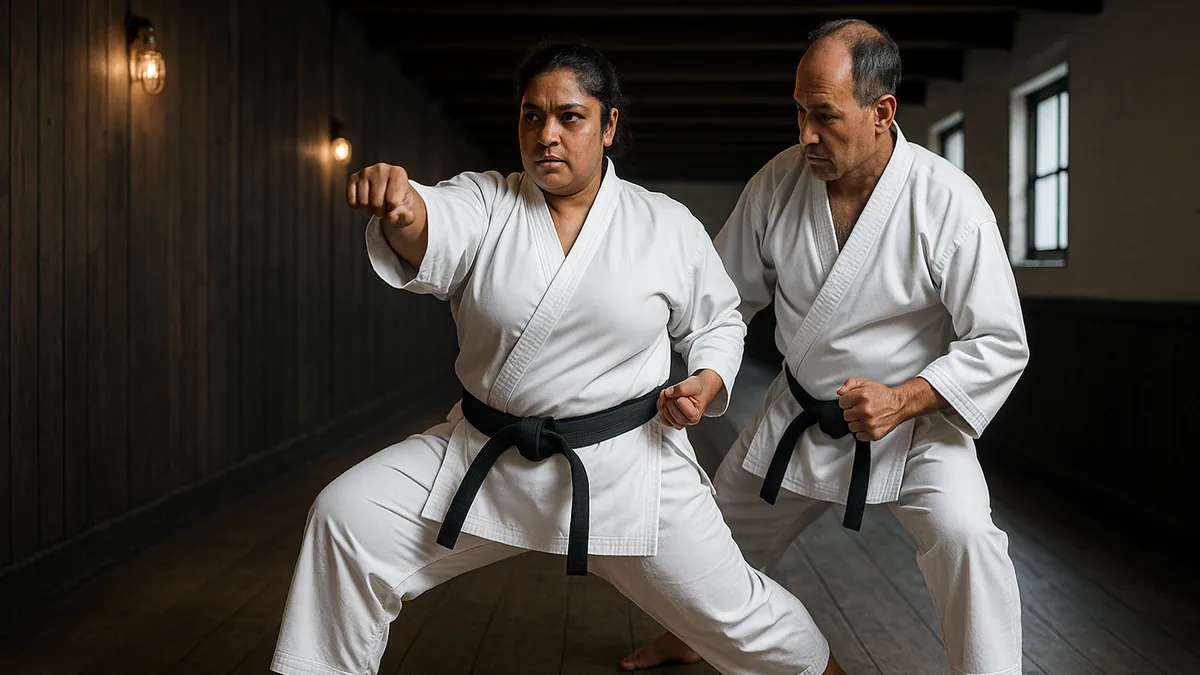
How to Develop Zanshin: What It Actually Means, Why Most Practitioners Fake It, and How to Train It Into Your Default State
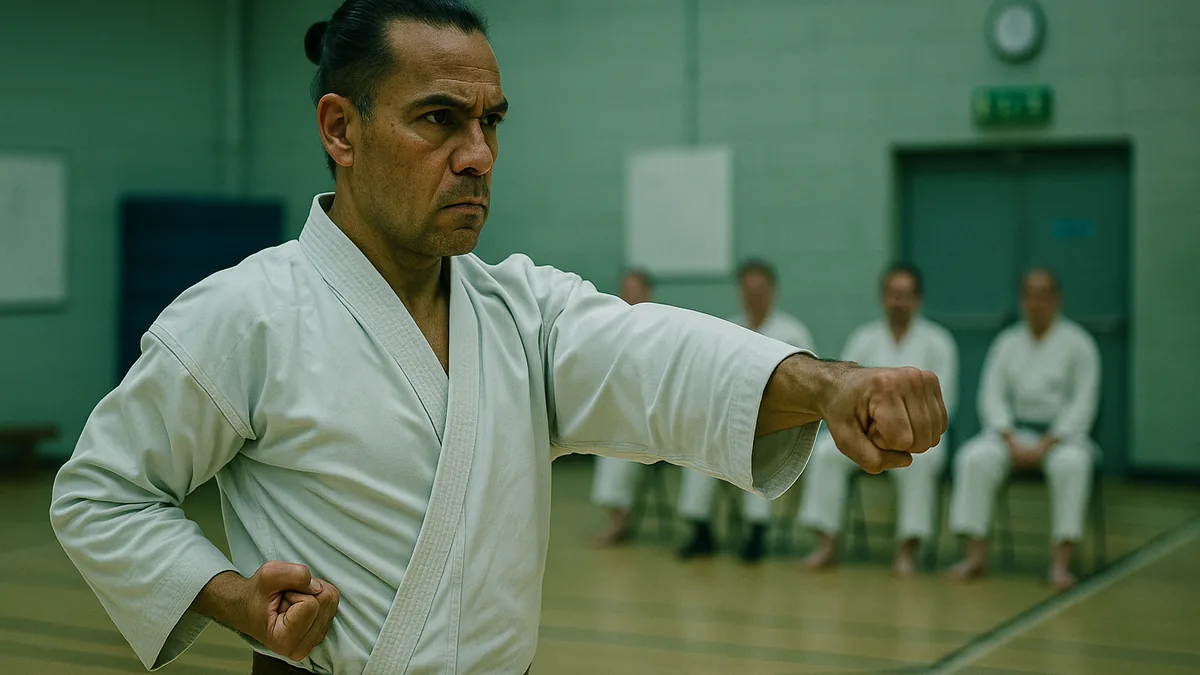
Most students think zanshin is a finishing pose. They throw the technique, hold the chamber, keep their eyes forward, and wait for the instructor to say “yame.” It looks correct. It is completely empty.
I’ve been watching this happen for fifteen years. And I understand why - when you’re first learning, you’re managing so many things at once that “awareness” becomes a checklist item you perform after the technique rather than something that runs underneath all of it. But that performance habit is exactly what we need to break, because it will limit everything else you do.
What Zanshin Actually Is (And Why the Definition Most People Know Is Wrong)
The translation you’ll hear most often is “remaining mind” or “lingering awareness.” That’s accurate but it doesn’t tell you anything useful about what it feels like to have it or how to train it.
What I tell students is this: zanshin is not what happens after the technique. It is the state you’re in during and before the technique. The moment after you finish is just when it becomes visible - or when its absence becomes visible.
My instructor used to say that zanshin is the difference between a practitioner and a fighter. I didn’t understand that until a brown belt grading where I completed a combination, held my finish position, and got tagged by my partner because I had switched off before he had. I was performing the end of the technique instead of staying present through it. The technique was over in my mind before it was over in reality. That’s the gap zanshin fills.
Physically, genuine zanshin feels like readiness without tension. Your weight is settled, your breathing is controlled, your eyes are soft-focused rather than fixed on one point. You’re not braced for the next thing - you’re available for it. There’s a difference, and you’ll feel it once you’ve experienced both.
Why Most Practitioners Fake It
The honest answer is that we teach them to.
When we run kihon lines and call “yame,” students learn to complete the movement and stop. The stopping becomes the point. Add a kiai and a held position and you’ve created a very convincing performance of zanshin that has nothing to do with actual awareness.
I’ve noticed that the practitioners who fake it best are often mid-kyu students who have learned the aesthetics of good technique. They look focused. Their eyes go to the right place. They hold the position cleanly. But if you step toward them the moment after the technique, they flinch or freeze rather than respond. The awareness isn’t there - just the shape of it.
The other reason it gets faked is that real zanshin is uncomfortable to maintain in early training. It requires a particular kind of sustained attention that is genuinely tiring. It’s much easier to switch off between techniques and switch back on when the next rep starts. That pattern becomes habitual faster than most students realise, and by the time they’re a few years in, they’re running on autopilot between techniques without knowing it.
The Drills That Actually Build It
I want to be direct here: most of the drills that claim to develop zanshin are really just awareness exercises dressed up in Japanese terminology. Some of them are useful. Some of them are a waste of your training time. What follows are the ones I’ve actually seen create lasting change.
The Pause and Respond Drill
This is my first choice for any student who wants to work on zanshin specifically. It’s simple, it’s uncomfortable in the right way, and the results show up in kumite faster than almost anything else I’ve used.
Why it matters: It breaks the habit of switching off after technique completion by introducing an unpredictable demand immediately after the finish.
Setup: You need a partner. Start in fighting stance, 1.5 metres apart. No pads needed for the basic version.
Execution:
- Throw a single technique - gyaku-zuki, kizami-zuki, whatever you’re working on. Kizami-zuki is worth developing here specifically because it’s the technique most practitioners switch off after.
- Hold your finish position.
- Your partner either steps toward you, steps back, or does nothing - randomly, without a pattern.
- You respond appropriately: if they step in, you move or counter. If they step back, you follow. If they do nothing, you hold.
- The response has to happen without a reset. No resetting your stance, no bouncing back to ready position first.
What to feel for: When you’re doing this correctly, you’ll feel a kind of low-level aliveness in your position after the technique. Your weight is still mobile, your knees haven’t locked, your attention hasn’t narrowed. When your partner moves, your response feels like a continuation rather than a restart.
The mistake I see most often: Students reset their stance between the technique and the response. They come back to ready position and then react. That reset is exactly what we’re trying to eliminate - it’s the physical manifestation of switching off.
The Eyes-Last Drill
This one addresses the most common visual tell for absent zanshin: the eyes dropping or drifting after technique completion.
Why it matters: Where your eyes go, your attention follows. Students who look down after a technique aren’t just failing aesthetically - they’ve genuinely disengaged. This drill makes the habit of sustained visual contact automatic.
Setup: Partner drill, or solo with a fixed point on the wall. If you’re training solo, a mirror can help here but read this first - you want to use the mirror to check eye position, not to watch your technique.
Execution:
- Run any combination you’re currently drilling.
- After the final technique, your eyes must be the last thing to move. Not simultaneously with the technique finishing - last.
- Your partner calls out what they see your eyes do. Honest feedback here matters.
- Repeat until holding eye contact after the finish feels natural rather than deliberate.
What to feel for: At first this feels forced and slightly aggressive. That discomfort is correct - you’re overriding a deeply ingrained habit of looking away after effort. After several weeks of consistent practice, it stops feeling deliberate and becomes part of how you move.
Shadowboxing With Consequence
I’d recommend this for anyone who does shadowboxing as a serious training tool rather than just as a warm-up filler. The basic version is this: every time you catch yourself switching off between techniques during shadowboxing, you stop and restart from zero.
The consequence doesn’t need to be dramatic. The point is that you’re introducing accountability for your own attention. Most practitioners shadowbox on autopilot. The body moves, the mind drifts. Zanshin cannot be developed on autopilot.
Execution:
- Set a timer for two to three minutes.
- Shadowbox with an imagined opponent. Move them, react to them, don’t just throw combinations at empty air.
- The moment you notice you’ve been going through motions without genuine attention - stop. Note it. Restart.
- Your goal is to reduce those stops over weeks of practice.
What to feel for: When your shadowboxing has genuine zanshin running through it, it feels slightly slower even when it isn’t. That’s because you’re processing more information rather than executing pre-programmed sequences. That processing quality is exactly what you want.
How This Changes With Experience
A white belt working on zanshin is mostly learning to not switch off. That’s the right starting point.
By green or blue belt, the work shifts. You’re not just staying present - you’re learning to read what you’re present to. The stillness after a technique starts to carry information. You’re feeling your partner’s weight, their breath, whether they’ve committed or held back.
Senior practitioners don’t think about zanshin at all. That’s the goal. What I’ve noticed in the best practitioners I’ve trained with is that their zanshin is invisible because it’s constant. There’s no moment where they switch on or switch off. The awareness just runs. When you watch them in jiyu-kumite, their fastest counters come off failed attacks - not because they planned it, but because they never stopped reading the situation.
Community Perspective
There’s a real split in how different dojos approach this. Traditional schools often treat zanshin as something that develops naturally through years of correct practice - you don’t drill it directly, you just train seriously and it emerges. Modern sport-focused schools sometimes treat it as a specific skill to develop through targeted drills, which is closer to how I approach it.
I think both positions have merit, and I’ve changed my view on this over time. As a younger instructor I was firmly in the “drill it directly” camp. Now I think the truth is that you need both: direct attention work to break the habit of switching off, and serious traditional training to give the awareness something real to attach to. Zanshin without genuine technique is just vigilance. Technique without zanshin is just movement.
The other common disagreement is whether zanshin applies only in the dojo or extends to daily life. Many traditional instructors would say the two are inseparable - the awareness you develop in training should change how you move through the world. I find this useful as a concept but I’m careful not to over-romanticise it. Train it in the dojo first. Get it solid. Then notice whether it starts showing up elsewhere.
Key Takeaways
- Zanshin is not a finishing position - if you’re performing it after the technique, you’ve already missed it. Train it as a continuous state, not a punctuation mark.
- The pause and respond drill will show you faster than anything else whether your zanshin is real or performed. If you flinch when your partner moves unexpectedly after your technique, you have your answer.
- Watch where your eyes go after you finish. That’s the most reliable external indicator of whether awareness is present or absent.
- The discomfort of sustained attention is real and it doesn’t fully go away - it just becomes familiar. Students who want zanshin to feel effortless before they’ve put in the work are confusing the goal with the starting point.
- Your shadowboxing quality matters more than most practitioners realise. If your mind is elsewhere during solo training, you’re building the habit of being elsewhere during solo training.
- The shift from performing zanshin to having zanshin is not dramatic. It doesn’t happen in one session. What I tell students is to look for it in small moments - the counter that came without thinking, the attack you felt before you saw it. Those moments are evidence it’s developing.
The weekly digest
New karate articles, once a week
One email every week with everything new on Karate Lifestyle. No spam; unsubscribe in one click.
We'll email you to confirm. See our privacy policy.