Shadowboxing for Karateka: How to Make It a Serious Training Tool
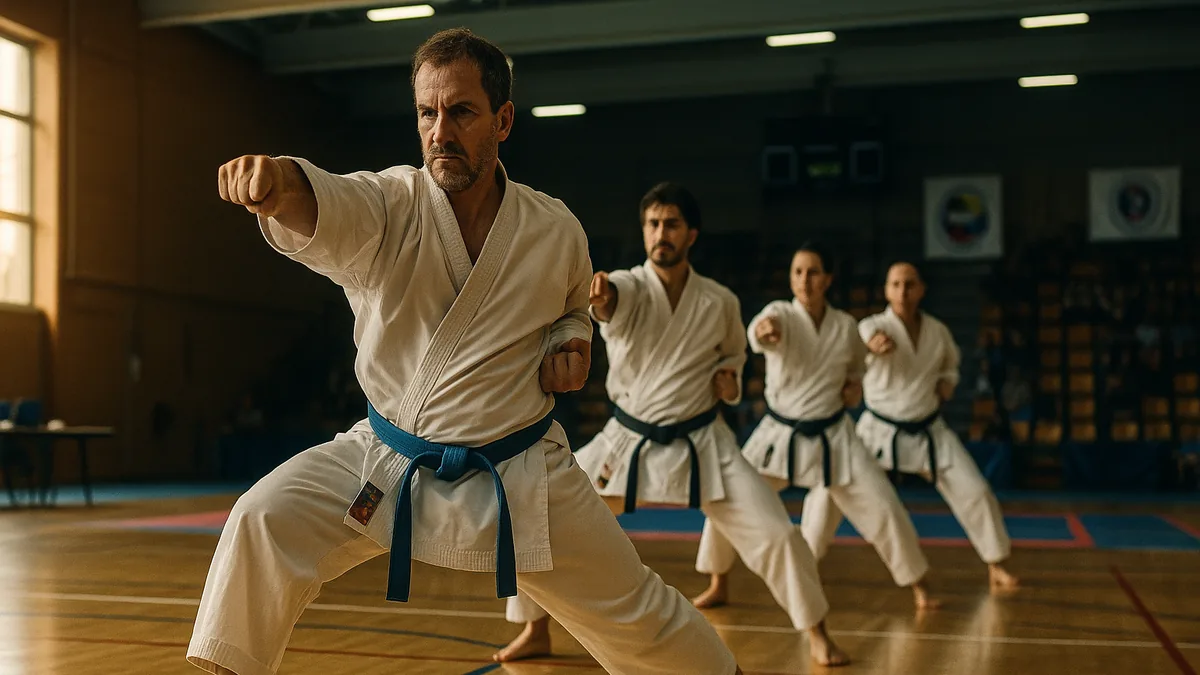
Most people treat shadowboxing as a warm-up. They throw a few punches, move around a bit, and consider it done. I’ve watched students spend twenty minutes shadowboxing before class and come away having practiced almost nothing useful. The movement was there. The intent wasn’t.
That’s the core problem. Shadowboxing without a mental opponent is just aerobics. It can feel productive because you’re moving and sweating, but your brain isn’t solving any real problems. There’s no timing to read, no distance to manage, no decision to make. You’re rehearsing the shape of techniques without rehearsing what makes them work.
Done properly, shadowboxing is one of the most valuable tools in solo training. I’d put it above bag work for developing technical quality, because the bag doesn’t lie but it also doesn’t challenge your decision-making the way a visualized opponent does. If you’re training alone and want to make real progress, this is where to invest your time.
Why Most Shadowboxing Misses the Point
The mistake I see most often is students shadowboxing at a comfortable pace with techniques they already do well. It looks like training. It feels like training. But you’re just reinforcing existing habits, including the bad ones.
Real shadowboxing is problem-solving. You’re working against a specific opponent who does specific things, and you’re finding answers. That requires you to slow down, think, and sometimes feel uncomfortable because you’re practicing things you’re not good at yet.
I used to think shadowboxing was about flow - keeping everything moving and looking sharp. My instructor at the time pulled me aside and said something I didn’t fully understand until years later: “If it looks good, you’re probably not working on anything.” What he meant was that polished movement usually means you’re staying in your comfort zone. The ugly, hesitant rep where you’re genuinely figuring something out is worth ten smooth ones.
Building the Visualization Habit
Before you can use shadowboxing effectively, you need to be able to see an opponent clearly. This sounds obvious but most people can’t actually do it. They have a vague sense of “someone is there” rather than a specific person with specific habits.
Start with someone you know. A training partner whose timing you’ve felt, whose favorite techniques you’ve been on the wrong end of. Put them in front of you. See their stance. Know which hand they lead with. Know what they like to do when they close distance.
Now react to them, not to an imaginary generic attacker.
What I tell students is to spend the first thirty seconds of any shadowboxing round just standing in kamae and visualizing. Don’t move yet. See the opponent. Watch them shift weight. Feel the distance. Then let the round begin.
This changes everything. Your movement becomes purposeful because you’re responding to something, not just generating motion for its own sake. Your techniques have targets. Your footwork has reasons.
The Drills That Actually Matter
I’d rank these in order of how much difference I’ve seen them make. The first two are essential. The third and fourth are where you separate competent shadowboxing from serious shadowboxing.
Drill 1: Single Technique with Full Commitment
Why it matters: Most students throw techniques in shadowboxing at about seventy percent effort because nothing is coming back at them. That seventy percent becomes your default. Then in kumite, when it matters, seventy percent is what you deliver.
Setup: Pick one technique. Gyaku-zuki, mae-geri, whatever you’re working on. Give yourself space. Set a timer for two minutes.
Execution:
- Stand in kamae. Visualize your opponent at correct fighting distance.
- See a specific opening - not a general “I’ll attack now” but a specific moment, a shift in their weight, a drop in their guard.
- Launch the technique with complete commitment. Not a practice rep. The real thing.
- Return to kamae and reset. Take three to five seconds between each rep.
- After each rep, ask: did I commit? Did I feel the hip connect? Did I actually see the target?
What to feel for: When the hip rotation is genuinely driving the technique, you feel the power travel through your body rather than just your arm or leg. A committed gyaku-zuki should feel like your whole trunk is involved. If you only feel it in your shoulder, the hip isn’t connecting.
What most people get wrong: They rush the reset. The pause between techniques is where you rebuild the visualization. Skip it and you’re just throwing punches at nothing.
Drill 2: Reaction Shadowboxing
Why it matters: This is the drill that most directly transfers to jiyu-kumite. You’re training your response to a specific attack, not just your ability to generate offense.
Setup: Choose one attack your opponent throws. Let’s say jodan oi-zuki. Your job is to move first, before they reach you.
Execution:
- Stand in kamae. Visualize your opponent clearly.
- Watch for the tell - the shoulder drop, the weight shift, whatever precedes their attack.
- The moment you see it, move. Block and counter, or evade and counter, or cover and smother. Pick one response and commit to it.
- Reset. Run this for ninety seconds, same attack, same response, building the pattern.
- Then switch the attack. Then switch the response.
What to feel for: When the timing is right, the block feels like it’s redirecting force rather than stopping it. You’re not there to absorb the attack - you’re moving so that it misses or glances. If you imagine the block correctly, you can feel the difference between a late, absorbing response and an early, redirecting one.
What most people get wrong: They wait until the “attack” has fully arrived before responding. In real sparring, that’s too late. The correction that works is to trigger your movement off the tell, not off the technique itself. I’ve seen this click for students after weeks of drilling and it’s one of the more satisfying moments to watch.
Drill 3: Footwork Isolation
Why it matters: Footwork in shadowboxing almost always gets neglected because there’s no pressure forcing you to move well. Without an opponent physically threatening your space, you default to standing in one spot and punching.
Setup: No techniques for this drill. Just movement. Set a two-minute timer.
Execution:
- Visualize your opponent in front of you.
- Maintain fighting distance as they move. When they advance, you retreat or angle. When they retreat, you follow or cut the angle.
- Every fifteen to twenty seconds, close distance for a commitment, then reset.
- Focus entirely on your base - your weight distribution, the width of your stance, whether you’re crossing your feet.
What to feel for: Good footwork feels light but grounded. You’re not bouncing unnecessarily, but you’re not flat-footed either. When you’re moving well, direction changes feel easy because your weight is centered. When you’re moving badly, you’ll feel yourself leaning into the direction of movement before your feet catch up.
What most people get wrong: Crossing the feet, especially when moving backward. I’ve noticed this happens most when students are thinking about their hands instead of their base. The correction is simple but requires conscious attention: always move the foot that’s already in the direction you’re going, and never let your feet get narrower than shoulder width.
Drill 4: Combination Flow with Decision Points
This is for practitioners who already have solid combinations. If you’re still building your combination vocabulary, read How to Train Combinations in Karate: Moving Beyond Single Techniques first and come back.
Why it matters: Combinations in shadowboxing often become scripted. You run the same three-technique sequence every time because it’s comfortable. This drill forces genuine decision-making.
Execution:
- Start a combination - say, jab, gyaku-zuki.
- At the end of the second technique, your opponent has responded in one of three ways: they’ve covered and stayed, they’ve retreated, or they’ve countered. You decide which, in the moment.
- Your third technique depends on which response you chose. If they stayed, you follow. If they retreated, you pursue or disengage. If they countered, you defend first.
- The combination isn’t predetermined. It ends when the exchange ends.
This feels wrong at first because you’re used to knowing what comes next. That discomfort is the point. In jiyu-kumite, you never know what comes next.
What Changes With Experience
A white belt doing shadowboxing is mostly concerned with whether the technique looks right. That’s fine - visual feedback matters early on. But somewhere around brown belt, if the training has been honest, the focus shifts from appearance to timing and intent.
Senior practitioners I’ve trained with barely look impressive when they shadowbox. The movement is small, the techniques are controlled, and there are long pauses. What they’re actually doing is working very specific problems - a particular timing issue, a response to a specific kind of pressure, a transition they want to automate. The drill is almost invisible from the outside.
That’s the progression. Early shadowboxing is about building the vocabulary. Later shadowboxing is about solving specific problems within that vocabulary.
Community Perspective
There’s a genuine split in how different dojos and styles approach this. Traditional Shotokan training often treats shadowboxing as secondary to kihon - the argument being that solo movement without a fixed reference point can reinforce bad habits if your technique isn’t already solid. There’s something to this. I’ve seen students shadowbox their way into deeply ingrained technical errors because no one corrected them.
The counter-argument, which I find more persuasive, is that kihon without decision-making practice produces technically clean but contextually helpless karateka. The techniques are there, but the ability to deploy them under pressure isn’t.
I think the honest answer is that both concerns are valid and the solution is sequencing. Use Kihon Training Drills for Beginners to build the technical foundation. Then use shadowboxing to stress-test it. If the technique breaks down under the pressure of visualization and decision-making, that’s information. Go back to kihon, fix it, and return.
Key Takeaways
- Shadowboxing without a specific visualized opponent is just movement practice. Useful, but not shadowboxing. Build the habit of seeing someone before you start moving.
- The pause between techniques is where the visualization lives. Don’t skip it to keep the round looking smooth.
- If your shadowboxing looks polished, you’re probably not working on your weaknesses. Ugly, hesitant reps on difficult material are worth more than clean reps on comfortable material.
- Footwork gets neglected because there’s no external pressure. Dedicate at least one round per session to movement only, no techniques.
- Reaction drilling transfers directly to kumite. Train your responses off the tell, not off the completed attack.
- For more on structuring this kind of solo work into a consistent practice, How to Build a Karate Training Schedule That Actually Fits Your Life is worth reading alongside this.
The weekly digest
New karate articles, once a week
One email every week with everything new on Karate Lifestyle. No spam; unsubscribe in one click.
We'll email you to confirm. See our privacy policy.