How to Build a Karate Training Schedule That Actually Fits Your Life
Most people approach scheduling their training the same way they approach a diet - they plan for the version of their life they wish they had, not the one they actually live. I’ve seen this play out more times than I can count. A student gets motivated after a good class, writes out a six-day-a-week training plan, sticks to it for two weeks, then disappears from the dojo for a month because real life hit them sideways.
The schedule isn’t the problem. The planning is.
What I tell students who come to me frustrated about inconsistency is this: stop trying to train more. Start trying to train smarter. The person who trains three focused sessions a week for two years will always outpace the person who trains six days a week for two months, burns out, and starts over.
Start With Honest Accounting, Not Wishful Thinking
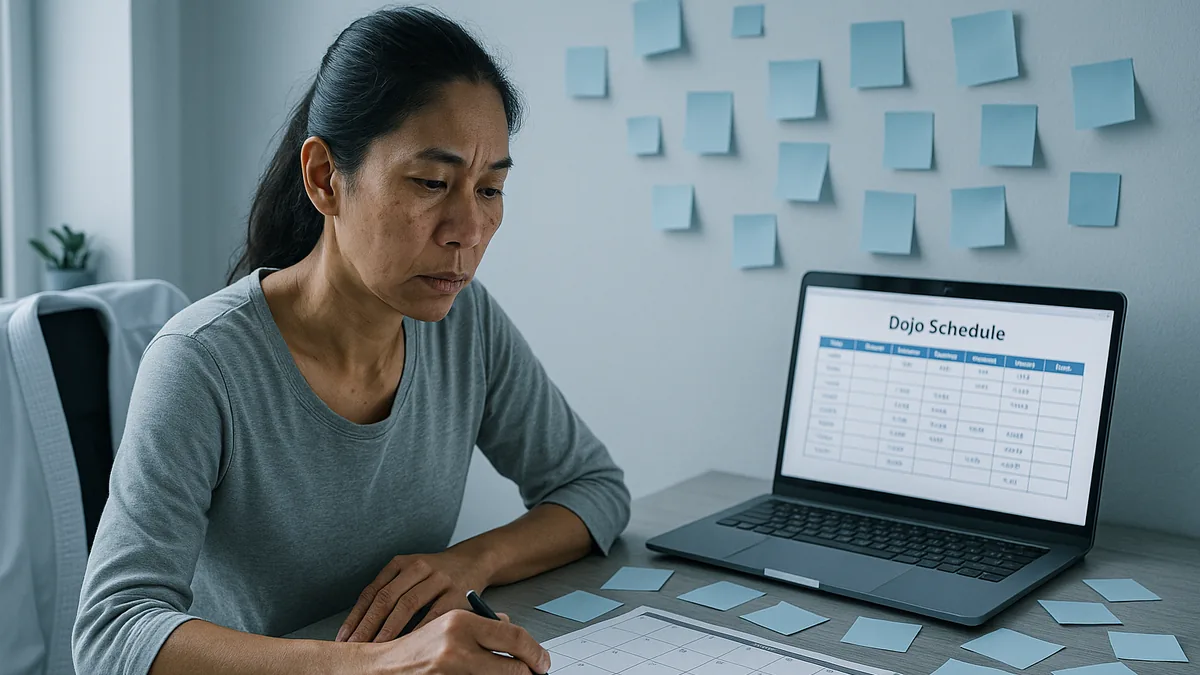
Before you write a single session into your calendar, I want you to do something that feels boring but makes everything else work: track your actual week. Not the week you think you have - the week you actually live.
I used to think I had five evenings free for training. When I actually looked at it, I had two. The other three had work commitments, family obligations, or the kind of mental fatigue where you’re physically present but not actually training - you’re just going through motions. Going through motions is worse than rest. It builds sloppy habits.
Write down every fixed commitment you have across a typical two-week period. Work, family, commute, recovery time. Be honest about the evenings where you’re genuinely cooked by 7pm. Those are not training slots. Trying to force a quality session when you’re running on empty is how technique degrades and bad habits get drilled in.
What you’re looking for is not the maximum number of slots available. You’re looking for the slots where you can actually train with focus. For most people with full lives, that’s two to four sessions per week. That’s enough. That’s genuinely enough to make real progress, if you use them well.
Prioritise the Sessions That Actually Move You Forward
Once you know what you’re working with, the next question is what goes into those sessions. And this is where I see the second major mistake: people train whatever they feel like training, rather than what they actually need.
I’ve watched students spend years drilling the techniques they’re already good at because it feels good to be competent. Their strong side reverse punch is excellent. Their weak side is still where it was three years ago. Their kata has the sequences memorised but no real power or intent behind it. They’re comfortable. Comfortable is not progress.
Here’s how I’d structure your priority sessions if you’re training two to four times a week:
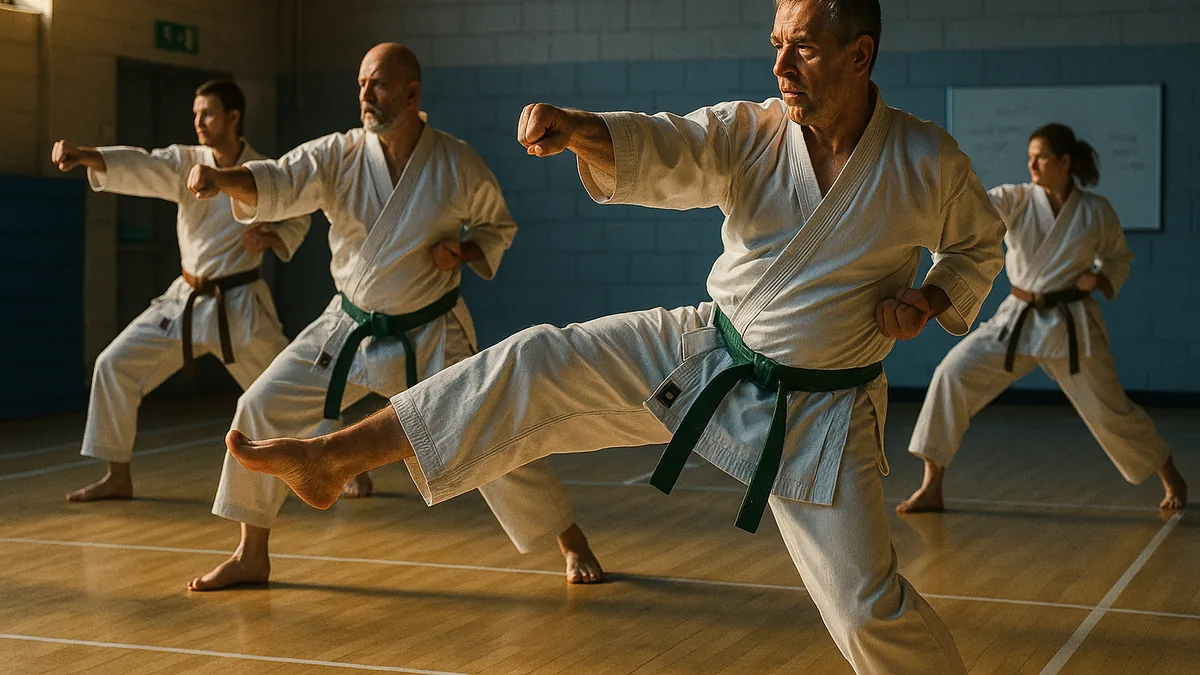
Session one is always fundamentals. Kihon. Stance work. Basic combinations. If you’ve been training for years, this still applies - I’d argue it applies more. What I tell students is that kihon isn’t beginner work, it’s the work you return to when your technique starts drifting. And technique always drifts. [Training combinations properly]((/training/how-to-train-combinations-in-karate-moving-beyond-single-tec/) requires the individual techniques to be clean first. You can’t build combinations on shaky foundations and expect them to hold under pressure.
Session two is your weakest area. Not your favourite. Your weakest. If kata is where you’re losing points at gradings, kata goes in session two. If your kumite timing is off, that’s session two. This takes honesty, and it takes the willingness to spend time in discomfort.
If you’re only getting two sessions a week, those are your two. Fundamentals and your weakest area. Everything else is a bonus when time allows.
Session three, if you have it, is where you push. Harder combinations, sparring, pressure testing what you’ve been drilling. This is the session that makes the other two feel real.
Session four is active recovery and review. Lighter work. Kata at half pace. Slow drilling where you feel every position. This is where senior practitioners separate themselves from everyone else - they use the easy sessions to notice things, not just to clock hours.
Build In Flexibility Before You Need It
The schedule that breaks the first time life intervenes was never going to work long-term. What I’ve found is that flexibility isn’t a concession to laziness - it’s what keeps serious practitioners training through the years when everything else is pulling at them.
Here’s what this looks like in practice. I’d recommend you identify at least one short-format session option - something you can do in 20 to 30 minutes at home when the full session isn’t happening. Not a replacement for real training, but a bridge that keeps the thread connected. [Training at home]((/training/how-to-practise-karate-at-home/) doesn’t have to mean compromising on quality, but it does mean being selective. Pick two or three things you can work with no equipment and minimal space. Kihon in a hallway. Kata in a living room. Slow shadowwork focused on hip mechanics and timing.
The mistake I see most often here is students treating home training as either a full substitute for dojo work or as completely worthless. It’s neither. It’s maintenance. And maintenance is what keeps you from losing ground during the weeks when everything goes sideways.
I’d also build one floating session into your week - a slot with no fixed content that you use based on what happened in your other sessions. If Tuesday’s kihon work exposed something in your stance, Thursday’s floating session is stance work. If you’re preparing for a grading, that slot becomes kata. If you’re genuinely tired, it becomes rest. The floating session is where experienced practitioners self-coach. If you’re working toward a grading, knowing what examiners are actually looking for will help you use that time well.
What Actually Keeps People Consistent
I used to think consistency was about motivation. My instructor corrected me on this early - he said motivation is for beginners, habit is for practitioners. I didn’t fully understand it until I’d been through enough cycles of high motivation and burnout to see the pattern.
The biggest difference between students who make long-term progress and students who plateau or disappear is not talent, not how many sessions they do, and not how hard they train when they show up. It’s how they handle the bad weeks.
Bad weeks are not exceptional. They’re part of the structure. The student who plans for them - who has a shortened session option ready, who knows which single drill they can do in 15 minutes that keeps the habit alive - that student is still training in year five. The student who treats every disruption as a reason to reset their schedule is usually starting over every three months.
What I tell students is: never miss twice. One missed session is life. Two missed sessions is a pattern. If you miss a session, the only job you have is to make sure the next one happens. Not a longer session to compensate. Not a harder session to punish yourself. Just the next one, as planned.
If you’re training without regular club access - through travel, work patterns, or location - training alone effectively becomes a skill in itself. The mechanics of solo training are different, and worth understanding properly rather than improvising.
Community Perspective
There’s a genuine split in how dojos approach this, and I think it’s worth being honest about it. Traditional training culture - particularly in Japanese-influenced styles - tends to treat frequency as a virtue in itself. The expectation in many traditional dojo environments is that serious students train as often as possible, and anything less is a sign of insufficient commitment.
I understand where that comes from, and I respect the discipline behind it. But I’ve also seen it produce students who burn out, get injured, or develop technically sloppy habits from training when they shouldn’t be. Quantity without quality is just repetition, and repetition of poor technique is worse than no repetition.
The more pragmatic approach - fewer sessions, higher quality, built around real life - tends to come from practitioners who’ve been training long enough to have burned out at least once. It’s a shift in perspective that happens around brown belt for a lot of people. You stop trying to train like you have no other responsibilities and start training like someone who intends to still be doing this in twenty years.
I prefer the pragmatic approach. That’s not a universal position, and some instructors would disagree with me. But I’ve seen it produce more consistent long-term practitioners than the alternative.
Key Takeaways
- Track your real week before you plan anything. Identify focus-capable slots, not just available time.
- If you have two sessions per week, make them fundamentals and your weakest area. Everything else is secondary.
- Build a short-format home session option before you need it. Having it ready is what keeps the habit alive through disrupted weeks.
- Never miss twice. One missed session is fine. Two is where consistency breaks down.
- Use a floating session for self-coaching based on what your other sessions revealed. This is where real progress accelerates.
- Power in your techniques comes from quality repetition over time - a schedule that keeps you training consistently will build more of it than any single intensive training block.
The weekly digest
New karate articles, once a week
One email every week with everything new on Karate Lifestyle. No spam; unsubscribe in one click.
We'll email you to confirm. See our privacy policy.