How to Train Combinations in Karate: Moving Beyond Single Techniques
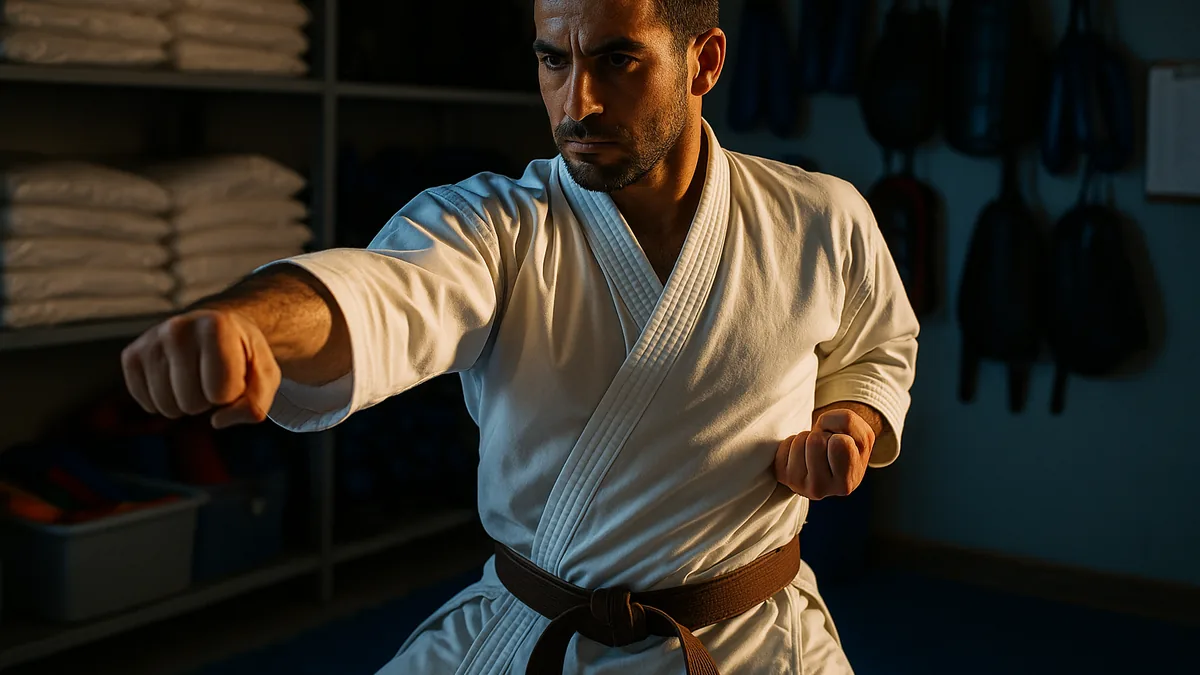
Most students treat combinations as a sequence of separate techniques. They throw a punch, pause, then throw another punch. You can see the gaps - little hesitations where they’re mentally selecting the next move. That’s not a combination. That’s a list.
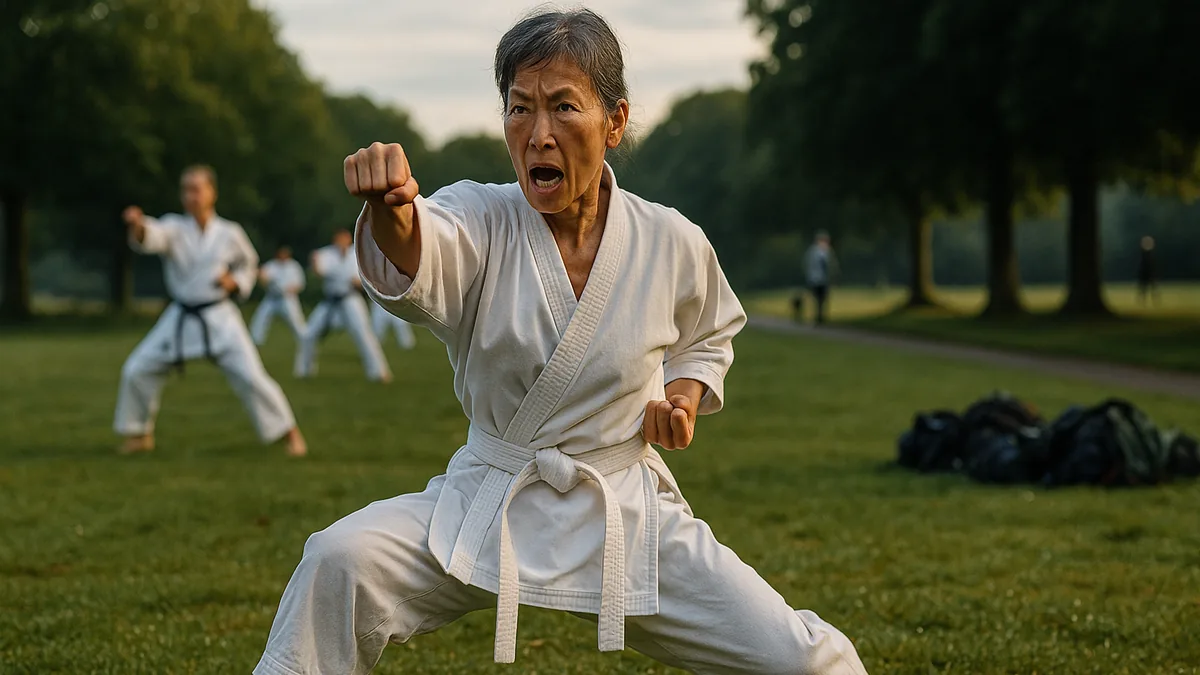
What I tell students when we first get into this work is: a combination isn’t several techniques, it’s one continuous action that happens to have multiple strikes in it. The moment you start thinking between moves, you’ve already lost the thread. Getting from “I know these individual techniques” to “I can flow between them under pressure” is the actual training problem, and it takes longer than most people expect.
Here’s the good news: the path is pretty clear if you know what to work on.
Why Single Techniques Aren’t Enough
You can have a technically excellent gyaku-zuki and still be completely ineffective in kumite. I’ve seen it hundreds of times. The student’s reverse punch is clean, powerful, well-timed in isolation - and then the moment they need to follow up or create an opening, they stall.
The reason is that single technique drilling, which is most of what kihon gives you, trains you to complete a movement and return to kamae. That’s correct and necessary early on. But it also trains a full stop at the end of every technique. Combinations require you to train through that stop - to use the rebound and momentum of one technique as the setup for the next.
My instructor used to say “the end of one technique is the beginning of the next.” I nodded along for years without really understanding it. It wasn’t until I started doing serious pad work that I felt what he meant - when the timing is right, you don’t reset between strikes. The hip that drove the first punch is already rotating back to load the second one. There’s no pause. It’s a cycle.
That physical understanding doesn’t come from kata repetition alone. You need resistance, feedback, and pressure to feel it.
Building Your Foundation: The Two-Strike Combination
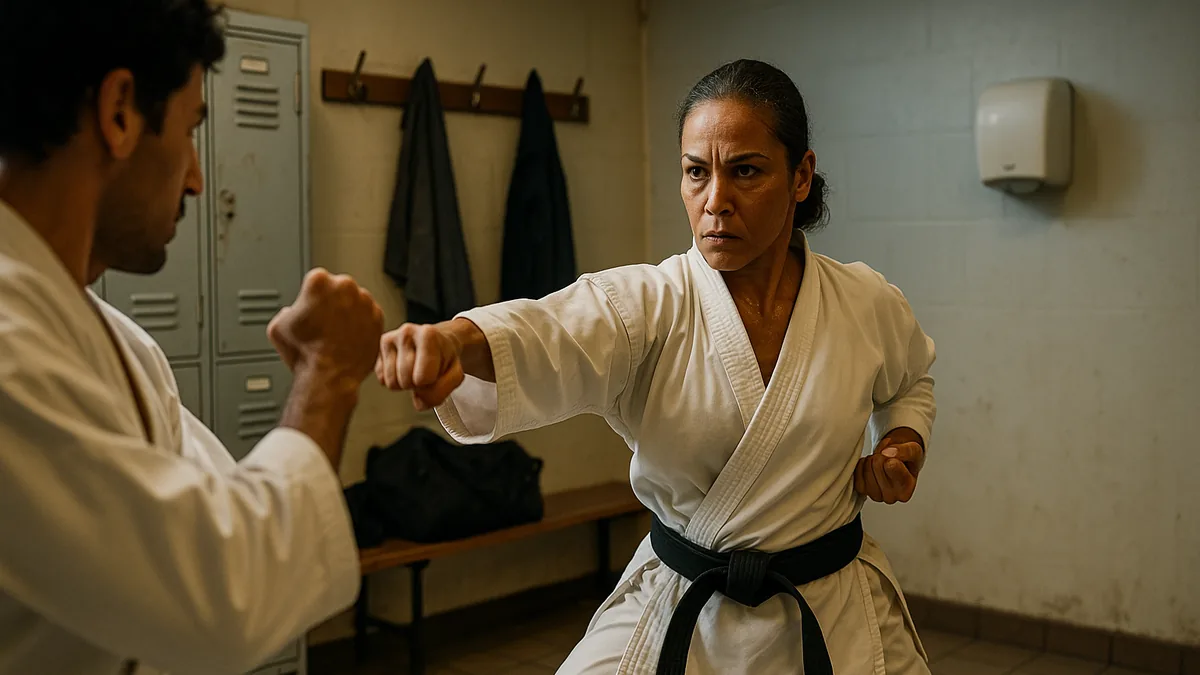
Before you add complexity, you need to own the basics. I’d rather see a student throw a clean jab-gyaku-zuki combination a thousand times than fumble through a five-technique sequence. The two-strike combination is where everything important lives.
Drill 1: Jab - Reverse Punch on the Bag or Pads
Why it matters: This is the foundational combination in most karate systems. It teaches you hip sequencing, weight transfer, and how to generate power from the second technique without telegraphing it. Get this wrong and every combination you build on top of it will have the same flaw buried inside it.
Setup: Use a heavy bag or have a partner hold focus mitts at head height. If you’re training alone, the bag is fine - but pads will give you better feedback on timing. (If you’re regularly without a partner, there’s more on making solo training effective at How to Train Alone When You Have No Club Access.)
Execution:
- Start in left fighting stance, relaxed, weight centred.
- Throw the jab by extending the front hand - don’t over-commit. The jab is a range-finder and a distraction, not your power shot.
- As the jab returns, your right hip is already beginning to rotate forward.
- Drive off the back foot and fire the reverse punch. The power comes from the hip rotation connecting through the core into the shoulder and fist. Not from the arm.
- Land back in a stable stance, weight forward but balanced.
What to feel for: The jab should feel light and quick - almost like flicking a switch. The gyaku-zuki should feel like your whole right side is accelerating into one point. When the hip rotation is connecting properly, you’ll feel the impact through your whole body, not just your fist. If it feels like you’re just extending your arm, the hip isn’t doing its job. There’s more on generating that kind of power at How to Generate Power in Karate.
The mistake I see most often: Students pause after the jab to “reset.” They throw the jab, bring it back to chamber, then initiate the reverse punch from scratch. This kills all the momentum and telegraphs the second strike. The correction that works is to think of the jab as a trigger - the moment it lands, the gyaku-zuki is already in motion. Drill it slow first so you can feel the overlap, then build speed.
Adding the Third Technique
Once the two-strike combination feels automatic - and I mean genuinely automatic, not “I can do it if I concentrate” - you’re ready to add a third element.
Drill 2: Jab - Reverse Punch - Mae Geri
Why it matters: Adding a kick to a hand combination is where most students fall apart. The transition from punching to kicking requires a complete weight shift, and if your punching combination has any instability in it, the kick will expose it immediately.
Setup: Heavy bag is ideal here. Pads work but require a more experienced partner who can manage the distance change.
Execution:
- Throw the jab-gyaku-zuki as above.
- As the reverse punch lands and you feel your weight settle slightly forward, chamber the front knee.
- Drive the mae geri forward - hip extending through the kick, not just the leg reaching out.
- Return the foot to stance without dropping it down behind you.
What to feel for: The kick should feel like a continuation of the forward momentum from the punches, not a separate action you’ve tacked on. If you feel yourself pausing and resetting before the kick, the combination has a gap in it. It feels wrong at first, but trust the mechanics - the weight shift from the reverse punch actually loads the front leg for the kick if you let it.
Common mistake: Students drop the guard completely when they kick. Both hands come down. I see this because students are concentrating so hard on the kick that the upper body goes on autopilot - and autopilot means hands down. Keep the rear hand at cheek level throughout the kick. Drill it in slow motion until it becomes habit.
Introducing Pads and a Partner
Solo drilling on a bag will only take you so far. The bag doesn’t move, doesn’t react, and doesn’t pressure you. Partner work with pads changes everything.
Drill 3: Pad Holder Calls the Combination
Why it matters: This is where timing and rhythm start to develop under real conditions. The pad holder controls the pace, the distance, and eventually the pressure. This is the closest thing to sparring that combination drilling gets.
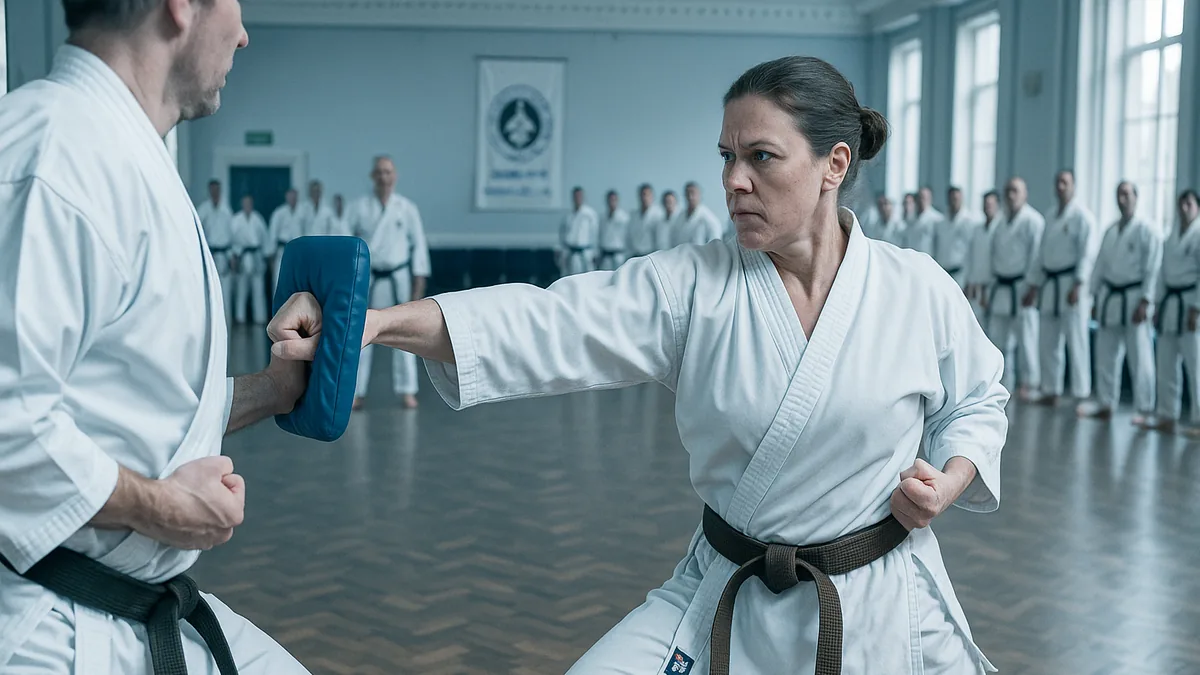
Setup: One partner holds focus mitts, one partner works. The holder starts by presenting both pads for a simple two-strike combination.
Execution:
- Holder presents the jab pad - striker throws the jab.
- Holder immediately presents the gyaku-zuki pad - striker fires the reverse punch.
- Gradually, the holder reduces the gap between presentations, forcing the striker to increase speed and reduce reset time.
- Progress to the holder calling combinations verbally (“one-two,” “one-two-kick”) so the striker has to process and execute simultaneously.
- Eventually, the holder moves unpredictably - presenting pads at different heights and angles.
What to feel for: When the timing is genuinely clicking, you stop thinking about the sequence and start just responding to the pad. That’s the goal. You’ll know you’re there when you’re surprised by how fast the combination came out.
What changes with experience: A beginner doing this drill is thinking about each technique. A senior practitioner is reading the pad holder’s body language and adjusting distance and angle automatically. The combination itself becomes background - what they’re actually focused on is position and timing. That shift takes months of consistent pad work to develop.
Timing and Rhythm: The Part Nobody Talks About Enough
I think rhythm is the most undercoached element of combination training. Instructors teach technique. They teach power. Timing gets mentioned but rarely drilled explicitly. And yet it’s what separates combinations that work in jiyu-kumite from combinations that only work on a compliant partner.
The key insight is that combinations don’t have to be even. A jab-gyaku-zuki doesn’t have to be “one-two” at equal intervals. Sometimes it’s “one… TWO” - a slight pause before the power shot to catch an opponent resetting. Sometimes it’s “onetwo” - compressed to create a single burst. Drilling combinations at different rhythms is what makes them adaptable.
A simple way to train this: do your combination drills to music with different tempos, or have your pad holder deliberately vary the pace of presentations. Your breathing matters here too - if you’re holding your breath through a combination, you’ll run out of steam fast. There’s specific guidance on managing breath through techniques at Breathing in Karate: When and How.
In jiyu-kumite, a combination becomes your fastest counter off a failed attack precisely because you’ve drilled the rhythm enough that it fires without deliberate thought. The opponent overcommits, creates a gap, and the combination is already happening before you’ve consciously decided to throw it.
Progression: Making It Harder
Once two and three-technique combinations feel solid, here’s how to build:
Add defensive transitions. Start the combination from a block or a parry. This is where combination training connects to real application. A gedan barai that flows immediately into a counter combination is a completely different skill from throwing combinations in isolation. See Blocking in Karate: Why Most Blocks Fail for why the block-to-counter transition breaks down for most students.
Increase the pressure. Have your partner add light resistance - not full sparring, but enough that they’re not just holding pads passively. They can push back slightly, change angle, or move the target just before you commit.
Reduce the setup time. Start from a neutral position rather than fighting stance. Start from movement. Start after a partial technique that didn’t land. Real combinations rarely start from a perfect setup.
Train the entry. Most combination drilling assumes you’re already at the right distance. Work on closing distance as part of the combination - the entry step or tai sabaki that creates the angle for the first technique.
Community Perspective
There’s a real split in how different dojos approach combination training, and it’s worth being honest about it. Traditional karate schools often keep combination work within pre-set patterns - sanbon kumite, ippon kumite, specific kata applications. The argument is that drilling set combinations builds precision and correct form before you introduce variables.
More sport-oriented or contemporary dojos tend to move toward open pad work and free combination drilling much earlier. The argument there is that adaptability matters more than precision at early stages.
I’ve trained in both environments. My honest view is that set combinations are valuable for learning mechanics, but if that’s all you do, you’ll develop combinations that only work when the opponent cooperates. The transition to variable pad work and eventually free sparring needs to happen earlier than most traditional curricula allow. That said, I’ve also seen students from sport-focused dojos who can throw fast combinations but have no understanding of why the techniques work - they’re pattern matching without real structure underneath.
The answer isn’t to pick one approach. It’s to understand what each type of drilling is actually developing, and make sure your training includes both.
Key Takeaways
- A combination is one continuous action, not a sequence of separate techniques. If you’re pausing between strikes, you’re drilling the wrong thing.
- Own the two-strike combination completely before adding complexity. Most students progress too fast and build instability into everything that follows.
- Pad work with a partner is not optional if you want combinations that work under pressure. The bag doesn’t give you timing feedback.
- Drill combinations at different rhythms deliberately. Even and uneven timing serve different purposes in sparring.
- The guard stays up through kicks. Always. Drill it in slow motion until it’s automatic.
- The transition from “I can do this combination” to “this combination fires without thinking” takes consistent repetition over months - not weeks. How Many Days a Week Should You Train Karate? is worth reading if you’re trying to structure that kind of long-term development.
The weekly digest
New karate articles, once a week
One email every week with everything new on Karate Lifestyle. No spam; unsubscribe in one click.
We'll email you to confirm. See our privacy policy.