Why Your Gyaku-Zuki Loses Power When You Spar: Fixing the Gap Between Kihon and Kumite
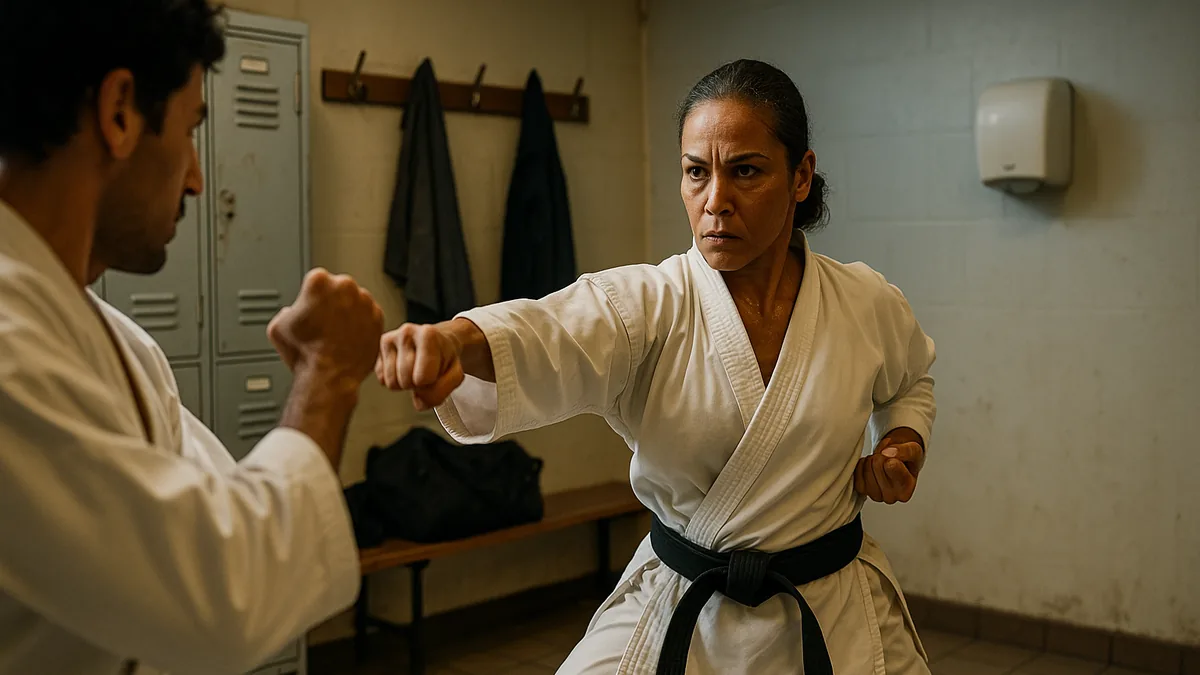
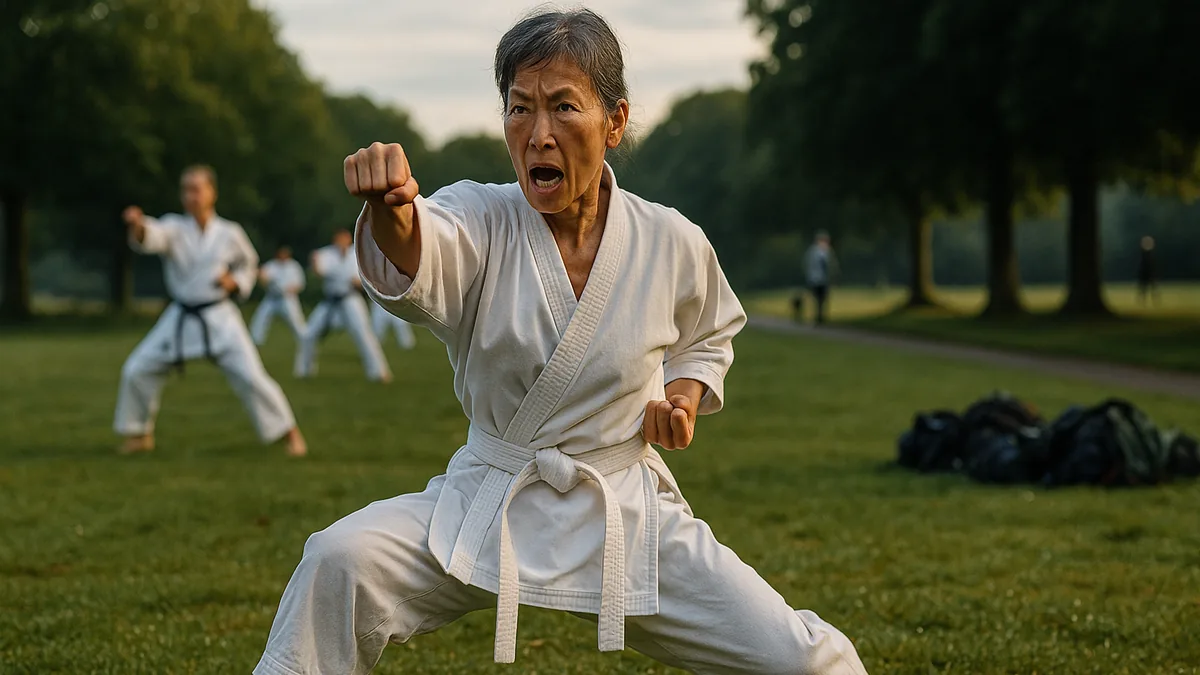
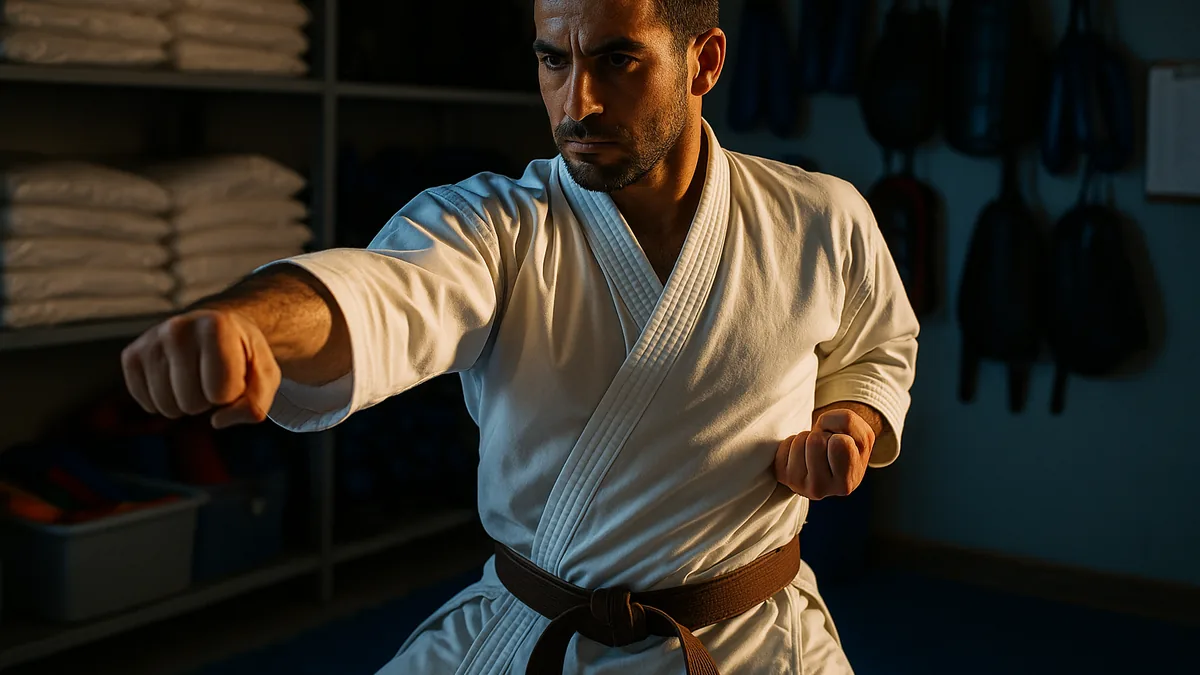
Most students I’ve worked with can throw a decent gyaku-zuki in kihon. Clean chamber, hip rotation, good extension. Then they get into jiyu-kumite and the same punch looks like they’re swatting a fly. The power disappears. The timing’s off. And they can’t figure out why, because in their mind, they’re doing the same thing.
They’re not. And the gap between those two versions of the same technique is exactly what we’re going to fix.
I’ve seen this pattern repeat across every grade from 8th kyu to 2nd dan. The mechanics aren’t the problem - most students understand the mechanics well enough. The problem is that kihon teaches you to generate power from a static, prepared position, and kumite never gives you that position. So the punch that works perfectly in line drills falls apart the moment there’s a real opponent, real pressure, and real movement.
Here’s what I’ve learned actually fixes it.
The Real Problem: Your Stance Is Already Wrong When You Punch
Before we talk about hip rotation or extension, we need to talk about what’s happening before the punch. Because the biggest difference I see between a gyaku-zuki that lands with weight behind it and one that doesn’t is what the stance looks like at the moment of commitment.
In kihon, you set your zenkutsu-dachi, you’re stable, and you fire. In kumite, you’re moving - shifting weight, adjusting distance, reacting. By the time you decide to punch, your stance is often shallow, your weight is distributed wrong, or you’re mid-step. You throw the punch anyway, from wherever you happen to be. That’s why it feels weak. Because it is weak. You’ve lost your base before you’ve even started.
What I tell students is this: the punch starts from the ground. Not from the hip, not from the shoulder - from the floor. When the hip rotation is actually connecting, you feel the whole chain fire - foot pressing into the floor, knee driving, hip snapping, shoulder following. It travels through your body like a wave. When it’s not connecting, you feel the punch stop at your shoulder. You’re just throwing your arm.
The correction that works most reliably here is getting students to practise finding their stance under pressure, not just from a standing start. Which brings us to the first drill.
Drill 1: Stance Recovery into Gyaku-Zuki
Why This Matters
If you only ever practise gyaku-zuki from a set stance, you’re training yourself to need that set stance. This drill teaches you to find your base fast - from movement - and fire the punch the moment you have it.
Setup
Work with a partner or use a makiwara/heavy bag. You need space to move. Start from jiyu-dachi at normal sparring distance.
Execution
- Move freely - shuffle forward, back, side to side - for 10-15 seconds. Don’t telegraph anything.
- On your partner’s signal (or your own decision), drop into zenkutsu-dachi and fire gyaku-zuki immediately. No pause between landing the stance and punching.
- Hold the finishing position for two seconds. Check your back foot - is it flat? Is your weight actually forward? Is your rear hip through?
- Reset and repeat. 10 reps each side, three sets.
What to Feel For
When you get this right, the punch lands at the same moment your stance fully loads. It feels like the stance and the punch are one movement, not two. When it’s wrong, you’ll feel yourself punch and then settle into the stance - there’s a lag, and the power leaks out in that gap.
What People Get Wrong
Most beginners rush the punch and skip the stance. They’re so focused on firing fast that they punch before their back foot has even landed properly. The punch arrives but there’s nothing behind it. I’ve seen students do this for months without realising because in kihon, the stance is always ready - they’ve never had to build it under time pressure.
The correction: slow it down. Exaggerate the stance drop first. Feel the floor under your back foot. Then punch. Speed comes after the sequence is reliable.
Drill 2: Hip Rotation Isolation with Resistance
Why This Matters
I think this is the most underused drill for fixing gyaku-zuki. It isolates the hip rotation so you can feel exactly what it’s contributing - or not contributing - to the punch. Most students think they’re rotating when they’re actually just shifting weight slightly. This drill exposes that immediately.
Setup
Stand in zenkutsu-dachi facing a wall. Place the back of your punching-side fist against the wall at chest height, arm extended. Your partner stands behind you and places both hands on your rear hip.
Execution
- From this position, drive your rear hip forward and through - as if you’re trying to touch the wall with your hip. Your partner provides moderate resistance.
- Focus on the rotation, not the arm. The arm is already extended. You’re just learning what the hip contribution feels like in isolation.
- Do this 20 times slowly. Then remove the wall and throw the punch normally.
- Compare what you feel.
What to Feel For
When the hip is doing its job, you’ll feel the connection between your rear leg and your shoulder. The whole side of your body engages. When it’s not working, you feel the punch as an arm movement - isolated, disconnected from everything below.
This feels wrong at first because most students have learned to think of the punch as an arm technique with hip assistance. It’s actually a hip technique that the arm delivers. That reframe changes everything.
What People Get Wrong
Students rotate their shoulders instead of their hips. They look like they’re rotating because the upper body is moving, but the actual hip joint isn’t driving. My instructor used to press his palm flat against our rear hip and tell us not to move until we pushed his hand forward. I didn’t understand why until I tried throwing gyaku-zuki against a resisting pad and realised I was generating almost no force from below the waist.
Drill 3: The Kihon-to-Kumite Bridge
Why This Matters
This is the drill that directly addresses the gap in the article title. The problem isn’t that your kihon is bad - it’s that you’ve never practised the transition. This drill builds that bridge deliberately.
Setup
Work with a partner. One person is the feeder, one is the puncher. You need focus mitts or a pad.
Execution
- Start in kihon format: set stance, punch three gyaku-zuki in sequence at the pad. Normal kihon rhythm.
- After the third punch, feeder steps back and raises their hands - you’re now in a light sparring exchange. Move freely for five seconds.
- Feeder offers an opening - a dropped guard, a slight lean. Puncher fires gyaku-zuki into the pad.
- Immediately return to kihon format - three more punches - then back to movement.
- Alternate for three minutes.
What to Feel For
The goal is for the sparring punch to feel like the kihon punch. Same hip engagement, same ground connection, same extension. Most students notice immediately that their sparring punch feels thin compared to the kihon version. That feeling is the information - chase it until the gap closes.
What People Get Wrong
Students treat the sparring section as a break from the drill. They relax, they move casually, and then they’re surprised when the punch doesn’t fire cleanly. The movement phase is the drill. You’re training yourself to stay ready - to maintain the physical conditions for a powerful punch even while you’re moving and reacting.
This is also where seeking feedback from your instructor matters most. Have them watch specifically at the moment of commitment - the transition from movement to punch. That’s where the errors are, and they’re often invisible to the person making them. Kihon training drills for beginners can help you build the baseline mechanics before adding this kind of pressure.
What Changes With Experience
As a white belt, I thought gyaku-zuki was about power. Hit hard. By brown belt I realised it’s about timing - a punch that lands when the opponent is committed to something else doesn’t need to be powerful to be effective. By the time I was a senior student, I understood that the real skill is making the conditions for the punch - creating the opening, controlling the distance, being in the right stance before the opponent knows you’ve decided.
The mechanics don’t change. The hip rotation is still the hip rotation. But the context around it gets more sophisticated. Beginners practise the punch. Experienced practitioners practise everything that makes the punch possible.
If you’re working on combinations that set up gyaku-zuki, this connects directly to what’s covered in How to Train Combinations in Karate: Moving Beyond Single Techniques. And if you’re doing a lot of solo work to build these patterns, Shadowboxing for Karateka: How to Make It a Serious Training Tool is worth reading alongside this - it covers how to make solo drilling actually transfer to partner work.
Community Perspective
There’s a genuine split in how different dojos approach the kihon-to-kumite gap, and I think it’s worth being honest about it.
Traditional schools - particularly those with strong JKA or Shotokan lineage - tend to argue that deep, disciplined kihon practice eventually transfers to kumite on its own. The idea is that if your mechanics are truly correct, they’ll be available under pressure. I’ve trained with senior practitioners who hold this view and back it up with their own sparring. There’s something to it.
More sport-focused schools argue that kumite-specific conditioning needs to start earlier, that you can’t just do line drills and expect the technique to appear in a live context. They’d introduce pressure drills and partner work at a much earlier stage.
I think both camps are partially right. Deep kihon practice builds the mechanics. But mechanics without pressure training don’t automatically become functional. You need both, and you need to practise the transition deliberately - which is exactly what the drills above are designed to do. The mistake is treating them as separate disciplines rather than two phases of the same skill.
Key Takeaways
- Your stance at the moment of commitment determines whether the punch has anything behind it. Train stance recovery under pressure, not just from a set position.
- Hip rotation is the punch. The arm is the delivery mechanism. If you feel the punch stopping at your shoulder, your hip isn’t connecting.
- The kihon-to-kumite gap is real and specific - practise the transition deliberately, not just the techniques on either side of it.
- Get your instructor to watch the moment of commitment in sparring, not your kihon form. The errors are different and they’re not always visible to you.
- In jiyu-kumite, gyaku-zuki becomes your fastest counter off a failed attack - when your opponent overcommits, you’re already in position if you’ve trained the stance recovery. That’s where all this work pays off.
- Slow the drill down before you speed it up. Speed that skips the stance or the hip is just practising bad habits faster.
The weekly digest
New karate articles, once a week
One email every week with everything new on Karate Lifestyle. No spam; unsubscribe in one click.
We'll email you to confirm. See our privacy policy.