How to Use Pad Work to Fix Specific Kumite Problems
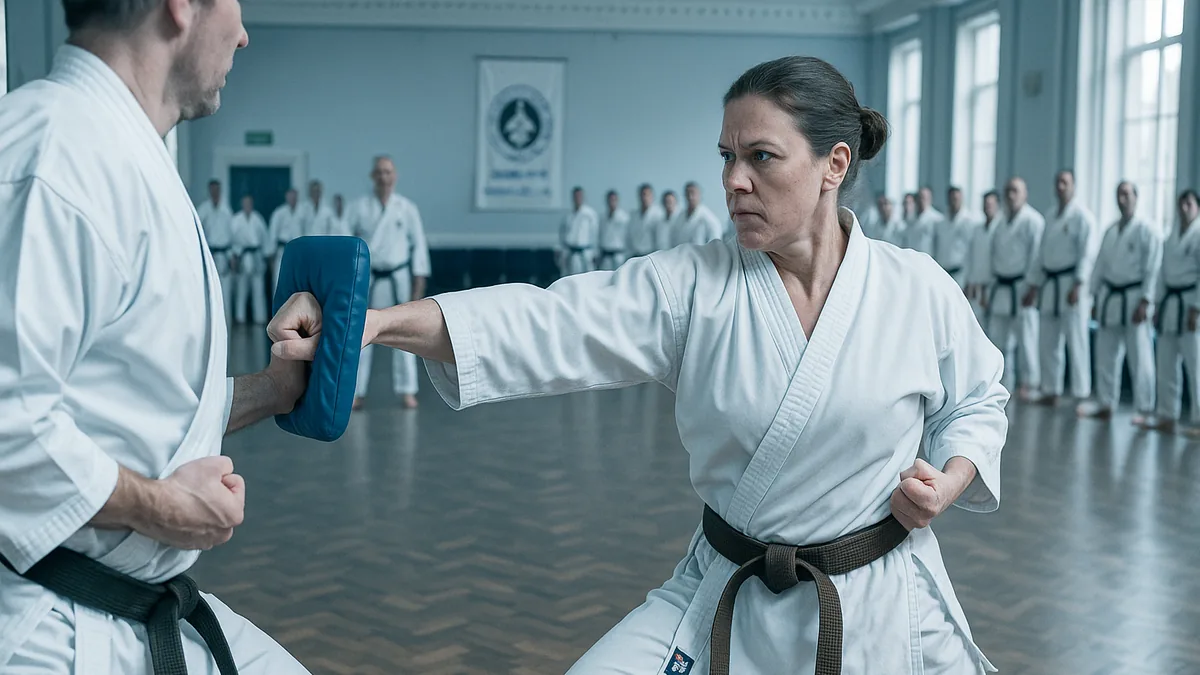
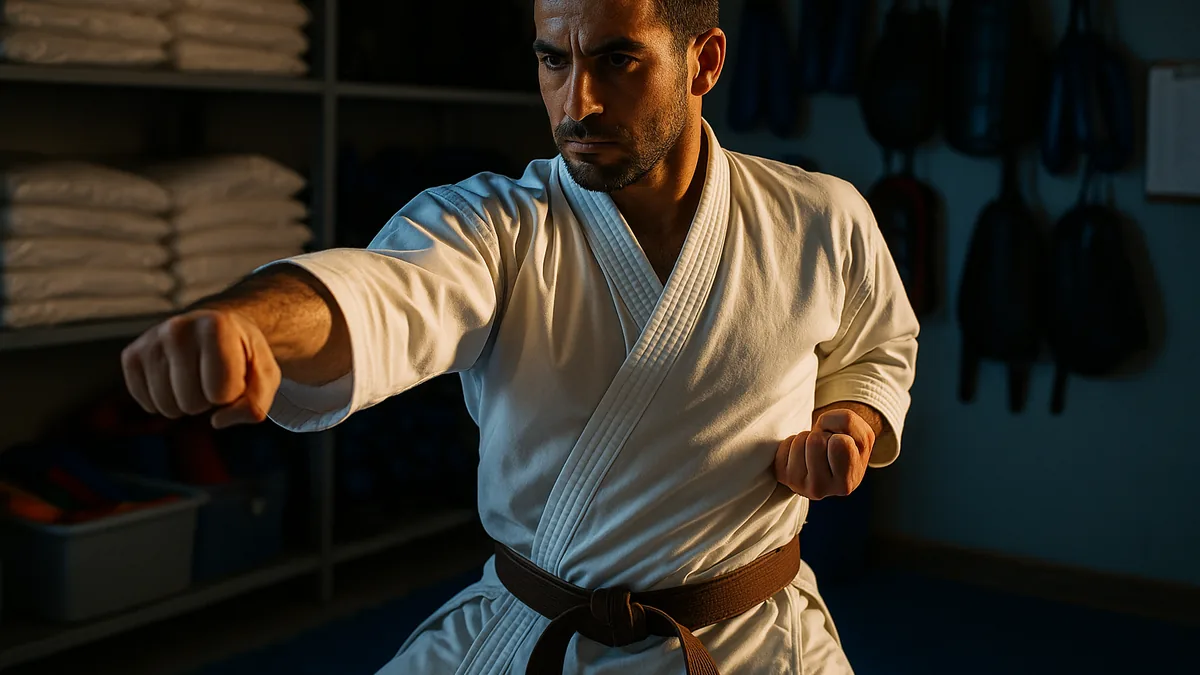
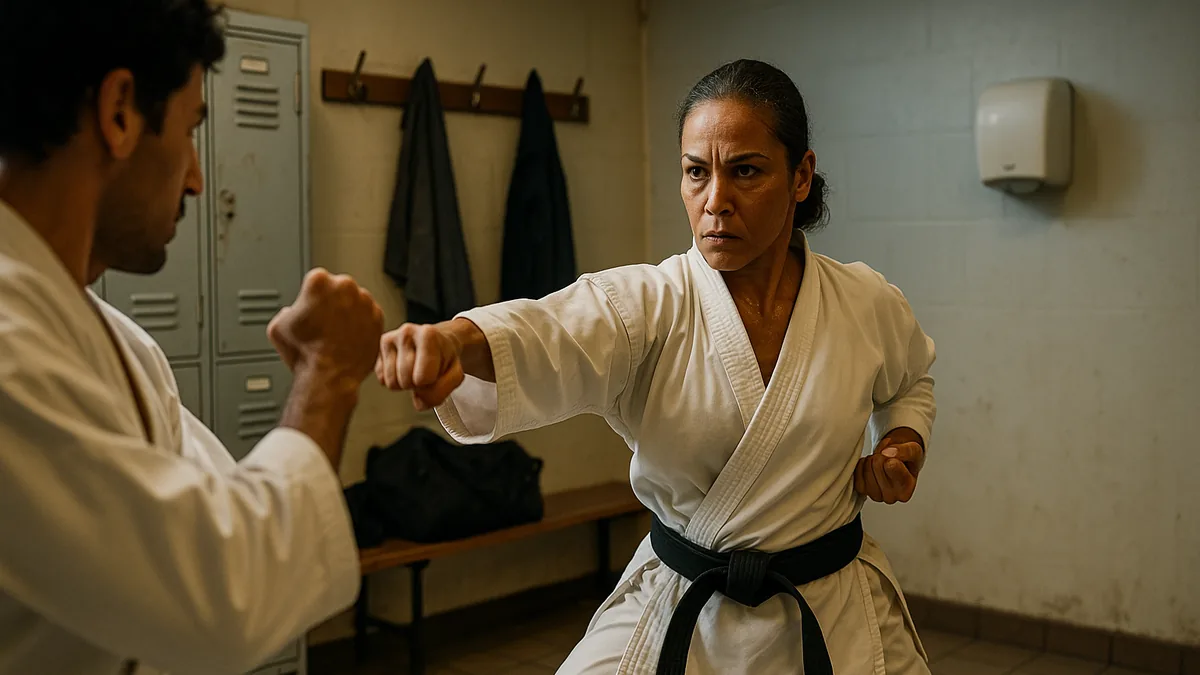
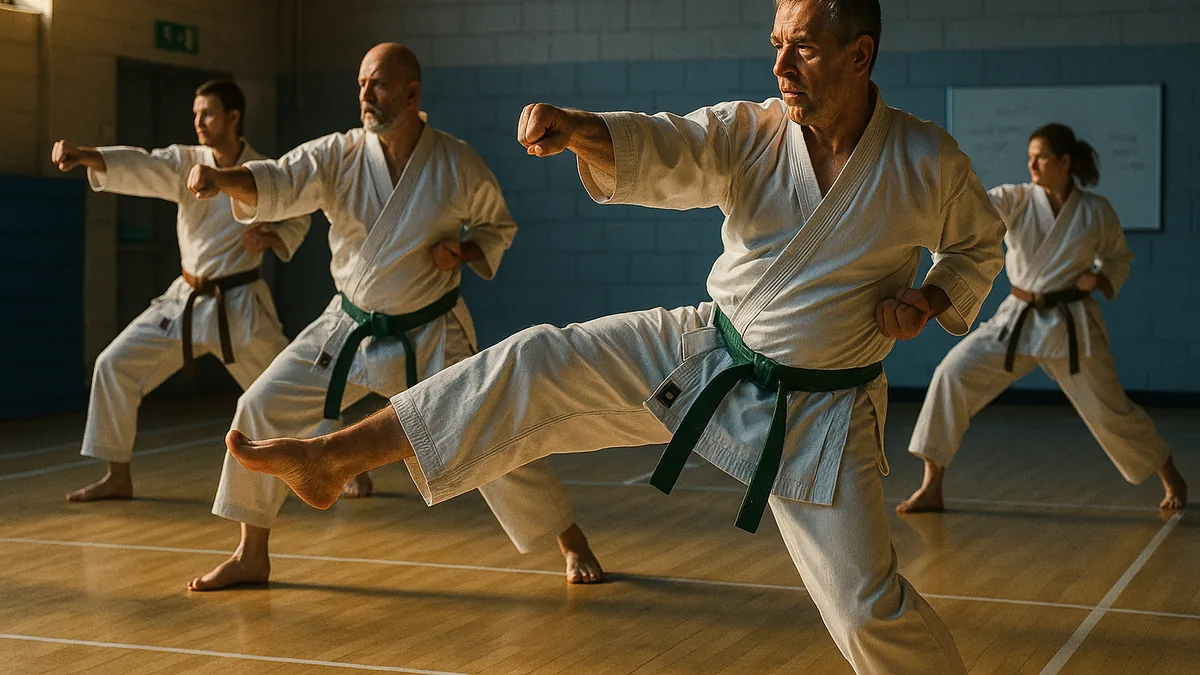
Most people treat pad work as a cardio drill. Hit the pad, get sweaty, feel like you trained hard. That’s not what it’s for. The best use of pad work is surgical - you identify something specific that’s breaking down in kumite, and you build a drill that isolates exactly that problem. Done right, a good pad session fixes things that a hundred rounds of free sparring won’t touch.
I’ve been running pad drills with students for over a decade, and the pattern I see constantly is this: someone has a real, specific problem in kumite - they’re getting countered off their gyaku-zuki, or their combinations fall apart after the first technique - but they go to the pads and just hit. No diagnostic. No structure. They work hard and nothing changes.
What follows is the approach I actually use, built around the problems I see most often and the drills that address them directly.
Diagnosing the Real Problem First
Before you touch a pad, you need to know what you’re fixing. This sounds obvious. In practice, most people skip it.
The three most common kumite problems that pad work can actually fix are: lack of commitment on the entry (you’re pulling your techniques before they land), combination breakdown after the first punch (the second and third techniques are slower and weaker than the first), and poor recovery positioning (you land something and end up somewhere your opponent can counter easily).
If you’re not sure which applies to you, have someone watch you spar and tell you honestly. Or film yourself. The problem is usually obvious from the outside and invisible from the inside.
Once you know what you’re fixing, you build the drill around that. Every session has a purpose. If you can’t state in one sentence what you’re working on, you’re not ready to start.
Drill 1: The Commitment Entry Drill
Why It Matters
I’ve noticed that the most common reason techniques fail in kumite isn’t poor mechanics - it’s hesitation on the entry. You throw the technique but you’ve already started pulling it back before it arrives. The punch lands soft. The kick doesn’t penetrate. Your opponent feels it and counters.
This drill forces you to commit fully on every entry, and it uses the pad to give you honest feedback.
Setup
You need a partner holding a focus mitt at chest height, standing in a natural stance. You start from outside striking range - further than you think you need to be. That distance is deliberate.
Execution
- Start from stillness. No bouncing, no telegraphing.
- Close the distance with a single explosive step - either a sliding step or a full oi-zuki entry, depending on what you’re drilling.
- Strike through the pad, not to it. Your arm should finish extended, your hip should be fully rotated, your back foot should have driven forward.
- Hold the finish position for one full second before recovering.
- Your partner gives you honest feedback: did the pad move, or did you just touch it?
What to Feel For
When the commitment is right, you feel the impact transfer through your whole body - not just your arm or your shoulder. The pad should move your partner, not just absorb the strike. If you’re only feeling it in your wrist and forearm, your hip isn’t connecting. The hip rotation is the whole punch. Without it, you’re just throwing your arm.
The Mistake I See Most Often
Students start the drill from too close, which means they don’t have to solve the distance problem. The whole point is learning to cover ground and arrive with power simultaneously. When you start from a comfortable range, you train a short entry. In kumite, your opponent isn’t standing at comfortable range.
The other mistake: stepping and then punching. Two separate movements. What you want is one movement where the punch arrives with the step, not after it. This feels wrong at first, but trust the mechanics - the power comes from the drive, not from the arm.
Drill 2: Combination Continuation Drill
Why It Matters
If your combinations fall apart after the first technique, pad work is the fastest way to fix it. The problem is almost always that you treat each technique as a separate event. You punch, stop, adjust, punch again. That pause is where you get countered.
For more on this, How to Train Combinations in Karate: Moving Beyond Single Techniques covers the underlying mechanics in detail. But pad work is where you actually train it into your body.
Setup
Partner holds two mitts. You’re working a three-technique combination - I prefer kizami-zuki, gyaku-zuki, gyaku-zuki as the base pattern, but use whatever combination you’re actually running in kumite. The mitts are held at slightly different heights to force adjustment between techniques.
Execution
- First technique lands. Don’t stop. Don’t reset.
- The moment the first technique makes contact, the second is already loading.
- Third technique is driven by the hip, not the arm.
- Your partner moves the mitts slightly between techniques - not dramatically, just enough that you have to find them.
- Run it at 60% speed first. Speed comes later. Continuity comes first.
What to Feel For
When the combination is working, it feels like one continuous movement with three contact points, not three separate punches. You’ll feel a rhythm - not a pause-punch-pause-punch rhythm, but a flowing rhythm where each technique feeds into the next. The gyaku-zuki at the end should feel just as loaded as the first punch, not weaker.
I used to think combination training was about speed. My instructor kept telling me it was about continuity. I didn’t understand what he meant until I started getting countered in the gap between my second and third technique. That gap was a full stop I didn’t know I was making.
The Mistake I See Most Often
Students slow down at the end of the combination because they’re thinking about the next technique. The correction that actually works is this: don’t think about the next technique. Think about finishing the current one with full commitment. The next technique follows from the body position, not from a decision. When you’re making decisions mid-combination, you’re too slow.
Drill 3: Counter-and-Recover Drill
Why It Matters
Landing a technique and ending up in a bad position is one of the most common problems I see in kumite. You score, but you’re wide open. Your partner is already countering before you’ve recovered. This drill trains the recovery as part of the technique, not as an afterthought.
If your gyaku-zuki is losing power in sparring, this connects directly to that problem - Why Your Gyaku-Zuki Loses Power When You Spar explains the kihon-to-kumite gap. But the pad drill here trains the full sequence: entry, strike, and recovery as one unit.
Setup
Partner holds a single mitt. After you strike, they immediately indicate a direction - left, right, or back - by moving the mitt or giving a verbal cue. Your job is to recover to a guard position in that direction before they can follow up.
Execution
- Enter and strike with full commitment.
- The moment of contact, your partner gives the direction cue.
- Recover to guard in that direction within one step.
- Your partner throws a controlled follow-up technique. You should be in position to deal with it.
- Repeat. Vary the cues so you can’t predict them.
What to Feel For
When the recovery is right, you feel stable the moment you arrive in the new position - not off-balance, not reaching. It feels like landing, not like catching yourself. If you’re stumbling into the recovery, your weight transfer on the strike was wrong. You’re finishing forward instead of balanced.
Making It Harder
Once the basics are solid, add these progressions:
- Reactive entry: Partner gives a signal to start. You can’t pre-load the entry. This kills the habit of telegraphing.
- Broken rhythm: Partner varies the timing of the mitt presentation. You have to wait for the target, not throw on your own schedule.
- Fatigue rounds: Run the drill at the end of training, not the beginning. Your technique will break down. That’s the point. You need to know what breaks first.
- Live follow-up: After the combination lands, partner immediately sparrs for five seconds. No rest, no reset. This is the closest pad work gets to actual kumite.
Community Perspective
There’s a real debate in traditional karate about whether pad work belongs in training at all. Some instructors see it as a sport karate import that has no place in a traditional dojo. Others - and I’m in this camp - think that’s a false choice.
The argument against pad work is that it trains you to hit something that doesn’t react, which builds false confidence. That’s a fair criticism of bad pad work. If your partner just holds the mitt and you hit it the same way every time, you’re not training kumite, you’re training a punching bag routine.
But pad work designed around real kumite problems - where the partner moves, varies the presentation, and gives honest feedback - is something different. I’d rather have a student do thirty minutes of well-designed pad work than an hour of jiyu-kumite where they’re just repeating the same habits.
The honest answer is that pad work and free sparring aren’t competing. They address different things. Pad work lets you isolate and fix. Sparring tests whether the fix holds under pressure. You need both, and How to Build a Karate Training Schedule That Actually Fits Your Life is worth reading if you’re trying to fit both into limited training time.
Key Takeaways
- Know what you’re fixing before you start. A pad session without a specific problem to solve is just cardio.
- The pad gives you honest feedback that sparring often doesn’t - use it diagnostically, not just for volume.
- Most combination problems are continuity problems, not power problems. Train the flow before you train the speed.
- Recovery is part of the technique. If you’re not training the position you end up in after the strike, you’re only training half the movement.
- Start every drill slower than feels productive. The speed comes. The mechanics have to come first.
- If the drill feels comfortable, make it harder. Add fatigue, add reaction requirements, add live follow-up. Comfort means you’ve already adapted to it.
The weekly digest
New karate articles, once a week
One email every week with everything new on Karate Lifestyle. No spam; unsubscribe in one click.
We'll email you to confirm. See our privacy policy.