How Many Days a Week Should You Train Karate?
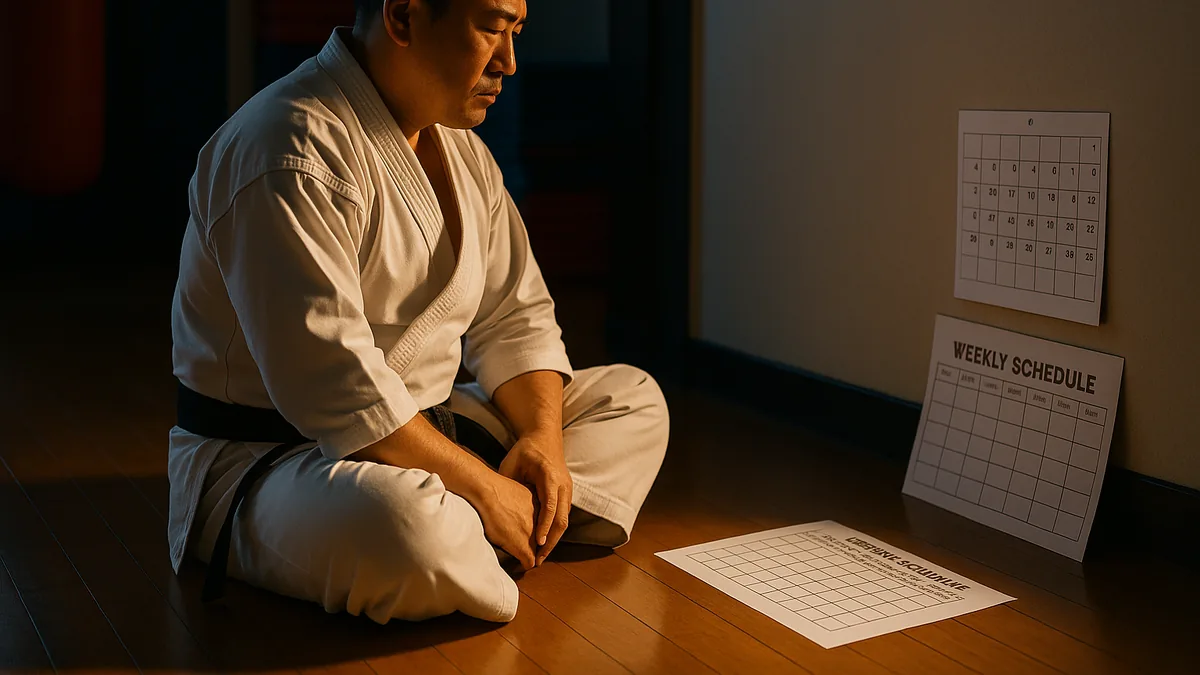
Three to five days a week. That’s my answer, and I’ll stand behind it for most people training seriously. The honest answer is that it’s not a fixed number - it depends on where you are in your training, what you’re working toward, and how well you recover. But if you’re asking because you want to actually improve, three days is the floor and five days is probably the ceiling before recovery starts working against you.
The nuance matters though, and I’ve seen people get this wrong in both directions.
Is Training More Days Always Better?
No, and this is the mistake I see most often with newer students. There’s a period - usually around green or purple belt - where people catch the bug hard. They want to train every day, sometimes twice a day. I’ve been there. My instructor used to say “the dojo will still be here tomorrow,” and I thought he was just managing expectations. It took a pulled hip flexor and three weeks off to understand what he actually meant.
Your nervous system needs time to consolidate what you’ve drilled. The kata you ran twenty times on Tuesday isn’t going to be sharper if you run it twenty more times on Wednesday with tired legs and a foggy mind. What I tell students is this: a focused 90-minute session three times a week will outperform six half-hearted sessions every single time. Quality of attention matters more than raw hours on the floor.
The physical side is obvious - muscles repair during rest, not during training. But the cognitive side is underrated. Technique is a skill, and skill acquisition has limits per session. You’ll feel this if you’ve ever drilled a new combination until it felt sharp, then tried to add one more thing and watched everything fall apart. That’s not weakness. That’s your brain hitting a processing limit.
What Should Those Training Days Actually Look Like?
Not all training days are equal, and treating them that way is a fast route to burnout or plateau. I’d structure it roughly like this: if you’re training four days a week, two of those should be high-intensity - sparring, hard kihon, heavy bag work, conditioning. One should be technical - slow kata, partner drills, detail work. One should be lighter - solo practice, breathing work, flexibility.
The slow technical day is the one people skip, and it’s the one that actually builds the foundation. Understanding breathing in karate and how to generate power properly only comes from working at a pace where you can actually feel what’s happening through your body. You can’t do that when you’re gassing through a hard session.
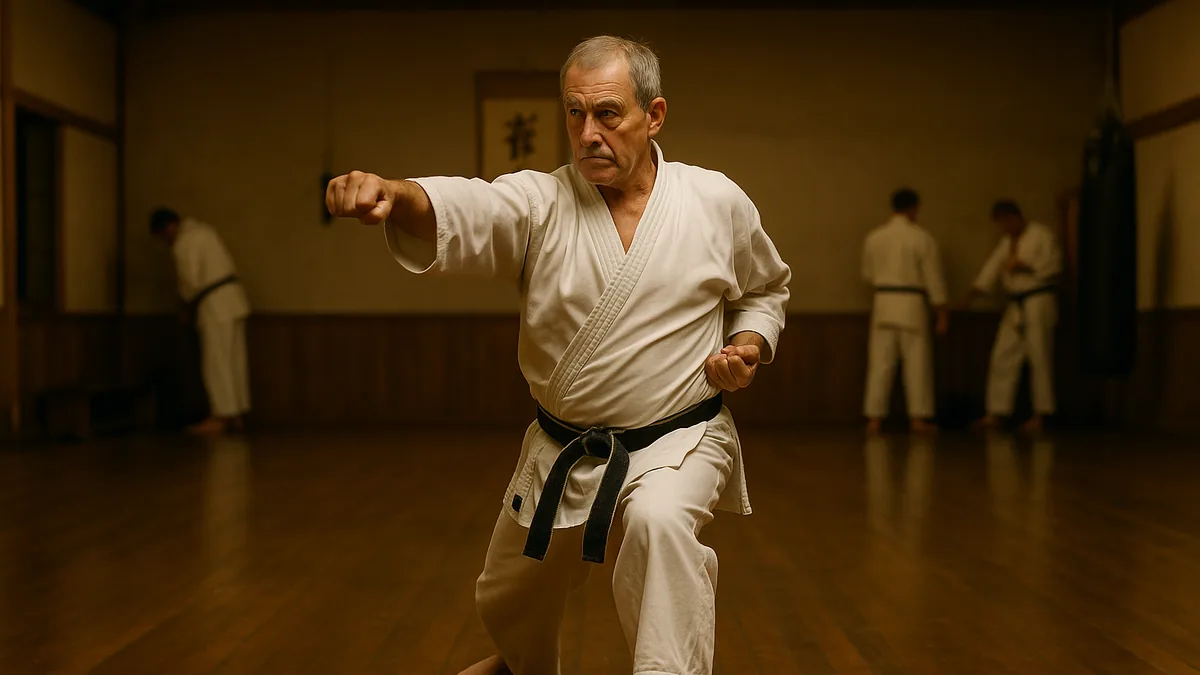
I’ve noticed that the practitioners who plateau at intermediate level are almost always the ones who train hard every session. Senior practitioners - the ones who’ve been doing this for twenty years and still look dangerous - tend to be deliberate about varying intensity. They know when to push and when to absorb.
How Do You Adjust Frequency Around Goals?
This is where personal goals genuinely change the answer. If you’re preparing for a grading, you probably need to increase frequency in the six to eight weeks before - but that’s a temporary spike, not a new baseline. If you’re competing in kumite, your conditioning demands are different from someone focused on kata. If you’re training for self-defence application, drilling a small number of techniques to reflex level matters more than volume.
What I’d recommend is working backward from your goal. Grading in two months? Add one session per week for six weeks, then taper back in the final week. Competition season? Build intensity over eight weeks, then deload. No specific goal right now? Three solid sessions a week, focus on fundamentals, and don’t overthink it.
Age and life circumstances matter too, and I think we’re sometimes too reluctant to say that plainly. A 22-year-old with no job and unlimited recovery capacity can train five days a week and thrive. A 45-year-old with a physical job and family commitments might find that three focused sessions is genuinely optimal - not a compromise, but the actual right answer for their situation.
What If You Can’t Get to the Dojo That Often?
Solo training is underused, and I’ve written more about it in how to train alone when you have no club access. The short version: it’s not a replacement for dojo time, but it’s a legitimate supplement. Kata, shadow sparring, flexibility work, conditioning - all of this can be done at home and it counts.
If you can only make it to the dojo twice a week, fill the gap with two solo sessions and you’re effectively at four. The dojo sessions give you feedback and pressure-testing. The solo sessions give you repetition and consolidation. They serve different functions and both are valuable.
How Do You Know If You’re Training Too Much or Too Little?
Too much looks like this: your technique starts to feel mechanical rather than sharp, you’re dreading sessions you used to look forward to, minor niggles aren’t clearing up between sessions, and you’re not improving despite the hours. If any of those sound familiar, the answer is almost always less training, not more. See also training with injuries: when to push, when to rest - the principle applies to general fatigue too, not just specific injuries.
Too little is easier to spot: you feel rusty at the start of every session, you’re not retaining corrections between classes, and there’s no continuity to your progress. If you’re training once a week, you’re essentially starting over each time. That’s maintenance at best.
The sweet spot feels like this - you arrive at sessions with some energy in reserve, you’re building on what you did last time, and you’re making small but visible progress over weeks rather than months.
Community Perspective
This is a topic where dojos and styles genuinely disagree, and it’s worth being honest about that. Traditional Japanese and Okinawan dojo culture often emphasises high frequency - daily training was the norm historically, and some instructors still hold that view. Sport karate competitors, particularly those preparing for international competition, often train twice a day during peak periods. Neither of these is wrong for the context.
What I think gets lost is that those high-frequency models assume a level of physical preparation, coaching support, and life structure that most recreational practitioners don’t have. Applying a competitive athlete’s training schedule to someone training after work three nights a week is a category error.
I’ve also noticed that opinions on this shift significantly as practitioners age and accumulate years. Most people I know who’ve been training fifteen or more years have moved toward fewer, higher-quality sessions. The ego-driven need to be in the dojo every day tends to fade once you’ve actually been training long enough to understand recovery. That’s not a criticism - it’s just what experience teaches you.
Key Takeaways
- Three to five days a week is the practical optimal range for most serious practitioners
- Vary intensity across sessions - not every day should be a hard session
- Recovery is part of training, not a break from it
- Adjust frequency based on specific goals, not just ambition
- Solo training can bridge the gap when dojo access is limited
- Watch for signs of overtraining: dreading sessions, stalling progress, and lingering fatigue are all signals to pull back
- Your optimal frequency will probably change as you progress - what works at green belt may not be right at brown belt or beyond
The weekly digest
New karate articles, once a week
One email every week with everything new on Karate Lifestyle. No spam; unsubscribe in one click.
We'll email you to confirm. See our privacy policy.