The Problem With Waiting to Be Ready: Why Karateka Keep Delaying Kumite, Grading, and Competition Until They Feel Prepared Enough
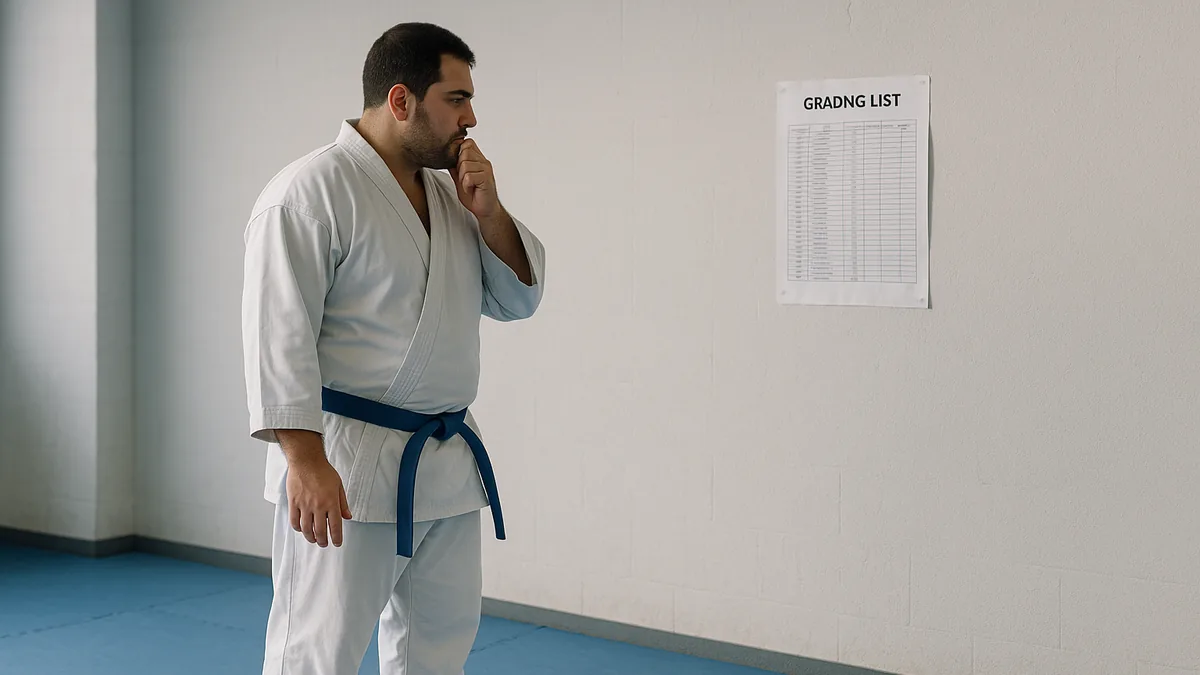
I’ve watched more students talk themselves out of gradings than I’ve ever seen fail one. That’s not an exaggeration. Over fifteen years and three different dojos, the pattern is almost identical every time: someone trains hard for months, clearly has the material, and then quietly pulls themselves from the grading list because they don’t feel ready. A few weeks later, they’re still not ready. A few months later, same story. Sometimes they leave the club entirely, and you never really find out why.
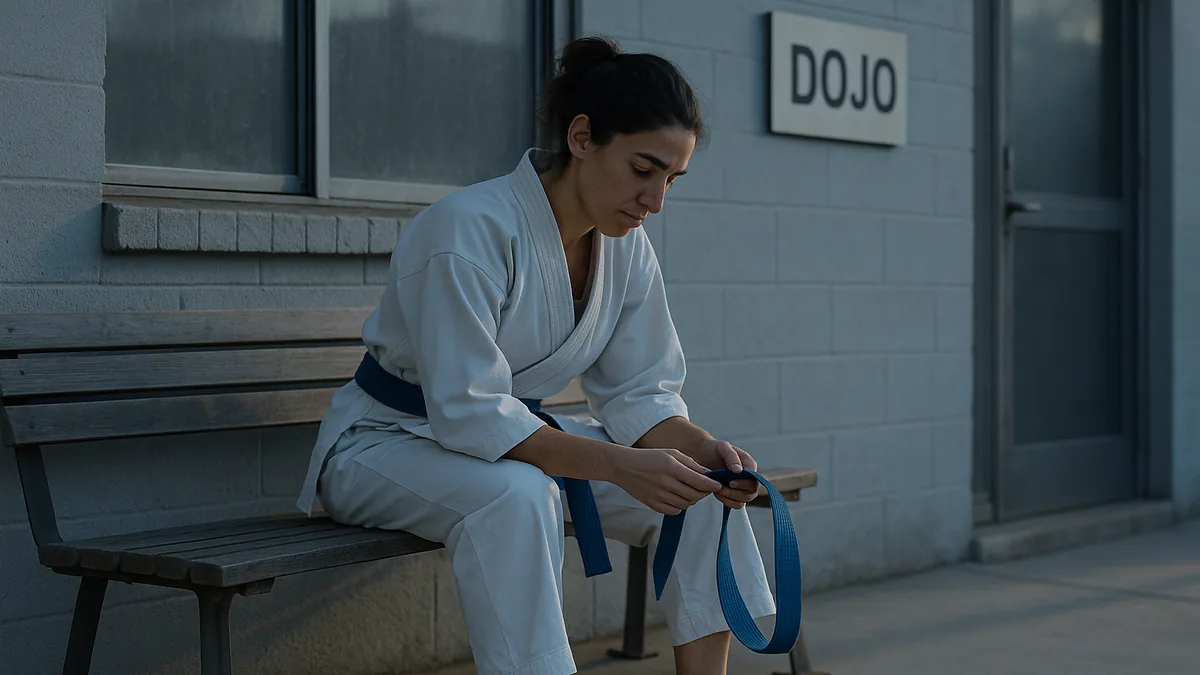
That’s the thing about waiting for readiness. It feels responsible. It feels like you’re being diligent, not wasting anyone’s time, being respectful of the process. But in most cases I’ve seen, it’s just fear wearing a sensible hat.
The Readiness Trap
Here’s what I’ve noticed after watching this happen repeatedly: the students who wait until they feel completely ready almost never feel completely ready. There’s always one more kata to polish, one more combination that needs work, one more sparring session they want to get under their belt before they commit. The bar keeps moving because the bar isn’t really about skill level. It’s about managing the fear of being seen to fail.
I used to do this myself. I remember sitting on a grading for nearly four months longer than I needed to because I’d had one bad kumite session and convinced myself my timing was off. My instructor at the time - a blunt, no-nonsense man who’d been training since before I was born - pulled me aside after class and said something that’s stayed with me: “You’re not training to get better anymore. You’re hiding.”
That landed hard. Because he was right. I wasn’t refining anything. I was running the same drills in the same order, staying comfortable, and calling it preparation.
Why Kumite Gets Avoided Most
Kumite is where this problem shows up most visibly. I think it’s because kata and kihon give you the illusion of control. You can run a kata alone, decide when it’s good enough, and never have to test that judgment against another person. Kumite removes that option entirely.
I’ve seen students at every grade level find reasons to avoid it. White belts say they need more basics first. Brown belts say they want to work on their distance. Senior grades say they’ve got a niggling injury. Some of those reasons are legitimate. Most of the time, they’re not.
What actually happens when you avoid kumite for too long is that your technique calcifies around a kind of theoretical perfection that doesn’t survive contact. You’ll feel this the first time you get back in and someone throws a real attack at you - everything you thought you knew about your own timing vanishes instantly. That slightly panicked, completely blank feeling where your body doesn’t know what to do is the gap between training in isolation and training with pressure. The only way to close it is to get in and get hit a few times.
The correction that works here isn’t a technique fix. It’s just getting back in the ring. I tell students who’ve been avoiding kumite to start with light, structured partner work - nothing competitive, just exchanges with a training partner they trust. The goal isn’t to win anything. It’s to get comfortable with the fact that someone is actually there, actually moving, actually reacting. Once that stops feeling like a crisis, you can build from it.
Grading Avoidance and What It Actually Costs You
One mistake I see often is students treating a grading like a performance that needs to be perfect before it can happen. It isn’t. A grading is a checkpoint, not a showcase. The examiner isn’t expecting perfection - they’re looking at whether you’re at the right stage of development for the next level of training.
When you delay a grading for six months because you want to be better prepared, you’re not giving yourself more time to prepare. You’re giving yourself more time to overthink. And overthinking in karate is genuinely expensive. It tightens you up. You’ll feel it in your shoulders, in the way your punches stop flowing and start being placed. Technique that felt fluid in practice suddenly feels mechanical under pressure because you’re monitoring yourself instead of moving.
I’d recommend reading how to handle a grading failure gracefully if you haven’t already, not because you’ll fail, but because understanding that failure isn’t catastrophic is part of what makes you willing to try. The students I’ve seen come back strongest from a failed grading are almost always better for it. They know what the pressure feels like, they know they survived it, and they come back with something more useful than technique - they come back with perspective.
Small Goals, Not Big Readiness
The thing that changed my understanding of how to actually build confidence was watching a student I was mentoring at the time. She was technically strong, trained consistently, and had been avoiding her brown belt grading for almost a year. Every conversation about it ended the same way: “I just want to be a bit more solid on the kata.”
What we did instead of waiting for that feeling of solidity was set a sequence of small, specific commitments. First: compete in one kata event at a local tournament, just to stand in front of judges. Then: enter one kumite competition, not to win, just to get three fights. Then: attend an interclub training day and train with people she didn’t know. Each of those things felt manageable on its own. None of them required her to feel ready. They just required her to show up.
By the time she graded, she didn’t feel ready in the way she’d been chasing. But she’d accumulated enough real experience under mild pressure that the grading itself wasn’t the terrifying unknown it had been. She passed comfortably.
That’s what small goals actually do. They don’t build readiness directly. They build a tolerance for doing things before you feel ready, which is a completely different and far more useful skill.
The Perfectionism Problem
I think perfectionism gets a free pass in karate culture that it doesn’t deserve. We talk about the pursuit of perfection as though it’s automatically a virtue, and in terms of long-term technical development, there’s something to that. But perfectionism applied to the decision of whether to grade or compete or step into kumite isn’t a high standard. It’s a defence mechanism.
The students who improve fastest are almost never the most naturally talented. They’re the ones who are willing to look bad. They enter the competition with three months of training and get beaten. They grade before they feel ready and get corrected. They step into kumite and get countered repeatedly until they figure out why. Each of those experiences gives them something to work with that no amount of solo training can replicate.
The community around your training matters here more than people usually acknowledge. If you’re in a club where failure is treated as embarrassing rather than instructive, it’s much harder to take those risks. That’s one reason why the off-mat culture of a club shapes training outcomes more than most instructors will admit - if you want to read more on that, karate club socials and off-mat culture covers this in a way that I think a lot of instructors need to hear.
Community Perspective
This is an area where dojos genuinely differ, and it’s worth being honest about that. Some traditional instructors take the position that a student should only grade when the instructor decides they’re ready - the student has no input, and the whole question of “feeling ready” is irrelevant because it’s not their call. I’ve trained in places like that, and there’s something valuable in it. It removes the anxiety of self-assessment.
But I’ve also seen that approach used badly, where students are held back for years not because they need more development but because the instructor hasn’t been paying close enough attention or has a personal preference for keeping students at lower grades longer. That’s not tradition. That’s just poor mentoring.
The other end of the spectrum - clubs where students can grade almost on demand - creates its own problems. Students who haven’t been tested under any real pressure arrive at higher grades without the experience to back it up, and it shows immediately when they train with people from other clubs.
What I’ve landed on after training in both environments is that the instructor should lead the grading decision, but the student should be encouraged to communicate honestly about where they feel held back - not to override the instructor’s judgment, but to make sure that judgment is based on accurate information. Mentoring junior karateka gets into this dynamic in more depth, and it’s worth reading if you’re a senior grade trying to figure out how to support students through exactly this kind of block.
Key Takeaways
-
If you’ve been “almost ready” for more than two months, the problem isn’t your technique. Identify what you’re actually afraid of and address that directly.
-
Set one small, specific commitment that puts you in front of mild pressure - a tournament entry, an interclub visit, a structured sparring session with a trusted partner. Not to win. Just to go.
-
Understand that a grading is a checkpoint, not a performance. Examiners are assessing your stage of development, not your capacity for perfection.
-
Avoiding kumite for too long doesn’t protect your technique - it freezes it in a state that hasn’t been tested. Get back in. The discomfort is the point.
-
Perfectionism about readiness is a defence mechanism, not a training standard. The students who improve fastest are the ones willing to look bad in front of other people.
-
Talk to your instructor honestly if you feel stuck. They can’t adjust their approach to your development if they don’t know what’s holding you back.
The weekly digest
New karate articles, once a week
One email every week with everything new on Karate Lifestyle. No spam; unsubscribe in one click.
We'll email you to confirm. See our privacy policy.