Why Your Uke Isn't Working: How to Train Blocks So They Function as More Than a Last Resort
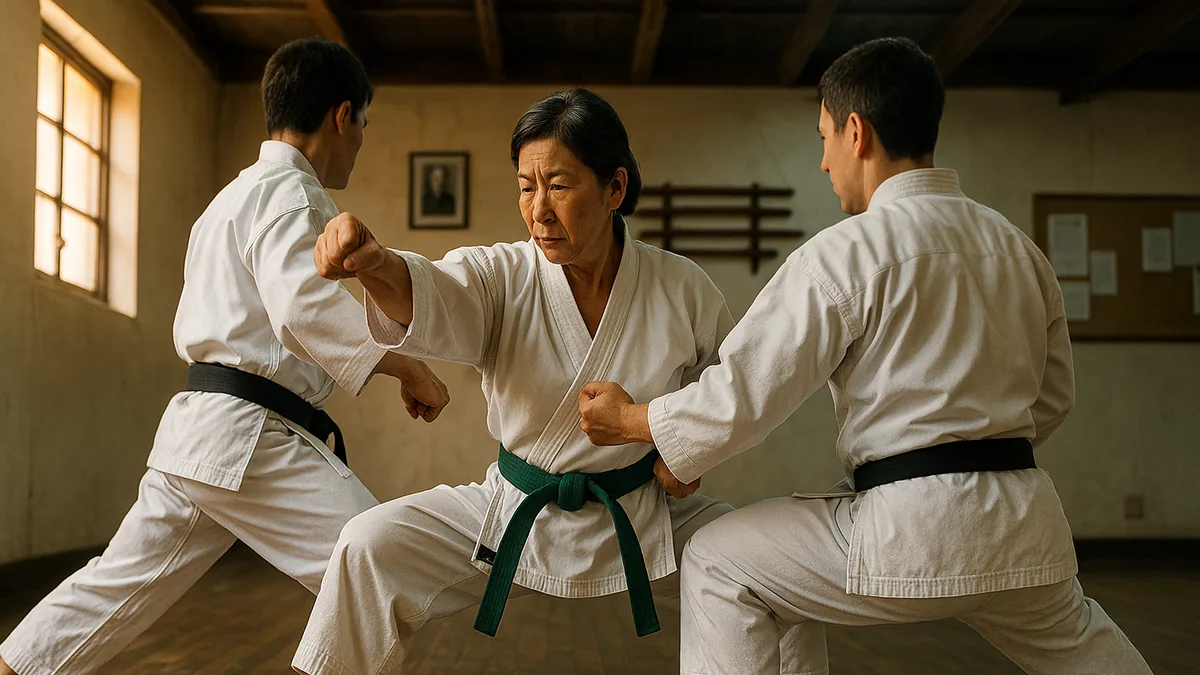
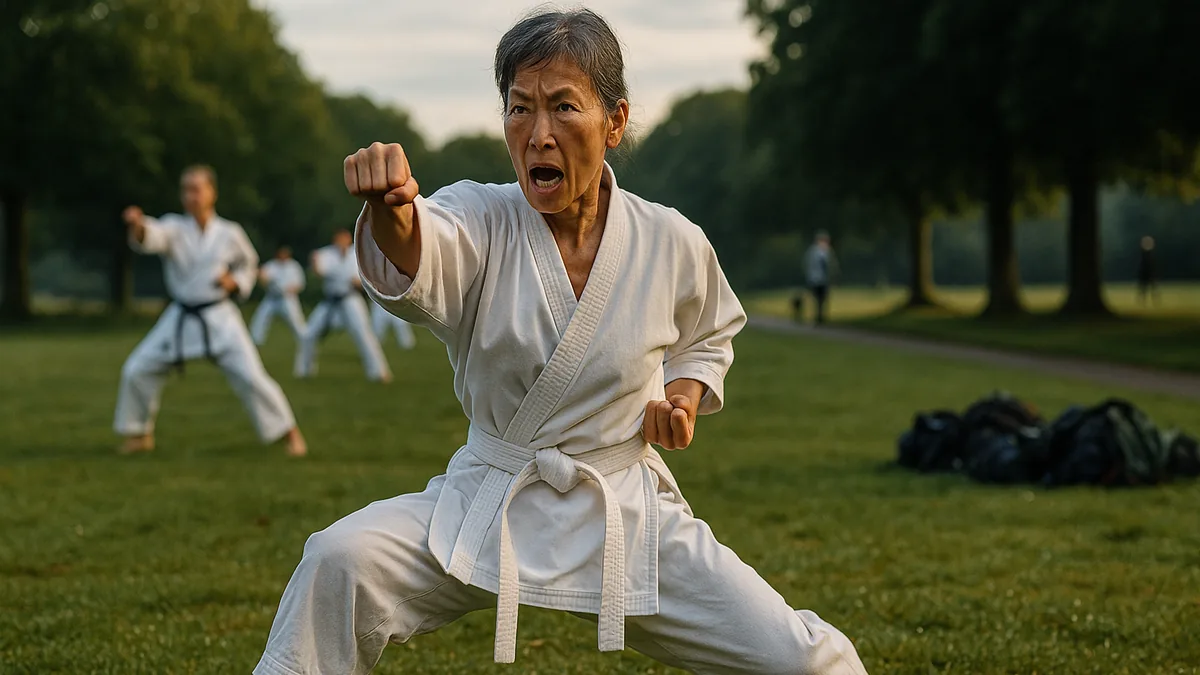
Most students treat blocks as a panic response. An attack comes, they throw up an arm, they survive - and they call that a block. I’ve seen this pattern repeat for years across every level of training, and it’s the single biggest reason people plateau defensively. The block becomes a wall instead of a weapon, and the counter never comes because they spent the block just trying not to get hit.
My instructor used to say that uke without a counter is just damage limitation. I didn’t fully understand that until I started sparring regularly against faster opponents. When someone is quicker than you, absorbing attacks and hoping to reset doesn’t work. You run out of time. What works is using the block itself to create the opening - redirecting the attack in a way that puts your opponent off-balance and puts you in position to counter before they recover. That’s the difference between uke as a last resort and uke as the first move of your counter.
This is what I want to work through with you.
What Blocks Are Actually For
The translation of uke as “block” has caused a lot of confusion. A more accurate reading is “receiving” - and that changes how you think about it. You’re not stopping the attack. You’re receiving it in a way that controls it, redirects it, and creates a gap.
When the timing is right, you feel the block redirect the attack rather than absorbing it. There’s a difference in sensation between the two that becomes very clear with experience. A block that absorbs feels heavy - you take the force into your arm and it stops there. A block that redirects feels almost light - you catch the attack at an angle and it slides off, taking your opponent’s structure with it. That second feeling is what you’re training toward.
The problem is that most beginners - and a lot of intermediate practitioners - have only ever trained blocks in isolation. Kihon lines, kata, maybe some static partner work. None of that teaches you to redirect because there’s no real attack coming. You’re going through the shape without the function.
I think the biggest difference between a block that works and one that doesn’t comes down to one thing: intent. Are you training to survive the attack, or are you training to use the attack? Those are two different movements even when they look the same from the outside.
The Drills That Actually Develop Functional Blocking
I’ll be direct about priority here. If you only have time to work on one thing, do the first drill. The others build on it, but the first one is where the understanding lives.
Drill 1: Redirect and Counter Flow
This is the foundational drill I come back to with every student who is treating blocks as damage limitation. It’s simple, but the simplicity is the point - you’re building a reflex, not a technique.
Why it matters: This drill teaches you to treat the block and the counter as one connected movement, not two separate decisions. Most people block, pause, then counter. The pause is where they lose.
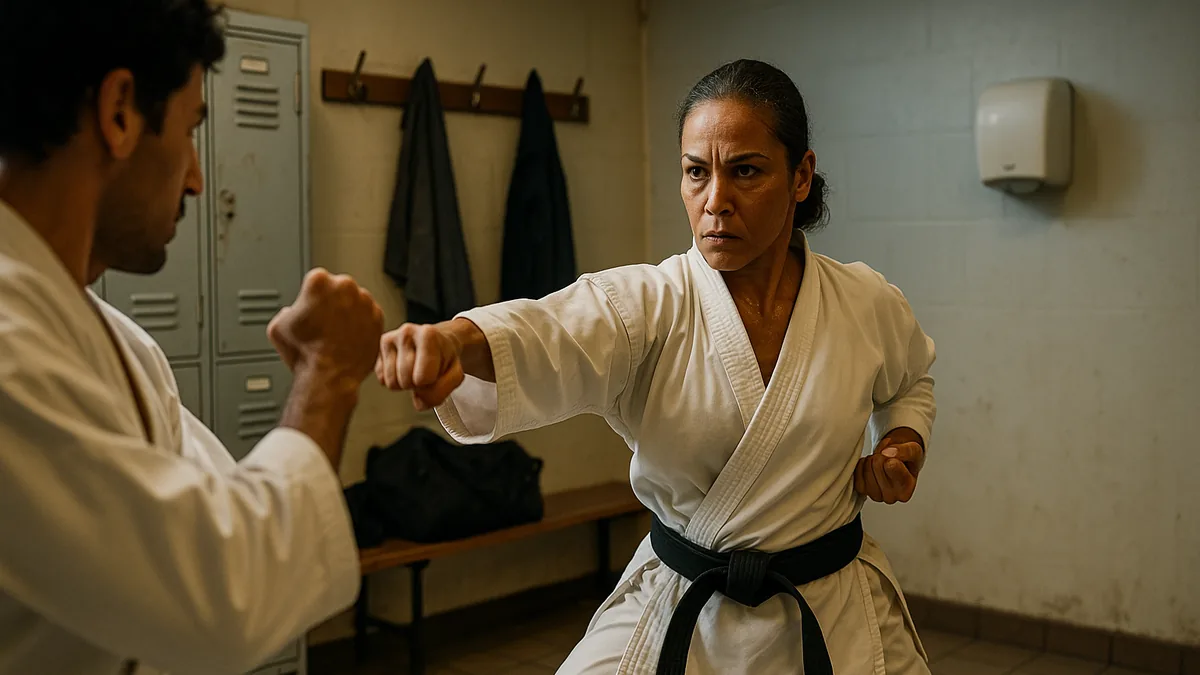
Setup: Two partners, one attacker, one defender. Attacker throws a committed oi-zuki to chudan. Defender executes soto-uke. No pads needed to start - keep it controlled.
Execution:
- Attacker steps in with a full oi-zuki, committed and on target. Not a tap - a real step with intent.
- Defender times the block to meet the arm at mid-extension, not at the end of the punch. This is critical.
- The soto-uke sweeps outward, redirecting the punch across the defender’s body. You’re not stopping it - you’re steering it.
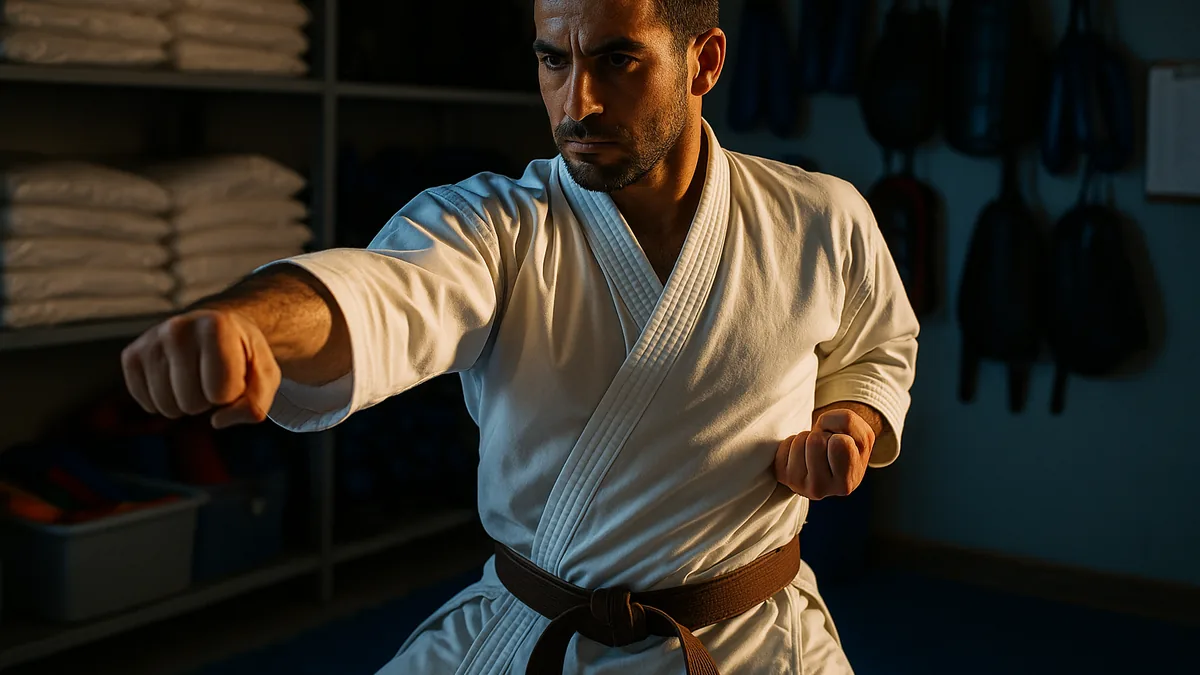
- Without resetting, the counter follows immediately. Gyaku-zuki to chudan is the standard starting point.
- Switch roles after ten repetitions.
What to feel for: When the timing is right, you’ll feel the attacker’s arm move with your block rather than against it. Your block and their punch are briefly in contact and moving together - you’re guiding it offline. If you feel a hard impact and your arm stops, you’ve blocked too late and you’re absorbing instead of redirecting.
The mistake I see most often: Defenders block and then reset their stance before countering. They bring their blocking arm back to chamber, square up, then punch. By that point the attacker has recovered. What I tell students is that the counter should start before the block is finished - the hip is already turning as the block lands.
Once you can do this cleanly, try it with oi-zuki as the counter instead of gyaku-zuki. The mechanics shift because you’re stepping through rather than rotating in place, and it teaches you to use the block to create forward momentum.
Drill 2: Variable Attack Flow
This is where you start training the block against uncertainty, which is closer to what actually happens in sparring.
Why it matters: If you only ever block oi-zuki, you’ll only ever block oi-zuki well. The redirecting reflex needs to work against different attacks, different angles, different timing.
Setup: Same two-person format. Attacker now has three options: oi-zuki jodan, oi-zuki chudan, or mae-geri chudan. Defender doesn’t know which is coming.
Execution:
- Attacker chooses their attack without signalling. The choice should feel genuine, not telegraphed.
- Defender reads and responds - age-uke for jodan, soto-uke or gedan-barai for the kick.
- Counter follows immediately from whichever block lands.
- Keep the pace slow to start. Speed comes after the pattern is reliable.
What to feel for: You’re looking for the same redirecting sensation across all three attacks. The block for the kick feels different from the block for the punch - gedan-barai has a downward sweeping quality that should push the leg offline rather than just pushing it down. When it works, the attacker’s kick goes wide and they land slightly off-balance.
The mistake I see most often: Defenders start guessing instead of reading. They commit to age-uke before they’ve confirmed it’s a jodan attack. I see students do this because they’re trying to be fast, but the real issue is they don’t trust their reaction speed. Slow the drill down until they’re reading and responding, not predicting and committing.
Drill 3: Pressure Blocking with Resistance
This drill is harder to set up and requires a training partner who can give you honest resistance. I’d call it essential for anyone preparing for kumite, and less critical for those focused on kata or kihon.
Why it matters: Redirecting a cooperative attack is one thing. Redirecting an attack from someone who is actively trying not to be redirected is another. This drill builds the structural strength and timing to redirect under pressure.
Setup: Attacker throws oi-zuki with genuine commitment and does not pull back immediately. They maintain forward pressure after the punch lands.
Execution:
- Attacker steps in with oi-zuki and holds the extension, pressing forward slightly.
- Defender executes soto-uke and immediately uses the contact to push the arm further offline - not just blocking but actively controlling the limb.
- Counter comes from the controlled position. You have a moment because you’ve taken their arm out of play.
- Attacker provides enough resistance to make the redirect require real effort, but not so much that the drill becomes a wrestling match.
What to feel for: This is where you start to understand the connection between your block and your hip. You’ll know the hip rotation is connecting when you feel the redirect through your whole body, not just your arm. If it’s only your arm doing the work, the attacker’s resistance will stop you. When your hip is in it, they move.
What changes with experience: Beginners use this drill to find the physical connection between hip and block. Senior practitioners use it to find the timing - specifically, where in the attacker’s movement they have the least structural support. That’s usually just past mid-extension, when the punch is almost full but the shoulder hasn’t fully committed. That’s the moment to redirect. You feel it before you can explain it.
Applying This in Jiyu-Kumite
In free sparring, the redirect-and-counter pattern becomes your fastest response off a failed attack. When your opponent overcommits - steps too deep, punches too wide - you’re not defending, you’re countering off their mistake. The block is just the first part of your counter.
I’ve noticed that practitioners who’ve trained this way start to move differently in sparring. They’re not backing up when attacks come in. They’re stepping slightly offline and into the attack, which is exactly where the redirect works best. It looks aggressive from the outside, but it’s actually the more defensive position because you’re controlling the attack rather than retreating from it.
If you’re working on kizami-zuki as your lead counter, the redirect drill pairs well with it - the jab is fast enough to land before your opponent recovers from the redirect, and it sets up combinations naturally. There’s a whole layer of combination work that opens up once the block-to-counter connection is automatic.
Community Perspective
There’s a genuine split in how different dojos approach this, and I think it’s worth being honest about it.
Traditional Shotokan training tends to emphasise strong, committed blocks in kihon - big hip rotation, full chamber, maximum power. The argument is that you’re building structure and muscle memory for a block that can stop a full-force attack. I understand the logic, and I trained this way for years.
The counter-argument - and it’s one I’ve come around to over time - is that training blocks as stopping techniques reinforces exactly the wrong reflex. By the time you’re in sparring, your body does what it’s practised. If you’ve practised absorbing, you absorb. If you’ve practised redirecting, you redirect.
I’ve seen students from more contact-oriented styles come in with blocks that look rough in kihon but work immediately in kumite, because they’ve always trained against real attacks. And I’ve seen technically beautiful blockers who fall apart under pressure because their blocks have never had to actually function.
My position is that both matter, but in a specific order. Build the structure with kihon. Then immediately test it with partner drills that have genuine intent. The structure without the application is incomplete.
Key Takeaways
- A block that absorbs and a block that redirects feel completely different - train until you can tell the difference by sensation, not by outcome.
- The counter should start before the block is finished. If you’re resetting between the two, you’re training the pause in.
- Meet the attack at mid-extension, not at the end. Late blocks absorb. Early blocks redirect.
- Your hip is doing the work in the redirect - if your arm feels like it’s working alone, the hip isn’t in it yet.
- Slow the variable attack drill down until you’re reading, not guessing. Speed comes after the pattern is reliable.
- If you only have solo training time available, the solo training article has ways to build the structural side - but the redirect reflex genuinely needs a partner to develop properly.
The weekly digest
New karate articles, once a week
One email every week with everything new on Karate Lifestyle. No spam; unsubscribe in one click.
We'll email you to confirm. See our privacy policy.