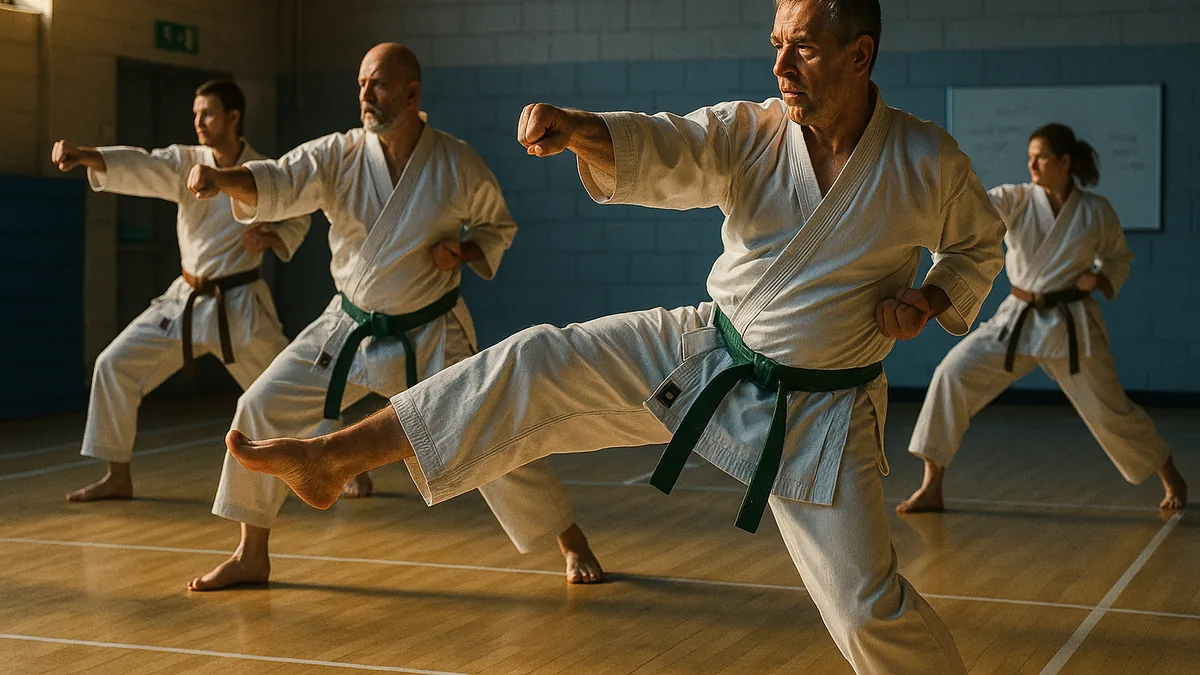
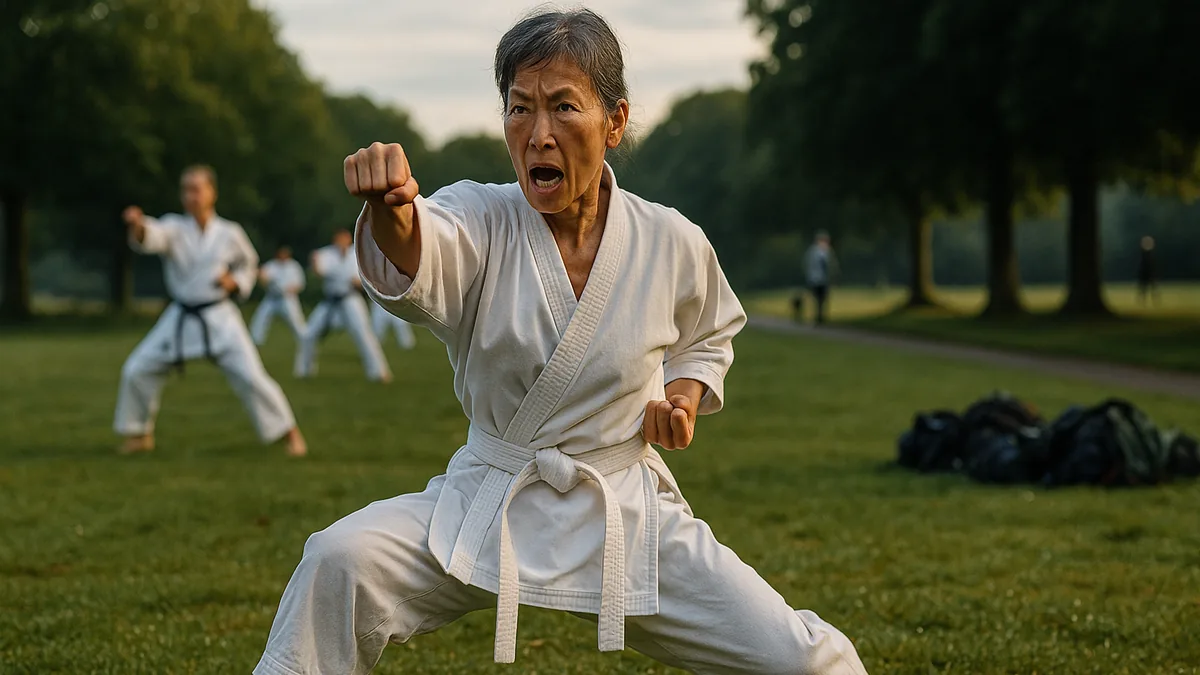
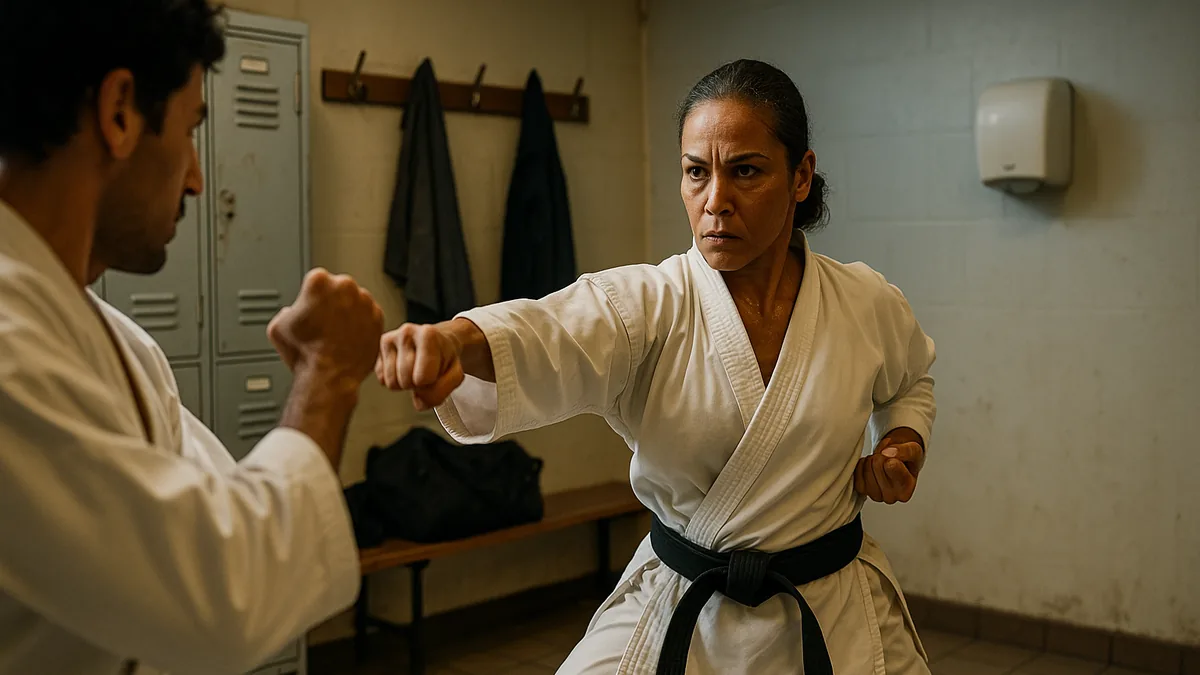
How to Train Oi-Zuki So It's More Than Just a Lunge Punch
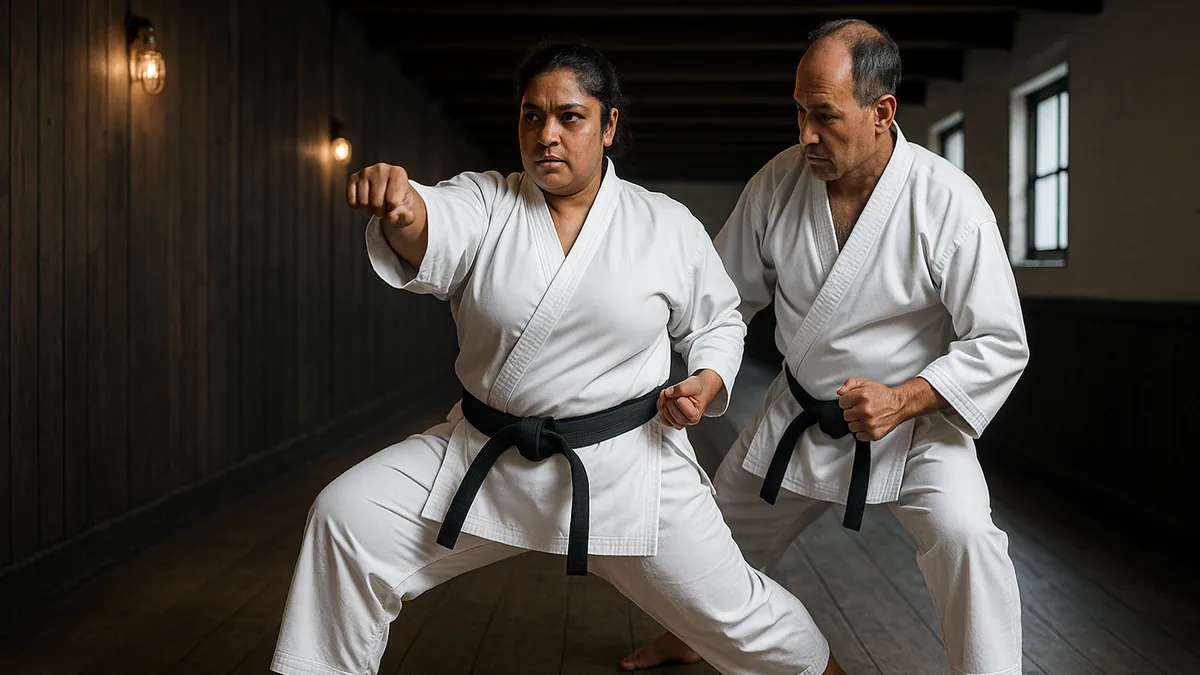
Most students treat oi-zuki like a lunge with a fist at the end. You can see it in the way they step first and punch second - two separate events that happen to occur in the same sequence. The punch lands late, or the body arrives and then the arm shoots out, and the whole thing feels like an afterthought. What should be one explosive, unified movement becomes a two-part action that telegraphs itself from across the room.
I’ve been correcting this for years. And the frustrating thing is, it’s not a strength problem or a flexibility problem. It’s a coordination problem rooted in a misunderstanding of what oi-zuki actually is.
Here’s how I think about it: oi-zuki is not a step followed by a punch. It’s a full-body commitment to a single point of impact, where the foot and fist arrive together, powered by the same hip rotation, at the same moment. When it works, you feel it through your whole skeleton. When it doesn’t, you feel it only in your shoulder.
Breaking Down What Oi-Zuki Actually Is
Before we get into drills, it helps to understand the mechanics - not from a textbook, but from what you actually need to feel.
The punch starts in the back foot. That’s not a metaphor. The drive comes from pushing the floor away with your rear leg. That force travels through your hip, which rotates to face the target, and that rotation is what accelerates your punching arm. The arm doesn’t generate the power. It delivers it.
My instructor used to say “punch with your hip, not your hand.” I didn’t understand it until I was maybe three years into training and sparring with someone faster than me. I was throwing oi-zuki and getting countered every time because I was leading with my shoulder. He could see it coming. The moment I stopped thinking about my fist and started thinking about driving my hip through the target, the punch became harder to read and significantly harder to absorb.
The other thing most people underestimate is the front foot landing. When your timing is right, the front foot hits the floor at the same instant the fist makes contact. You feel a kind of full-body compression - the ground coming up through your leg at the same moment your arm is extending into the target. It’s a physical sensation that’s hard to describe until you’ve felt it, but once you have, you’ll immediately notice when it’s missing.
The Drills That Actually Matter
I’ll be direct: not all drills are equally useful. The ones below are the ones I come back to constantly, both in my own training and when teaching. I’ve listed them roughly in order of priority.
Hip Drive Wall Drill
This is the one I start every student on when they’re struggling with power. It isolates the hip rotation so you can feel it working without the distraction of footwork.
Why it matters: Most people think they’re rotating their hips when they’re actually just twisting their shoulders. This drill makes the difference obvious.
Setup: Stand in zenkutsu-dachi facing a wall, close enough that your extended fist would just reach the surface. You’re not going to touch the wall - the proximity is just to keep you honest about your targeting.
Execution:
- Start with both hips square to the wall, fists chambered.
- Without stepping, throw a slow oi-zuki - maybe 30% speed.
- Pause at full extension and check: has your rear hip driven forward? Is your punching hip now closer to the wall than your back hip?
- Repeat 10 times slow, focusing entirely on the hip driving the arm.
- Gradually increase speed over 3 to 4 sets.
What to feel for: You’ll feel the hip rotation in your obliques and lower back, not your shoulder. When the hip is doing the work, your arm almost feels like it’s being pulled forward rather than pushed.
What most people get wrong: They rotate the shoulder and call it a hip rotation. The test is simple - if your shoulder is moving more than your hip, you’re arm-punching. I see this constantly with students who’ve been training for a year or two and have built a habit they don’t know they have.
Stationary Snap Drill
Before adding footwork, you need to own the punch itself. This drill builds the kime - the focused tension at the point of impact - that separates a strike from a push.
Why it matters: Oi-zuki without kime is just momentum. The snap is what creates penetrating impact rather than surface contact.
Setup: Stand in zenkutsu-dachi with a training partner holding a focus mitt at chest height, or use a heavy bag.
Execution:
- From a relaxed chamber position, throw the punch at full speed.
- At the moment of contact, tighten everything - fist, forearm, shoulder, core - for one instant, then relax immediately.
- The tension should last less than a second. If you’re holding it, you’re not snapping, you’re pushing.
- Do 20 repetitions, resting between sets.
What to feel for: The impact should feel sharp, not heavy. You’ll feel the recoil in your shoulder when you get the snap right - almost like the punch bounces back. If it feels like you’re leaning into the pad, you’re pushing.
What most people get wrong: They either tense too early (before contact) or hold the tension too long. Tensing early slows the punch. Holding it means you can’t recover quickly for follow-up techniques.
Step-and-Punch Coordination Drill
This is where the footwork and the punch learn to happen at the same time. It sounds simple. It takes longer than you’d expect.
Why it matters: This is the drill that fixes the two-part problem I described at the start. The goal is to make the step and the punch feel like one event.
Setup: Mark a line on the floor or use the edge of a mat. You’re going to step over it each repetition.
Execution:
- Start in gedan-barai, left leg forward.
- Begin driving off the back foot.
- As your front foot passes the midpoint of the step, your punching arm should already be extending.
- The fist makes contact at the exact moment the front foot lands.
- Walk through this slowly at first - genuinely slow, like a slow-motion film.
- Build speed only when the timing feels locked in.
What to feel for: When the timing is right, there’s a kind of thud that goes through your whole body - the floor impact and the punch impact happening simultaneously. It feels like everything lands at once. When it’s off, the punch either arrives early (arm extends before you land) or late (you land and then punch).
What most people get wrong: They rush the step and slow the punch, or vice versa. The correction that works best is slowing everything down to 20% speed and rebuilding from there. I’ve seen students try to fix timing at full speed for months without improvement, then get it in one session by slowing down.
Distance Drill With a Moving Partner
Once the stationary timing is solid, you need to train it against a moving target. This is where oi-zuki becomes a real weapon.
Why it matters: Oi-zuki is most effective when used to close distance on a retreating opponent. If you only train it in place, you’ll never develop the range judgment that makes it land in jiyu-kumite.
Setup: Partner A retreats in a straight line. Partner B follows and throws oi-zuki when the moment is right.
Execution:
- Partner A walks backward at a steady pace.
- Partner B follows, maintaining fighting distance.
- At a random moment, Partner A stops. Partner B throws oi-zuki immediately.
- Switch roles every 2 minutes.
- Progress to Partner A changing direction slightly - not full sparring, just enough unpredictability to train the eye.
What to feel for: You’re looking for the moment when the distance is exactly right - not too close, not too far. When you catch it correctly, the punch arrives with your full body weight behind it. When you misjudge, you either jam yourself or fall short.
What most people get wrong: They wait too long, trying to find the perfect moment, and miss it entirely. In my experience, this drill teaches you that oi-zuki is a committed technique - you have to decide early and trust the movement.
Progression
Once the basics are solid, here’s how to develop them further.
Add resistance by having your partner push back lightly on the focus mitt. This trains you to punch through the target rather than at it.
Train oi-zuki as the entry into combinations. The punch is rarely the end of an exchange - it’s often the opening. See How to Train Combinations in Karate: Moving Beyond Single Techniques for how to build on this.
Work it into shadow training. If you train alone regularly, Shadowboxing for Karateka: How to Make It a Serious Training Tool covers how to make solo practice genuinely useful rather than just going through the motions.
Pair it with kizami-zuki. The two techniques work well together - the jab creates the opening, oi-zuki closes the distance and commits. How to Train Kizami-Zuki So It Actually Lands is worth reading alongside this.
Community Perspective
There’s a genuine split in the karate community about how much oi-zuki matters in modern practice. Some traditional instructors consider it foundational - the technique that teaches you more about whole-body power than almost anything else. Others, particularly those with a sport kumite background, will tell you it’s too committed and too easy to counter at high level.
I think both positions have merit. In jiyu-kumite at a high level, a telegraphed oi-zuki against a sharp opponent is risky. But the body mechanics it teaches - driving off the back foot, hip rotation as the power source, timing the impact - transfer to almost every other technique you’ll train. You can’t throw a good gyaku-zuki without understanding what oi-zuki teaches you about hip drive. See Why Your Gyaku-Zuki Loses Power When You Spar for how those mechanics connect.
The other debate is about hip position at the moment of impact - hanmi versus shomen. Traditional Shotokan tends toward a more square hip at impact. Some styles and instructors prefer a more angled position for speed. I prefer the fuller rotation because I think it generates more power, but I’ve trained with excellent practitioners who disagree. The honest answer is that both can work, and the difference matters less than actually training the hip rotation consistently.
Key Takeaways
- The step and the punch are one movement, not two. If you’re punching after you land, you’re already late.
- The power comes from the back foot driving through the hip. Your arm is the delivery mechanism, not the engine.
- Slow the drill down when timing breaks down. Fixing timing at full speed almost never works.
- Kime is a sharp contraction at the moment of contact, not a sustained push. If it feels heavy, it’s a push.
- Train the distance. Oi-zuki only works when your range judgment is accurate, and that only comes from drilling against a moving target.
- If you’re training alone, this technique is one of the hardest to develop without feedback. How to Train Alone When You Have No Club Access has some practical workarounds for this.
The weekly digest
New karate articles, once a week
One email every week with everything new on Karate Lifestyle. No spam; unsubscribe in one click.
We'll email you to confirm. See our privacy policy.