Goju-Ryu vs Shitō-ryū: Why a Style Built on Two Masters Absorbed One of Them and Still Produced a Completely Different Art
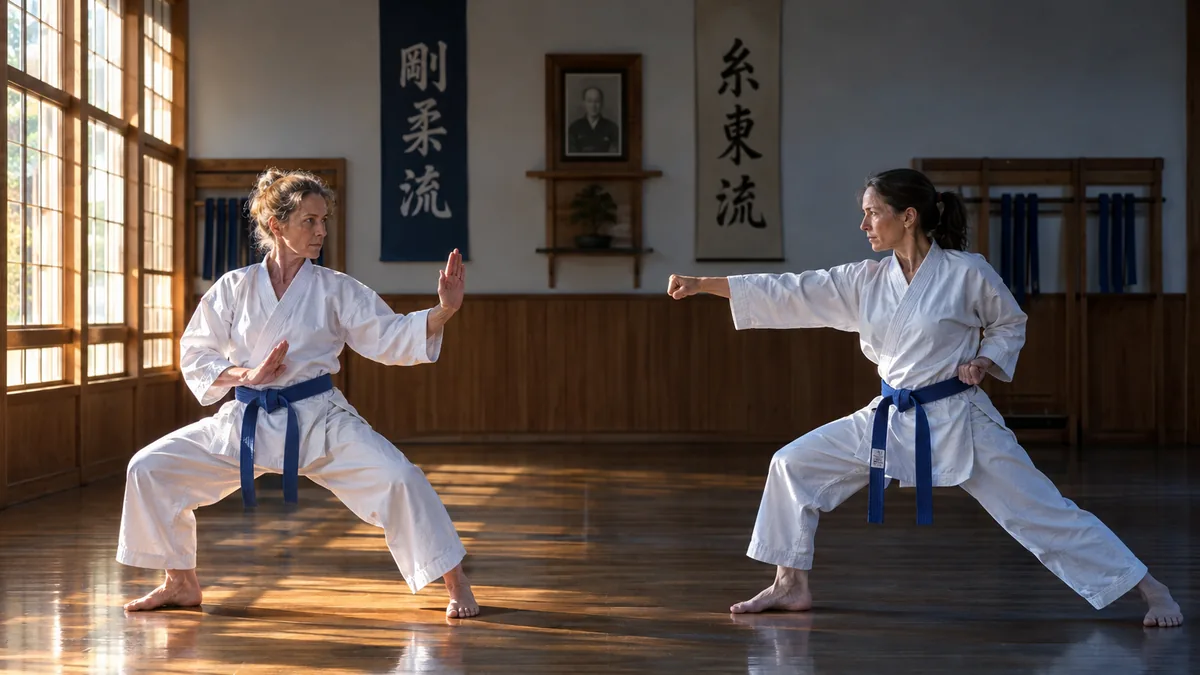
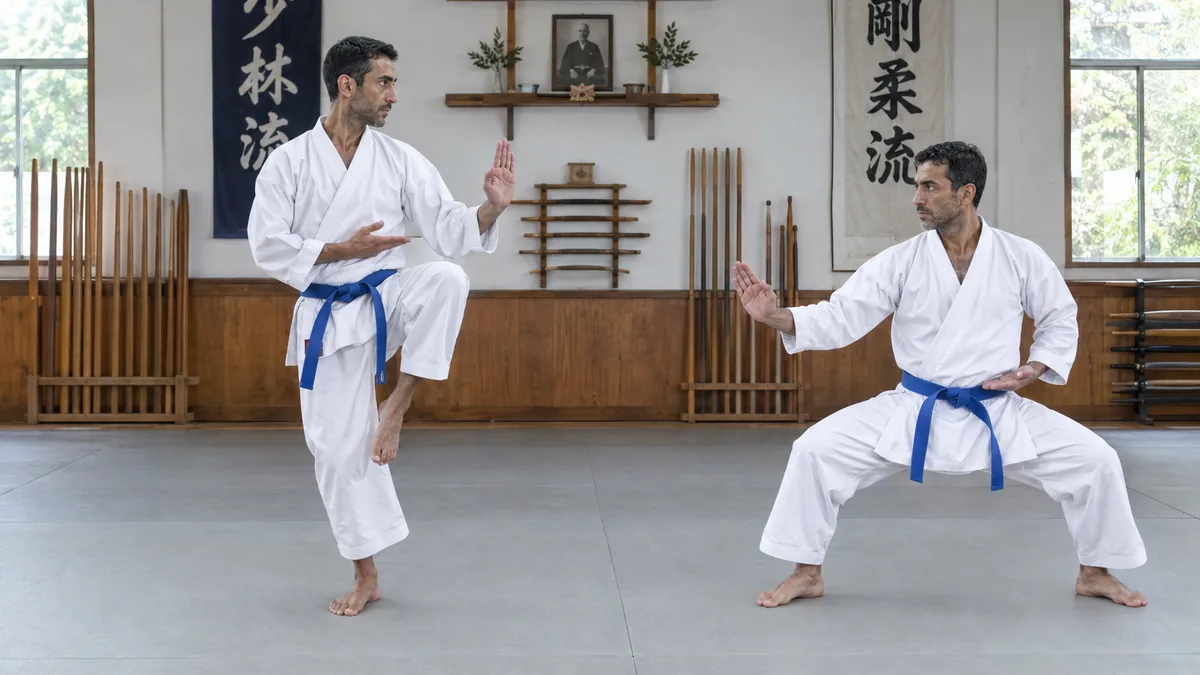
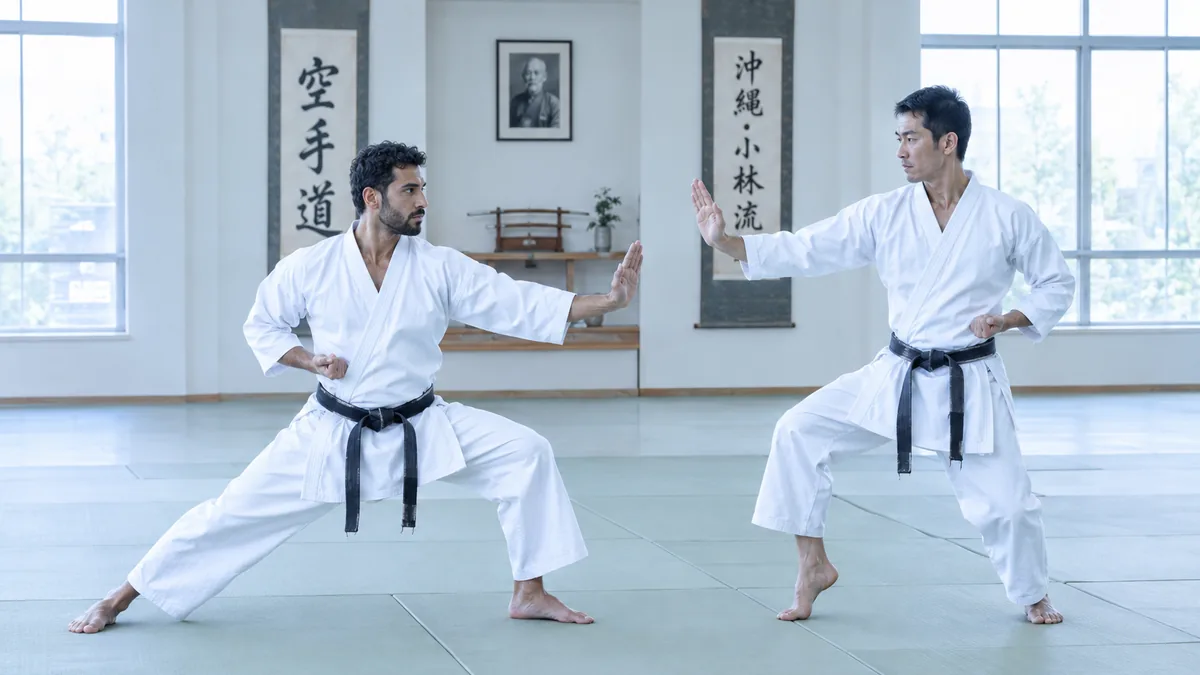
Most practitioners who cross-train between Goju-Ryu and Shito-Ryu come away with the same observation: on paper, these styles should feel related. Shito-Ryu’s founder, Kenwa Mabuni, trained directly under Kanryo Higaonna - the same Okinawan master who shaped Goju-Ryu founder Chojun Miyagi. Mabuni also trained under Anko Itosu, giving Shito-Ryu a second major lineage. The result, logically, should be something that sits between Goju-Ryu and Shotokan, borrowing from both. Instead, what you get is a style with its own distinct character - one that absorbed Goju-Ryu’s technical DNA and then moved in a different direction entirely.
Understanding why that happened tells you something genuinely useful about how both styles train and what each one asks of you.
The Two-Lineage Problem (and Why It Matters)
Shito-Ryu is sometimes described as a synthesis style, and that framing is broadly accurate but slightly misleading. Mabuni did not simply combine Higaonna’s Naha-Te with Itosu’s Shuri-Te and split the difference. What he produced was a style with the largest formal kata syllabus of any major karate system - typically cited at around 50 kata, though the exact count varies between associations.
That breadth is the defining feature of Shito-Ryu, and it creates a particular training culture. Where Goju-Ryu students spend years going deep into a relatively compact kata set - 12 kata in the IOGKF’s Goju-Ryu curriculum - Shito-Ryu students are expected to develop competence across a much wider range. This is not better or worse; it produces different practitioners.
The Goju-Ryu practitioner who has spent two years on Sanchin alone has a different relationship with tension, breath, and structural integrity than someone who has spread that same two years across five or six kata. Neither approach is wrong, but if you are choosing a style, this is the most honest thing anyone can tell you about the fork in the road.
What “Hard and Soft” Actually Means in Goju-Ryu
The name Goju-Ryu translates as “hard-soft style,” and most introductions leave it there. That is not enough. The hard-soft principle is not about mixing punches with open-hand techniques. It describes a continuous physical state - the ability to move through relaxation and generate power through sudden muscular contraction, then return to relaxation immediately.
You will feel this most clearly in Sanchin kata. The correct execution of Sanchin involves ibuki breathing - forceful, audible exhalation that creates full-body tension at the moment of impact. When a senior Goju-Ryu instructor tests your Sanchin with strikes to the body, you are supposed to absorb them without bracing in advance. The tension arrives with the strike, not before it. Many beginners get this backwards: they hold tension throughout, which looks like strength but actually limits both power generation and the ability to move fluidly between techniques.
A correction that often works is asking students to think of the tension as something that travels through the body like a wave rather than something they switch on and hold. The punch lands, the wave passes through, the body relaxes. The next technique begins from relaxation, not from residual tension.
Tensho kata - created by Chojun Miyagi - develops the complementary principle: circular, soft movements that redirect force rather than meeting it directly. The combination of Sanchin and Tensho represents the entire Goju-Ryu philosophy in two kata. Everything else in the system builds on what those two teach.
Shito-Ryu’s Technical Range and What It Demands
Where Goju-Ryu goes deep, Shito-Ryu goes wide. The Shuri-Te influence from Itosu brings longer stances, sharper linear movement, and faster hand techniques. The Naha-Te influence from Higaonna brings the circular blocks, the rooted stances, and the close-range grappling applications that Goju-Ryu practitioners will recognise immediately. Shito-Ryu kata like Seipai and Kururunfa come directly from the Naha-Te lineage through Higaonna - you will find them in both systems.1
This creates a genuine challenge for Shito-Ryu students: the physical demands of the style shift depending on which kata you are working. Bassai Dai requires a very different body use than Seipai. The stance work in Shuri-Te-derived kata feels nothing like the rooted, forward-weighted postures of the Naha-Te kata. Developing technical fluency across that range takes longer than mastering a more homogeneous system.
The common mistake in Shito-Ryu is applying a single physical template across all the kata - moving through Seipai with the same upright posture and light footwork that works in Bassai Dai. Many instructors flag this as the most visible sign that a student has learned the sequence without understanding the kata’s origin. The correction is treating each kata’s technical demands as a separate discipline within the same system.
For a direct comparison of how Shito-Ryu sits alongside another major competition style, the article on Shotokan vs Shito-Ryu covers the competitive and technical differences in detail.
Kumite: Where the Philosophies Show Up in Real Time
Both styles compete under WKF rules, and both have produced world-level competitors. But the kumite character of each style reflects its kata training in ways that are worth understanding.
Goju-Ryu kumite tends to favour closer range. The style’s emphasis on circular blocking, body conditioning, and short powerful strikes makes the middle distance uncomfortable for a Goju-Ryu practitioner - they want to be close enough to use their elbows, their body rotations, and their clinch-range techniques. In jiyu-kumite, a Goju-Ryu fighter who lets the fight stay at long range is working against their own training. The most effective Goju-Ryu kumite happens when they close the distance off a failed attack and work inside.
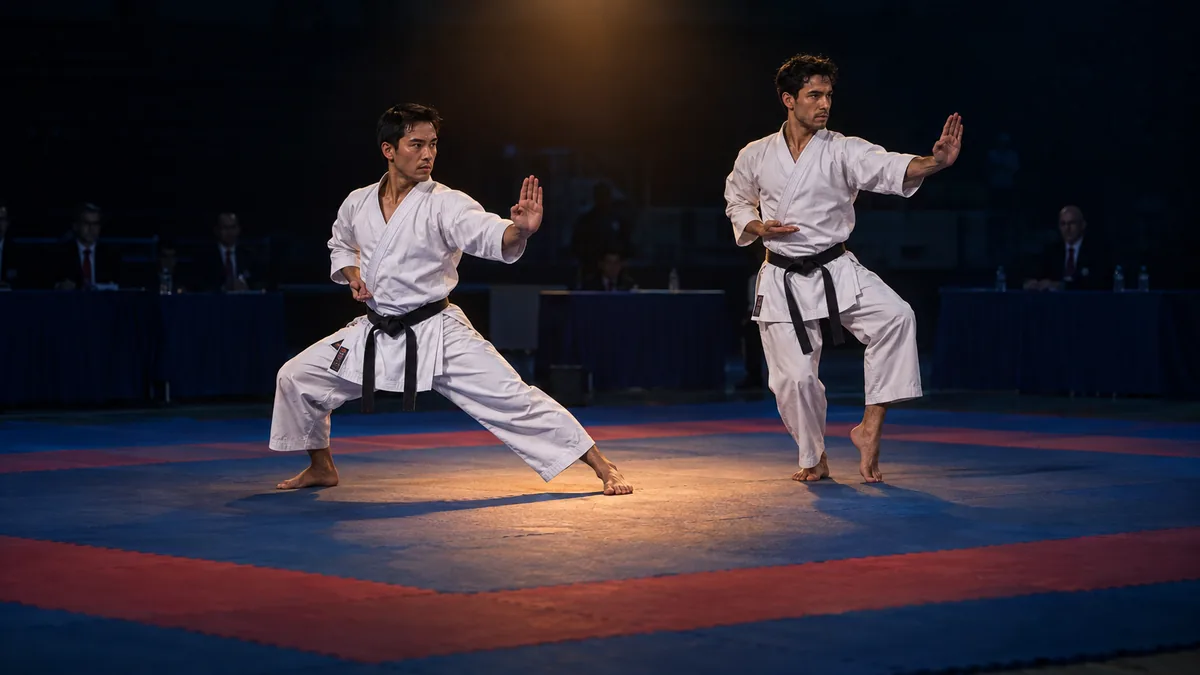
Shito-Ryu kumite is harder to characterise precisely because the style itself is broader. Competition Shito-Ryu at WKF level often looks fast and linear, drawing more heavily on the Shuri-Te influences. But a Shito-Ryu practitioner with strong Naha-Te grounding will fight more like a Goju-Ryu stylist than like a Shotokan competitor. The style does not impose a single kumite template the way Goju-Ryu does.
This is one area where we would argue Goju-Ryu’s narrower focus is an advantage for kumite development. Knowing exactly what range and what tools your style favours makes strategic decisions cleaner. Shito-Ryu’s breadth is a genuine strength in kata competition; in kumite, it can leave students without a clear identity until they are quite senior.
For a look at how Shito-Ryu’s competition approach compares with a full-contact system, the Kyokushin vs Shito-Ryu article is worth reading alongside this one.
The Conditioning Question
Goju-Ryu has a more explicit conditioning tradition than almost any other mainstream karate style. Hojo undo - supplementary training using traditional implements including the chi-ishi (stone lever weight), nigiri game (gripping jars) and kongoken (oval metal weight) - is considered part of the curriculum in most serious Goju-Ryu dojos, not an optional extra.2 The body conditioning element, including makiwara work and partner striking drills, is built into the style’s identity.
This matters because it shapes what Goju-Ryu technique is designed to do. The short, powerful strikes of Goju-Ryu are built on a foundation of grip strength, wrist stability, and a conditioned body that can both deliver and absorb impact. Practitioners who skip the conditioning work and focus only on kata and kumite are training an incomplete version of the system.
Shito-Ryu’s broader syllabus means conditioning tends to be less standardised. Some Shito-Ryu dojos maintain strong hojo undo traditions through their Naha-Te lineage; others, particularly those with a competition focus, train more like modern sports karate programmes. There is no single answer to what a Shito-Ryu dojo looks like in terms of physical conditioning - it depends heavily on the instructor’s background and emphasis.
Community Perspective
One question that comes up regularly among practitioners exploring these two styles is whether Shito-Ryu’s breadth makes it harder to reach genuine depth. The honest answer is: yes, probably, but it depends on what you mean by depth.
Goju-Ryu practitioners often argue that spending years on a compact kata set builds a level of physical understanding that a wider syllabus cannot replicate. There is something to this. The practitioner who has done Sanchin thousands of times has internalised something about tension, breath, and structure that is genuinely hard to develop any other way.
Shito-Ryu practitioners counter that the breadth of the syllabus develops adaptability - the ability to read different technical demands and adjust your body accordingly. At senior level, this argument also has merit. The question is whether you want to go very deep in one direction or develop a wider technical vocabulary. Neither answer is wrong.
What does seem to shift with experience is how practitioners view the kata overlap between the two styles. Lower-grade students tend to see shared kata as evidence that the styles are basically the same. By the time practitioners reach dan grade, they usually recognise that the same kata performed in two different styles can feel and function quite differently - the kata is a container, and the style shapes what goes inside it.
This kind of lineage complexity is not unique to these two styles. The Shotokan vs Wado-Ryu article covers a similar dynamic between styles that share roots but diverged significantly in practice.
Which Style Suits Which Practitioner
We would not recommend choosing a style based on which one sounds more appealing in description. The feel of a dojo, the quality of the instruction, and the training culture matter more than the style label on the door. That said, there are honest differences worth knowing.
If you are drawn to a style with a clear physical philosophy - one where the principles are embedded in every technique and the conditioning work is as important as the kata - Goju-Ryu rewards that kind of focused commitment. The style asks you to go deep rather than wide, and it has a coherent physical logic that becomes clearer the longer you train in it.
If you want exposure to the widest possible range of traditional kata, if you are interested in competition kata at WKF level, or if you want a style that sits at the intersection of Okinawan and mainland Japanese karate traditions, Shito-Ryu offers something genuinely distinct. The breadth is a feature, not a compromise.
Key Takeaways
-
The hard-soft principle in Goju-Ryu is a physical skill, not a conceptual balance. Train Sanchin correctly and you will feel the difference between tension as a held state and tension as a wave through the body. Many beginners get this wrong for years.
-
Shito-Ryu’s kata breadth means the physical demands shift between kata. The biggest mistake is applying one body template across all of them. Treat each kata’s technical character as a separate discipline.
-
In kumite, Goju-Ryu’s narrower focus gives practitioners a clearer range identity. Working inside, off a failed attack, is where Goju-Ryu tools are most effective. Staying at long range works against the style’s strengths.
-
Goju-Ryu’s hojo undo conditioning is part of the curriculum, not supplementary.2 Practitioners who skip it are training an incomplete system.
-
Shared kata between the two styles do not mean the styles are equivalent. The same kata trained in different systems develops different physical understanding. Judge by feel, not by name.
-
Choose based on the dojo and instructor, not the style label. But if the philosophy genuinely matters to you - focused depth versus wide technical range - that distinction is real and worth taking seriously.
References
Checked by the KarateLifestyle editorial team against official governing body documents (IOGKF, EGKA, Seito Shitoryu Kai), primary association histories, and published reference material in November 2026. Kata counts for Shito-Ryu vary across associations and sources; the 'around 50' figure given is a reasonable central estimate, appropriately caveated.
- Traditional Karate-Do: Okinawa Goju Ryu, Vol. 3 - Morio Higaonna. Morio Higaonna; Sugawara Martial Arts Institute, Tokyo, 1993; ISBN 0-87040-597-7. Documents IOGKF kata syllabus including Tensho and senior kata through Suparinpei
- Hojo Undo - English Goju-Ryu Karate-Do Association (EGKA). EGKA (Karate England-affiliated Goju-Ryu association) official page on hojo undo implements including chi-ishi, nigiri game and kongoken
The weekly digest
New karate articles, once a week
One email every week with everything new on Karate Lifestyle. No spam; unsubscribe in one click.
We'll email you to confirm. See our privacy policy.