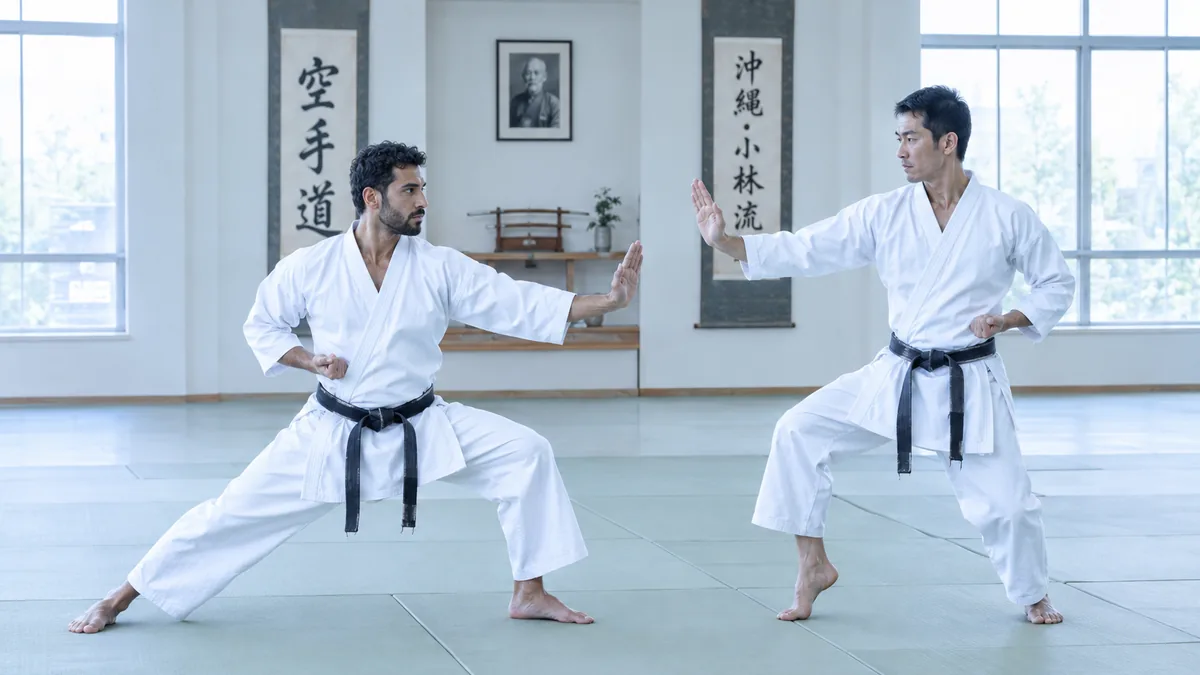
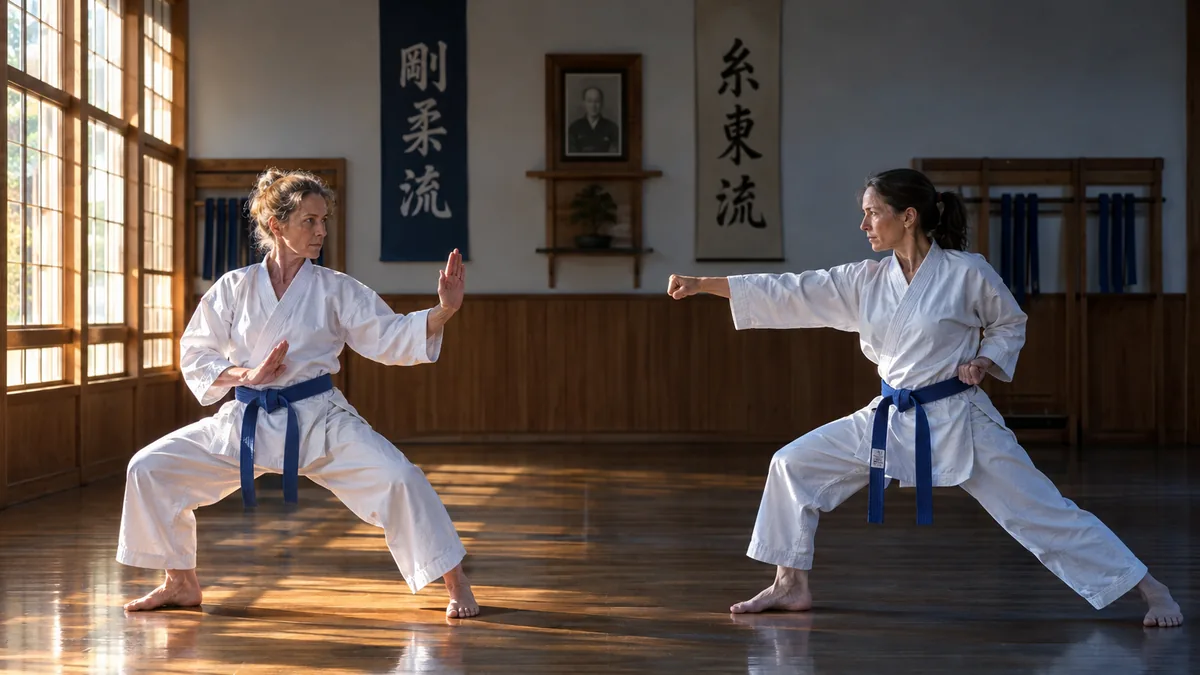
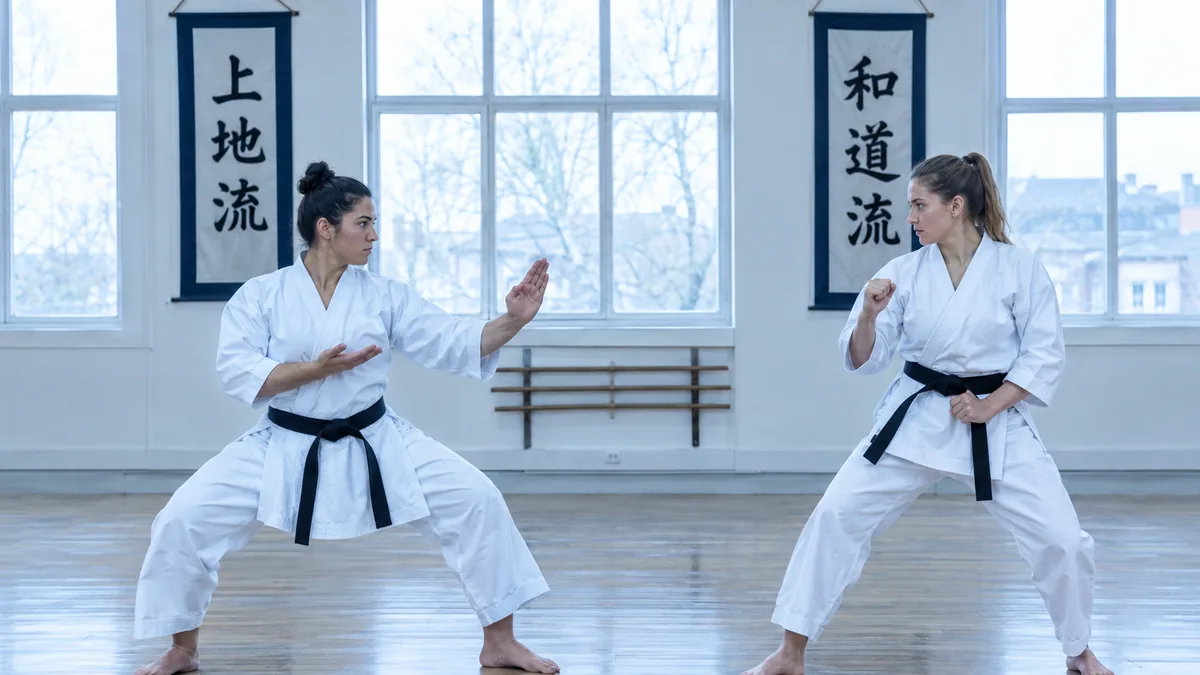
Shorin-Ryu vs Goju-Ryu: How the Two Dominant Okinawan Traditions Split from the Same Island and Ended Up Teaching Almost Opposite Principles
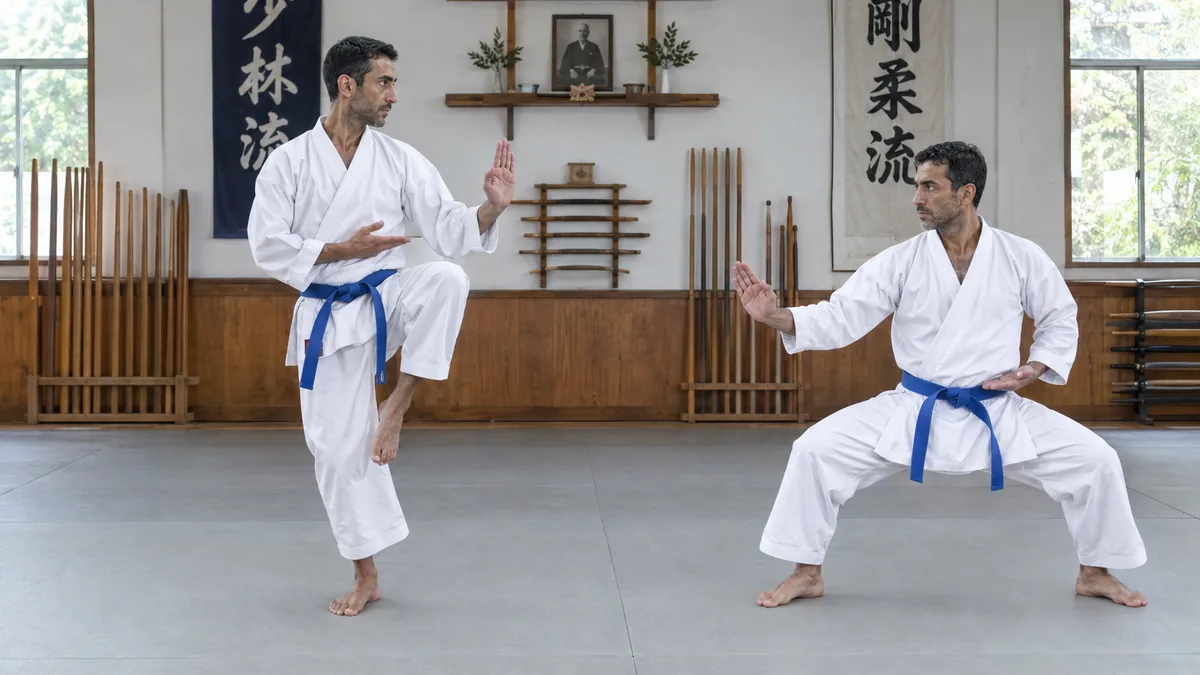
Most practitioners who cross-train between Okinawan styles come away genuinely surprised. Not because one style is harder or more technical, but because the underlying logic is so different. Shorin-Ryu and Goju-Ryu share the same island, overlap in kata, and both claim direct descent from the same 19th-century Okinawan fighting traditions - yet a serious student of one will feel immediately out of their depth in the other, and not just because the techniques are different. The principles are different. The way you use your body, generate force, and respond to pressure are almost inverted between the two.
That gap is worth understanding properly, because it tells you something important about what karate actually is and what you might be missing in your own training.
Where They Come From - and Why That Matters
Both styles trace their development through the Okinawan masters of the late 19th and early 20th centuries. Shorin-Ryu’s lineage runs primarily through Sokon “Bushi” Matsumura and his student Anko Itosu, with the style formally named by Choshin Chibana in 1933.1 Goju-Ryu was systematised by Chojun Miyagi, whose own teacher Kanryo Higaonna had trained in Fuzhou, Fujian Province, China, and brought back a heavily Chinese-influenced approach centred on close-range power and breath control. Miyagi named the style “Goju” - hard-soft - in 1930, drawing the term from the Bubishi, a classical Chinese martial arts text.
The split isn’t just historical trivia. It explains why the two systems feel so different from the inside. Shorin-Ryu developed in an environment that prioritised mobility and the ability to strike fast from varied positions. The “Shorin” name itself connects to the Shaolin tradition: “Shorin” is the Japanese and Okinawan pronunciation of “Shaolin”, and the characters written by Chibana mean “small forest”. Goju-Ryu absorbed the Chinese emphasis on internal mechanics, rooted structure, and the use of breath to generate and receive force.
What this means practically: if you come from a Shotokan background and step into Shorin-Ryu, you’ll find the movement familiar in outline but lighter and faster in execution. Step into Goju-Ryu and you’ll feel like you’ve entered a different sport entirely.
(If you’re curious how Shorin-Ryu’s principles translated into Shotokan as it moved to Japan, we’ve covered that in depth in Shorin-Ryu vs Shotokan: How the Okinawan Parent Style and Its Japanese Descendant Diverged and What Each Preserved That the Other Lost.)
Shorin-Ryu: Speed as a Structural Principle
The biggest misunderstanding about Shorin-Ryu is that “speed” means rushing. It doesn’t. Speed in Shorin-Ryu is a structural choice - it comes from high, mobile stances, relaxed limbs, and minimal pre-tension. The style does not load up before striking. It moves, then strikes, often as a single event.
Shorin-Ryu stances are higher and narrower than those you’ll find in Goju-Ryu or Shotokan. This is not a beginner compromise. It is deliberate. A higher stance allows faster footwork and weight transfer. The trade-off is less rooted power on impact - but Shorin-Ryu doesn’t primarily seek rooted power. It seeks to land before the opponent can respond.
What this feels like in practice:
- Movement should feel light underfoot, like you’re ready to redirect rather than planted
- Strikes should feel like they’re released rather than driven - the tension arrives at impact and releases immediately
- Combination work flows without resetting between techniques, which feels unfamiliar if you’re used to returning to a deep, grounded position between strikes
A common mistake in Shorin-Ryu is carrying Shotokan or Goju-Ryu tension into it. If you’ve trained in a style that rewards deep stances and full hip rotation, you’ll tend to over-commit in Shorin-Ryu combinations. The correction that usually helps is to practise kihon at 60% speed while consciously staying light - if your heels are heavy, you’re doing it wrong.
In jiyu-kumite, Shorin-Ryu’s speed principle becomes most visible in counter-attacking. A Shorin-Ryu practitioner won’t typically absorb and respond - they’ll slip or redirect and fire simultaneously, or beat the opponent’s timing entirely with a pre-emptive strike off a telegraphed preparation. The entry window is short and the follow-through is immediate.
Goju-Ryu: Power Generated From the Inside Out
Goju-Ryu asks a fundamentally different question: what if, instead of avoiding force, you meet it, absorb it, and return it amplified? That’s not a metaphor. It’s a mechanical description of how Goju-Ryu practitioners are trained to handle close-range pressure.
The style’s signature is ibuki - a forceful, audible breathing method used in kata to generate and express power. This isn’t performance. When done correctly, ibuki coordinates abdominal contraction, hip engagement, and full-body tension at the moment of impact. You’ll feel it as a wave of pressure through your core that arrives slightly before your technique lands - not after. If the breath comes after the strike, you’ve missed it.
Alongside ibuki, Goju-Ryu uses nogare - a softer, controlled breathing method - for transitions and defensive movements. The interplay between these two is what gives Goju-Ryu its distinctive rhythm in kata. Sanchin, the style’s foundational kata, is almost entirely a breathing and body-conditioning exercise. Performed correctly, it should feel like trying to move through resistance - every step, every block, every strike compressed with internal tension and then released.
Where most beginners go wrong in Goju-Ryu:
Most beginners confuse muscular tension with Goju-Ryu power. They tighten everything all the time, which produces stiff, slow technique and kills the “ju” (soft) half of the style entirely. The correction that works is to stay loose during the movement phase and contract only at the moment of impact - the same principle as any good karate technique, but taken further and made more explicit in Goju-Ryu than in almost any other style.
Goju-Ryu’s close-range emphasis also changes the geometry of sparring. Techniques like uke-waza (receiving techniques) and tuite (joint manipulation) are built into the kata and assume the opponent is within arm’s reach. In jiyu-kumite, this means a Goju-Ryu practitioner often works to close distance rather than manage it - getting inside punching range to where their short, powerful strikes and grip-based techniques are most effective.
Kata: The Same Word, Very Different Documents
Both styles have extensive kata curricula, and both treat kata as the primary vehicle for transmitting technical knowledge. But the kata themselves - and the way they’re interpreted - reflect the split in principles almost perfectly.
Shorin-Ryu’s kata (Pinan, Naihanchi, Passai, Kushanku and others) tend to be longer, more mobile sequences with varied directional changes and combinations that reward flowing transitions. The performance should look and feel light - weight shifts are decisive but not heavy.
Goju-Ryu’s kata (Sanchin, Tensho, Saifa, Seipai, Suparinpei and others) are shorter on average but denser. Sanchin, in its basic form, covers very little ground and can take years to perform correctly. The kata aren’t designed to look impressive from the outside - they’re designed to build specific internal qualities that only the practitioner can feel.
The most common mistake practitioners make when crossing between the two is applying the wrong interpretive lens. A Shorin-Ryu practitioner attempting Goju-Ryu kata will tend to rush transitions and lose the breathing. A Goju-Ryu practitioner attempting Shorin-Ryu kata will tend to over-root and lose the lightness. Both errors come from the same source: the body defaults to what it knows.
We’d argue that this is actually the best reason to study both, at least briefly. The contrast makes visible what your primary style does that you’ve stopped noticing.
Community Perspective
One of the more honest debates in Okinawan karate circles is whether Shorin-Ryu and Goju-Ryu are genuinely complementary or genuinely incompatible at a deep level. Some senior practitioners - particularly those who’ve spent decades in one system - argue that cross-training dilutes both, because the body learns contradictory default responses. A Shorin-Ryu practitioner trained to stay light will be fighting their own instincts in a Goju-Ryu sanchin test.
The counter-position, held by a number of Okinawan instructors who have trained in multiple lineages, is that the two styles represent poles of a spectrum that every karateka needs to understand - even if they only practise one. Understanding why Goju-Ryu roots makes Shorin-Ryu mobility more conscious. Understanding why Shorin-Ryu stays light makes Goju-Ryu power more precise.
There’s also a practical disagreement about which approach serves self-defence better. Goju-Ryu’s close-range power and structure is often favoured by practitioners who prioritise realistic scenarios where distance has already collapsed. Shorin-Ryu’s speed and mobility is favoured by those who argue that controlling distance is the most reliable way to stay safe. Both positions are defensible. Neither is obviously correct.
What does seem to change with experience is how practitioners view the “hard” and “soft” question. Most beginners assume hard means better. Most senior practitioners in both styles will tell you the same thing: the soft half of any technique is what makes the hard half work.
How They Relate to the Wider Style Landscape
Goju-Ryu’s influence on the Japanese styles is significant. Miyagi authorised Gogen Yamaguchi to promote Goju-Ryu on the Japanese mainland, and Yamaguchi went on to establish the All-Japan Karate-Do Goju-Kai and introduce free-sparring (jiyu-kumite) to the style. Shito-Ryu, which Kenwa Mabuni developed by deliberately combining the Shuri-te traditions he learned from Itosu with the Naha-te traditions he learned from Higaonna, draws directly on the same two Okinawan lineages that produced Shorin-Ryu and Goju-Ryu - and its very name combines characters from both teachers’ names. We’ve covered that relationship in Goju-Ryu vs Shito-Ryu: Why a Style Built on Two Masters Absorbed One of Them and Still Produced a Completely Different Art.
Shorin-Ryu’s influence on Shotokan is the most widely known lineage connection in modern karate. Gichin Funakoshi trained under Itosu and brought a modified Shorin-Ryu framework to Japan, where it became the most widely practised style globally. The differences between what Funakoshi preserved and what Okinawan Shorin-Ryu retained is a genuinely interesting technical question - one we address in Shorin-Ryu vs Shotokan.
Key Takeaways
-
Speed in Shorin-Ryu is structural, not just fast movement. High stances, relaxed limbs and minimal pre-tension are deliberate choices. If you’re carrying tension before the strike, you’re working against the style’s logic.
-
Goju-Ryu power comes from breath coordination, not muscular effort. The correction that works for most beginners is to practise staying completely relaxed during movement and contracting only at the point of impact. Constant tension is the most common error and it kills both speed and power.
-
Kata in these two styles are not interchangeable documents. Shorin-Ryu kata reward mobile, flowing execution. Goju-Ryu kata - especially Sanchin - are internal conditioning tools. Applying the wrong interpretive lens to either produces technique that looks approximately right but feels hollow.
-
In sparring, the strategic logic differs completely. Shorin-Ryu works best when managing distance and timing - entering fast, exiting fast, never staying in range. Goju-Ryu works best when distance has collapsed and close-range power, grip and structure become decisive.
-
Cross-training between the two styles is genuinely challenging - not because either is technically difficult, but because they train different default responses. The body will fight itself if the transition isn’t managed consciously. That said, understanding both makes your primary style more deliberate.
-
The “hard-soft” principle in Goju-Ryu is not a stylistic flourish. It describes a real mechanical sequence - relaxed movement followed by compressed, explosive contraction. Every style uses some version of this. Goju-Ryu makes it the explicit centre of everything. If you’ve never trained in it, your understanding of that principle in your own style is probably incomplete.
References
Checked by the KarateLifestyle editorial team against official karate association pages, style-specific historical records, and established karate reference sources in November 2026. Dates for when Chibana formally named Shorin-Ryu are genuinely contested across sources (1928, 1929 and 1933 all appear); we follow our own style page, which cites 1933.
- Shōrin-ryū Karate. KarateLifestyle editorial team, KarateLifestyle.uk, October 2026
The weekly digest
New karate articles, once a week
One email every week with everything new on Karate Lifestyle. No spam; unsubscribe in one click.
We'll email you to confirm. See our privacy policy.