Shorin-Ryu vs Shotokan: How the Okinawan Parent Style and Its Japanese Descendant Diverged and What Each Preserved That the Other Lost
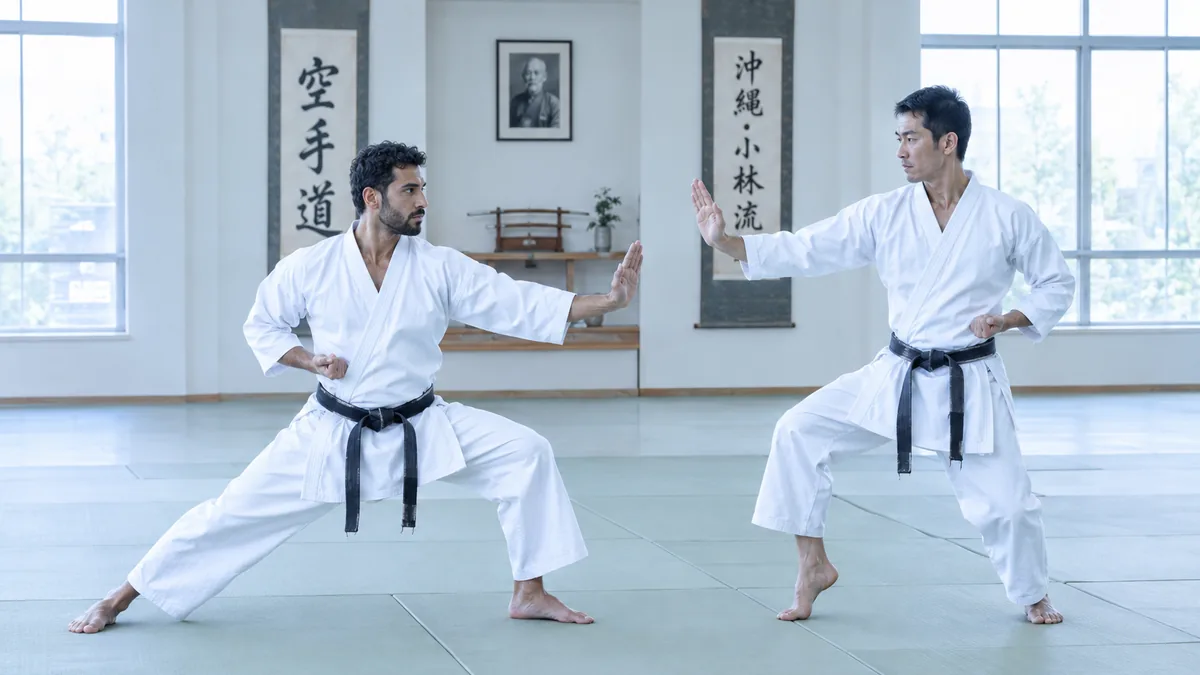
Shotokan and Shorin-Ryu share a lineage. Shotokan’s founder, Gichin Funakoshi, trained in Okinawa under Itosu Anko and Azato Anko, both teachers of Matsumura’s Shorin-Ryu. When Funakoshi brought karate to mainland Japan in 1922, invited by Japan’s Ministry of Education to demonstrate at the First National Athletic Exhibition in Tokyo, he did not simply transplant a fighting system - he adapted it for a new context, a new audience, and eventually a new purpose.1 What emerged was recognisably related to its Okinawan source but shaped by Japanese aesthetics, physical culture, and the demands of teaching large groups in universities. The divergence was not accidental. It was deliberate, and understanding what each style chose to emphasise - and what each gave up - tells you something important about what karate can be.
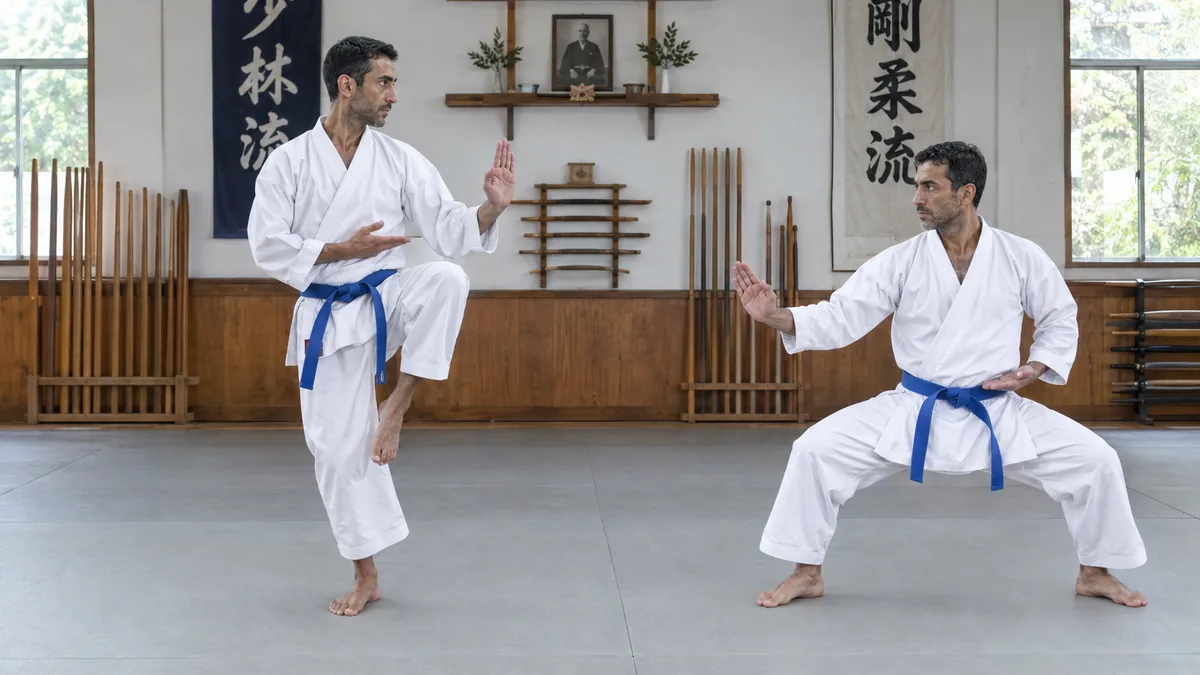
If you train Shotokan and then step into a Shorin-Ryu dojo for the first time, the experience is disorienting in a specific way. The stances are shorter, the movement is lighter, and the whole thing looks less like what you were taught and more like what your instructor told you not to do. The instinct is to assume Shorin-Ryu is somehow less rigorous. That instinct is wrong, and correcting it is worth your time.
What Shorin-Ryu Kept: Natural Movement as a Fighting Principle
Shorin-Ryu is not a single organisation. The four main branches - Kobayashi-Ryu, Shobayashi-Ryu, Matsubayashi-Ryu, and Matsumura Seito - each have their own lineage and emphasis. What they share is a commitment to movement that stays close to how the human body naturally wants to operate under pressure.
The stances in Shorin-Ryu are higher and shorter than their Shotokan equivalents. This is not a beginner shortcut. It is a deliberate choice that keeps the practitioner mobile and allows weight transfer to happen quickly rather than through the deliberate, powerful loading that Shotokan favours. When you practise Shorin-Ryu kata, the transitions between techniques feel more continuous - less like stopping to fire a cannon and more like flowing water that changes direction. Many instructors in Shorin-Ryu lineages cue this as keeping the body “alive” between techniques, meaning that there is no dead point where movement stops entirely.
The practical consequence is real. In jiyu-kumite, a higher stance lets you react and reposition faster. You can close distance, change angle, and re-engage without the commitment that a deep zenkutsu-dachi demands. The trade-off is that individual techniques carry less structural weight behind them - you are relying more on speed, angle, and timing than on mass and ground connection.
The Kata Shorin-Ryu Preserved
Several kata that are central to Shorin-Ryu lineages were either significantly altered or dropped entirely as Shotokan developed. The Pinan series (known in Shotokan as Heian) exist in both traditions, but even these show differences in timing, transition, and the interpretation of bunkai. More significant are kata like Passai (Bassai in Shotokan), Chinto (Gankaku in Shotokan), and Kusanku (Kanku-Dai in Shotokan), where the Okinawan versions retain movement patterns that Funakoshi’s adaptations modified - in some cases substantially.2
Naihanchi (Naifanchi in some Shorin-Ryu branches, Tekki in Shotokan) is a particularly instructive case. In Shotokan, the Tekki series is practised in kiba-dachi, the horse-riding stance, moving laterally along a single line. Shorin-Ryu versions of Naihanchi use a different stance and carry a different weight distribution: in many Okinawan lines the kata is performed in a narrower naihanchi-dachi rather than the deeper, wider kiba-dachi of Shotokan. Many Okinawan instructors argue that the original kata contains close-range grappling applications that become harder to see once the stance changes. Whether or not you find that argument convincing, the structural difference is real and observable.
What Shotokan Built: Power Architecture
Shotokan’s deep stances are the thing most people notice first and argue about most. The criticism from Okinawan practitioners is that zenkutsu-dachi is impractically low for real fighting. The defence from Shotokan practitioners is that the stance is a training tool, not a fighting position. Both positions have merit, but the Shotokan argument is more coherent when you understand what the deep stance is actually training.
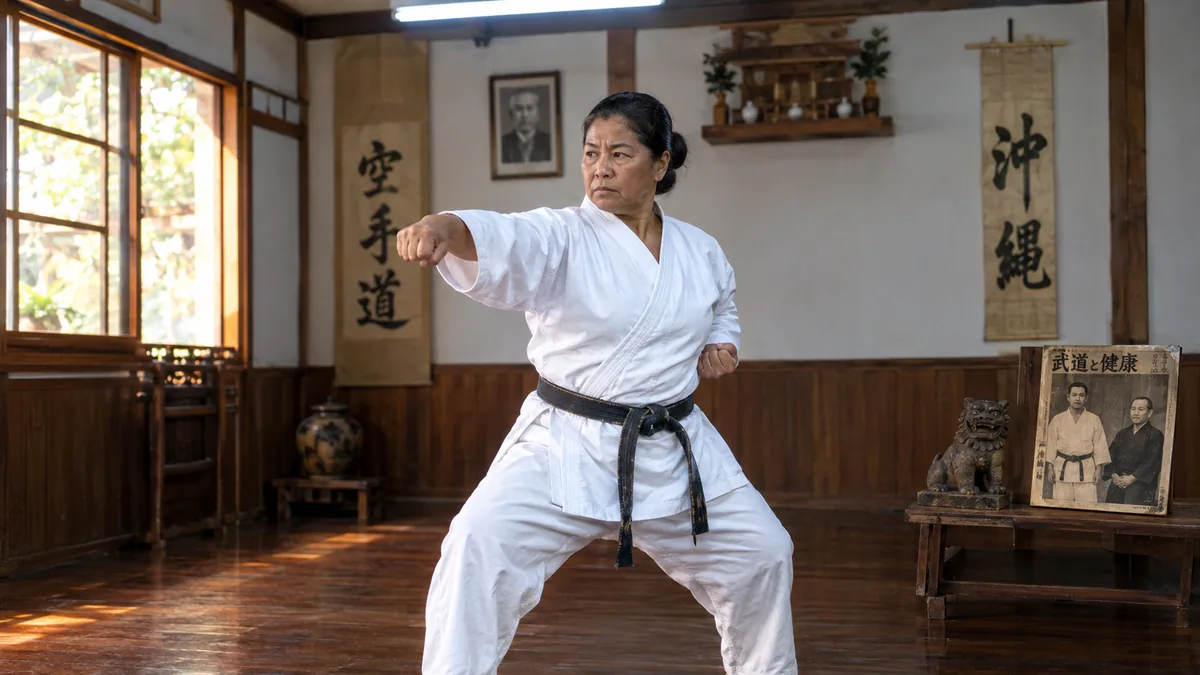
When you drop into a proper zenkutsu-dachi and drive a gyaku-zuki from it, the power chain runs from the back foot through the hip rotation through the core and out through the fist. You will feel it as a kind of wave that starts in the floor and arrives at the target - or, when it goes wrong, as a disconnected arm punch that your body was not really part of. The deep stance forces you to engage that chain. It makes cheating harder. A beginner in a shallow stance can throw a punch that looks acceptable but is mostly arm. A beginner in a deep stance cannot hide the disconnection - it shows immediately.
This is why Shotokan works well as a teaching system for large groups. The exaggerated positions make faults visible and correctable. The kata are designed around this logic: strong, clearly defined positions that a senior instructor can assess from across a dojo. It is a pedagogy as much as a fighting system.
The Kata Shotokan Developed
Funakoshi did not simply bring Okinawan kata to Japan unchanged. He renamed them, modified some of their movements, and formalised a syllabus.2 His son, Yoshitaka (Gigo) Funakoshi, is credited with deepening the stances further and introducing kicking techniques including mawashi-geri (roundhouse kick) and ushiro-geri (back kick) into the Shotokan curriculum. The kata that define Shotokan - Bassai-Dai, Kanku-Dai, Empi, Jion, Hangetsu - carry the fingerprints of this Japanese development period.
Hangetsu is worth singling out. It is one of the few Shotokan kata that retains a clearly Okinawan breathing and tension pattern. Its older Okinawan form is Seisan, and the first part of the kata is executed slowly with strong breathing and controlled expansion and contraction - an approach that is closer in character to Goju-Ryu’s Sanchin than to standard Shotokan kihon. Training Hangetsu seriously, with attention to the prescribed breathing, produces a physical sensation that reminds you the Okinawan substrate is still there, even in the most Japanese-feeling of the major styles.
Where the Divergence Actually Matters in Training
The practical differences between the styles show up most clearly in three areas: sparring, kata application, and how you develop over time as a practitioner.
In sparring, the Shorin-Ryu emphasis on mobility and natural movement tends to produce fighters who are harder to read and faster to reposition. The Shotokan emphasis on committed techniques and strong structure tends to produce fighters with more stopping power when they land. Neither is universally better. A common mistake for Shotokan practitioners crossing over to Shorin-Ryu is trying to plant and fire the way they were trained - they end up slow and predictable in a context where the other person is already moving. The correction that works is learning to think of movement as the primary weapon and technique as secondary.
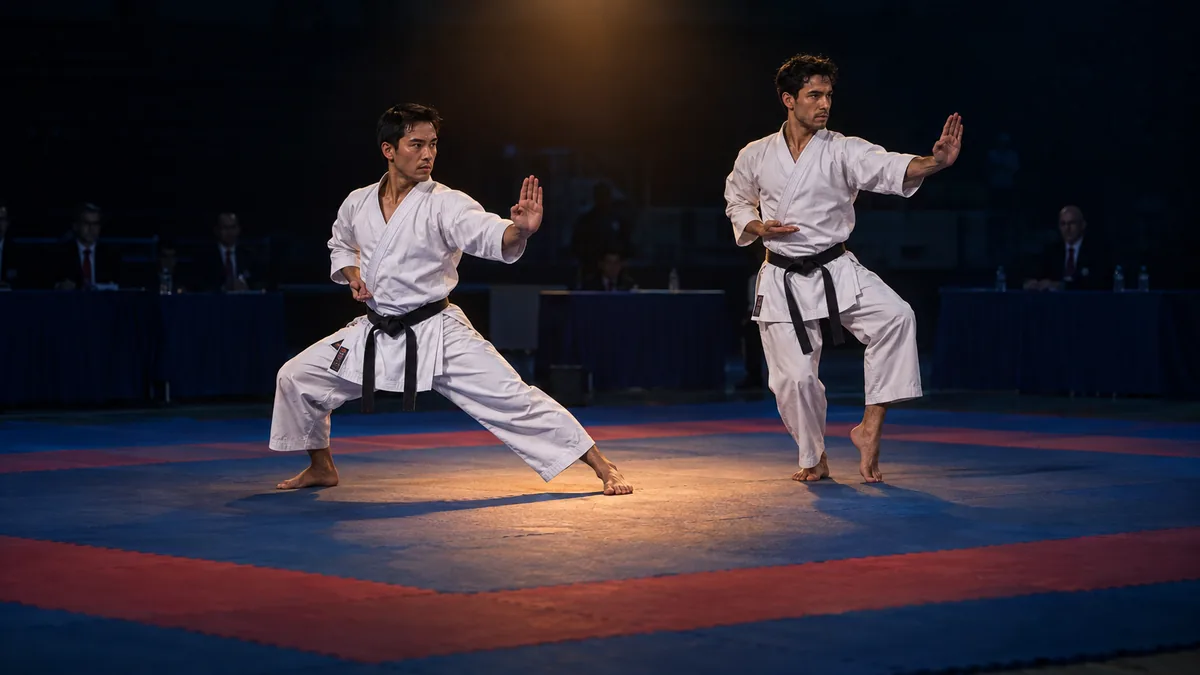
In kata, the difference is partly aesthetic and partly interpretive. Shotokan kata, performed correctly, should have a particular quality of kime - a sharp, focused contraction at the moment of technique that is visible and audible (the gi sleeve snaps). Shorin-Ryu kata have their own version of focus, but it is less about that single contracted moment and more about the flow and precision of the whole sequence. Neither approach is wrong. They reflect different theories about what kata is training.
Over time, practitioners who have spent years in one style and then seriously study the other often report the same thing: the other style shows them what they had stopped seeing in their own. Shotokan practitioners who study Shorin-Ryu kata find their movement between techniques becomes less mechanical. Shorin-Ryu practitioners who study Shotokan kihon often find their individual technique becomes more precise and powerful. This is not an argument for cross-training as a lifestyle choice - it is an observation that each style has genuinely preserved something the other allowed to fade.
Community Perspective
The question of which style is “more authentic” generates more heat than it deserves. Shorin-Ryu practitioners sometimes argue that Shotokan drifted too far from its Okinawan roots - that the deep stances, the sport kumite format, and the emphasis on visual kime represent a Japanese aesthetic preference rather than a fighting truth. Shotokan practitioners sometimes respond that Shorin-Ryu’s lighter movement lacks the structural integrity needed to generate real power at impact.
Both arguments are partly right and miss the point. Funakoshi made choices. Some of those choices were pragmatic (teaching large groups of Japanese university students required a systematised, assessable curriculum). Some were cultural. The result is a style that is genuinely different from its Okinawan parent - not better, not worse, but different in ways that suit different practitioners and different goals.
What tends to shift with experience is the certainty. Many senior Shotokan practitioners acknowledge that their early kata training was too focused on the visual snapshot and not enough on what connects the snapshots. Many senior Shorin-Ryu practitioners acknowledge that their early training undervalued the structural work that produces reliable power. The styles, at their best, are asking the same questions. They have arrived at different answers, and both answers are worth studying.
For a closer look at how Shotokan compares with another of its major Japanese relatives, see our article on Shotokan vs Wado-Ryu: Why Two Styles With Shared Roots Produce Such Different Stances, Movement, and Kumite. And if you want to understand how the competition landscape maps across the major Japanese styles, Shotokan vs Shito-Ryu: Why the Two Largest Competition Styles Produce Such Different Fighters and Kata Performers covers that ground in detail.
Key Takeaways
-
Shorin-Ryu’s shorter, higher stances are not a compromise - they are a deliberate prioritisation of mobility and natural movement over structural power. If you train Shotokan, resist the assumption that lighter stances mean less rigorous training.
-
Shotokan’s deep stances function as a training tool that makes power-chain faults visible. The correction that works for most beginners is not to think of the stance as a position to hold, but as a structure that connects the floor to the fist. You will feel the difference when a technique lands with your whole body behind it rather than just your arm.
-
The kata divergence is real and historically documented. Funakoshi renamed and modified kata when he brought them to Japan. Studying the Okinawan versions of Passai, Kusanku, and Naihanchi alongside their Shotokan equivalents is not cross-training for its own sake - it reveals interpretation choices that are otherwise invisible.
-
In jiyu-kumite, the biggest difference is commitment cost. Shotokan techniques tend to require more structural commitment to generate power; Shorin-Ryu techniques leave you more mobile but with less mass behind each strike. Neither is universally superior - the context determines which serves you better.
-
The “authenticity” argument is less useful than the training question. Rather than debating which style preserved the original art more faithfully, ask what each style developed that the other let go - and whether your own training has gaps that the other tradition addresses.
-
Hangetsu (Shotokan) and its Okinawan source, Seisan, are worth studying together. The breathing and tension patterns in Hangetsu are closer to Goju-Ryu than to standard Shotokan kihon, and training it seriously reveals how much of the Okinawan substrate survived the Japanese adaptation.
References
Checked by the KarateLifestyle editorial team against official governing body pages (JKA, British Karate Federation), specialist karate history resources, and primary lineage reference sites in November 2026. Historical attribution for Yoshitaka Funakoshi's technical contributions is broadly consistent across sources, though some secondary histories note that an earlier senior instructor, Takeshi Shimoda, may have begun some of the stance experiments before Yoshitaka formalised them.
- Supreme Master Funakoshi Gichin - Japan Karate Association. Japan Karate Association (JKA) official biography, accessed November 2026
- Gichin Funakoshi (biography) - findingkarate.com. findingkarate.com, detailed historical biography with primary source referencing, accessed November 2026
The weekly digest
New karate articles, once a week
One email every week with everything new on Karate Lifestyle. No spam; unsubscribe in one click.
We'll email you to confirm. See our privacy policy.