Kyokushin Branching: Shinkyokushin, Enshin, and Ashihara Explained and How Each Differs From the Original
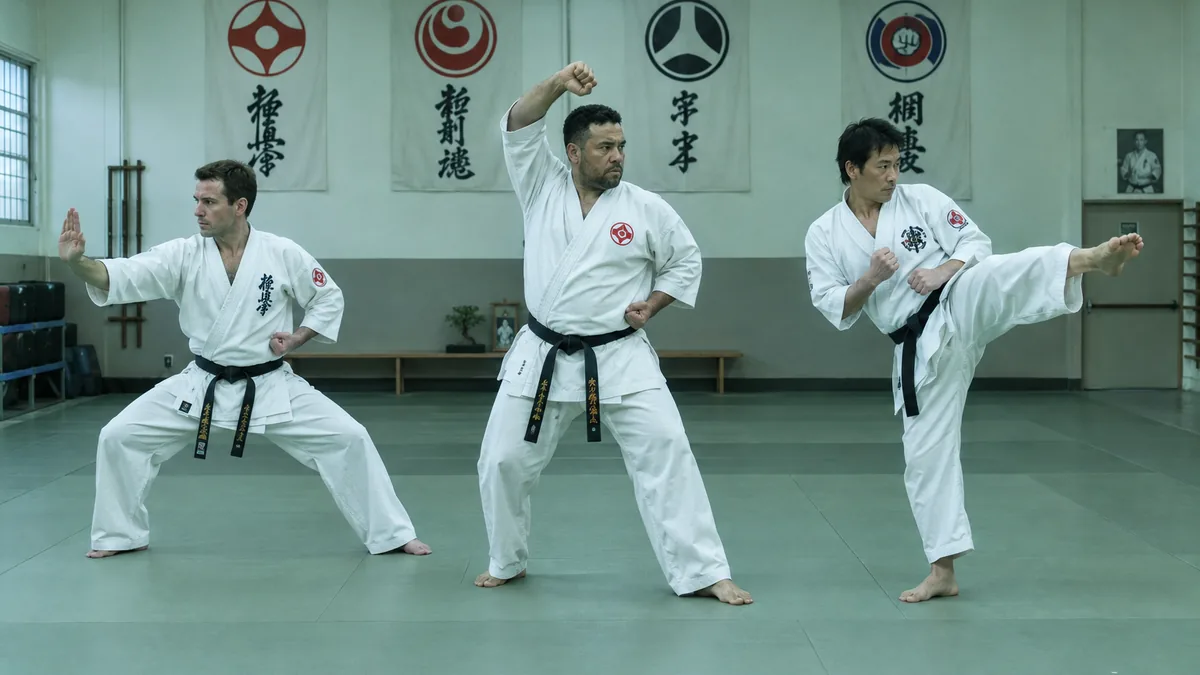
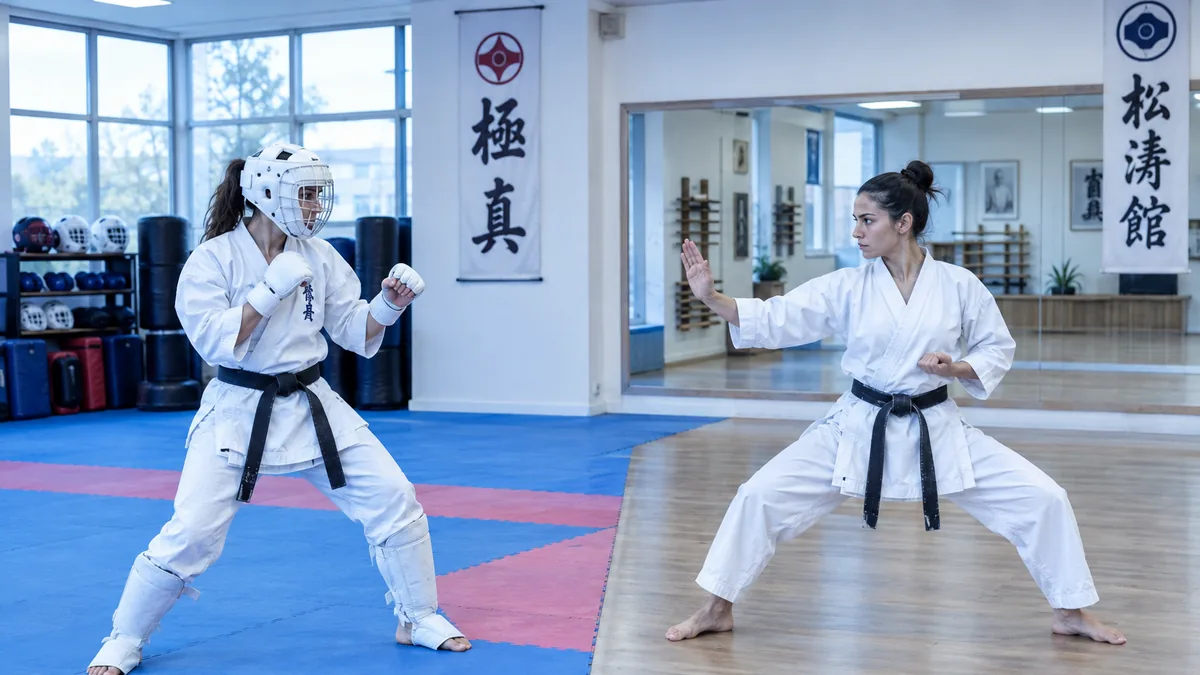
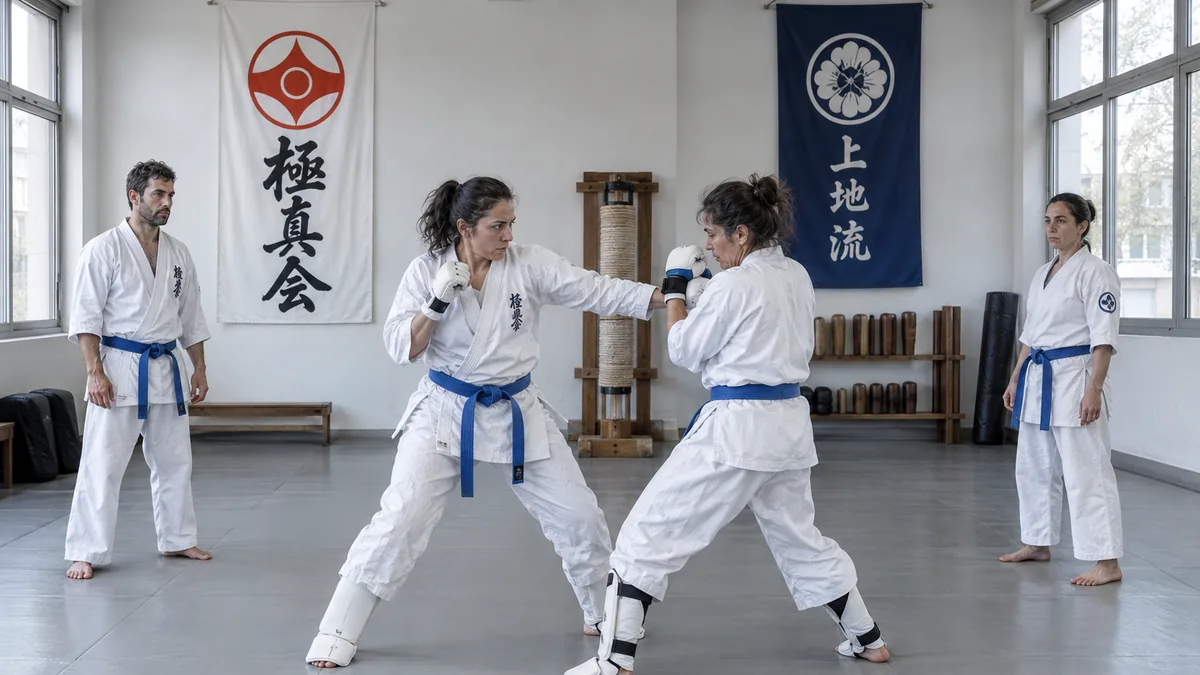
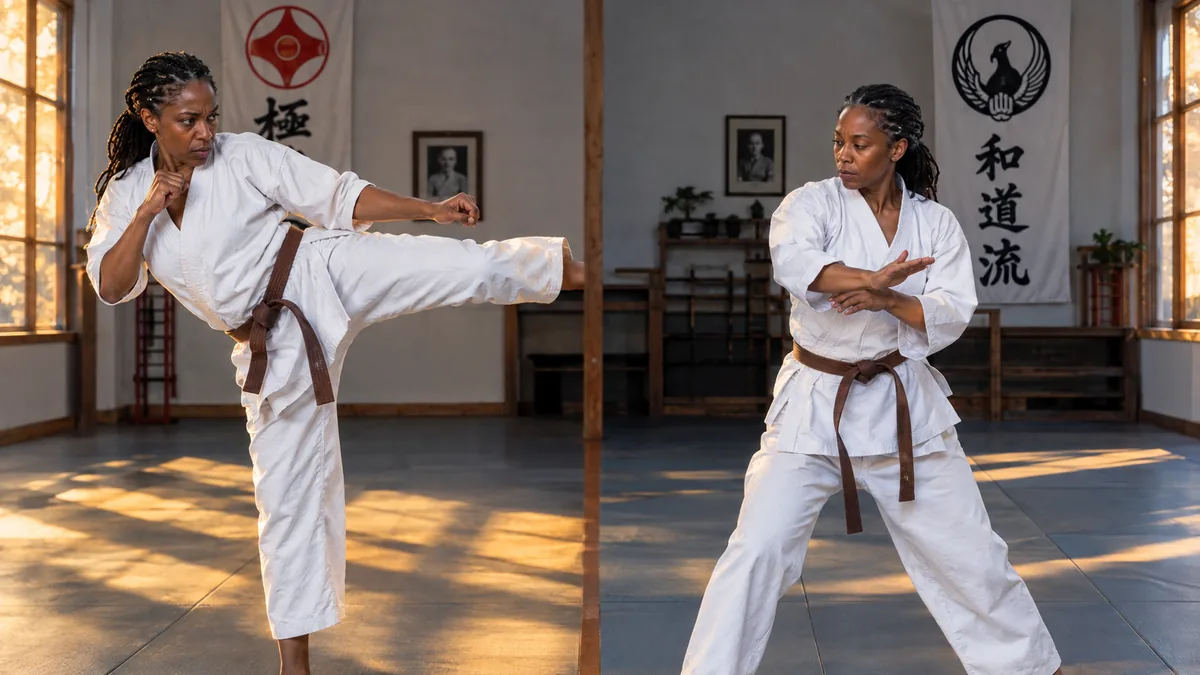
Kyokushin did not stay intact after Mas Oyama died on 26 April 1994. Within months, the organisation he built fractured, and the splits that followed were not clean breaks - they were arguments about legitimacy, competition rules, and what the style was actually supposed to be for. But the branching had started earlier than that. Ashihara Karate was formally established as its own organisation in 1980. Enshin Karate followed in 1988.1 Each founder left with a specific critique of where Kyokushin was heading, and each built something distinct enough that calling them “Kyokushin variants” undersells the differences.
If you train in any of these styles, or you are considering which to pursue, the organisational history matters less than the technical and philosophical differences. This article is about those differences - what each style actually emphasises in the dojo, how the training feels, and where each has moved away from the original.
For background on Mas Oyama himself and why Kyokushin’s training culture became so distinctive, see our full guide: Who Was Mas Oyama? The Founder of Kyokushin and How His Training Methods Became the Style’s Identity.
What the Original Kyokushin Actually Established
Before comparing the branches, you need to be clear on what they branched from. Kyokushin under Oyama was built around full-contact knockdown competition, rigorous conditioning, and a relatively small kata syllabus drawn primarily from Goju-Ryu and Shotokan. The competition rules - no punches to the head, no grappling, full-power body contact - shaped everything. Fighters developed exceptional leg kicks, body punching, and the ability to absorb punishment.
The kata were never the centre of Kyokushin identity the way they are in Goju-Ryu or Shotokan. Conditioning and knockdown sparring were. That distinction matters when you look at what each branch chose to keep, modify, or discard. You can read more about the kata question specifically in our Kyokushin Kata List.
The style’s relationship to its Goju-Ryu roots is also worth understanding - Kyokushin ended up looking dramatically different from the style it descended from, for reasons that are mostly explained by the competition ruleset. We covered that in detail here: Kyokushin vs Goju-Ryu: Why a Style Born from Goju-Ryu Ended Up Looking So Different From Its Parent.
Shinkyokushin: Competition Sharpened Further
Shinkyokushin - formally the WKO Shinkyokushinkai, or “new Kyokushin organisation” - emerged from the post-Oyama succession dispute. After Oyama’s death, the International Karate Organisation (IKO) fractured into several competing bodies. The lineage that became Shinkyokushinkai was initially known as IKO-2; Kenji Midori, the 1991 Kyokushin World Champion, became its head and in 2003 the organisation was formally renamed WKO Shinkyokushinkai under his leadership. The split was organisational before it was technical, but the technical emphasis that followed is distinct enough to warrant its own discussion.
What Shinkyokushin Changed
The most visible change is the competition framework. Shinkyokushin has pursued a more structured, internationally standardised approach to knockdown tournament karate. This includes more consistent judging criteria, weight categories (which Kyokushin tournaments historically resisted for much of their history), and a broader international competition calendar.
In the dojo, this competition focus has a real effect on training. Shinkyokushin dojos tend to weight sparring and conditioning heavily, with technical development often framed around what works in knockdown competition. The no-head-punch rule remains - that is a constant across all Kyokushin-lineage styles - but the emphasis on leg kicks, body attacks, and defensive movement is refined through a lens of modern competition analysis rather than tradition for its own sake.
The biggest difference most practitioners notice when moving between Kyokushin and Shinkyokushin dojos is not the techniques themselves but the training culture. Shinkyokushin tends to be more systematically organised around competition preparation. That is not a criticism - it is a deliberate choice, and for fighters who want to compete at international level, it is arguably the more supportive environment.
One common misconception is that Shinkyokushin softened Kyokushin. It did not. The knockdown rules are the same. The physical demands are comparable. What changed is the organisational structure and the degree to which training is calibrated toward competitive outcomes. If your goal is knockdown tournament karate, Shinkyokushin’s infrastructure is worth taking seriously.
Ashihara Karate: The Circular System
Hideyuki Ashihara was a Kyokushin instructor who trained under Oyama from 1961, was expelled from the IKO in the late 1970s following disputes with other instructors, and formally founded his own organisation - the New International Karate Organisation (NIKO) - in September 1980. His critique of Kyokushin was technical, not just organisational: he believed the style’s emphasis on linear, power-on-power confrontation was incomplete as a fighting system. His solution was Sabaki - a movement principle built around circular footwork designed to move you off the line of attack and into a dominant position.
What Sabaki Actually Means in Practice
The word “sabaki” appears in other martial arts contexts, but in Ashihara Karate it refers to a specific movement philosophy. Rather than meeting force with force - the Kyokushin approach of absorbing body kicks and returning with equal power - Ashihara training teaches you to redirect attacks by moving to the outside of your opponent, ideally ending up behind or to the side of them.
A common adjustment for practitioners coming from a Kyokushin background is overcoming the instinct to stand and exchange. Ashihara asks you to move earlier and more decisively, which requires a different read of distance and timing. The correction that most beginners need is to commit to the movement rather than half-stepping - a half-committed Sabaki leaves you in the worst of both positions.
The practical application is clearest in sparring: when an opponent drives forward with a committed mawashi geri (roundhouse kick) to the body, the Kyokushin answer is often to block and counter in the same line. The Ashihara answer is to step to the outside of the kick, which both avoids the impact and repositions you advantageously. Done well, you feel the kick pass you rather than absorbing it, and your counter comes from a position your opponent has to turn to face.
Ashihara’s Approach to Self-Defence
Ashihara Karate explicitly frames itself around practical application. The Sabaki principle extends beyond sport competition into scenarios where the environment is unpredictable - multiple opponents, confined spaces, uneven ground. The circular movement system makes sense in those contexts in a way that linear power exchange does not.
This is where Ashihara diverges most clearly from both Kyokushin and Shinkyokushin. Those styles are, at their core, built around one-on-one knockdown competition. Ashihara uses competition as a training tool but positions the style’s ultimate purpose as broader. Whether that framing translates into genuinely better self-defence preparation depends heavily on the individual dojo - but the technical vocabulary of the style is at least built with that application in mind.
Enshin Karate: Sabaki Developed Further
Enshin Karate was founded by Joko Ninomiya in 1988.1 Ninomiya had trained under Hideyuki Ashihara, winning the All-Japan Karate Championship in 1978 before moving to the United States and eventually establishing Enshin as a development of the Sabaki concept. If Ashihara introduced circular movement as a corrective to Kyokushin’s linearity, Enshin refined and systematised it into a comprehensive fighting method.
How Enshin Differs From Ashihara
The two styles share the Sabaki foundation, and practitioners moving between them will find much that is familiar. The differences are in emphasis and in the competition format Enshin developed.
Enshin’s tournament - the Sabaki Challenge, held annually in Denver, Colorado since 1989 - is distinctive. It permits sweeps, grabs and throws alongside striking, which creates a different competitive environment from pure knockdown karate. The inclusion of grappling-adjacent techniques changes how practitioners train and how they think about range. You cannot just develop your body punching and leg kicks in isolation; you have to account for the clinch and for being taken down.
This is where Enshin training feels most different from Kyokushin. Many practitioners coming from a Kyokushin background underestimate the clinch range in Enshin. The correction that usually helps is to treat the clinch not as a neutral position to escape from but as an opportunity - which is exactly what the Sabaki system is designed to create.
The Self-Defence Emphasis in Enshin
Like Ashihara, Enshin frames its training with self-defence application in mind. The circular movement, the throws, the positioning work - all of it is justified by the argument that real confrontations rarely stay at punching range and rarely involve a cooperative opponent. Whether you find this framing convincing probably depends on your training goals, but the technical content is genuinely different from styles that train exclusively for point or knockdown competition.
We would argue that Enshin’s competition format - which forces practitioners to deal with throws and takedowns - produces fighters with a more complete range than pure knockdown training alone. The Sabaki Challenge has run since 1989 and demonstrates that the system works competitively, not just theoretically.
The Mistake Most Practitioners Make When Comparing These Styles
The most common mistake when looking at Kyokushin lineage styles is treating the differences as cosmetic - assuming that because they all use knockdown rules (or similar rules) and share a technical vocabulary, the training is essentially the same. It is not.
The difference between Kyokushin’s linear confrontation model and Ashihara/Enshin’s Sabaki model is not a detail. It is a fundamental disagreement about how a fight should be managed. Kyokushin builds practitioners who can take punishment and return it with interest. Ashihara and Enshin build practitioners who aim not to be in the position of taking punishment at all.
Neither approach is obviously superior. The Kyokushin model produces exceptional toughness and power. The Sabaki model produces better footwork and positional awareness. A practitioner who trains seriously in either will be formidable. The question is what you want to develop and what kind of training culture suits you.
Community Perspective
The question of which Kyokushin-lineage style is “most authentic” generates genuine disagreement, particularly online. Practitioners from IKO-affiliated Kyokushin organisations sometimes view Shinkyokushin as a political rather than technical development - a split driven by succession disputes rather than genuine technical innovation. Shinkyokushin practitioners tend to argue that their competition infrastructure is more modern and better organised.
The Ashihara and Enshin communities occupy a slightly different position in these debates. Because their technical departure from original Kyokushin is more substantive - the Sabaki system is a real difference, not just an organisational rebranding - they are sometimes viewed as distinct styles rather than Kyokushin variants. Some Enshin practitioners prefer it that way.
What tends to shift with experience is the view on competition rules. Many practitioners who train primarily for self-defence or general fitness start by dismissing the competition format differences as irrelevant to them. By the time they have trained seriously for several years, most have revised that view - the competition ruleset shapes everything about how a style trains, even for practitioners who never compete.
Key Takeaways
- Shinkyokushin is not a softened Kyokushin - it is Kyokushin with a more systematically developed competition infrastructure. Formally the WKO Shinkyokushinkai, it has been led by Kenji Midori since 2001 and adopted its current name in 2003. If knockdown tournament karate is your goal, its international organisation is worth investigating.
- The Sabaki principle in Ashihara and Enshin is a genuine technical departure, not just a branding difference. It requires you to retrain your instinct to stand and exchange, which takes time and deliberate effort.
- When training Sabaki-based movement, commit fully - a half-step gets you neither the evasion nor the counter position. The correction that makes the biggest difference is learning to trust the movement earlier than feels natural.
- Enshin’s inclusion of throws and sweeps in competition produces a different kind of practitioner from pure knockdown training. If you want to develop clinch awareness alongside striking, Enshin’s competition format supports that in a way Kyokushin’s does not.
- The competition ruleset shapes dojo culture whether you compete or not. Choosing a style means choosing what the training optimises for - be honest with yourself about what that is.
- All three styles share Kyokushin’s core commitment to full-contact training. The differences are real but they sit within a shared tradition of hard, honest sparring. That foundation matters more than the organisational distinctions.
References
Checked by the KarateLifestyle editorial team against official governing body and organisation websites, competition records, and martial arts biography sources in November 2026. Biographical details for Ashihara's IKO departure date vary slightly across sources; the September 1980 NIKO founding date is consistent across all.
- Enshin Karate Headquarters Denver (official site). Enshin Karate official headquarters site, Denver. Confirms 1988 founding by Joko Ninomiya and annual Sabaki Challenge.
The weekly digest
New karate articles, once a week
One email every week with everything new on Karate Lifestyle. No spam; unsubscribe in one click.
We'll email you to confirm. See our privacy policy.