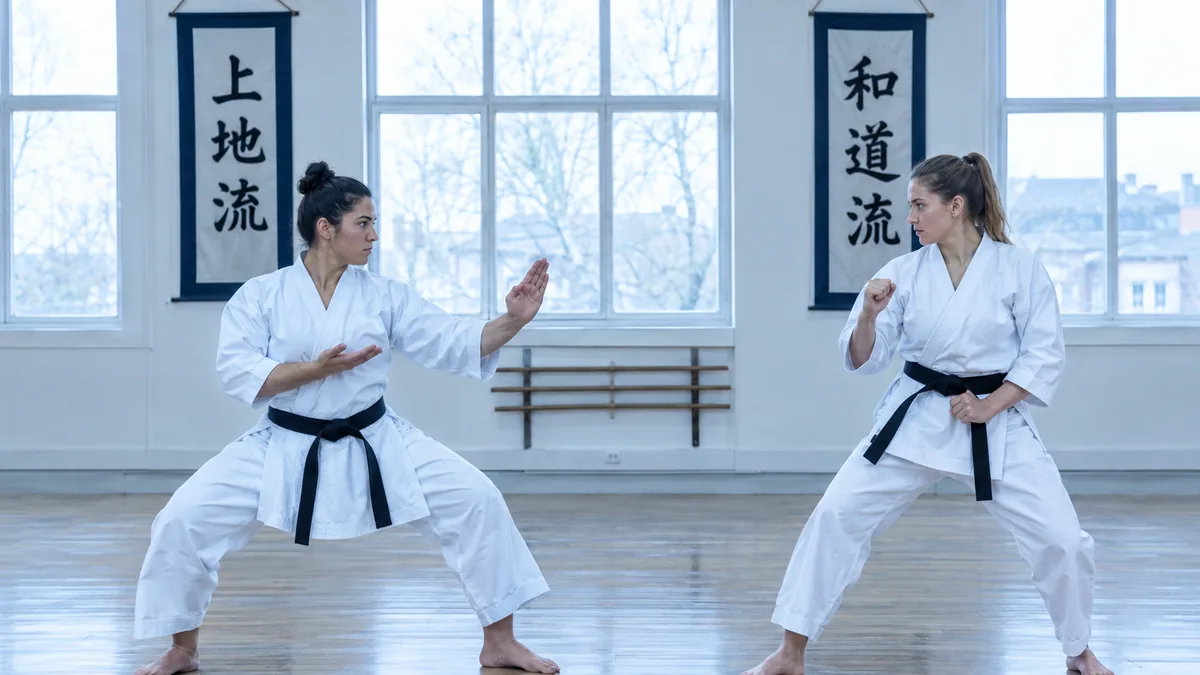
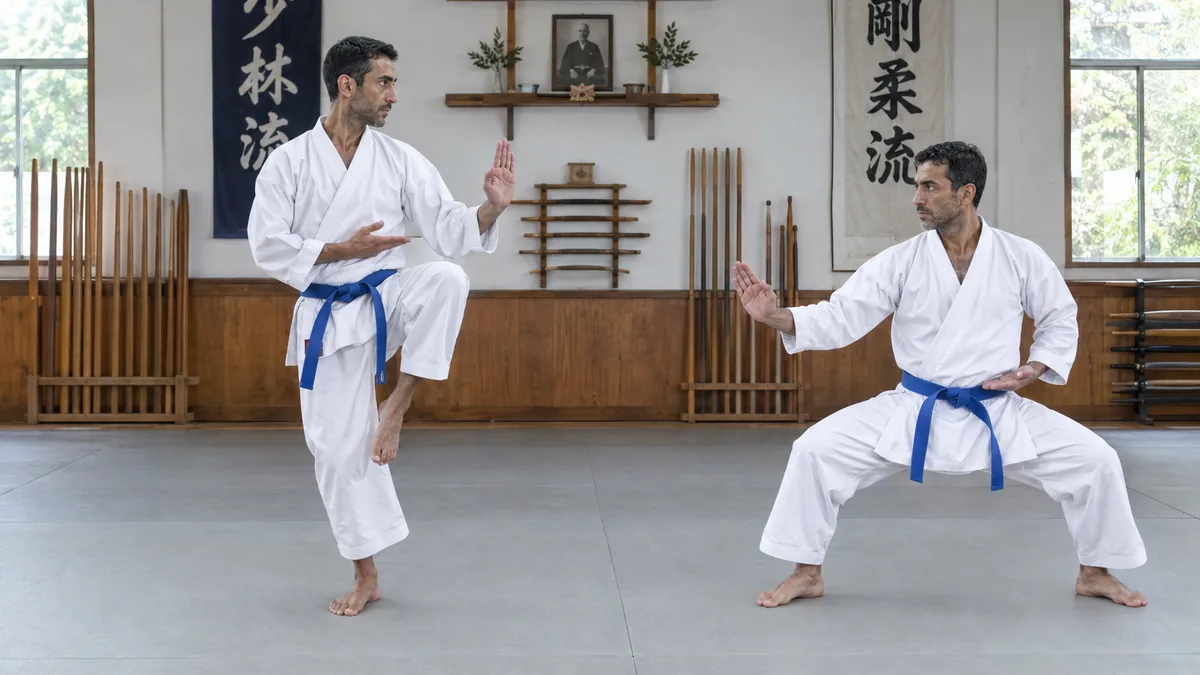
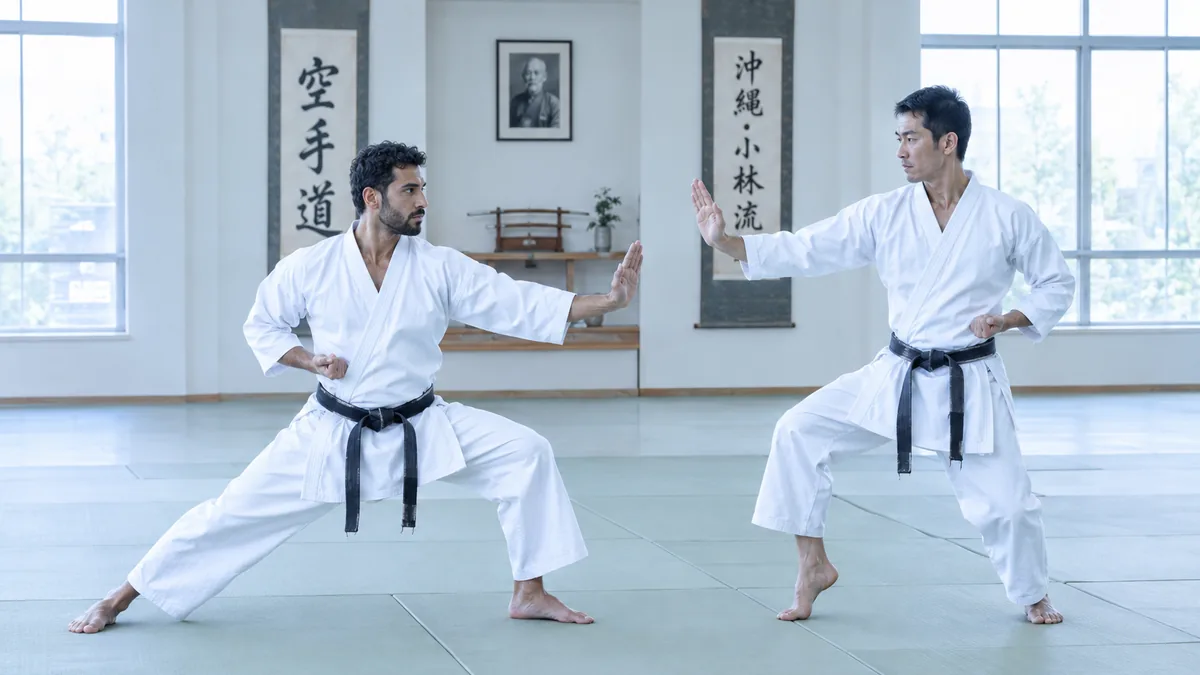
Kyokushin vs Uechi-Ryu: Why Two Full-Body-Contact Traditions With Completely Different Origins Produce Surprisingly Similar Fighters
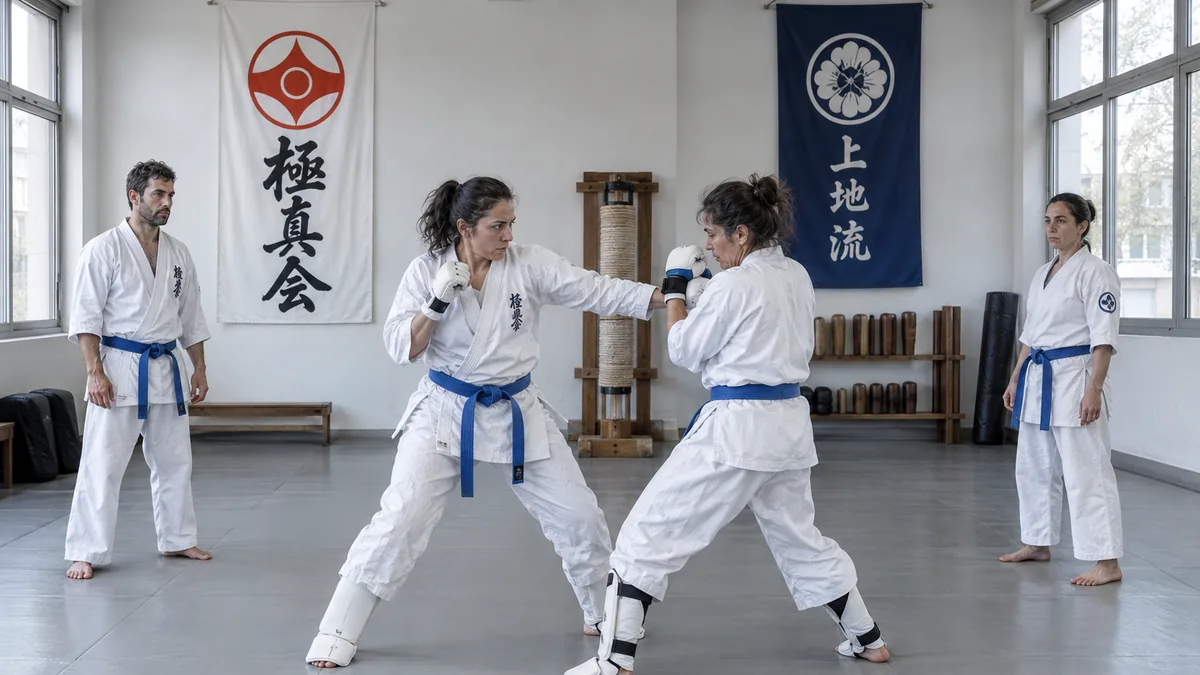
Put two Kyokushin fighters and two Uechi-Ryu fighters in the same room for a hard sparring session, and something interesting happens. Despite coming from traditions with almost nothing in common historically, they tend to understand each other immediately. The work ethic is the same. The tolerance for contact is the same. The willingness to absorb a hit in order to land one is the same. Most striking of all, the body conditioning is the same - and that is not a coincidence.
These are not sister styles. Kyokushin was built in Japan by Masutatsu Oyama, who trained under Gichin Funakoshi of Shotokan and Gogen Yamaguchi of Goju-Ryu, and in 1964 founded the International Karate Organization Kyokushinkaikan. Uechi-Ryu traces back to Kanbun Uechi, who studied Pangai-noon - a half-hard, half-soft Kung Fu system - under Shushiwa in the Fujian province of mainland China in the late 1800s and early 1900s. The two traditions have different kata, different stances, different theoretical foundations, and different organisational histories. And yet the fighters they produce share qualities that practitioners from more technically similar styles often do not. Understanding why tells you something important about what full-contact training actually does to people.
Where They Come From Matters Less Than You Think
The standard comparison in karate tends to focus on lineage and kata. Uechi-Ryu is grouped with the Okinawan hard-soft styles alongside Goju-Ryu - you can read more about how those two traditions diverged in our piece on Shorin-Ryu vs Goju-Ryu: How the Two Dominant Okinawan Traditions Split from the Same Island and Ended Up Teaching Almost Opposite Principles. Kyokushin sits in a different category entirely - a Japanese style built around tournament full-contact competition, with a founder whose personality shaped every aspect of the training culture.
What both systems share is a philosophical commitment to testing technique under pressure. This is not universal in karate. Many styles train kata and basics with the understanding that the application is implied. Kyokushin and Uechi-Ryu both insist on finding out whether the technique actually works when someone is hitting back.
The result is that practitioners from both styles develop a particular quality that is hard to fake: they are comfortable being hit. Not reckless, not numb - comfortable. There is a difference. A fighter who has never trained under real impact tends to flinch, to pull back, to lose structure at the moment of contact. Kyokushin and Uechi-Ryu practitioners tend not to do this, and the reason is that both systems train it out of you deliberately.
Body Conditioning: The Shared Foundation
Kyokushin is a full-contact karate style founded by Masutatsu Oyama in post-war Tokyo, in which students train kihon, kata, and kumite. What sets it apart is its competition format, knockdown: full-power strikes to the body and legs with bare hands and feet, kicks to the head allowed, and no hand or elbow strikes to the face.1 Makiwara work, leg conditioning drills, and the knockdown tournament format mean that practitioners develop exceptional core strength and the ability to take body shots without folding. The conditioning is not just physical toughness for its own sake. It is functional: if you cannot absorb a body kick in a Kyokushin tournament, you cannot compete.
Uechi-Ryu’s conditioning tradition is equally systematic and arguably more unusual. The style includes special forms of body conditioning. A formal forearm conditioning exercise called kote kitae involves the ritualised pounding of one’s fists and forearms against the forearms of a partner - a practice Kanbun Uechi brought back from China. The style’s characteristic nukite (spear hand) and boshiken (thumb strike) techniques require fingers and thumbs that can actually withstand impact, which means conditioning them over years. This is not decoration. It is a prerequisite for the technique to function.
A common mistake in both styles is treating conditioning as separate from technique training - something you do before or after the real work. The correction that usually helps is understanding that conditioning and technique are the same process. When you do kote kitae correctly in Uechi-Ryu, you are also learning to receive force through a stable structure, to breathe correctly under impact, and to maintain posture when someone is actively trying to disrupt it. There is a difference between bracing against a hit and actually absorbing it through your whole body. The latter feels like the force travels through you rather than stopping at the surface.
The Striking Toolkit: Different Weapons, Similar Principles
The actual techniques in each style look quite different. Kyokushin favours powerful linear punches, devastating body kicks, and low kicks to the thigh and calf. The gyaku-zuki (reverse punch) and mawashi-geri (roundhouse kick) to the body are workhorses of the style. Kyokushin fighters are typically comfortable in close range, and since punches to the head are not part of standard Kyokushin rules, fighters often stand close and trade hard body shots and low kicks.1
Uechi-Ryu has a more unusual toolkit. The style’s signature techniques include:
- Shoken (one-knuckle punch) - a compact strike that concentrates force through a single knuckle
- Boshiken (thumb strike) - targeting pressure points and soft tissue
- Sokusen-geri (toe kick) - a thrusting kick using the tips of the toes rather than the ball of the foot
- Hiraken (fore-knuckle fist) - a half-fist strike used at close range
These are not techniques you will find in Kyokushin. But the principle behind them is the same: concentrate force through a hardened surface into a specific target. Both styles are trying to solve the same problem - how do you generate maximum damage with minimum telegraphing - and they have arrived at different answers using different tools.
Where both styles converge most clearly is in close-range work. Uechi-Ryu emphasises toughness of body with quick blows and kicks, and its sanchin stance keeps practitioners upright and compact, which suits infighting. Kyokushin’s tournament experience produces fighters who are comfortable pressing forward and exchanging at close range. Put them together and the range preferences align even if the specific techniques do not.
Sanchin vs Kyokushin Conditioning Kata: The Same Idea, Different Methods
Sanchin kata is the foundation of Uechi-Ryu. It is performed with dynamic tension throughout, and senior instructors perform shime - a rigorous biomechanical audit during sanchin kata in which they use deliberate slaps, pushes, and checks to the legs, lats, shoulders, and core to immediately expose any weak link in the kinetic chain or breath timing. This is not symbolic. A comprehensive shime will assess the student’s ability to maintain focused concentration and mastery over the degree of tension and relaxation demanded of the various muscle groups in each aspect of the posture. If your tension collapses when someone presses your ribs mid-kata, you are not doing sanchin correctly.
Kyokushin does not have a direct equivalent, but the style’s approach to basics training achieves something similar. High-volume kihon sessions, partner conditioning drills, and the expectation that you will spar hard regularly all serve the same function: building a body that does not fall apart under pressure.
The biggest difference is that Uechi-Ryu makes the conditioning explicit and structural through kata, while Kyokushin builds it through cumulative sparring volume. Both work. We would argue that the Uechi-Ryu approach is more teachable to beginners because it gives them a clear framework - sanchin is something you can practise alone and feel the feedback from immediately. Kyokushin’s approach requires a training environment with enough experienced partners to make the sparring genuinely developmental, which is harder to guarantee.
Mental Discipline: What Pressure Training Actually Produces
Both styles have reputations for mental toughness, and the reputation is earned. The question worth asking is what mechanism produces it.
In Kyokushin, the answer is volume and escalation. Grading requirements are demanding - the style’s 100-man kumite (hyakunin kumite) represents the outer limit, with only 17 fighters having successfully completed all 100 bouts across the entire history of the style from 1965 to 2021. The challenge was devised by Masutatsu Oyama, and the second man to complete the test was Steve Arneil in 1965. Miyuki Miura, who completed the challenge in 1973, was the first Japanese man to complete it in its single-day format and was the seventh person overall to do so. Even standard grading involves extended sparring that tests endurance as much as technique. The mental quality that develops is persistence under fatigue. Kyokushin fighters learn to keep working when they are tired, hurt, and behind.
In Uechi-Ryu, the mental development comes partly from a different source: the willingness to train in ways that most people would find uncomfortable before they have seen the point. Conditioning your forearms by repeatedly striking them against a partner’s requires a particular kind of trust in the process. The mental quality it develops is patience - the understanding that some things take years rather than months, and that the discomfort is the point.
A common mistake in both styles is confusing toughness with aggression. The correction that usually works is watching a senior practitioner spar. What you will notice is economy - they do not waste energy on unnecessary tension, they do not react to feints, and they choose their moments. The toughness is not about being willing to get hurt. It is about not being distracted by getting hurt. That is a subtle but important distinction, and it takes years to develop.
Community Perspective
There is a genuine debate within karate circles about whether the conditioning-heavy approach of styles like Kyokushin and Uechi-Ryu is appropriate for all practitioners, or whether it carries injury risk that more moderate training avoids. This is not a trivial concern.
The counter-argument from practitioners of both styles is that controlled progressive conditioning is safer than the alternative - going into contact situations with an unconditioned body. The logic is that a practitioner who has never trained under impact is more likely to be injured by unexpected contact than one who has built tolerance gradually. Most senior practitioners in both styles would agree that the conditioning methods need to be taught progressively and supervised carefully, particularly with younger or less experienced students.
There is also a debate about tournament rules. Kyokushin’s rules are organisation rules and they vary: four bodies - IKO, WKO/Shinkyokushin, IFK, KWU - differ on details, so a statement of the form “Kyokushin forbids” something is incomplete until it specifies which organisation.1 The prohibition on hand strikes to the head in knockdown competition is frequently discussed - it produces excellent body fighters but arguably creates habits that would be problematic in other contexts. Critics, including practitioners inside the style, name specific habits: fighting at a distance a puncher would punish; not moving the head, because nothing has ever come at it from the hands; and holding the guard where the legal targets are rather than in front of the face.1 Uechi-Ryu’s competition formats vary between associations, which makes direct comparison difficult. Practitioners from both styles who cross-train tend to find that their conditioning transfers well but their range management needs adjustment.
For a sense of how Kyokushin compares to other contact-oriented styles, see our comparison of Kyokushin vs Wado-Ryu: Why the Two Styles Represent Opposite Ends of What Karate Training Can Look Like, and for how Kyokushin sits alongside competition-focused styles, Kyokushin vs Shitō-ryū: Why a Full-Contact Style and a Technically Diverse Competition Style Attract Completely Different Practitioners.
Key Takeaways
-
Conditioning and technique are not separate. In both Kyokushin and Uechi-Ryu, the conditioning process is where technique is tested and refined. Training one without the other produces practitioners who look good in isolation and struggle under pressure.
-
Comfort under impact is a trainable quality. The shared characteristic of fighters from both styles - the absence of flinching - comes from systematic exposure to contact over time, not from toughness as a personality trait. The correction that works is progressive, supervised contact from early in training.
-
Economy develops later than power. Most beginners in both styles overwork - too much tension, too much reaction to feints, too much energy spent on unnecessary movement. What actually works is doing less, more precisely, at the right moment. This takes years to feel natural.
-
The kata in Uechi-Ryu are diagnostic tools, not performances. If you train sanchin without ever having someone test your structure during it via shime, you are missing the point of the kata. The same principle applies to Kyokushin basics: if you never test them under resistance, you do not know whether they work.
-
Cross-training between these styles is more productive than it looks. The technical vocabularies are different enough to be interesting, but the underlying principles are similar enough that practitioners can understand each other quickly. The body conditioning transfers almost immediately; the range management takes longer to adjust.
-
Patience with the process is not optional. Both styles are built on the understanding that some adaptations - genuine structural conditioning, the ability to absorb force through a stable frame, real composure under pressure - cannot be rushed. Styles that try to shortcut this tend to produce practitioners who perform well in controlled conditions and struggle when those conditions change.
References
Checked by the KarateLifestyle editorial team against official governing body pages (IKO Kyokushinkaikan), style association history sources, and rules documentation in November 2026. Oyama's personal completion of the 100-man kumite is disputed by his own former students and is treated as unverified in this article.
- Why Kyokushin Tournaments Ban Punches to the Head - karateids.com. KarateIDS, rules analysis article, 2026
The weekly digest
New karate articles, once a week
One email every week with everything new on Karate Lifestyle. No spam; unsubscribe in one click.
We'll email you to confirm. See our privacy policy.