Kyokushin vs Wado-Ryu: Why the Two Styles Represent Opposite Ends of What Karate Training Can Look Like
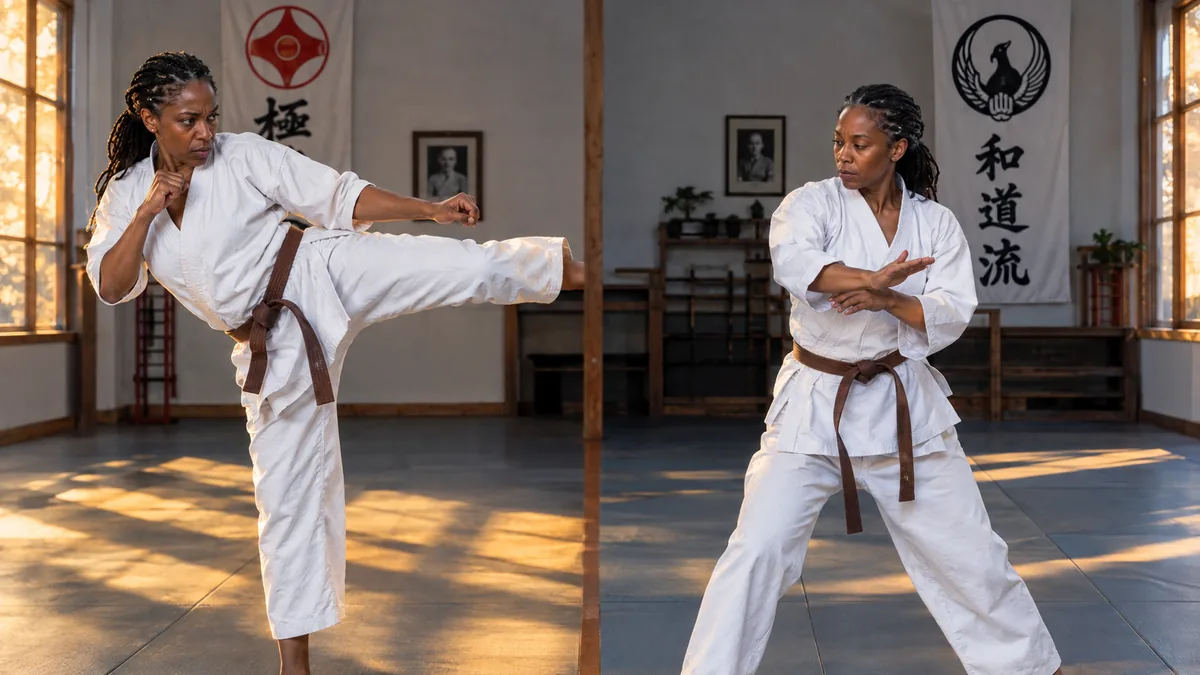
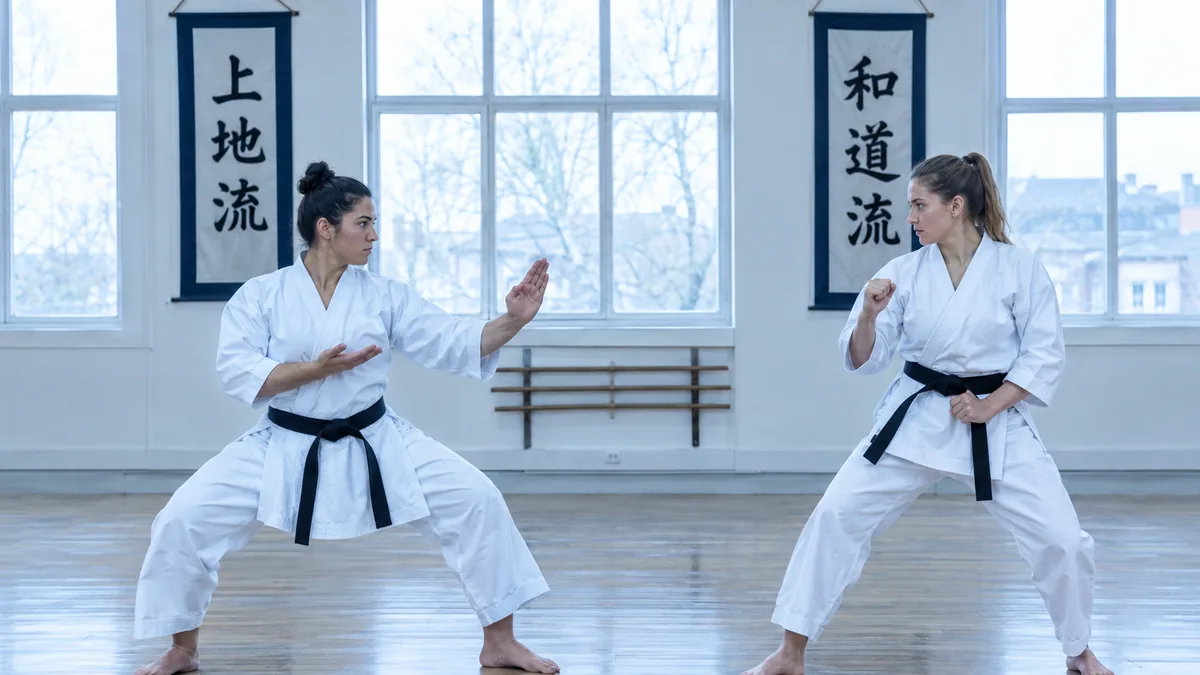
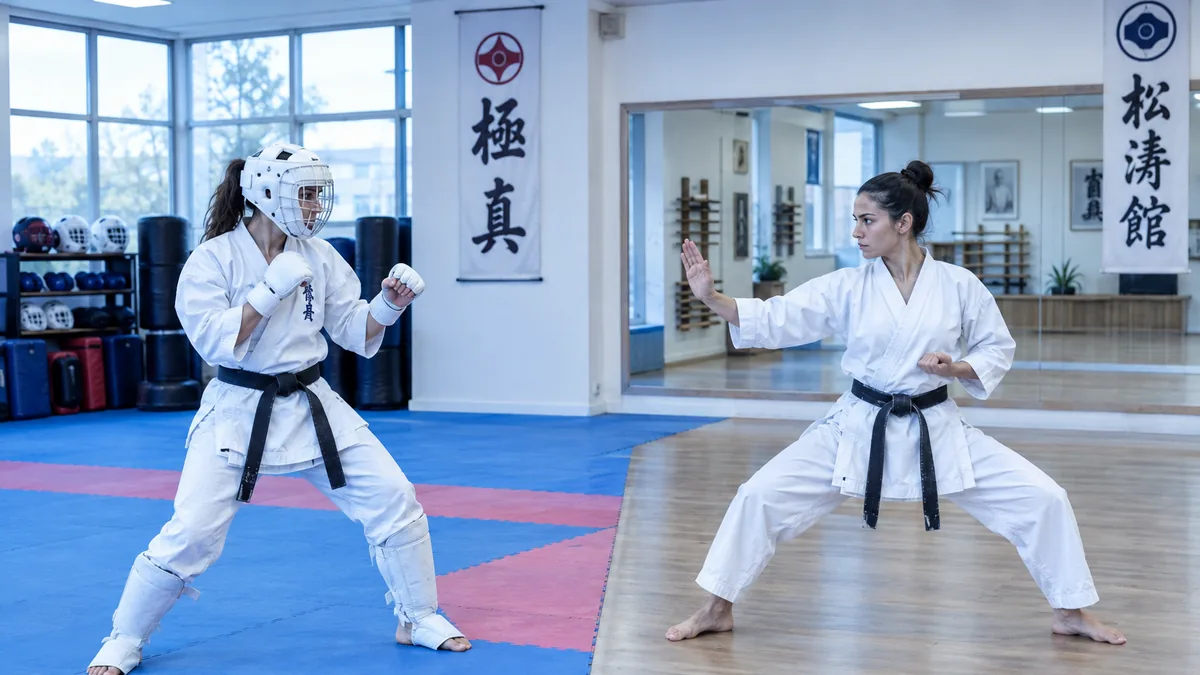
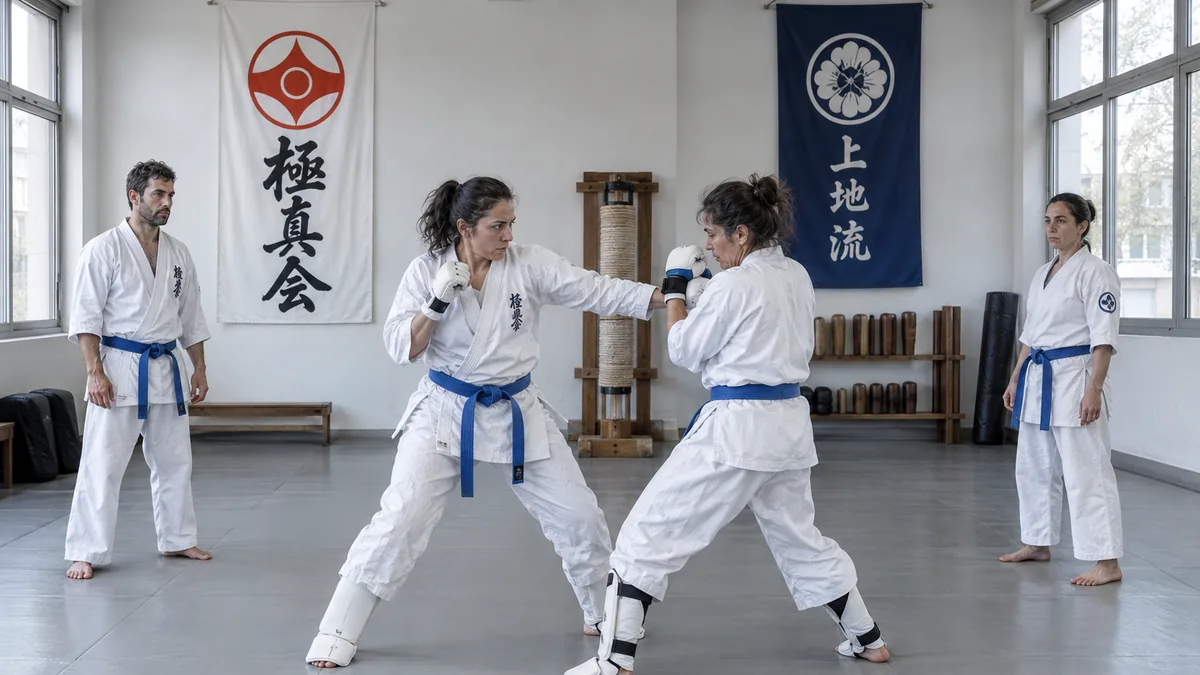
Put two styles side by side and the differences become impossible to ignore. A Kyokushin dojo at full pace looks like a controlled riot - bodies colliding, conditioning drills that leave marks, fighters who absorb punishment as a point of pride. A Wado-Ryu dojo at its best looks almost effortless - practitioners slipping attacks with small movements, redirecting force rather than meeting it, kata that flows rather than stamps. Both are karate. Both produce disciplined, capable practitioners. But they are built on fundamentally different ideas about what karate training is actually for, and understanding that difference will sharpen how you think about your own practice regardless of which style you train.
The Core Disagreement: Absorb It or Avoid It
Kyokushin, founded by Masutatsu Oyama with the International Karate Organization Kyokushinkaikan formally established in 1964, is built around a single premise: you should be able to take a hit and keep fighting.1 Everything in the training system flows from that. Full-contact sparring with no pads on the torso, brutal conditioning work, and a competition ruleset that prohibits hand strikes to the head - but permits kicks to the head - in order to focus fighters on body attacks and leg kicks. The result is a style that produces extraordinarily tough fighters with genuine structural durability.
Wado-Ryu, founded by Hironori Otsuka, was first recognised as an independent style in 1934 and registered with the Dai Nippon Butoku Kai in 1938 under the name “Shinshu Wado-ryu Karate-Jujutsu”. It comes from a different intellectual tradition. Otsuka trained under Gichin Funakoshi and had also received the Menkyo Kaiden - the traditional certificate of full proficiency - in Shindo Yoshin-ryu jujutsu in 1921, making him that school’s fourth grand master. That background shaped everything about Wado. The style’s name translates as “Way of Harmony” - not as a philosophical slogan but as a technical description. The core idea is that meeting force with force is inefficient. Instead, you move with the attack, redirect it, and find the counter in the same motion. Wado-Ryu practitioners are not trying to be tougher than the attack. They are trying to make the attack miss while they are already hitting back.
These are not just different training preferences. They represent genuinely different answers to the question: what does it mean to be good at karate?
What Kyokushin Training Actually Demands
Walk into a serious Kyokushin dojo and the conditioning work alone will tell you what the style values. Makiwara work, knuckle push-ups, leg conditioning drills where practitioners harden their shins through repeated impact - these are not warm-up exercises, they are central to the curriculum. The logic is straightforward: if you are going to fight full contact, your body needs to be able to deliver and receive force without breaking down.
A common mistake beginners make in Kyokushin sparring is treating it like point karate - throwing single techniques and resetting. That works nowhere in Kyokushin. The correction experienced instructors return to repeatedly is pressure: stay in range, keep working, and make your opponent deal with constant forward intent. When you feel a body kick land properly in Kyokushin - not just touching the ribs but driving through them - you understand immediately why the conditioning work exists. A punch that hasn’t been hardened through training cannot deliver that feeling consistently without injuring itself.
Kyokushin competition rules are worth understanding precisely because they reveal what the style is actually testing. Hand strikes to the head are not allowed in Kyokushin’s traditional knockdown format, though kicks to the head remain fully legal - it is hand and elbow attacks to the face and neck that are prohibited. The rule developed in part because competitors traditionally fight without boxing gloves, and allowing repeated bare-knuckle punches to the head would create a very different risk and injury profile. The prohibition pushes fighters toward body attacks and low kicks, which are harder to land cleanly and require more structural power to be effective. It also means Kyokushin fighters can develop genuine blind spots when training for self-defence contexts - a point worth acknowledging honestly rather than glossing over. For a broader look at how Kyokushin has evolved and splintered since Oyama’s death in 1994, the article on Kyokushin branching: Shinkyokushin, Enshin, and Ashihara covers the organisational landscape in detail.
What Wado-Ryu Training Actually Demands
Wado-Ryu is technically more demanding than it looks, and that gap between appearance and difficulty is where most practitioners underestimate it. The fluid movement that senior Wado practitioners display is not natural - it is the result of ingraining a specific approach to body mechanics that feels completely wrong at first.
The key concept is tai sabaki - body displacement. In Wado, you are not blocking and then countering as two separate actions. You are moving off the attack line while simultaneously setting up the counter, so the defence and offence happen in one continuous motion. Most beginners learning this for the first time feel like they are doing nothing - the movement is small, the timing is tight, and there is no satisfying impact moment that tells you the block worked. Many instructors cue this as “don’t stop the attack, join it” - which sounds abstract until you feel someone slip your punch and their counter is already arriving before your arm has fully extended.
Wado-Ryu kumite at senior level has a distinctive quality: it looks like both people are almost cooperating, because the defender is moving with the attacker’s energy rather than against it. That is not softness. That is precision. The difference between a competent Wado practitioner and an excellent one is usually in the irimi - the entering movement that closes distance and controls the attacker’s structure at the moment of the attack. Get that right and the counter is almost automatic. Get it wrong and you are just standing close to someone who is hitting you.
The jujutsu influence in Wado also means the style retains throws, joint locks, and takedown awareness that most other karate styles have reduced or removed. This gives Wado kata a different texture - movements that look like blocks often contain grappling applications, and the self-defence syllabus (kihon kumite and ohyo kumite) addresses closer-range scenarios that pure striking styles tend to ignore. If you want to understand how Wado’s technical approach compares to another style with shared roots, the article on Shotokan vs Wado-Ryu is worth reading alongside this one.
Training Philosophy: Where the Differences Become Practical
The difference in training philosophy shows up most clearly in how each style treats sparring.
In Kyokushin, sparring is the test. Everything else - kata, kihon, conditioning - feeds into the ability to fight effectively at full contact. There is a clear hierarchy: if it does not make you more durable or more dangerous in sparring, it is of secondary importance. This produces fighters with genuine pressure-testing experience, which is a real advantage. The trade-off is that the full-contact format selects for a particular physical profile - heavy, strong, conditioned - and can disadvantage smaller practitioners who might have excellent technique but cannot generate the structural power the format rewards.
Wado-Ryu treats sparring as one training tool among several rather than the primary test. The paired kata work (kihon kumite) is considered equally important because it develops the specific timing and distance management that Wado technique requires. You cannot learn Wado tai sabaki properly in free sparring alone - the movements are too precise and the timing too specific to develop reliably under full pressure without prior structured drilling. This is a defensible training methodology, not a softening of standards.
A common mistake in comparing these styles is assuming that Kyokushin’s full-contact format automatically produces better fighters than Wado’s more structured approach. That argument is worth examining rather than accepting. Wado’s technical model - smaller movement, better timing, redirection rather than absorption - has genuine advantages in self-defence situations where size and conditioning differentials matter. The honest answer is that Kyokushin produces better Kyokushin fighters, and Wado produces practitioners with a different skill set that is harder to test in a standard competition format but no less valid.
Community Perspective
This comparison generates real disagreement in the karate community, and it is worth being honest about where the fault lines sit.
Kyokushin practitioners often argue that styles without full-contact pressure-testing produce practitioners who cannot perform under stress - that technical excellence without regular hard sparring is a theoretical exercise. There is something to this. Pressure-testing does reveal gaps that controlled drilling conceals, and Kyokushin’s format is genuinely effective at exposing those gaps.
Wado practitioners tend to counter that Kyokushin’s knockdown ruleset creates its own distortions - that training without hand strikes to the head produces fighters who are less prepared for attacks that the format simply does not include. This is also a fair point. No sparring format tests everything, and every ruleset shapes the fighters it produces in ways that do not always transfer cleanly outside the format.
What tends to shift with experience is the appreciation of what each system is actually optimising for. White belts often assume the hardest training is the best training. Senior practitioners - across both styles - tend to recognise that the question is always “best for what?” Kyokushin is optimising for a specific kind of toughness and forward pressure. Wado is optimising for technical precision and efficiency of movement. Both are legitimate goals. The mistake is assuming they are competing for the same prize.
This debate has parallels in the broader styles conversation. The article on Shotokan vs Kyokushin covers similar ground from a different angle, and is worth reading if the full-contact vs point-sparring question interests you.
Key Takeaways
-
Kyokushin’s conditioning work is not supplementary - it is the foundation. If you are training Kyokushin, treat the body hardening and pressure work as technical training, not just fitness. It changes what you can deliver and absorb.
-
Wado tai sabaki feels like doing nothing until suddenly it works. The correction that usually helps is to stop thinking about the block and focus entirely on the footwork. The hands follow the body - if the body movement is right, the hands arrive in the right place automatically.
-
Do not let Kyokushin’s knockdown ruleset become your entire self-defence model. The prohibition on hand strikes to the head is a competition rule, not a self-defence recommendation - and head kicks remain legal in competition. If you train Kyokushin, supplement your sparring with work that includes defence against hand attacks to the head.
-
Wado’s paired kata drills are not a beginner’s substitute for real sparring. They are developing a specific skill - precise timing and entry against a committed attack - that free sparring at full speed does not reliably teach. Train both, and understand what each one is building.
-
The biggest difference between the two styles is what they ask you to do when an attack arrives. Kyokushin says: be hard enough that it does not stop you. Wado says: be precise enough that it does not land. Both are valid answers. Knowing which one your training is developing helps you understand your own gaps.
-
Cross-training awareness is worth developing regardless of your style. A Kyokushin fighter who has never felt a proper tai sabaki entry will be surprised by it. A Wado practitioner who has never absorbed a full-power body kick will have a gap in their pressure experience. Neither style has the complete picture, and recognising that is a mark of genuine understanding rather than disloyalty to your system.
References
Checked by the KarateLifestyle editorial team against official governing body pages (IKO Kyokushinkaikan, WIKF), primary historical archives and rules documents in November 2026. The founding chronology of Wado-Ryu involves overlapping dates across different sources; we have used the earliest reliably evidenced milestone (1934 recognition, 1938 registration) with both noted.
- International Karate Organization Kyokushinkaikan - Sosai Masutatsu Oyama. Official IKO Kyokushinkaikan website. Confirms founding of the IKO in 1964 and Oyama's biography.
The weekly digest
New karate articles, once a week
One email every week with everything new on Karate Lifestyle. No spam; unsubscribe in one click.
We'll email you to confirm. See our privacy policy.