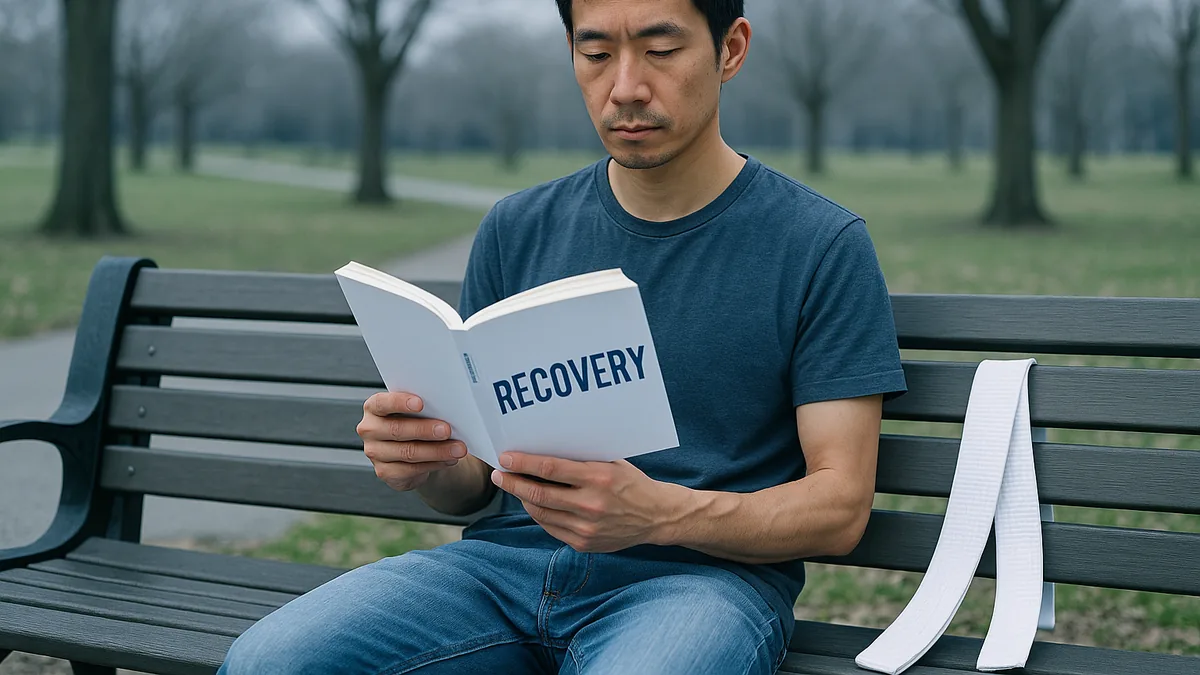
Mental Recovery in Karate: How to Reset After a Bad Session, a Failed Grading, or a Heavy Loss
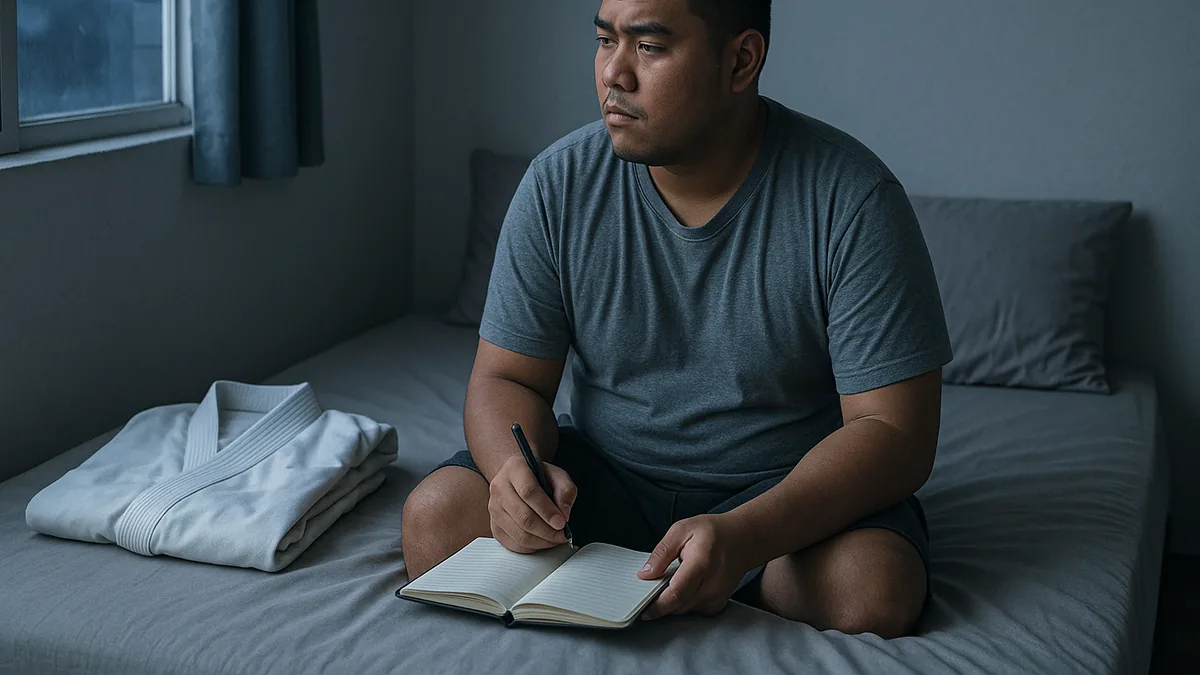
The session ends. You bow out, change, drive home. And the whole way back you’re replaying it. The technique that fell apart under pressure. The grading panel’s face when you blanked on the kata. The point you gave away in the final exchange when you knew exactly what was coming and still didn’t stop it.
Most karateka I’ve trained with are good at pushing through physical pain. We’re not nearly as good at handling the mental aftermath of a bad session. And I’d argue that gap - the space between physical toughness and mental recovery - is where most people quietly plateau without ever understanding why.
I’ve seen students disappear after a failed grading. Not quit outright - just start attending less, training with less intensity, slowly fading. I’ve done it myself. After a competition loss in my early years that I was convinced I should have won, I spent about three weeks going through the motions in the dojo, turning up but not really being there. My instructor at the time said nothing about the competition. He just kept pushing me harder in class, which I resented at the time and understood much later.
What he was doing was giving me something to focus on other than the story I was telling myself about what the loss meant.
The Mistake Most of Us Make First
The most common mistake I see after a setback - and I’ve seen it dozens of times with students I’ve graded and trained alongside - is the attempt to skip the emotional processing entirely and go straight to “fixing the problem.”
You fail a grading, and within 48 hours you’re obsessively drilling the kata section you struggled with. You lose a match and you’re immediately watching footage and building a new game plan. On the surface this looks like dedication. What it actually is, most of the time, is avoidance.
The problem with skipping straight to fixing is that you carry the emotional residue into every rep you do. You’re not drilling with focus - you’re drilling with anxiety. And anxious repetition doesn’t build clean technique. It builds hesitation and second-guessing dressed up as training.
What I tell students now is this: give yourself 24 to 48 hours where you’re not allowed to train the thing that went wrong. Not because rest is magic, but because you need to actually feel the disappointment before you can move past it. Sit with it. Let it be uncomfortable. Name what it actually is - embarrassment, frustration, self-doubt, whatever. You can’t process something you refuse to acknowledge.
This is harder than it sounds. Karate culture doesn’t always make space for this. The ethos of “get back up, keep going” is valuable in the dojo during a session. Applied to mental recovery after a significant setback, it can become a way of suppressing something that needs to come out.
What “Processing” Actually Looks Like
I’m not talking about journaling your feelings for an hour (though if that works for you, fine). I mean something more practical.
After a bad grading or a competition loss, I have a specific routine now. I give myself the evening of the setback to be properly disappointed - no training talk, no analysis, no planning. The next morning I write down three things: what actually happened (not what it means, just the facts), what I was feeling in the moment things went wrong, and one thing I did well that I’m not going to let the outcome erase.
That third one matters more than people think. I’ve noticed that after a setback, the brain tends to retroactively flatten everything - suddenly the whole performance was a disaster, you were never any good, what were you thinking. It’s not accurate. Forcing yourself to identify something real that worked creates a more honest picture to work from.
Then I leave it alone for a day.
This isn’t weakness. It’s the same logic behind active recovery days after hard physical sessions - the recovery is part of the training, not an interruption to it. Mental recovery works the same way. The processing is the work.
Building a Mental Reset Routine
Once you’ve actually processed the emotion - not suppressed it, not wallowed in it, but genuinely moved through it - you need a way to reset your mental state before you go back into the dojo. This is where I see the second common mistake.
Most people walk back into training carrying the identity of “person who failed” or “person who lost.” They don’t mean to. But it shapes everything - the way they hold themselves, how much they commit to techniques, whether they volunteer for sparring or wait to be asked. The dojo picks up on it. Other students pick up on it. And it becomes self-reinforcing.
What I’d recommend - and this is what I’ve done myself after significant setbacks - is a deliberate pre-training reset routine that you do before you even get to the dojo. Not a motivational speech to yourself in the mirror. Something more physical and specific.
Mine involves three things. A short walk, about 15 minutes, where I’m not listening to anything - just moving and letting my mind settle. Before I leave the house, I spend five minutes reviewing what I’m going to work on in the session - specific, technical, achievable. And I set one micro-goal for the session that has nothing to do with the setback. Something I can succeed at today.
The walk matters because it gets you out of your head and into your body before you ask your body to train. You’ll feel the difference - there’s a quality of readiness that comes from being physically present rather than mentally somewhere else entirely. When you arrive at the dojo already in your body, the bow-in actually means something.
Using Visualisation - But Not the Way Most People Do It
Visualisation gets talked about a lot in martial arts circles, and most of the time it’s described in a way that makes it sound passive - lie down, close your eyes, imagine yourself winning. I’ve tried that version. I don’t think it does much.
What actually works, in my experience, is scenario-specific mental rehearsal with an emphasis on the moment just before things went wrong.
Here’s what I mean. If you failed a grading because you blanked on a kata sequence under pressure, don’t visualise yourself performing the whole kata perfectly. That’s too distant from the actual problem. Instead, visualise the specific moment - the panel watching, the pressure building, the point where your mind went - and then rehearse what you’re going to do differently in that exact moment. Feel the breath you’re going to take. Feel your feet on the floor. Feel the first movement of the kata beginning from a place of calm rather than panic.
It feels strange at first. You’re deliberately putting yourself back into the uncomfortable moment rather than skipping to the good part. But the point is to build a new neural pathway through that specific bottleneck, not around it.
I started using this properly after a competition where I kept making the same timing error in the final exchange. I wasn’t visualising the fight - I was visualising the moment just before my opponent launched, and rehearsing the counter I kept missing. Three weeks of that, ten minutes a night. The next competition, the timing was different. Not perfect, but different. The rehearsal had done something.
For grading failures specifically, I’d add one more layer: visualise the panel. Not as judges scoring you, but as senior karateka who want to see you succeed. The relationship you have with authority in your mental rehearsal affects your performance in the actual moment more than most people realise.
Community Perspective
There’s a genuine split in how different dojos handle the mental side of setbacks, and I think it’s worth being honest about it.
Traditional dojo culture - particularly in clubs with a strong Japanese lineage - tends to treat emotional resilience as something you develop through continued training, not something you address directly. The philosophy is essentially: get back on the floor, the training will fix it. I have some sympathy for this view. There’s something to be said for not over-psychologising every bad session.
But I’ve also watched that approach fail students who needed more than just more reps. Students who quietly internalised a failed grading as evidence that they weren’t good enough, full stop - and who trained for another year carrying that belief without anyone ever naming it or challenging it.
The other end of the spectrum - dojos that bring in sports psychology frameworks, talk openly about mental performance, treat visualisation as a structured practice - sometimes produces students who are very good at talking about their mental state and less good at just getting on with training under pressure.
I think the balance most practitioners land on with experience is this: you don’t need to make a big thing of the mental side, but you do need to acknowledge it exists and give it some structure. A reset routine doesn’t have to be elaborate. It just has to be intentional.
The Longer Game
One thing it took me years to understand - genuinely years, not months - is that setbacks in karate are not interruptions to your development. They are your development.
The gradings I passed easily taught me almost nothing about myself. The one I failed at brown belt, in front of people I respected, in a kata I had trained for months - that one changed how I trained. Not because failure is romantic or character-building in some abstract sense, but because it showed me exactly where my preparation had been shallow and my confidence had been covering for it.
I was drilling the kata. I wasn’t training under pressure. There’s a difference, and I didn’t understand it until the pressure arrived and the drilling turned out to be insufficient.
If you’re dealing with overtraining on top of a mental setback - which happens more than people admit, because anxious training often means excessive training - the physical and mental recovery need to happen together. You can’t think your way back to sharpness if your body is running on empty, and you can’t train your body back to sharpness if your head isn’t in it.
Both matter. Both take time. Neither is a sign of weakness.
Key Takeaways
- Give yourself 24 to 48 hours after a significant setback before you start drilling the thing that went wrong - anxious repetition builds anxious technique, not clean technique
- Write down what actually happened, what you felt, and one thing you did well - the third one is the most important and the easiest to skip
- Build a pre-training reset routine that gets you into your body before you ask your body to perform - a walk, a specific focus for the session, one achievable micro-goal
- Use visualisation to rehearse the specific moment things went wrong, not the whole performance done perfectly - you’re building a new path through the bottleneck, not around it
- Distinguish between processing emotion and wallowing in it - the goal is to move through it with enough honesty that you’re not carrying it into your next session unexamined
- The setbacks that change how you train are more valuable than the sessions that confirm what you already know - the failed grading taught me more than the ones I passed
The weekly digest
New karate articles, once a week
One email every week with everything new on Karate Lifestyle. No spam; unsubscribe in one click.
We'll email you to confirm. See our privacy policy.