Foot and Toe Injuries in Karate: The Ones You Keep Taping Over and the Ones You Shouldn't Ignore
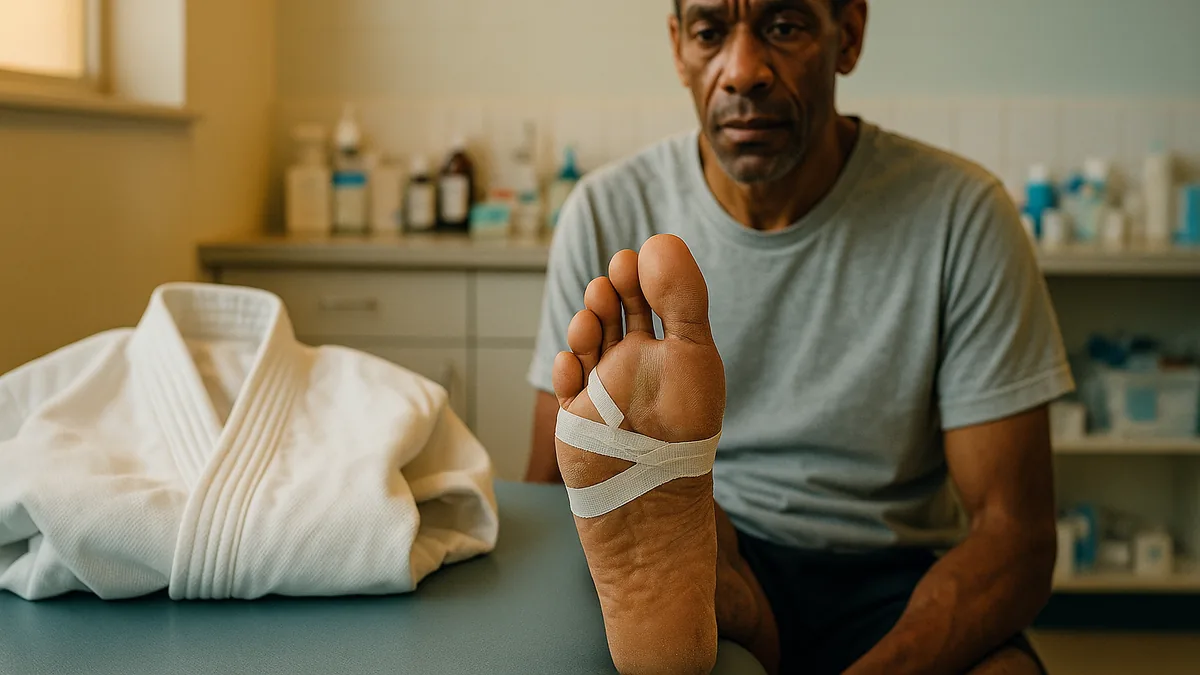
Every dojo has that one student who’s been taping the same two toes for six months. You see them at the start of class, methodically wrapping, and you think - how long has that been going on? When you ask, they say “oh it’s fine, just a bit sore.” That’s the answer that should make you stop and pay attention.
I’ve been that person. I’ve also watched students train through things they absolutely shouldn’t have, and I’ve watched others sit out for weeks over something that needed three days of rest and some ice. After fifteen years of this, the thing I keep coming back to is that most karateka are terrible at reading their own feet. We’re trained to push through discomfort, which is genuinely useful in training - but it makes us catastrophically bad at distinguishing “this is manageable soreness” from “this is structural damage that’s getting worse every time you step on the mat.”
This is what I’ve learned about telling the difference.
Why Feet Take Such a Beating in Karate
Bare feet on a hard floor, pivoting, stomping, kicking, stepping through stances - your feet are doing constant work that most shoes would normally absorb. The first thing I tell new students is that their feet are going to hurt for the first few months, full stop. The skin toughens, the joints adapt, the small muscles that have never had to work this hard start to develop. That initial soreness is normal.
The problem is that “normal training soreness” and “early-stage injury” can feel remarkably similar, especially to someone who’s still figuring out what their body does under training load. What I’ve noticed over years of watching beginners is that they either ignore everything (because they’ve been told to be tough) or they panic at every bit of discomfort. Neither approach serves them well.
The feet are complicated. You’ve got 26 bones, 33 joints, and more than a hundred muscles, tendons and ligaments doing coordinated work. When something goes wrong, the pain doesn’t always point directly to the source. A stress fracture in a metatarsal can feel like general foot ache. A sprained ligament can feel like a bruise. This is why “it’s probably nothing” is sometimes right and sometimes very wrong.
The Ones You Can Train Through (Carefully)
I’m not going to pretend every foot complaint needs a trip to A&E. Some things are genuinely manageable with sensible precautions.
Bruised toes from blocking kicks or catching your foot on a partner’s knee are a fact of life. The toe is tender, maybe a bit swollen, but you can bend it reasonably well and the pain doesn’t get significantly worse when you load it. Tape it to the neighbouring toe for support, monitor it, train at reduced intensity if needed. This is the classic “buddy tape” situation and it works fine.
Skin issues - blisters, mat burns, calluses splitting - are maintenance problems. Keep the skin in reasonable condition, use tape where needed, don’t let blisters get infected. Nothing complicated.
Minor sprains of the smaller toe joints, where you’ve bent a toe awkwardly and there’s localised soreness but no significant swelling and you can bear weight without real pain - these often settle within a week with care. I’d still recommend getting anything that swells noticeably checked, but mild sprains in the outer toes are common and usually manageable.
The key word in all of this is monitor. You tape it, you train sensibly, and you watch whether it improves. If it’s not improving over a week to ten days, that’s telling you something.
The Ones You Shouldn’t Be Taping Over
This is where I see the real mistakes happen. Not from laziness - from genuine misunderstanding of what the pain is telling them.
Suspected Broken Toes
I used to think a broken toe was obvious. Turns out it isn’t. I’ve seen students train for three weeks on a fractured little toe because it “didn’t hurt that much” and the swelling went down. The problem is that an undiagnosed fracture that you keep loading doesn’t heal cleanly. You can end up with a malunion - where the bone heals in the wrong position - and that creates long-term problems with how your foot moves and how you stand in stance.
The signs that should stop you training and get you to a clinic: significant bruising that spreads across the foot (not just around the toe), swelling that doesn’t reduce meaningfully within 24-48 hours, pain that’s sharp and specific when you press directly on the bone (not the joint, the bone itself), and any visible deformity or the toe sitting at a wrong angle. If you’re ticking two or more of those boxes, tape isn’t the answer.
Metatarsal Stress Fractures
This one I feel strongly about because I’ve watched it derail two students who should have caught it much earlier. A stress fracture doesn’t happen from one impact - it’s cumulative damage from repetitive loading, and it’s particularly common in karateka who’ve recently increased their training volume.
The pattern is usually this: a dull ache on the top of the foot, somewhere along the shaft of one of the middle metatarsals, that feels worse during and after training and better with rest. Early on, it’s easy to dismiss as general foot fatigue. The thing that should flag it is that it keeps coming back, it doesn’t fully resolve with rest, and it localises - you can press on a specific spot and reproduce the pain.
If you’re seeing this pattern, stop training on it and get it imaged. A stress fracture that you keep loading becomes a complete fracture. I’ve seen that happen and it’s months of recovery instead of weeks.
Plantar Fasciitis That’s Being Ignored
The classic presentation is sharp heel pain first thing in the morning, or when you stand up after sitting for a while. It often eases once you’ve been moving for a bit, which is exactly why people talk themselves into training through it. “It warmed up, I’m fine.”
You’re not fine. You’re loading an already-inflamed structure repeatedly, and plantar fasciitis that gets ignored and trained through can become genuinely chronic and difficult to shift. I’d rather a student took two weeks off early than spend six months managing something that got out of hand.
The ankle sprains in karate article covers some relevant rehab principles that apply here too - the general lesson being that soft tissue injuries need actual recovery time, not just pain management while you keep training.
The Taping Conversation
I want to be direct about this because I think there’s a culture problem in some dojos around tape. Tape is useful. I use it, I recommend it for appropriate injuries, and there’s real skill in taping well. But I’ve noticed that tape has become a kind of psychological permission slip - if you’ve taped it, you’ve “dealt with it” and you can train. That’s not what tape does.
Tape provides support and compression. It can reduce pain. It does not accelerate healing, it does not protect a fracture from further damage, and it absolutely does not tell you whether what you have is something that should be rested. The fact that you can train with it taped is not evidence that training with it taped is a good idea.
What I tell students is this: tape is for injuries you’ve already assessed and decided are safe to train with. It’s not an assessment tool. If you’re taping something because the pain is bad enough that you can’t train without tape, that’s a signal to find out what you’re dealing with before you decide whether to train at all.
What Actually Changes Your Understanding
As a white belt I thought foot injuries were just part of the deal - you tape them and get on with it. By the time I was brown belt I’d seen enough people train through things they shouldn’t have to understand that there’s a difference between toughness and poor injury management. They look similar from the outside. The outcomes are very different.
The thing that actually changed my understanding was watching a senior student - someone I respected enormously - train for months on what turned out to be a stress fracture in his second metatarsal. He was tough, he was committed, and he made it significantly worse. He was out for four months instead of six weeks. That’s not dedication, that’s a miscalculation.
Good injury management is part of the discipline, not a contradiction of it. The same attention you bring to your technique should go into reading your body. If you’re interested in how to structure your training load to reduce the cumulative stress that leads to these injuries in the first place, the piece on deload weeks for karateka is worth reading - managing volume intelligently is one of the better preventive tools you have.
Common Mistakes I Keep Seeing
Waiting too long to get something looked at. The most consistent pattern I see is students waiting until something is seriously bad before seeking any kind of assessment. Get things checked early. A GP appointment or a sports physio visit when something’s been sore for two weeks is not an overreaction.
Training through something because the session is important. Gradings, competitions, important classes - I understand the reasoning. But I’ve seen students make injuries significantly worse in exactly these moments because the adrenaline masks pain and they push harder than they should. One session is never worth a month of recovery.
Assuming it’s the same injury as last time. I’ve watched students self-diagnose based on previous experience and get it wrong. Similar location, similar feeling - different problem. Don’t assume.
Ignoring referred pain patterns. Foot pain isn’t always about the foot. I’ve seen hip and lower back issues present as foot discomfort, and vice versa. If your foot pain doesn’t make anatomical sense - if it’s vague, shifting, or accompanied by other symptoms - that’s worth a proper assessment. The article on back pain in karate touches on how interconnected these things can be.
This is also worth reading alongside the finger and hand injuries from blocking piece - the same pattern of ignoring and taping applies to hands and the same principles about when to actually seek help hold true.
Community Perspective
There’s a genuine split in how different dojos approach this, and I think it’s worth being honest about it. Traditional dojo culture tends toward “train through it, you’ll be fine” - and some instructors actively discourage students from sitting out or seeking medical advice for what they consider minor injuries. I’ve trained in those environments and I understand the logic: toughness is developed partly by training when you don’t feel like it.
But I’ve also seen the cost of that culture when it’s applied without nuance. Stress fractures that became complete fractures. Plantar fasciitis that became chronic. Students who quit the art entirely because they trained through something that should have had six weeks of rest and ended up needing six months.
I think the more experienced you get, the better you are at reading the difference - but beginners and even intermediate students don’t have that calibration yet. For them, the default should lean toward caution and assessment, not toward taping and pushing through. That’s my position and I’ll hold it even when it’s unpopular with more traditionally-minded instructors.
Key Takeaways
- If you’ve been taping the same injury for more than ten days without clear improvement, stop treating it as maintenance and find out what it actually is.
- Significant bruising spreading across the foot, pain that’s sharp and specific on the bone (not the joint), and swelling that doesn’t reduce within 48 hours are signs to stop training and get assessed.
- Tape is a support tool for injuries you’ve already assessed - it is not a substitute for assessment.
- Metatarsal stress fractures feel like general foot fatigue early on. The tell is that the pain localises, keeps returning, and you can reproduce it by pressing on a specific point on the bone.
- One training session is never worth a month of recovery. This is true even when the session feels important.
- Managing your overall training load - how often you train, how hard, and when you rest - is one of the best preventive tools you have. See how long to rest between karate training sessions for practical guidance on structuring recovery.
The weekly digest
New karate articles, once a week
One email every week with everything new on Karate Lifestyle. No spam; unsubscribe in one click.
We'll email you to confirm. See our privacy policy.