Why Karateka Get Injured in the Warm-Up (And How to Stop It Happening)

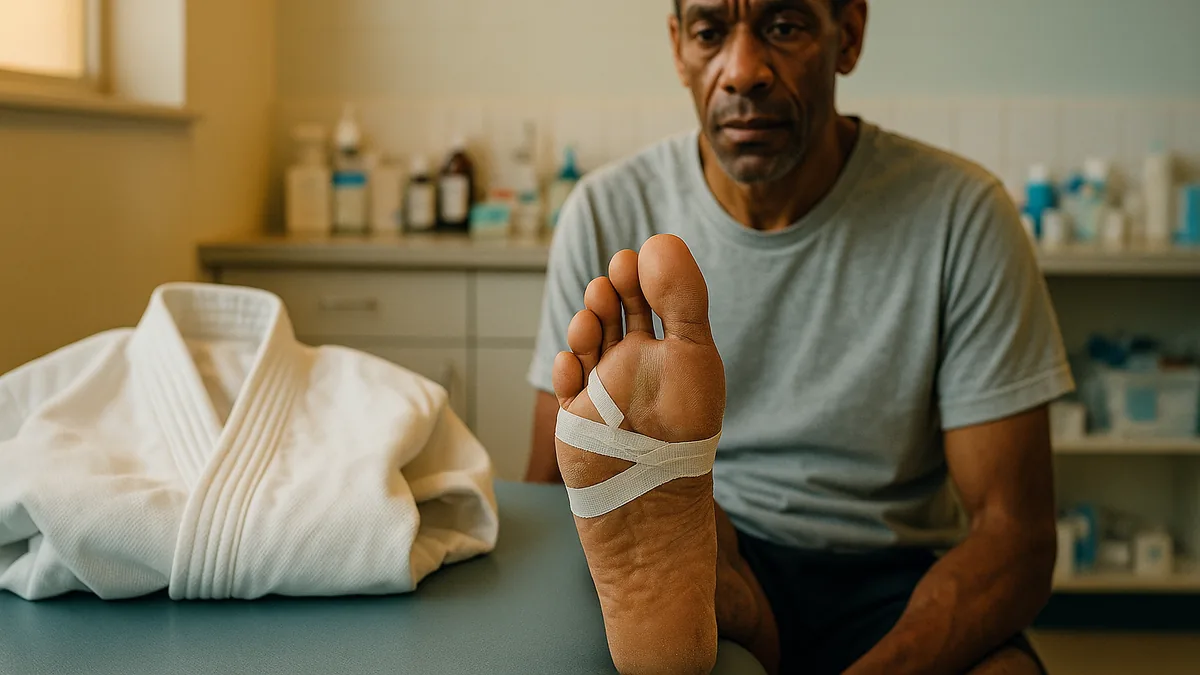
I’ve watched a lot of warm-ups over the years. Different dojos, different instructors, different styles - and the same injuries keep happening. Pulled hamstrings at the start of class. Tweaked groins during high kicks. Sore shoulders that nobody can trace back to a specific moment. When you ask the person what happened, the answer is almost always some version of: “I don’t know, it just went during the warm-up.”
That’s not bad luck. That’s a bad warm-up.
The Mistake That Costs You the Whole Session
The most common thing I see is people treating the warm-up as something to get through so they can start the real training. Static stretching cold muscles, bouncing into splits, cranking their neck around before their body temperature has moved even one degree. I’ve seen black belts do this. People who have been training for years, who know better, who would correct a white belt doing exactly the same thing.
The reason it keeps happening is that most of us learned to warm up by watching whoever was running the class, and a lot of those people were working from habit rather than understanding. My first instructor used to start every session with two minutes of jogging on the spot and then straight into deep stretches. Nobody questioned it. We just did it. I pulled my hamstring in a warm-up at my second dojo and spent three weeks barely able to train. That was the moment I started actually thinking about what warm-ups are for.
What a warm-up is supposed to do is raise core temperature, increase blood flow to the muscles you’re about to use, and take your joints through progressively larger ranges of motion. Static stretching a cold muscle doesn’t do any of that. You’re not lengthening the muscle - you’re fighting it. The tissue is stiff, circulation is low, and you’re forcing it into a stretched position it hasn’t earned yet. You’ll feel it resisting. That resistance is information. The problem is that people push through it because they think that’s what stretching is supposed to feel like.
It isn’t. That feeling is the muscle telling you it’s not ready.
Why Dynamic Movement Changes Everything
I switched to dynamic warm-ups about eight years ago and I haven’t looked back. The difference in how my body feels going into the first technique of class is significant enough that I can’t understand why anyone would do it differently.
Dynamic stretching - leg swings, hip circles, arm rotations, walking lunges, controlled kicks through increasing range - does what static stretching can’t. It warms the tissue while moving it. You’re not holding a position and hoping the muscle relaxes. You’re taking it through its range repeatedly, and each repetition it moves a little more freely. By the time you’re at the fifth or sixth leg swing, you’ll feel the hip loosening up, the movement becoming fluid rather than forced. That’s the sensation you’re looking for before you start throwing techniques.
What I tell students who are new to this approach is to think of it less like stretching and more like a conversation with your body. You’re asking it to move, seeing what it gives you, and gradually asking for more. Not demanding it all at once.
A good dynamic warm-up for karate doesn’t need to be complicated:
- Light jogging, skipping or shadow movement for 3-5 minutes to raise temperature
- Neck rolls and shoulder circles - slow and controlled, not aggressive
- Hip circles and figure-eights - big movements, both directions
- Leg swings forward and back, then lateral - using a wall for balance, controlling the height
- Walking lunges with a torso twist
- Controlled roundhouse kicks at 50%, gradually increasing
- Wrist and ankle rotations - these get ignored constantly and they matter
That sequence takes about ten minutes. Ten minutes is not a long time. But I’ve been in dojos where the warm-up is three minutes of jogging and then straight into partner drills, and I’ve watched people limp out of those sessions.
If you want to understand more about why mobility work specifically matters for karate - not just general flexibility - the article on mobility vs flexibility for karate recovery is worth reading. The distinction between the two is something most of us don’t think about until we’re already injured.
The Grading Day Problem
I want to talk about a specific scenario because I think it illustrates something important. Grading days.
I’ve seen more injuries happen before and during gradings than in almost any other context. The reason is nerves. When people are anxious, they rush the warm-up. They want to feel ready so they move faster, stretch harder, try to force their body into a state of readiness that it hasn’t earned. I’ve watched students who have trained for months throw all of that preparation away in fifteen minutes by going at their warm-up like they’re trying to make up for lost time.
One student I coached - solid technique, genuinely ready for his brown belt - pulled his groin doing a high kick in the first five minutes of the pre-grading warm-up. He’d done that kick hundreds of times in training. The difference was that he skipped his usual build-up and went straight for height because he was nervous and wanted to prove to himself he could do it. He passed the grading but in real discomfort, and it affected his performance.
The correction that works in this situation is to have a non-negotiable warm-up routine that you follow regardless of context. Same sequence, same timing, same progression. Not because it’s ritual, but because your body doesn’t know it’s grading day. It just knows whether it’s warm or not.
Listening to Your Body Is a Skill, Not a Feeling
There’s a phrase that gets used a lot - “listen to your body” - and I think it’s almost useless without context. Most people hear it as permission to stop when something feels hard. That’s not what it means.
What it actually means is learning to distinguish between different types of physical feedback. Muscle fatigue is different from joint pain. The discomfort of a muscle being stretched is different from the sharp signal of something going wrong. Tightness that eases as you warm up is different from tightness that gets worse.
I used to think I was good at this. Then I trained through a knee issue for about four months because I kept telling myself it was just tightness. It wasn’t. I eventually had to take six weeks off - time I wouldn’t have lost if I’d paid attention earlier. That experience changed how I approach any signal from my body during warm-up. Discomfort that improves as I move through the warm-up? Fine, keep going. Discomfort that stays the same or increases? I adjust. I drop the range of motion, I modify the drill, or I tell the instructor I’m working around something today.
What I tell students is to check in at three points during the warm-up: after the initial cardio, after the joint mobility work, and after the first few light techniques. Not to look for reasons to stop - to assess what state they’re in and adjust accordingly. If your hip is complaining after leg swings, you don’t stop training. You work within a range that doesn’t aggravate it and you don’t push for height in your kicks that session. That’s not weakness. That’s how you stay on the mat long-term.
This kind of body awareness also connects to how you manage training load overall. If you’re consistently arriving at class already fatigued, your warm-up becomes less effective and your injury risk goes up. Active recovery days and how you manage the days between hard sessions matters more than most people realise.
Community Perspective
There’s a genuine split in how different dojos approach warm-ups, and it mostly comes down to tradition versus adaptation.
Some instructors - particularly in more traditional associations - see a structured, fixed warm-up as part of the discipline of training. You do what the dojo does. Changing it feels like questioning the method. I understand that view. There’s value in consistency and in learning to follow a structure before you start customising it.
But I’ve also trained with instructors who have updated their approach based on what they’ve seen work and what they’ve seen cause injuries. The best warm-up I’ve ever experienced was led by a 6th dan who had clearly thought hard about what his students needed physically, not just what looked correct. He’d kept the traditional structure but replaced static holds with dynamic movement and added specific joint preparation for the techniques they were going to train that session. It felt intentional rather than habitual.
The honest answer is that most dojo warm-ups were designed by someone who learned them from someone else, and they haven’t been critically examined since. That doesn’t make them wrong - but it does mean you should be thinking about whether yours is actually preparing your body or just filling time before class starts.
Key Takeaways
-
Static stretching cold muscles causes injuries - if your warm-up starts with deep static holds before you’ve raised your temperature, you’re working against your body, not with it.
-
Dynamic movement is the foundation - leg swings, hip circles, controlled kicks at reduced intensity. The goal is progressive range of motion, not maximum range from the first repetition.
-
Have a non-negotiable routine for high-pressure sessions - gradings, competitions, seminars. Nerves make people rush. A fixed sequence removes the decision-making.
-
Learn to distinguish between types of discomfort - tightness that eases is different from pain that persists. Check in with yourself at three points during the warm-up and adjust accordingly.
-
Wrists and ankles get ignored and they matter - if you’re punching and kicking, these joints need preparation. Two minutes of circles and rotations before you load them is not optional.
-
Your warm-up quality affects your recovery - a proper warm-up means your body is working efficiently from the first technique, which reduces the cumulative load that leads to overuse injuries. If you’re already dealing with those, overtraining in karate is worth reading before your next session.
The weekly digest
New karate articles, once a week
One email every week with everything new on Karate Lifestyle. No spam; unsubscribe in one click.
We'll email you to confirm. See our privacy policy.