Mobility vs Flexibility for Karate Recovery: Why the Difference Matters
I’ve watched students stretch for twenty minutes before class and still pull a hamstring in the first round of kumite. And I’ve watched others who barely touch their toes do a clean jodan mawashi-geri without blinking. For a long time that confused me. Then I started paying closer attention to what they were actually doing before training, and the difference became obvious.
One group was stretching. The other was moving.
Those aren’t the same thing, and if you’re treating them like they are, you’re leaving recovery capacity on the table - and probably picking up injuries you could avoid.
What We Actually Mean When We Say These Words
I want to be clear that I’m not going to give you a textbook breakdown here. But I do need to establish what I’m talking about because I’ve had this conversation in the dojo many times and people are genuinely using these terms interchangeably when they shouldn’t be.
Flexibility is about the length of your muscles and connective tissue. It’s passive. You can have excellent flexibility and still move like a rusted hinge if your nervous system hasn’t learned to control that range. I’ve seen students who can do a full front split sitting on the floor but can’t execute a clean chudan mae-geri above the waist because their hip flexors and glutes don’t have the strength to use that range dynamically.
Mobility is about what your joints can do under load, with control, through a full range of motion. It’s active. It’s your body knowing how to move, not just how far it can be pushed. When I throw a high yoko-geri and feel my hip fully loaded, controlled, and stable at the top of the chamber - that’s mobility at work. When I’m just passively hanging in a stretch, that’s flexibility.
The reason this matters for recovery specifically is that they break down differently under training stress, and they need different things to recover.
How Training Stress Hits Each One
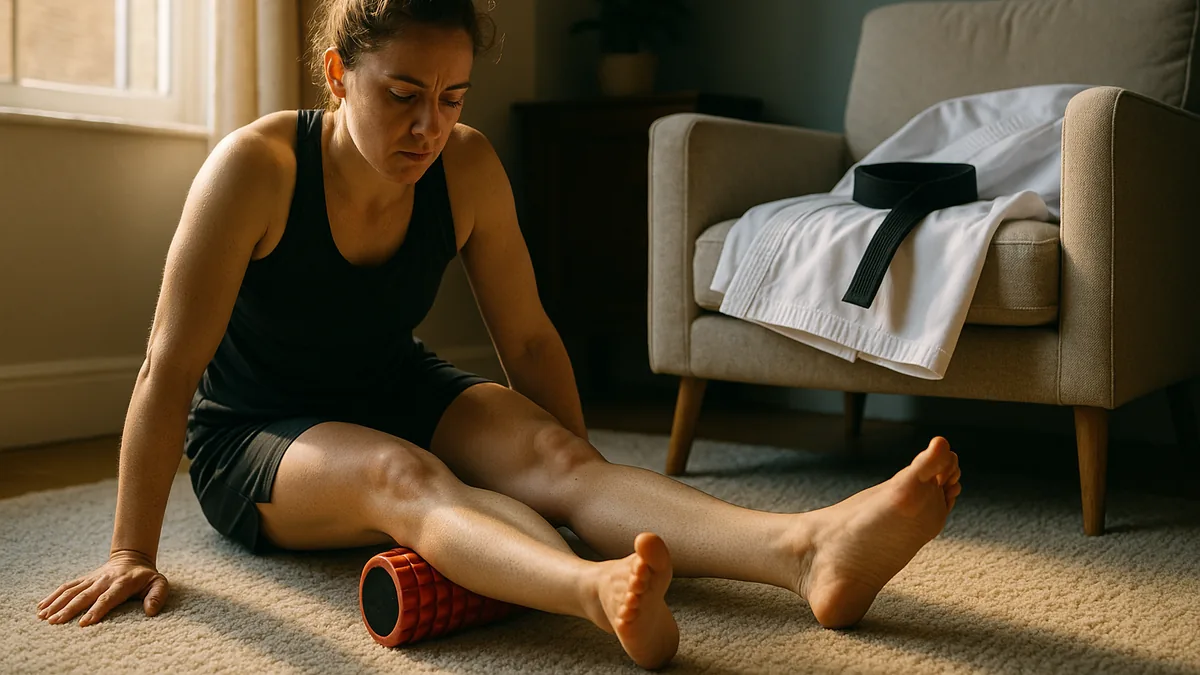
After a hard session - especially one with a lot of kicking, ground fighting, or heavy bag work - your muscles are fatigued and often slightly shortened from repeated contraction. That’s a flexibility issue. The tissue needs to return to its resting length, and if it doesn’t, you accumulate tightness over weeks and months. I’ve seen senior students in their 40s who’ve trained for decades but never addressed this end up with chronic hip flexor and lower back tightness that limits their technique far more than their fitness does.
But here’s what I’ve noticed with mobility: it degrades faster when you stop training than flexibility does. A student who takes two weeks off will often come back and find their passive flexibility is roughly where they left it. Their mobility - the ability to move through that range with control and speed - drops noticeably. They feel unstable in their stances, their kicks feel disconnected, and their transitions between techniques lose crispness.
That’s because mobility is partly a neurological skill. Your nervous system has to stay practised at controlling those ranges. When you stop moving through them, that control softens.
The Recovery Mistake I See Most Often
The most common mistake I see is practitioners treating their post-training routine as purely a flexibility session. They finish class, do some static stretching, and call it done. There’s nothing wrong with static stretching after training - I do it myself - but if that’s all you’re doing for recovery, you’re only addressing one half of the equation.
What’s missing is controlled active movement. And I don’t mean more training. I mean deliberate, slow, loaded movement through the ranges you just worked. Hip circles with a pause at end range. Slow single-leg deadlifts that load the posterior chain through full extension. Deep squat holds where you’re actively pressing your knees out rather than just sitting there.
The correction that actually works here is adding ten to fifteen minutes of this kind of work on your lighter recovery days - not after hard sessions when you’re already depleted, but on the days in between. You’re essentially reminding your joints what they can do, keeping the neurological pathways active without creating more fatigue.
My instructor used to say “stretch to recover, move to stay ready.” I thought that was just a saying until I had a six-week period where I was training five days a week and only doing static work afterward. By week four my kicks felt like I was fighting through mud even though my passive flexibility hadn’t changed. I added two short mobility sessions a week and within ten days the crispness came back. That was the thing that changed my understanding - it’s not just about tissue length, it’s about your body staying practised at using the range it has.
What This Looks Like in Actual Karate Contexts
Let me be specific because general advice is useless here.
Grading week: In the days leading up to a grading, I’d recommend pulling back on intense flexibility work and prioritising mobility maintenance. Your body doesn’t need to get more flexible in three days. It needs to stay sharp and controlled. Short hip mobility circuits, slow deliberate kicking practice at 60% intensity, and dynamic warm-up patterns keep you primed without creating soreness. If you go hard on static stretching right before a grading, you can actually temporarily reduce the reactive stiffness in your muscles that helps generate power - you’ll feel looser but hit softer.
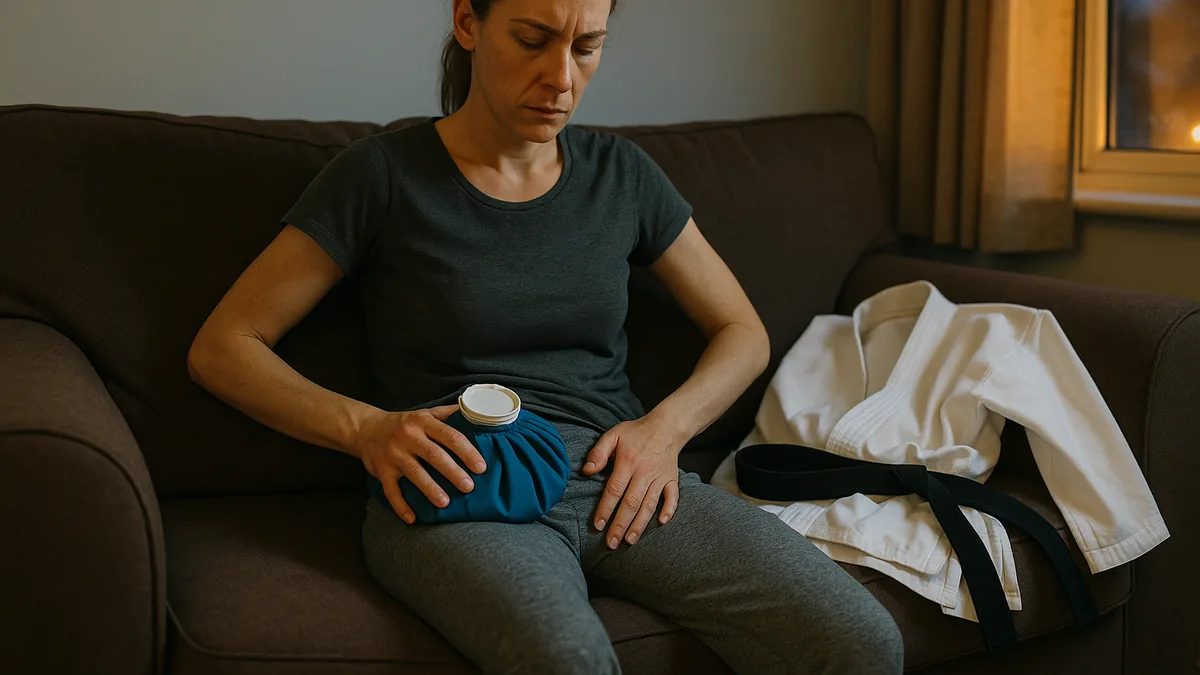
After a heavy sparring session: This is where static flexibility work earns its place. Your hips, groin, and hip flexors have been working hard and contracting repeatedly. Long holds - two minutes or more in positions like a low lunge or supine hip stretch - help the tissue decompress and return to resting length. This is genuine recovery, not just ritual.
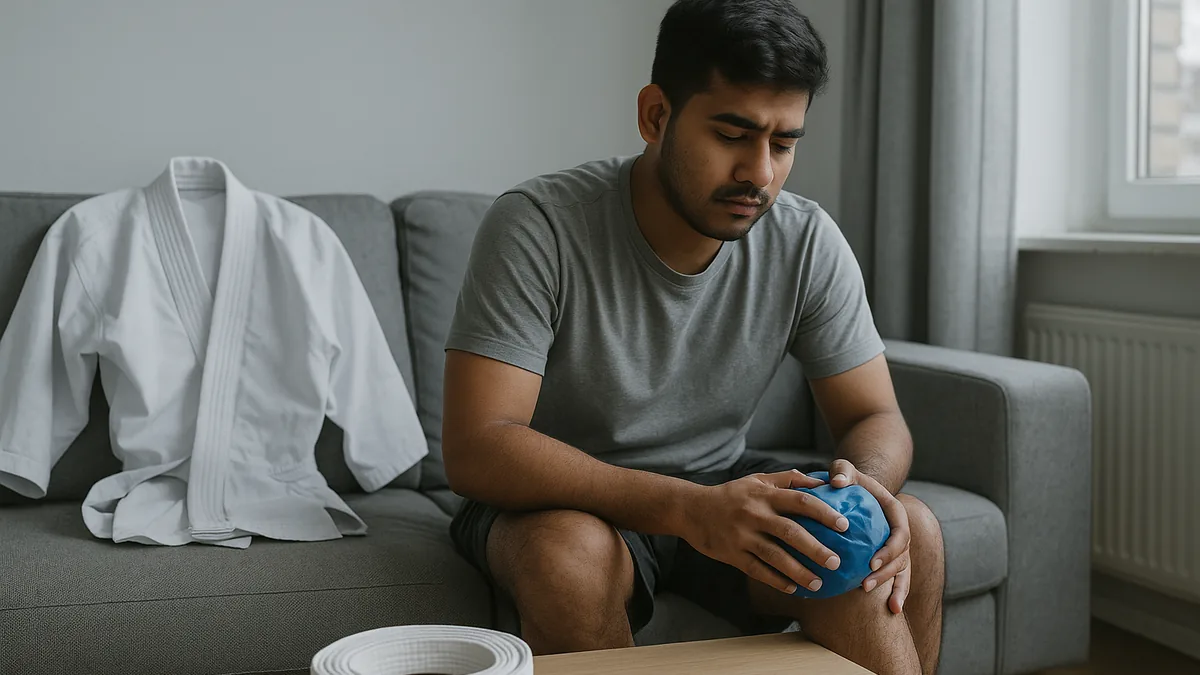
Coming back from a break or minor injury: Mobility work first, always. Before you try to reclaim lost flexibility, make sure your joints are moving safely through a controlled range. I’ve seen students come back from a knee injury and immediately go back to deep static stretching, which puts passive load on a joint that isn’t yet stable. Slow, controlled active movement - leg swings, supported single-leg work, shallow squat patterns - rebuilds the neuromuscular control before you start pushing tissue length.
For more on managing the injury side of this, Preventing Common Karate Injuries covers the specific patterns I see come up repeatedly and what actually helps.
Building Both Into Your Recovery Week
I think the biggest difference between practitioners who stay injury-free and those who accumulate a list of chronic niggles is not training volume - it’s how they structure the days between sessions. Most people either do nothing or try to stretch everything and call it recovery. Neither is optimal.
Here’s how I’d structure it if you’re training three to four times a week:
- Day after hard training: Light static flexibility work, focusing on whatever felt tight. Hip flexors, hamstrings, thoracic spine. Hold positions for time, breathe into them, don’t rush.
- Middle recovery day: Active mobility work. This is the controlled movement session. Not stretching, not training - deliberate joint loading through range. Fifteen to twenty minutes is enough.
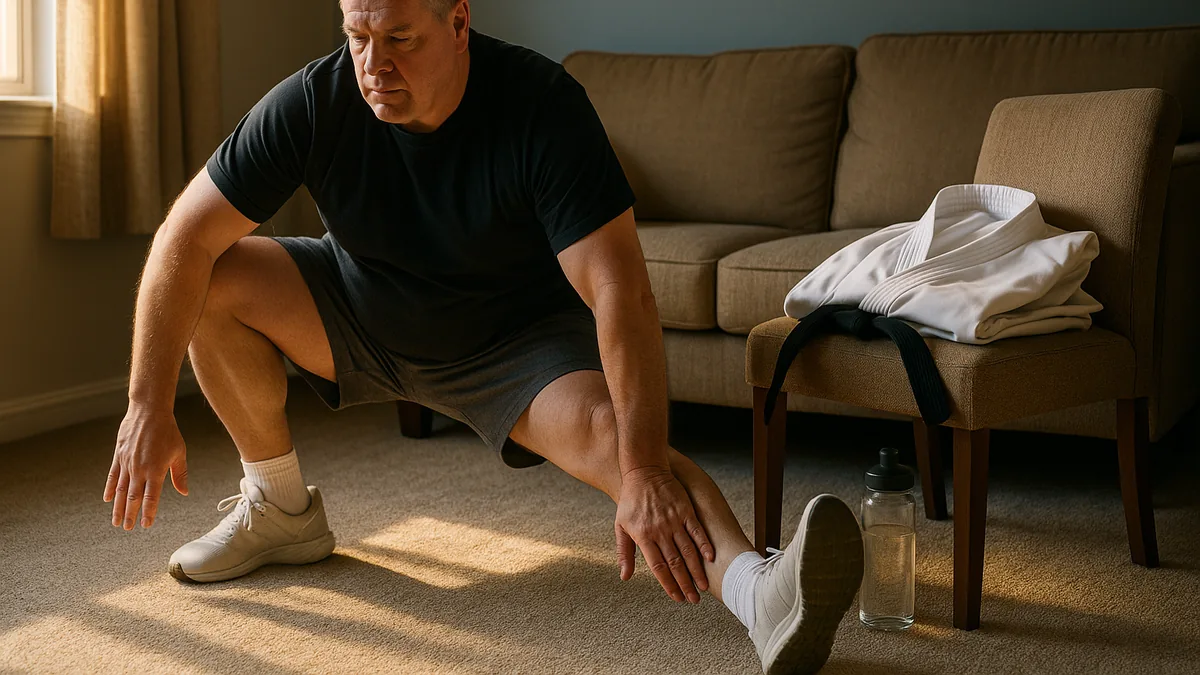
- Day before training: Dynamic mobility as part of your pre-training prep. Leg swings, hip rotations, shoulder circles, slow chambered kicks. You want your nervous system activated and your joints warm, not your muscles lengthened.
Your warm-up routines for karate training should already be doing some of this work - but the warm-up is not a substitute for dedicated recovery mobility work on off days. They serve different purposes.
If you’re also using things like ice baths or cold exposure as part of your recovery stack, it’s worth reading Cold Exposure and Ice Baths for Karate Recovery to understand how temperature affects both tissue recovery and neurological readiness, because the timing matters more than most people realise.
The Flexibility Side Deserves More Respect Than It Gets
I want to push back slightly on a trend I’ve noticed in the last few years where mobility has become the fashionable thing and static flexibility work gets dismissed as old-fashioned or even counterproductive. Some of that criticism is valid in specific contexts - static stretching before explosive training, for instance, is genuinely not ideal. But the overcorrection has led to students who barely stretch at all and wonder why they’re chronically tight.
Flexibility work done at the right time - after training, on recovery days, as a deliberate decompression practice - is genuinely valuable. For more on what actually matters in terms of flexibility development for karate specifically, Flexibility for Karate: What Actually Matters goes deeper into this than I can here.
I prefer to think of them as two tools with different jobs. You wouldn’t use a hammer to do a screwdriver’s work. Static flexibility and active mobility both belong in a serious practitioner’s recovery toolkit - the skill is knowing when to use which one.
Community Perspective
This is one of those topics where you’ll get genuinely different answers depending on who trained you and where. Traditional dojos - particularly those with a strong Japanese or Okinawan lineage - tend to emphasise flexibility as the foundation, with long post-class stretching sessions that are almost ritualistic. The logic is sound: flexibility is a long-term investment that compounds over years of training.
More sports-science-influenced clubs and competition-focused dojos have largely shifted toward mobility-first thinking, treating static stretching as a recovery tool rather than a performance tool. Younger coaches especially tend to favour this approach.
I’ve trained in both environments and my honest view is that neither has it completely right. The traditional approach undervalues the neurological component of joint control. The modern approach sometimes dismisses flexibility work that has genuinely served practitioners well for decades.
What I’ve found changes with experience is that white and yellow belts almost always need more flexibility work - they simply don’t have the range yet. By brown and black belt level, the limiting factor is usually mobility and control, not tissue length. So the right emphasis probably shifts as you advance, which is why there’s no single answer that works for everyone.
Key Takeaways
- Flexibility and mobility are not the same thing. Flexibility is passive tissue length; mobility is active, controlled range under load. Your recovery needs both, but at different times.
- Static stretching belongs after training and on recovery days, not before explosive work. Doing it before kumite or kihon can temporarily reduce the reactive stiffness that helps generate power.
- Mobility degrades faster during breaks than flexibility does. If you’ve had time off, prioritise controlled active movement before you start pushing tissue length again.
- The most effective recovery week includes at least one dedicated mobility session - not more training, not more stretching, but deliberate slow movement through the ranges your karate demands.
- Coming back from injury, always restore joint control before reclaiming flexibility. Passive loading on an unstable joint is how minor injuries become chronic ones.
- Your warm-up handles pre-session preparation. Your recovery sessions handle tissue repair and joint maintenance. Don’t confuse the two or expect one to do the other’s job.
For a broader look at how all of this fits into a complete recovery approach, Recovery for Karate Practitioners is worth reading alongside this - and don’t overlook Sleep and Karate Performance either. Most practitioners optimise everything except the thing that matters most.
The weekly digest
New karate articles, once a week
One email every week with everything new on Karate Lifestyle. No spam; unsubscribe in one click.
We'll email you to confirm. See our privacy policy.