Hip Flexor Pain in Karate: Why Kicking-Heavy Training Destroys Them and How to Manage the Load
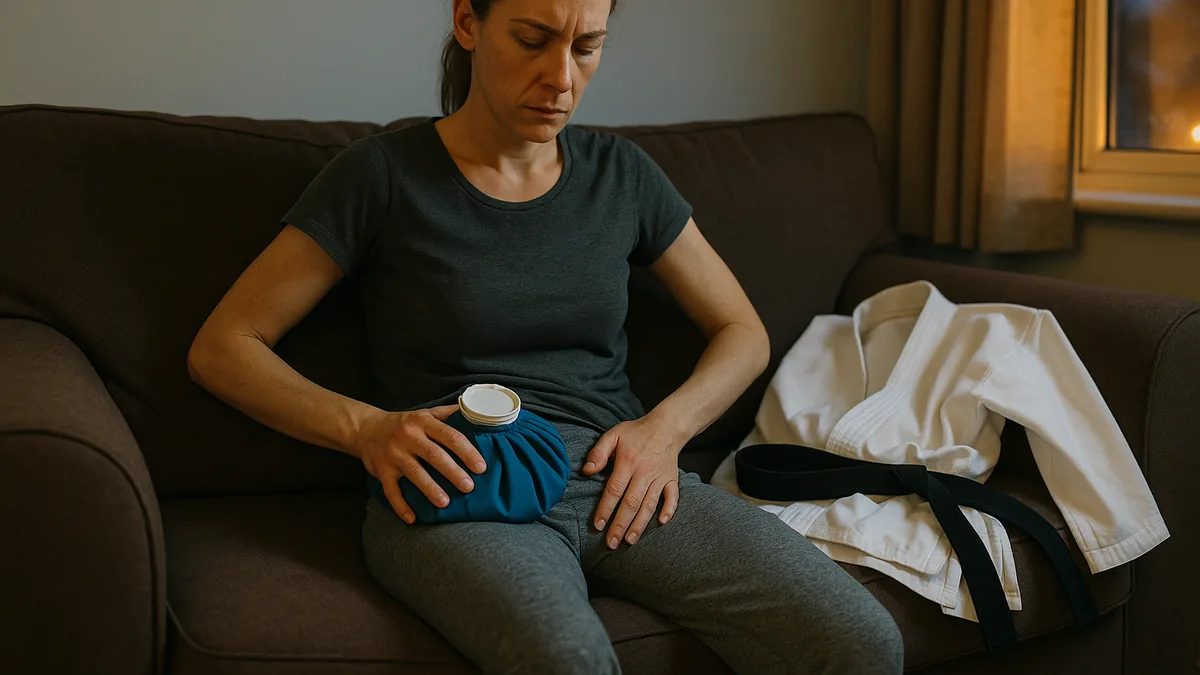
When Your Hip Flexors Start Screaming, Your Training Load Is Already Telling You Something
Three weeks out from a grading, one of my students - a solid green belt with genuinely good technique - came to me after class and said her hip felt “weird.” Not painful exactly, just tight and pulling at the front. I asked her how many kicks she’d done that week. She thought about it. Between class, her home practice, and the extra sessions she’d added for grading prep, she reckoned somewhere around four hundred.
That’s the number that breaks people. Not immediately, not dramatically - just a slow, grinding accumulation that turns into a pain you can’t train through.
Hip flexor injuries are probably the most underestimated overuse problem in karate, and they follow a pattern I’ve seen so many times I could predict it. Practitioner gets motivated - grading, competition, new technique they want to nail - volume goes up fast, recovery stays the same, and somewhere around week three the front of the hip starts complaining. By week five they’re limping through class and wondering what happened.
What happened is physics. And anatomy. And the fact that nobody told them what they were actually loading every time they threw a kick.
What You’re Actually Doing to Your Hip Flexors When You Kick
The hip flexors aren’t one muscle. That’s the first thing worth understanding. When we talk about hip flexor pain, we’re usually talking about the iliopsoas - which is actually two muscles, the iliacus and the psoas major, that merge into a single tendon - and the rectus femoris, which is the front head of your quad but also crosses the hip joint. The tensor fasciae latae gets involved too, especially in roundhouse mechanics.
In a mae-geri, the iliopsoas is doing the heavy lifting. It drives the knee up into chamber, and then it’s working eccentrically to control the leg as it comes back down. That eccentric load - the muscle lengthening under tension - is where the damage accumulates. Most people think about the explosive part of the kick. The return is where the tissue actually takes the beating.
Mawashi-geri adds the rectus femoris into the equation more heavily, particularly if your chamber mechanics aren’t clean. I’ve noticed that students who kick with a lazy chamber - who swing the leg out in a wide arc rather than bringing the knee up first - are loading the hip flexors at a longer muscle length, which increases the stress significantly. It feels like you’re kicking harder because there’s more momentum, but you’re also grinding the tissue in a way that compounds quickly over high volume.
Yoko-geri is where I’ve seen the most acute problems. The hip has to reach end-range in a direction it doesn’t naturally want to go, the iliopsoas is working to stabilise the pelvis, and if the supporting hip isn’t strong enough, the whole load dumps onto the flexors. I had a student years ago who developed a genuine hip flexor tear doing yoko-geri keage in a competition prep camp. He’d done nothing wrong technically - he just did too many of them in too short a time.
The Load Problem Nobody Talks About Honestly
Here’s my honest opinion: most karate training structures are not designed with tissue load management in mind. They’re designed around curriculum, around grading requirements, around what the class needs to cover. That’s not a criticism - it’s just the reality. And it means that load management is something you have to take responsibility for yourself.
What I tell students is this: the kick you do in class is never the only kick you did that day. By the time you’re in the dojo, your hip flexors have already been working - sitting at a desk shortens them, driving contracts them, even standing with poor posture loads them asymmetrically. You walk into class with tissue that’s already been used, and then you spend an hour throwing kicks.
The accumulation problem is worse than most people realise. I used to think soreness was just part of training hard. It took me years to understand the difference between productive training stress and cumulative damage. The line between them isn’t always obvious in the moment - it usually only becomes clear in retrospect, when you’re two weeks into pain that won’t shift.
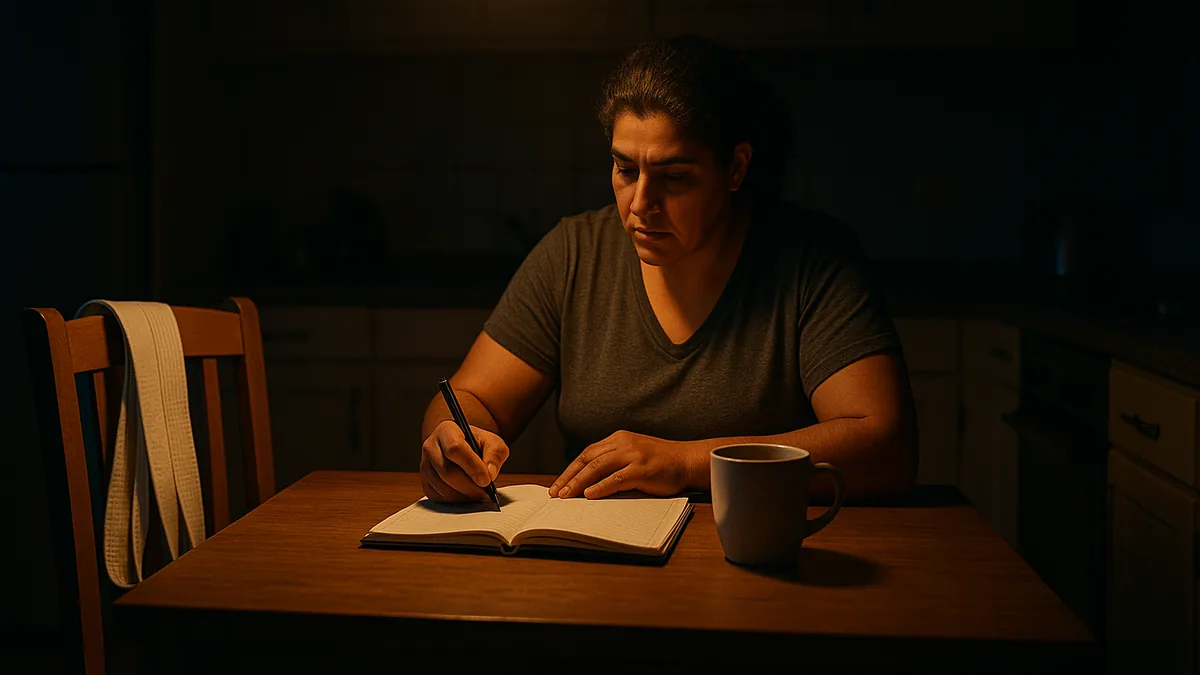
If you’re tracking your training at all - and you should be - a training diary that logs how your body feels, not just what you did is genuinely useful here. Hip flexor issues rarely appear without warning. There are usually two or three weeks of tightness, fatigue, or reduced range that you either ignore or don’t notice because you’re not recording it.
What Overloaded Hip Flexors Actually Feel Like
The early warning sign is a pulling sensation at the front of the hip - not sharp, not alarming, just there. It’s often worse first thing in the morning, when you stand up from sitting, or at the start of class before you’re warm. It can feel like tightness rather than pain, which is why people ignore it.
As it progresses, you’ll feel it during the chamber phase of your kick - that moment when the knee comes up. There’s a gripping, almost cramping sensation that makes you want to kick with less height. Your body is telling you something. Most people interpret it as “I need to stretch more” and stretch aggressively into the pain, which is one of the worst things you can do to an already irritated tendon.
Acute hip flexor strain feels different - sharper, more localised, often with a specific moment you can point to. If you felt something give or snap during a kick, that’s a different conversation and you need to stop training and get it assessed properly.
The Mistakes I See Constantly
Stretching an irritated hip flexor aggressively. This is the most common one. The logic makes sense on the surface - it’s tight, so stretch it. But if the tendon is inflamed, you’re loading it at end-range under tension, which makes it worse. What I tell students in the acute phase is to back off the deep hip flexor stretches entirely. Gentle movement, yes. Pulling the hip into full extension with body weight - no.
Adding volume without adjusting recovery. The pattern I described at the start. Grading is coming, so you add sessions. You don’t add sleep, you don’t add nutrition, you don’t reduce intensity elsewhere. The tissue simply can’t regenerate fast enough. I’ve been guilty of this myself, more than once.
Ignoring the hip extensors. One mistake I see constantly in students who develop chronic hip flexor problems is that their glutes are weak. The hip flexors and extensors work in opposition, and if the glutes aren’t doing their job during the kick - particularly in controlling the return - the hip flexors compensate and overwork. Strengthening the posterior chain isn’t optional if you want healthy hip flexors long-term.
Assuming it’s a flexibility problem when it’s a strength problem. As a white belt I thought hip flexor tightness meant I needed to stretch more. By brown belt I’d realised that what looked like tightness was often weakness - the muscle was guarding because it wasn’t strong enough through its full range. The correction that made the biggest difference for me was starting to load the hip flexors through range rather than just passively stretching them.
This connects to something I’ve written about elsewhere - a lot of the back pain karateka experience comes from the same hip flexor/glute imbalance. If you’re dealing with both, the back pain article on this site covers the relationship in more detail.
What Actually Helps
Reduce kicking volume before you think you need to. This is the hardest advice to follow and the most important. If you’re feeling the early warning signs, cut your kicking volume by half for two weeks. Not forever - just enough to let the tissue recover. You will not lose your kicks in two weeks. You will lose months if you train through it.
Strengthen the hip flexors under load. Hanging knee raises, slow and controlled. Lying leg raises with a pause at the top. Psoas marches with a resistance band. The goal is to build capacity through range, not just at end-range. I prefer these over static stretching during a flare-up because they improve tissue quality rather than just temporarily increasing length.
Strengthen the glutes. Single-leg glute bridges, hip thrusts, Bulgarian split squats. I’d recommend the split squat specifically because it also works hip flexor length under load - you get both sides of the equation in one movement. The rear leg gets a hip flexor stretch, the front leg drives glute activation. It’s the most efficient thing I’ve found for karateka dealing with this pattern.
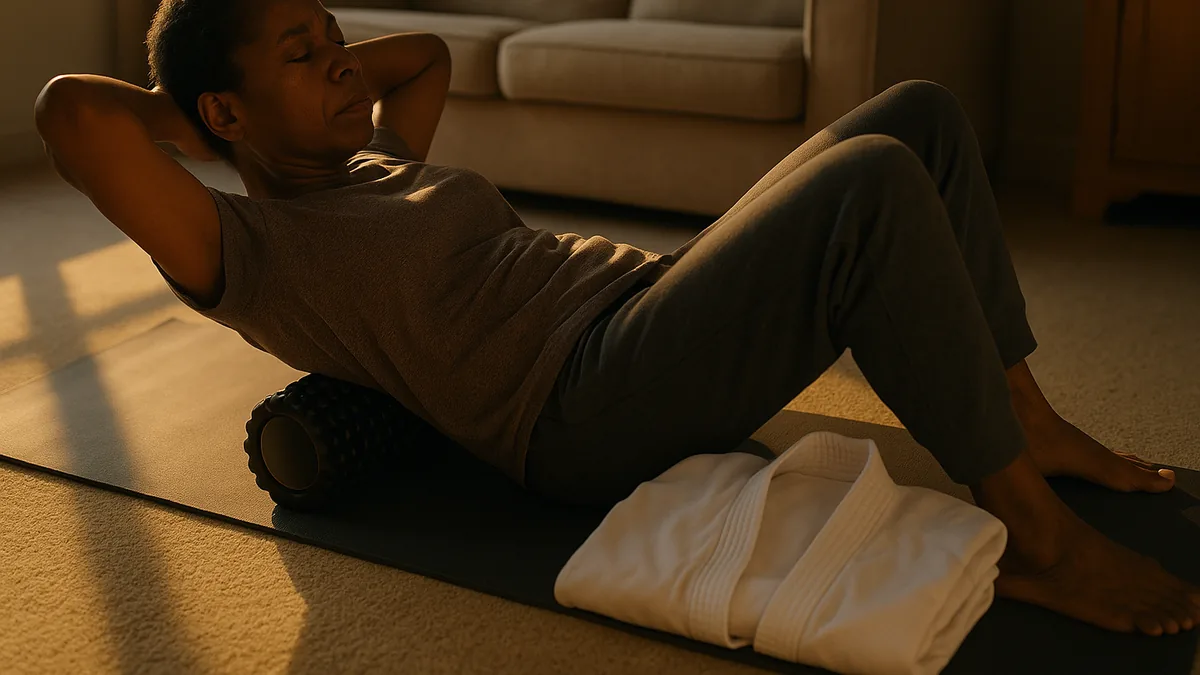
Soft tissue work - but carefully. Foam rolling the quad and TFL can help, but rolling directly on the hip flexor tendon is not something I’d suggest during an acute flare. The foam rolling article on this site covers which areas are worth targeting and which aren’t.
Warm up the hip flexors specifically before kicking. Not just a general warm-up - actual hip flexor activation. Hip circles, dynamic lunges, leg swings front to back. You’ll feel the difference in the first few kicks if you do this properly versus just jumping straight into kicking drills.
Managing the Load Long-Term
The practitioners I know who’ve trained for twenty or thirty years without chronic hip flexor problems share a few habits. They don’t kick at full intensity every session. They have weeks where they focus on kata or kumite mechanics without high-volume kicking. They take the early warning signs seriously.
I think the karate community sometimes treats load management as a sign of weakness or a concession to age. That’s a mistake. The people who train intelligently are still training hard in their fifties. The people who ignored every warning sign are the ones who stopped.
If you’re in a pattern of recurring hip flexor problems, it’s worth looking honestly at whether you’re in overtraining territory. Hip flexor pain that keeps coming back is often a symptom of a wider recovery deficit, not just a local tissue problem.
Key Takeaways
- The return phase of your kick - not the chamber or extension - is where hip flexor damage accumulates most. Control the leg on the way down.
- Aggressive stretching into an irritated hip flexor makes it worse, not better. Back off passive stretching during a flare and focus on gentle loading instead.
- Weak glutes are almost always part of the picture. If your hip flexors keep failing, train the posterior chain - single-leg glute bridges and split squats are the most direct fix I’ve found.
- Cut kicking volume at the first sign of persistent tightness. Two weeks of reduced load now is better than two months of pain later.
- Track how your body feels between sessions, not just what you trained. Hip flexor problems don’t appear without warning - they appear without you noticing the warnings.
- Strength through range beats passive flexibility for long-term hip flexor health. Hanging knee raises and psoas marches build the capacity that keeps the tissue resilient under high kicking volume.
The weekly digest
New karate articles, once a week
One email every week with everything new on Karate Lifestyle. No spam; unsubscribe in one click.
We'll email you to confirm. See our privacy policy.