How to Use a Training Diary to Track Recovery and Spot Overtraining Before It Becomes a Problem

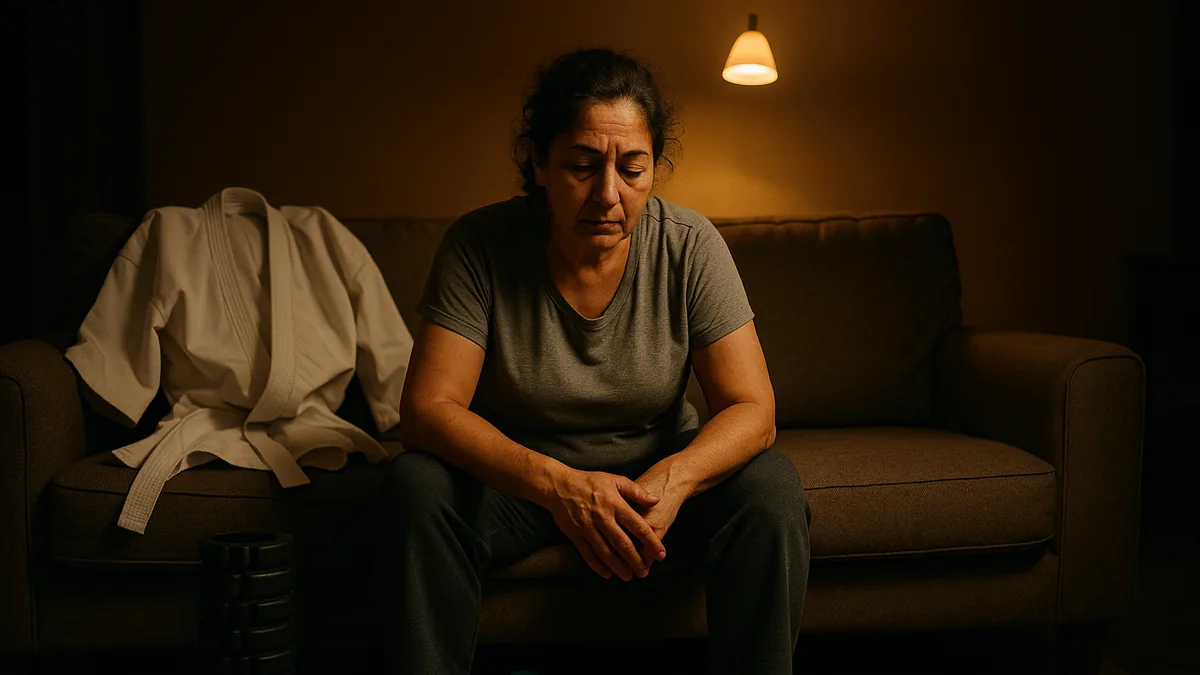
Most people only open the training diary when something goes wrong. A pulled muscle, a grading that went badly, a month where progress just stopped. By then you are already in the hole, looking backwards trying to figure out how you got there. The diary should have told you three weeks ago.
A common pattern among recreational athletes who develop overtraining problems is that they kept no consistent record of how they were responding to training load. When asked to walk through the previous six weeks, they are guessing at their own training history. That guessing is what makes the problem hard to solve.
The diary is not a log of what you did. It is data you can actually use.
What You’re Actually Trying to Capture
The point of a training diary is not to prove you trained hard. That is the ego version of record-keeping, and it leads you to write down sessions in a way that makes you look good rather than in a way that is honest.
What you are actually trying to build is a picture of how your body and mind respond to load over time. That means recording more than just the session itself.
An increasing scientific approach to athletic preparation involves regularly monitoring the external and internal loads experienced by an athlete, and how they respond to those loads. Athlete monitoring may provide coaches with a greater degree of certainty when prescribing and adjusting training load, with the intention of optimising adaptation and performance whilst reducing the risk of overtraining, injury and illness.1, 2
Every entry needs at minimum:
- What you trained and for how long
- Intensity - not a precise number, just honest (light, moderate, hard, brutal)
- How you felt going in (energy, motivation, any niggles)
- How you felt coming out (same categories)
- Sleep the night before
- Anything notable - a new technique clicked, a specific pain showed up, you could not focus, you felt unusually sharp
That last category is where the real information lives. The session itself is just context. The pattern of how you feel across sessions is what tells you something.
The Morning Check-In
One addition that many coaches recommend, and that we would not go back on: a morning rating before you even know what the day’s training looks like. Just three numbers on a scale of one to ten - energy, mood, body soreness. It takes thirty seconds. Over weeks, those numbers start to form a shape, and that shape tells you things.
Various wellness questionnaires, which examine factors such as sleep quantity and sleep quality, feelings of fatigue, and soreness, have been used to measure internal training load.3 The same principle applies to a simple personal morning check-in: it gives you a consistent reference point across training blocks that memory alone cannot provide. A consistently elevated soreness rating across four or five consecutive days, combined with declining energy scores, is the kind of pattern that becomes visible in the diary before it becomes visible in your performance.
Recording Physical and Mental State Together
A common mistake among athletes who do keep diaries: they only record physical symptoms. Muscle soreness, joint pain, injury notes. That is valuable, but it is only half the picture.
Mental state is an early warning system that physical symptoms often are not. Clinical manifestations such as generalised fatigue, insomnia, change of appetite, irritability, loss of motivation, and lack of concentration may be helpful in identifying overtraining syndrome (OTS).4 Several of those - particularly loss of motivation and irritability - are psychological signals that are easier to catch in a diary than in physical testing. By the time your joints are aching and your sleep is consistently disrupted, you are already well into overtraining territory.
Mood changes precede changes in commonly used biochemical markers of training stress such as cortisol. Athletes with signs of OTS typically exhibit both a greater increase in total mood disturbance and a different pattern of mood disturbance compared with athletes undergoing the same training who remain free from symptoms.5 That is the key practical point: the psychological signals show up in the record before any blood test would flag a problem.
If you write “felt flat, didn’t want to train” more than twice in a ten-day period, treat it as a signal rather than a character failing. Decreased athletic performance in the setting of increased training intensity without appropriate recovery, often accompanied by changes in mood, motivation, and general well-being, are the distinctive features of OTS.5 The instinct is to push through low motivation. The diary is what gives you the evidence to resist that instinct.
If you want to understand what full overtraining looks and feels like, and how to come back from it properly, the article on overtraining in karate - how to recognise it, admit it, and actually fix it goes into real depth on that. But the diary is what catches it before you get there.
Tracking the Specific Physical Signals Worth Watching
Not all physical symptoms are equal. Some are normal training soreness. Some are early warning signs. The diary helps you tell the difference over time, but you need to be recording the right things.
Things worth noting specifically:
- Joint soreness vs muscle soreness (joints are the warning, muscles are usually normal post-training)
- Where the soreness is and whether it is the same place repeatedly
- How long soreness takes to clear between sessions - if it is not gone by the next session, write that down
- Sleep quality - not just hours, but whether you woke up, whether you felt rested
- Appetite changes - loss of appetite is a recognised sign of overtraining; the condition can cause an increase in hormones such as epinephrine and norepinephrine that tend to inhibit appetite, and the physical exhaustion and anxiety that often accompany overtraining can have the same effect.6
- Any unusual irritability or difficulty concentrating outside of training
That last one belongs in a training diary. The sympathetic form of overtraining syndrome involves signs and symptoms including restlessness, excitation, insomnia, and irritability, while the contrasting parasympathetic form is characterised by inhibition, fatigue, depression, apathy, and low resting heart rate.4 Irritability and difficulty concentrating outside the dojo are not a “life thing” - they are a nervous system thing, and they have a physiological basis. Many practitioners do not connect those feelings to training load because they feel like personal problems rather than sports medicine ones. The diary is what makes the connection visible.
Reviewing Entries to Spot the Pattern
Writing entries is the easy part. Most people who keep diaries do write them - for a while. The part that actually requires discipline is the review.
A useful structure is a weekly review every seven days. It takes about ten minutes. Look at the week’s entries as a block and ask a few specific questions:
- Did my energy trend up or down across the week?
- Were there any recurring physical complaints?
- How many sessions felt genuinely good vs flat vs forced?
- Did I sleep consistently?
- What is the ratio of hard sessions to moderate or light sessions?
That last question is one we would push hard on. Most practitioners, when they look at their training week honestly, have almost no genuine recovery built in. Everything is either “on” or rest days, with no gradation. The diary makes that visible in a way that memory does not, because memory compresses - a week of hard training feels like it was appropriately varied when you are looking back without records.
Athlete monitoring may provide a greater degree of certainty when adjusting training load, and it is recommended that monitoring be performed during periods of heavy training or throughout athletic preparation.1 The weekly diary review is the practical version of that principle for a club-level practitioner.
A monthly review is also worth building in: look at the bigger picture - are you improving at the things you are focusing on, are there injury patterns building, has your overall energy been trending in the right direction? This is where you catch the slow-build problems that a weekly review misses.
If you are not sure what your training week should actually look like in terms of session intensity distribution, the article on how long you should rest between karate training sessions is worth reading alongside your diary review - it gives you a practical framework for spacing hard sessions correctly.
Adjusting Training Based on What You Find
The diary is only useful if you are willing to act on what it tells you. This sounds obvious, but it is where most people fail.
The correction that actually changes training is learning to treat a bad diary pattern as data rather than weakness. When the entries show several weeks of declining energy and increasing joint soreness, the answer is not to train harder to push through it. The answer is to pull back, add a proper active recovery day or two, and reassess. The diary gives you permission to do that without feeling like you are making excuses, because the evidence is right there in front of you.
For practitioners who are reluctant to reduce training load: you are not backing off, you are adjusting based on evidence. Systematic review does not clearly direct diagnosis, management, or prevention of OTS, but given the severity of symptoms and impairment to quality of life, prevention should be considered by all who interact with athletes.7 Ignoring the evidence and training through warning signs anyway is not toughness; it is bad management.
Common Mistakes With Training Diaries
Recording sessions instead of responses. The session itself - what techniques you drilled, how many rounds of kumite - is just context. The diary’s value is in capturing how you responded to the training. An entry that reads “one hour kihon, three rounds jiyu-kumite, felt fine” is not a useful diary.
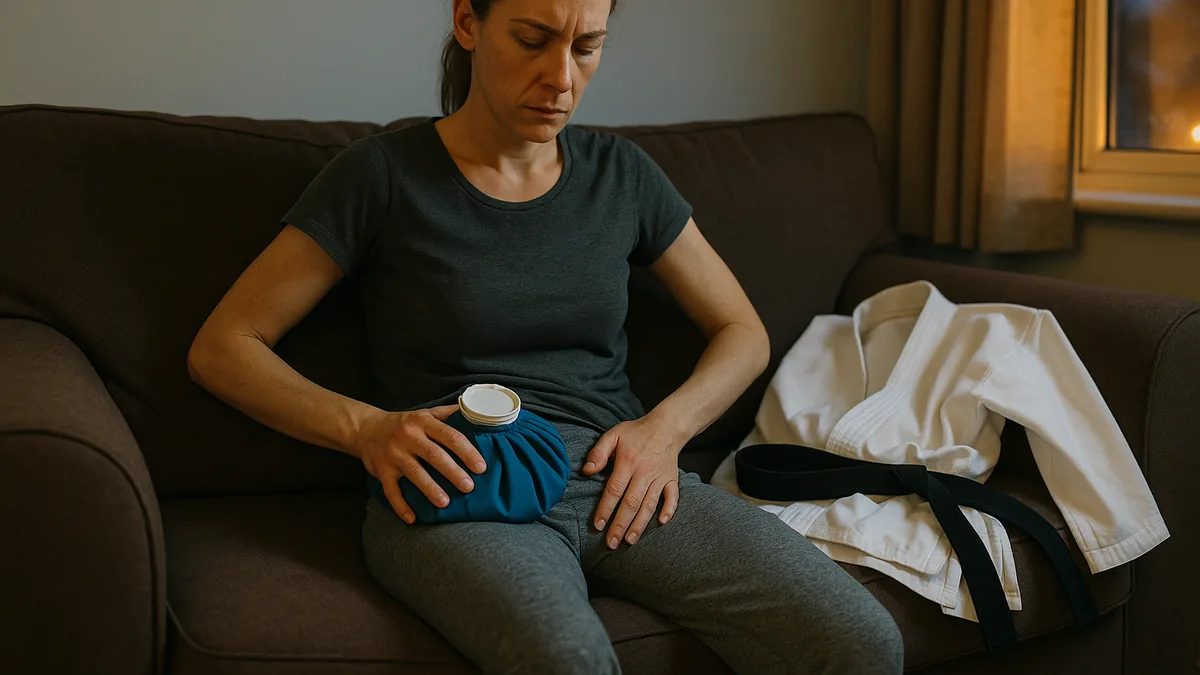
Only writing when something goes wrong. Students pull a muscle and suddenly they are documenting everything in detail. Then they recover and stop again. The diary only works as a pattern-detection tool if you are consistent. Self-report measures such as questionnaires and diaries are a relatively simple and inexpensive approach to monitoring athlete responses.1 Their value depends entirely on consistency. An ankle sprain that is properly documented - how it happened, how it felt, how recovery progressed - is genuinely useful. But you also need the context of what training looked like in the weeks before it happened. If you want a good model for how to track injury and recovery properly, the article on ankle sprains in karate shows what that kind of detailed, honest record-keeping looks like in practice.
Being dishonest about intensity. This is the ego problem. People write down that a session was “moderate” because writing “hard” too often makes them feel like they are not recovering well. The rating of perceived exertion (RPE) is one of the most common means of assessing internal load, based on the notion that an athlete can monitor their physiological stress during exercise as well as retrospectively provide information regarding their perceived effort post training.3 That only works if the rating is honest. If it was a brutal session, write brutal. If you were going through the motions, write that too.
Never reviewing. Writing without reviewing is journalling for its own sake. The review is the point.
Community Perspective
There is genuine disagreement among practitioners about how structured a training diary needs to be. Some instructors think anything beyond basic session notes is overthinking it - “your body tells you when to rest.” There is something to be said for developing body awareness without outsourcing it to a notebook.
But the evidence is clear that unaided subjective judgement is not reliable as a sole monitoring tool. Diagnosis of OTS is clinical and accomplished through history, which should demonstrate: decreased performance persisting despite weeks to months of recovery, disturbances in mood, and lack of signs or symptoms or diagnosis of other possible causes of underperformance.2 That kind of history is simply impossible to reconstruct accurately without consistent records. The diary does not replace body awareness; it sharpens it, because it makes you pay attention to signals you would otherwise rationalise away.
The other debate is around recovery tools and whether tracking them in the diary is worth it. We think it is - if you are experimenting with something like contrast showers or Epsom salts, noting whether you felt better recovered the following session is how you actually figure out what works for you. There is a good breakdown of which recovery tools are worth the effort in the article on Epsom salts, contrast showers, and compression if you want to start tracking those things systematically.
Key Takeaways
- Record your physical and mental state before and after every session, not just what you trained - the response to training is where the useful information lives1, 2, 4
- Add a thirty-second morning check-in for energy, mood, and soreness - over weeks this becomes one of your most reliable early warning systems for overtraining3, 4
- Do a weekly review every seven days and ask specifically whether your energy trended up or down across the week - a consistent downward trend is a signal, not a coincidence1
- If you write “felt flat, didn’t want to train” more than twice in ten days, treat it as data, not weakness - mood and motivational changes are recognised clinical markers of overtraining and appear before most physical symptoms4, 5
- Be honest about session intensity when you record it - a diary that flatters your ego is useless as a pattern-detection tool3
- Act on what the diary tells you - adjusting your training load based on evidence is not backing down, it is the whole point of keeping the record7
References
Checked by the KarateLifestyle editorial team against peer-reviewed sports medicine literature (PubMed/PMC), a joint ECSS/ACSM consensus statement, and a university counselling services resource in September 2026. The evidence base for overtraining syndrome is noted by reviewers to be limited by the difficulty of inducing true OTS experimentally, so several symptom timelines and thresholds in the literature are consensus-based rather than derived from controlled trials.
- Monitoring Athletes Through Self-Report: Factors Influencing Implementation. Saw et al., Frontiers in Psychology, 2015. PMCID: PMC4306765.
- Overtraining Syndrome: A Practical Guide. Kreher JB, Schwartz JB. Sports Health. 2012;4(2):128-138. PMCID: PMC3435910. DOI: 10.1177/1941738111434406.
- Monitoring Training Load to Understand Fatigue in Athletes. Halson SL. Sports Medicine. 2014;44(Suppl 2):S139-147. PMCID: PMC4213373.
- Overtraining Syndrome as a Complex Systems Phenomenon. Tae-Won Jun et al. Frontiers in Network Physiology. 2021. DOI: 10.3389/fnetp.2021.794392.
- Prevention, Diagnosis, and Treatment of the Overtraining Syndrome: Joint Consensus Statement of the European College of Sport Science and the American College of Sports Medicine. Meeusen R, Duclos M, Foster C, et al. Medicine and Science in Sports and Exercise. 2013;45(1):186-205. DOI: 10.1249/MSS.0b013e318279a10a.
- Signs of Over Training. Kansas State University Counselling Services. Accessed September 2026.
- Diagnosis and Prevention of Overtraining Syndrome: An Opinion on Education Strategies. Kreher JB. Open Access Journal of Sports Medicine. 2016;7:115-122. PMCID: PMC5019445.
The weekly digest
New karate articles, once a week
One email every week with everything new on Karate Lifestyle. No spam; unsubscribe in one click.
We'll email you to confirm. See our privacy policy.