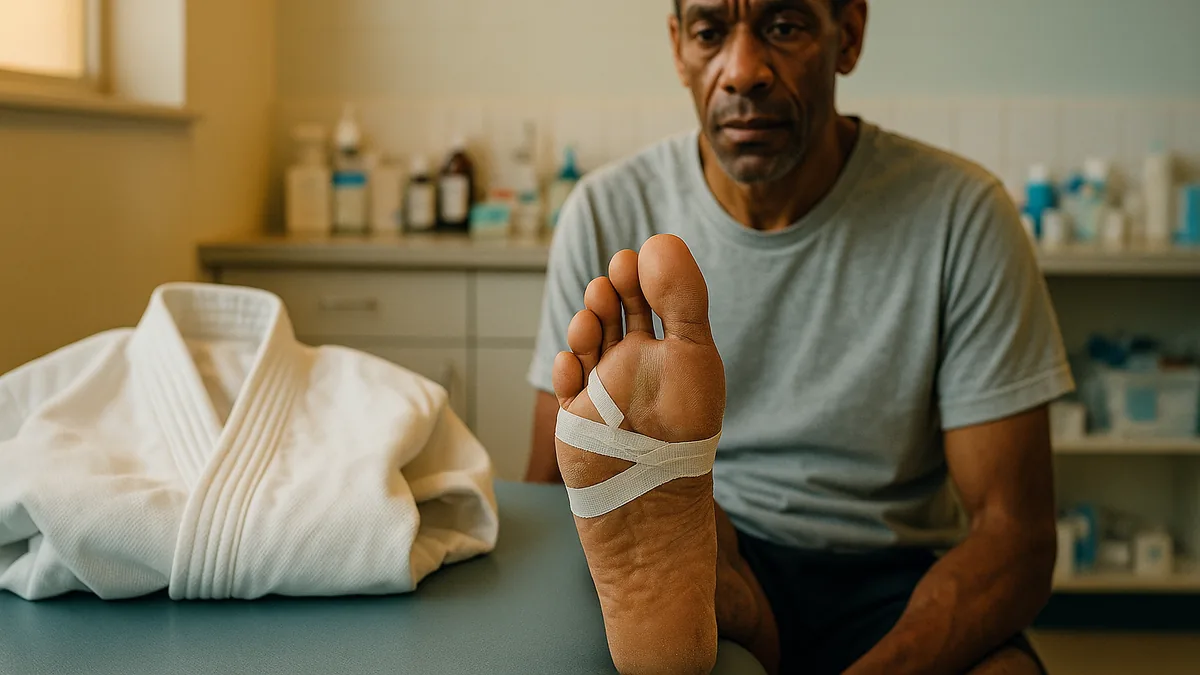
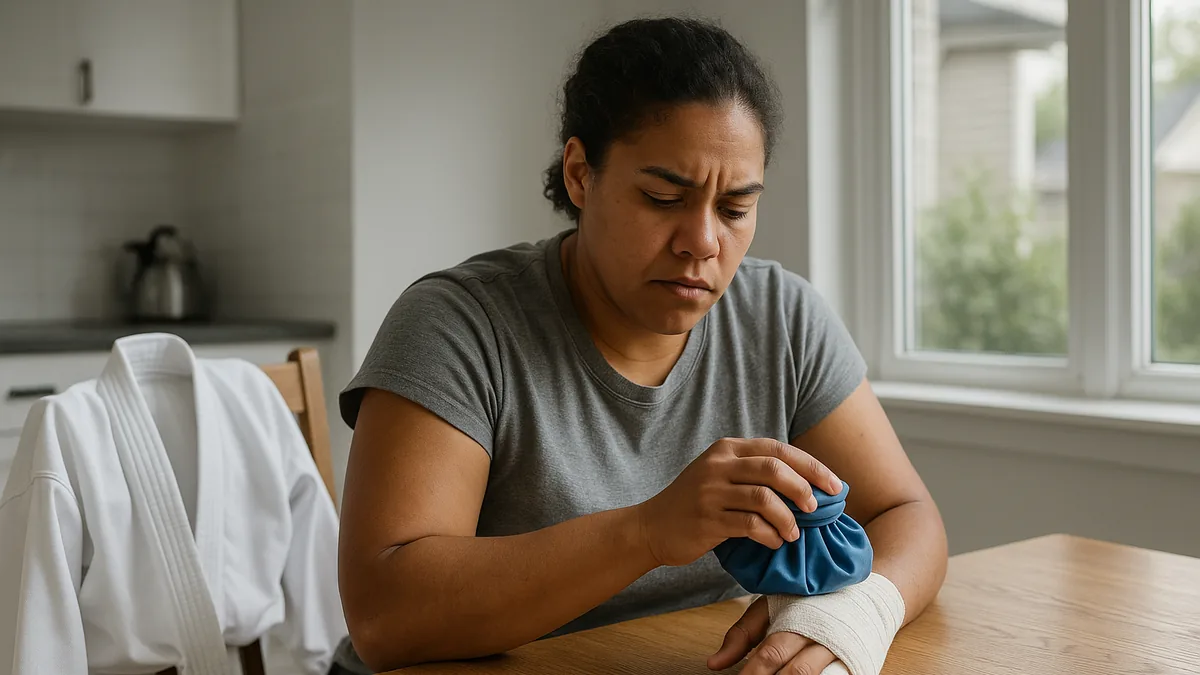
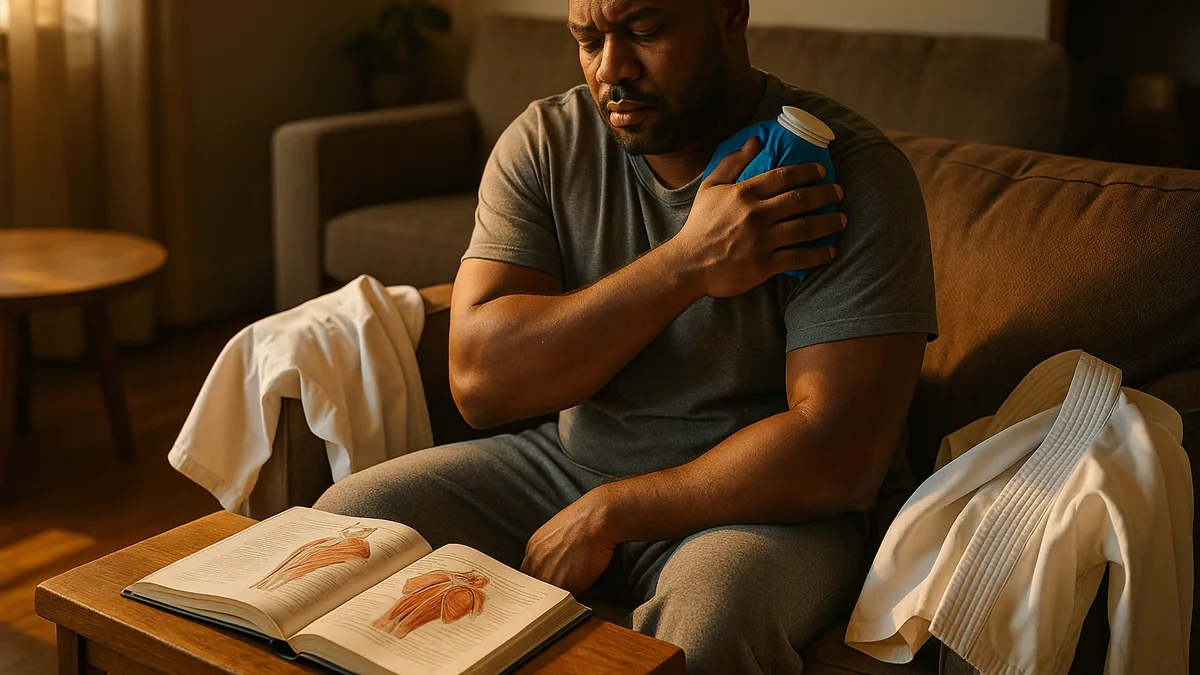
Active Recovery Days: What Karateka Should Actually Do Between Hard Sessions
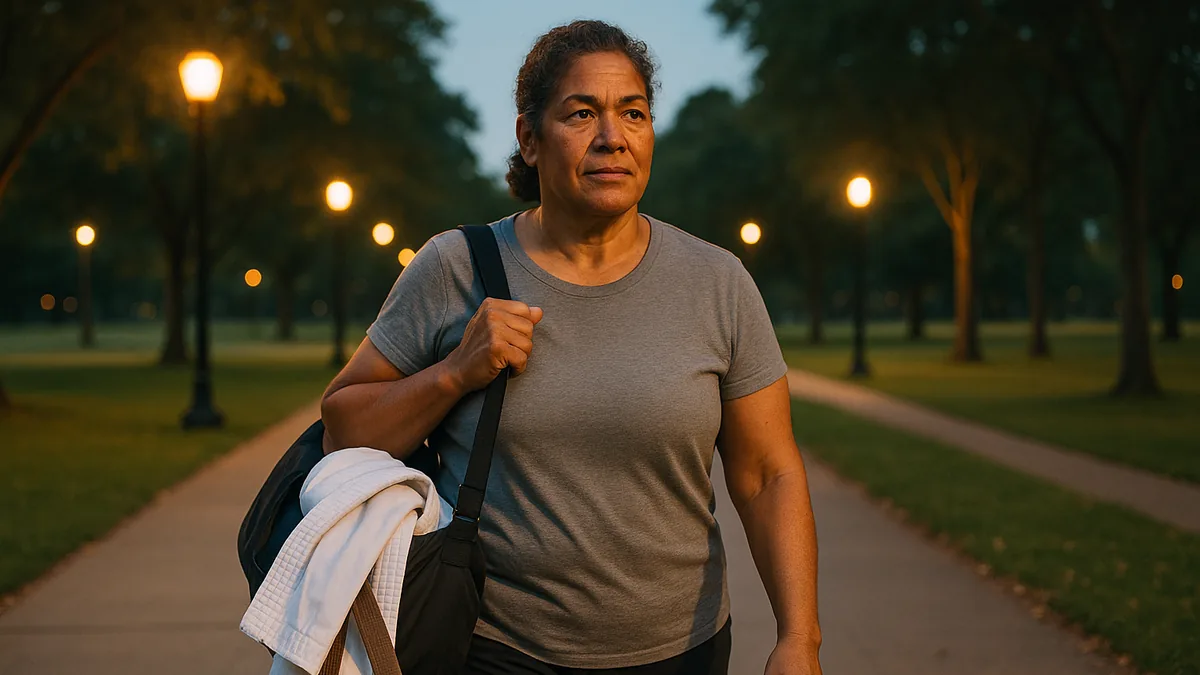
Most of us treat recovery days like a guilty conscience. We know we should do something, but we’re not sure what, so we either do nothing and feel lazy, or we go too hard and defeat the whole point. I’ve watched students show up to the next hard session stiff, flat, and wondering why their technique feels sluggish - and nine times out of ten, it’s because their “rest day” was either completely passive or quietly too intense.
Active recovery is not a light training session. That distinction matters more than most people realise.
What Active Recovery Actually Means for Karateka
The goal on a recovery day is blood flow, not adaptation. You’re not trying to get fitter. You’re not trying to sharpen technique. You’re trying to flush out the metabolic waste from hard training, keep your joints moving, and arrive at the next session feeling better than you would have if you’d just sat on the couch.
I’ve noticed that intermediate students are the worst offenders here. White belts are usually tired enough to actually rest. Senior grades tend to have learned the hard way. It’s the kyu grades who’ve just discovered how much they love training who push too hard on recovery days and then wonder why they’re always nursing something.
The other mistake I see constantly is treating active recovery like an opportunity to work on weaknesses. “I’ll just do some bag work, keep it light.” It never stays light. The bag is there, you’re warmed up, and suddenly you’re throwing combinations at 80% and calling it recovery. That’s just training with worse programming.
What actually works is boring by comparison - and that’s the point.
Light Cardio: What to Do and What to Skip
Walking or Easy Cycling
I prefer a 20-30 minute walk over almost anything else on a recovery day. Not power walking. Not incline intervals. Just walking at a pace where you could hold a full conversation without any effort. If you’re breathing hard, you’ve already missed the mark.
What you’re feeling for here is looseness. After about ten minutes, you’ll notice your hips start to free up, your lower back decompresses a little, and the residual tightness from yesterday’s training starts to ease. That’s the sensation you want - not exertion, but a gradual softening of whatever the hard session left behind.
Easy cycling works the same way. Keep resistance low. Keep cadence moderate. If your quads are burning at any point, you’re working too hard.
What I’d Skip
Swimming gets recommended a lot for recovery, and I understand why - it’s low impact and full body. But I’ve found that most karateka don’t swim with a relaxed enough technique to keep it truly low intensity. They start competing with themselves, their heart rate climbs, and they’ve done a cardio session without meaning to. If you’re a very relaxed, technically sound swimmer, it’s fine. Otherwise, skip it on recovery days.
Same goes for skipping rope. I love it as a training tool, but there’s no such thing as “light” skipping for most people. It’s too easy to drift into intensity.
Stretching and Mobility Work
This is where I think recovery days earn their real value for karateka - not the cardio, but the time you spend on the floor.
Hard training days don’t leave much room for genuine stretching. You warm up, you train, you cool down, and by the end you’re tired and just want to go home. Recovery days are when you actually have the time and the physical availability to work on range of motion properly.
I’d recommend spending at least 20-25 minutes here. The distinction between stretching and mobility work matters - if you haven’t read Mobility vs Flexibility for Karate Recovery: Why the Difference Matters, it’s worth your time, because conflating the two leads to doing the wrong thing at the wrong moment.
Hip Flexor and Quad Release
This is the one I come back to more than anything else. Karate training loads the hips hard - kicking, stancing, pivoting - and the hip flexors take a beating without most people realising it. Tight hip flexors affect your front kick height, your stance depth, your hip rotation on punches, and your lower back health.
Setup: Get into a low lunge, back knee on the floor. Spend 90 seconds on each side, genuinely letting the hip sink rather than just tolerating the position. Most people hold tension through the glute and don’t actually release into the stretch.
What you’re feeling for: a deep pull through the front of the hip, not the quad. If you’re only feeling it in your quad, shift your hips forward more and tuck your pelvis under slightly. When you find the right position, it feels like the hip is being opened rather than stretched - hard to describe until you’ve felt it, but you’ll know the difference.
The mistake I see most often is people rushing through this. They hit the position, hold for 20 seconds, and move on. That’s not enough time for the tissue to actually respond. Hold longer, breathe into it, and let gravity do the work.
Thoracic Rotation
Most karateka have stiff mid-backs from years of guard position and punching. This doesn’t show up as obvious pain - it shows up as reduced hip rotation, because the upper body compensates for what the thoracic spine won’t do.
Lie on your side, knees stacked at 90 degrees, arms extended in front of you. Slowly rotate your top arm back toward the floor behind you, following with your eyes. Let the chest open. Hold for a breath, return slowly. Ten reps per side, no rushing.
You’ll feel this in the mid-back, not the lower back. If you’re feeling it in the lower back, your knees have shifted - keep them stacked and the movement will stay where it belongs.
Ankle Circles and Calf Work
Neglected almost universally. Ankles take constant stress in karate from pivoting, and tight calves affect your stance mechanics more than most people account for. Two minutes of slow ankle circles and a couple of minutes in a wall calf stretch costs you almost nothing and pays back in joint health over time.
For more on how this fits into a broader recovery approach, Recovery For Karate Practitioners covers the full picture.
Listening to Your Body - What That Actually Means
“Listen to your body” is advice that sounds obvious and gets ignored constantly. What I tell students is: if you’re unsure whether something is too intense for a recovery day, it probably is.
The physical cues are specific. Muscle soreness that eases as you move - that’s fine, keep going gently. Joint pain, sharp sensations, or fatigue that gets worse rather than better as you warm up - that’s your body telling you to do less, not push through. There’s a difference between stiffness and injury, and learning to read that difference is something that takes years. If you’re still figuring it out, err toward less.
I used to think “listening to my body” meant pushing until something actually hurt. My instructor used to say that by the time it hurts, you’ve already missed the message. I didn’t fully understand that until I trained through a knee warning sign for three weeks and ended up sidelined for two months. The signal was there early. I just wasn’t listening for it.
For context on the role sleep plays in how you read your body’s recovery signals, Sleep and Karate Performance: What Serious Practitioners Get Wrong is worth reading - it changed how I structure my whole training week, not just recovery days.
Community Perspective
There’s a real split in how different dojos approach this. Traditional schools, particularly those with Japanese or Okinawan lineage, often don’t formally programme recovery days at all. The expectation is that you train when there’s class and rest when there isn’t, and the body adapts. Some senior practitioners I respect enormously have trained this way their whole lives and are fine.
The counter-argument - and I lean toward this view - is that most of us aren’t training in a dojo six days a week with a lifetime of progressive conditioning behind us. We’re fitting training around jobs and families, often doing intense sessions two or three times a week, and the recovery between those sessions matters more because the training itself is less consistent.
I’ve also seen the debate around whether active recovery is even necessary, or whether full rest is better. Honestly, I think it depends on the individual and the training load. For someone doing two sessions a week, a full rest day is probably fine. For someone doing four or five hard sessions, active recovery days make a measurable difference in how the next session feels. The research supports this, but more practically - I’ve run it both ways across years of training, and the active recovery weeks consistently produce better sessions.
The cold exposure question comes up here too - some practitioners swear by ice baths on recovery days, others think it blunts adaptation. Cold Exposure and Ice Baths for Karate Recovery: Do They Actually Work? covers this in detail if you want to go deeper on it.
Key Takeaways
- Active recovery means blood flow, not training. If you’re working hard enough to feel it as exercise, you’ve crossed the line.
- Walking for 20-30 minutes at genuine conversation pace is the simplest, most reliable recovery tool available. Use it.
- Spend more time on the floor than you think you need to. Hip flexors, thoracic rotation, and ankles are where most karateka carry unnecessary restriction.
- The correction that makes the biggest difference in stretching is time, not effort. Hold longer. Stop rushing.
- Joint pain or worsening fatigue during a recovery session is a signal to stop, not to push through. Learn the difference between soreness that eases and pain that builds.
- If you’re serious about injury prevention, the work you do on recovery days matters as much as the work you do in the dojo. Preventing Common Karate Injuries is a useful companion read for this.
The weekly digest
New karate articles, once a week
One email every week with everything new on Karate Lifestyle. No spam; unsubscribe in one click.
We'll email you to confirm. See our privacy policy.