Finger and Hand Injuries from Blocking: What Karateka Keep Ignoring and How to Actually Manage Them
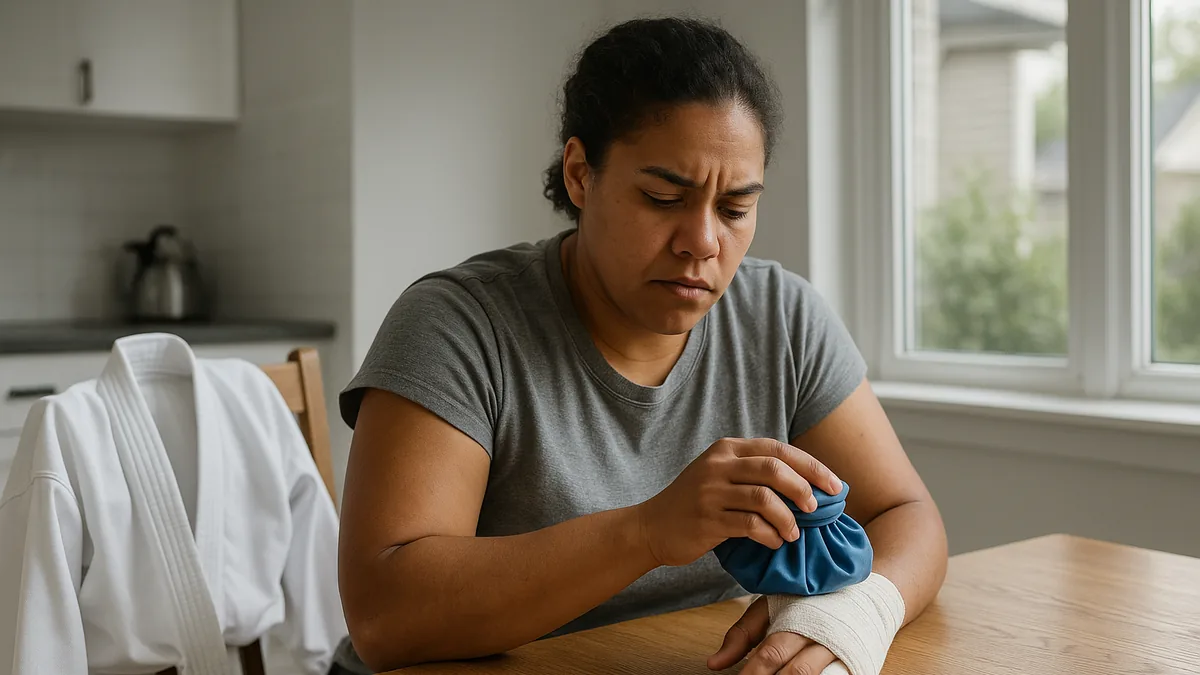
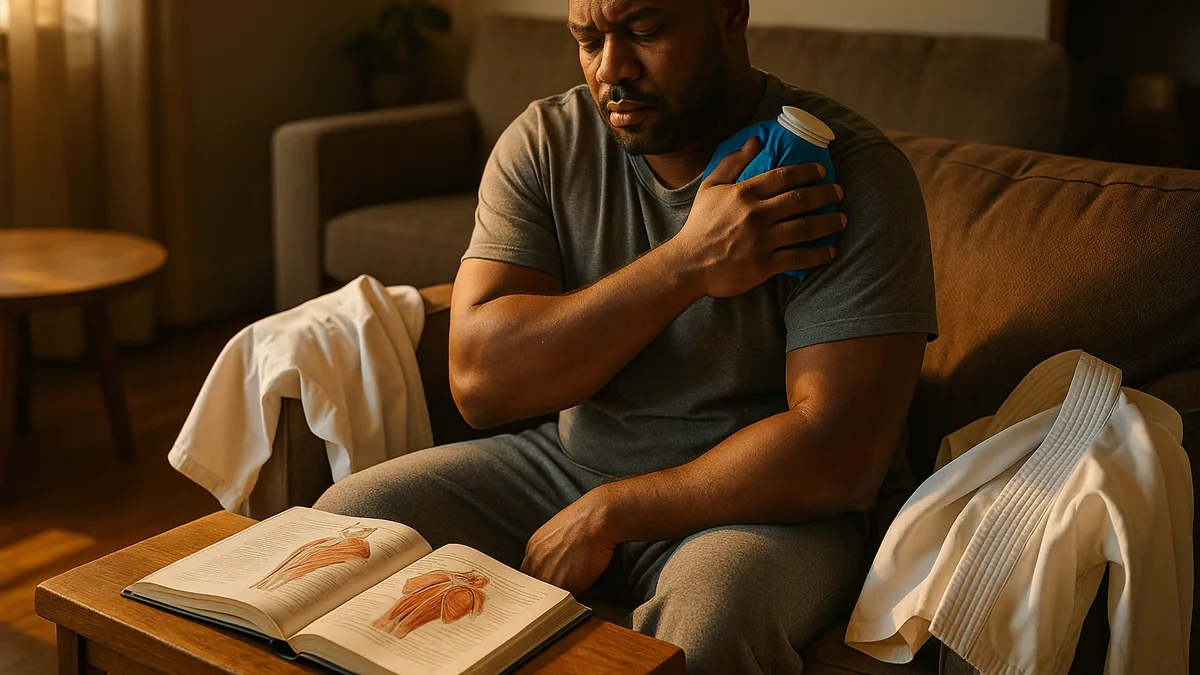
Most karateka treat hand and finger injuries from blocking the same way they treat a bad grade on a test - they wince, move on, and hope it gets better by next training. The honest answer is that approach works right up until it doesn’t, and by the time it stops working, you’re usually looking at something that’s going to take months to properly address instead of weeks. The injury gets minimised, training continues, and what started as a jammed finger or bruised metacarpal quietly becomes chronic instability or a persistent ache that never fully resolves.
The good news is that most of these injuries are manageable - and a lot of them are preventable once you understand what’s actually causing them.
Why Are Blocking Injuries So Common and So Underestimated?
The short answer is that we train our blocks to be hard contact techniques, then act surprised when repeated hard contact causes damage.
A common pattern in dojos is that practitioners treat blocking injuries as bad luck - wrong angle, wrong timing, someone throws a weird punch. In most cases, though, the mechanism is cumulative. It’s not the one block that hurts your finger. It’s the many thousands of blocks before it that degraded the joint, and the one block that finally tips it over.
What tends to separate senior practitioners from beginners is the direction of error. Beginners jam their fingers dramatically and loudly. Senior practitioners often don’t notice the injury happening at all - they’ve trained through so many minor contacts that the warning signals are blunted. That’s not toughness. That’s a feedback problem.
The most common injuries are:
- Jammed or sprained fingers - usually from catching a kick or punch at an awkward angle, or from blocking with fingers slightly extended rather than properly tensioned. Most finger sprains involve the proximal interphalangeal (PIP) joint, which is the joint in the middle of the finger, and injury typically causes pain and swelling.
- Bruised metacarpals - the long bones of the hand, particularly from gedan barai and chudan soto uke drilling on hard forearms
- Ligament strains at the PIP joint - often from a block that deflects into the finger rather than through the forearm. The mechanism of injury is usually either hyperextension or a laterally deviating force to the fingertip.1
- Hamate fractures - less common but worth knowing about. The hamate bone can fracture in two distinct ways: hook fractures, which are most commonly seen in racket and bat sports, and body fractures, which occur primarily by an axial load directed through the fourth or fifth metacarpals when a clenched fist strikes an unyielding object - a punching mechanism.2 Carpal bone fractures excluding the scaphoid are rare, accounting for approximately 1.1% of all fractures, and hamate fractures account for only around 2% of carpal fractures.3
- Tendon irritation along the back of the hand - from repetitive tension and impact in uke waza
The one that catches people off guard most often is the ligament strain. It doesn’t feel dramatic. You block, something feels slightly off, and two days later the finger is swollen and stiff. Many people assume it’s just bruising. Sometimes it is. Ligamentous injuries of the PIP joint are categorised into three grades, from asymmetric swelling and tenderness without instability at Grade 1 through to partial disruption at Grade 2.1 A partial ligament tear needs proper management, not a strip of tape and a return to drilling.
What Does Proper Blocking Technique Actually Feel Like?
This is where most of the conversation about blocking injuries goes wrong - we talk about the injury without talking about the technique that causes it.
A properly executed block should feel like the force distributes through your forearm and into your shoulder. When you feel it primarily in your hand or fingers, something in the mechanics is off. Either your hand is too open, your wrist is breaking at contact, or your elbow position is letting the force redirect somewhere it shouldn’t go.
Many instructors cue this as “block with the bone, not the meat.” The point is that the muscular belly of the forearm absorbs and spreads force but also transmits it to the wrist and hand. The bony ridge of the forearm deflects it more cleanly. When you get that contact point right, your hand barely feels anything. When you get it wrong, you feel it all the way to your fingertips.
A common mistake is tensing the whole hand during a block, which actually makes finger injuries more likely by transmitting force directly through a rigid structure. What works better is a relaxed hand that firms up at the moment of contact - similar to how a good punch works. The relaxed-then-firm approach means the hand isn’t pre-loaded with tension that has nowhere to go when contact happens.
How Do You Prevent These Injuries During Regular Training?
Prevention splits into two areas: technique and conditioning. Most people focus on neither until they’re already injured.
On the technique side, the correction that makes the biggest difference is checking your hand position during uke waza. Fingers should be together and slightly curved, not splayed. A splayed finger is an invitation for a jammed finger. It sounds obvious, but experienced practitioners can drill with loose hands for years because no one pulls them up on it.
On the conditioning side, we recommend:
- Regular stretching of the finger flexors and extensors - not aggressive, just consistent
- Grip strengthening that includes extension work, not just squeezing (most grip training only addresses flexion)
- Gradual exposure to contact rather than jumping straight into hard partner drilling
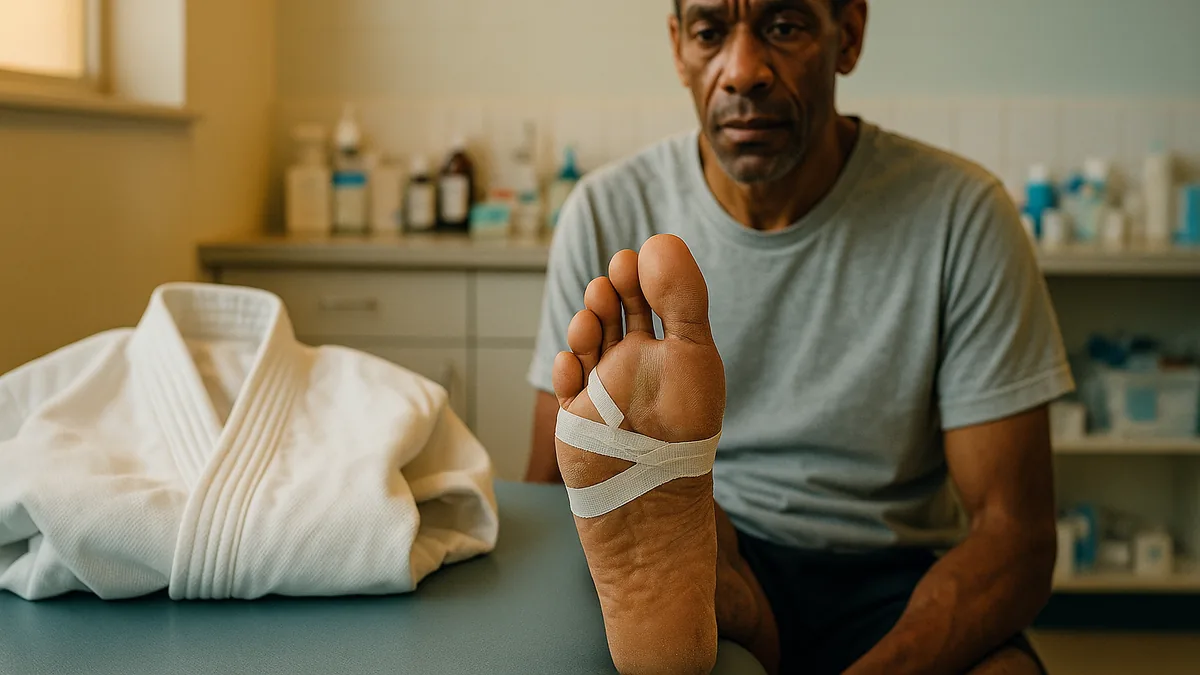
Taping is worth a mention here. It’s not a problem in itself, but a common pattern is that practitioners use tape as a substitute for addressing the underlying mechanical issue. Tape a jammed finger and train through it, and you often end up with a chronically unstable joint that needs taping forever. Prolonged immobilisation of the PIP joint can cause stiffness and may result in irreversible loss of motion in the digit, which highlights the need for a timely and accurate diagnosis.1 Use tape to protect a healing injury during light training - fine. Use it to mask a problem you’re not addressing - not fine.
If you’re doing significant training volume, building in genuine recovery time matters more than most people acknowledge. The article on active recovery days for karateka is worth reading if you’re unsure what that actually looks like in practice.
When Is It Serious Enough to See a Doctor?
A reasonable working rule: if swelling persists beyond 72 hours, get it assessed. If you can’t fully bend or straighten the finger, get it assessed immediately. If you heard or felt a pop at the moment of injury, the same applies.
The injuries people most often wait too long on are ligament tears and fractures. Both present initially as “just a bad jam.” The difference is that a fracture you train through can displace. In injuries with a total ligament tear, conservative treatment frequently results in discomfort, instability, and pinch strength loss.4 Neither of those outcomes is worth saving yourself an appointment.
It is also worth knowing that standard X-rays can miss certain hand fractures entirely. Standard radiographs of the wrist frequently miss hamate fractures; oblique and carpal tunnel views should be obtained when a fracture of the hamate is suspected.2 If you’ve had a normal X-ray but pain persists on the little-finger side of your hand or wrist after impact work, tell your doctor - you may need further imaging.
For general soreness and bruising that resolves within a few days, contrast therapy - alternating cold and warm water - is a widely used recovery method. Benefits are generally reported on subjective measures such as perceived recovery, fatigue and muscle soreness, but the evidence is less clear regarding influence on physiological measures and performance.5 Keep expectations realistic: contrast therapy is unlikely to harm you and many practitioners find it useful, but it is not a substitute for rest when an actual injury is present. The article on cold exposure and recovery for karateka goes into more detail on what the evidence says about ice - it is more nuanced than the old RICE protocol suggests. Current sports medicine thinking, set out in the PEACE and LOVE framework published in the British Journal of Sports Medicine by Dubois and Esculier, now advocates a more active, graduated approach to soft tissue injury recovery that moves beyond the simple Rest-Ice-Compression-Elevation model.6 There is also useful information in the piece on Epsom salts, contrast showers, and compression if you want to understand which of those recovery tools are actually earning their place in your routine.
Community Perspective
There’s a genuine split in how dojos approach hand conditioning and blocking contact, and it’s worth being honest about it.
Traditional Okinawan-influenced training often involves deliberate hardening of the hands and forearms through makiwara work and partner conditioning drills. The argument is that conditioned tissue handles impact better and that the process teaches you to relax into contact rather than brace against it. There are practitioners who’ve done this for decades and maintained remarkably functional hands.
The long-term picture, however, is contested. A study of the hands and wrists of 22 karate instructors who had practised for a minimum of five years found radiological evidence of ten fractures but no evidence that practice of the sport predisposed to the early onset of chronic tenosynovitis or osteoarthritis.7 That is encouraging - but it applies to practitioners who trained correctly and gradually. Arthritis and joint damage concerns are real but not clearly proven; evidence is mixed, and any association with osteoarthritis appears to come mainly through repeated injury from bad technique or overtraining, not moderate correct practice. The claim that aggressive conditioning inevitably causes arthritis is not supported by the available evidence; the claim that it carries no risk at all is equally unsupported.
Our position: moderate conditioning is useful and probably protective. Aggressive conditioning for its own sake, or to demonstrate toughness, is a gamble with your long-term joint health. The middle path - building contact tolerance gradually, maintaining good technique, and not training through actual injuries - gives you most of the benefit without most of the risk.
This is also a conversation worth having if you’re dealing with overtraining more broadly. The patterns that lead to ignoring hand injuries often show up in other areas too - the article on recognising and fixing overtraining in karate is relevant if any of this is sounding familiar.
Key Takeaways
- Most blocking injuries are cumulative, not sudden - the technique problem usually predates the injury by a long time
- A block that loads your hand and fingers rather than your forearm is a technique problem, not just bad luck
- Relaxed-then-firm hand tension at contact is the correction that prevents most finger injuries from blocking
- Tape protects healing injuries; it doesn’t fix underlying mechanical problems
- Persistent swelling, inability to fully flex or extend, or a pop at the moment of injury all mean see a doctor - not next week, now
- Standard X-rays can miss hamate fractures; if pain on the little-finger side of the hand or wrist persists after impact work, ask for further imaging
- Conditioning has a place in training, but there’s a real difference between building contact tolerance and accumulating damage - the evidence does not straightforwardly support the claim that heavy conditioning causes arthritis, but aggressive progression without good technique does carry risk
- The same discipline that makes you a good karateka also makes you prone to training through injuries you should be resting - recognise that tendency in yourself
References
Checked by the KarateLifestyle editorial team against peer-reviewed clinical literature (PubMed/PMC), the American Academy of Orthopaedic Surgeons, and sports medicine journals in September 2026. Evidence on hand conditioning and long-term arthritis risk is mixed; the article reflects this uncertainty rather than asserting a clear causal link.
- Sprain, PIP Joint - Hand Surgery Resource. Hand Surgery Resource. Clinical reference on PIP joint ligament injury classification and mechanism. No individual author or date listed.
- Hamate Body Fractures: a Comprehensive Review of the Literature. PMC/PubMed Central, 2022. Peer-reviewed systematic review. DOI available via PMC.
- Hamate Fracture - StatPearls (PMC). StatPearls, NCBI/PMC. Peer-reviewed clinical reference. Published 2015, updated regularly.
- Midterm clinical outcomes of collateral ligament repair of the thumb and lesser digits. PMC/PubMed Central, 2022. Peer-reviewed retrospective analysis, 35 cases. Covers instability outcomes from untreated total ligament tears.
- The use of contrast therapy in soft tissue injury management and post-exercise recovery: a scoping review. Physical Therapy Reviews, Vol 26, No 1, 2021. Peer-reviewed scoping review, 29 papers. Taylor & Francis.
- Soft-tissue injuries simply need PEACE and LOVE. Dubois B, Esculier J-F. British Journal of Sports Medicine, 2020;54(2):72-73. doi:10.1136/bjsports-2019-101253. Epub 3 August 2019. Peer-reviewed editorial introducing the PEACE and LOVE framework.
- The effect of hand strengthening techniques in martial arts on bone mineral density - pilot study (citing 1985 BJSM karate instructor study). ResearchGate, 2015 (references BJSM 1985 study of 22 karate instructors). Reproduced data originally from British Journal of Sports Medicine.
The weekly digest
New karate articles, once a week
One email every week with everything new on Karate Lifestyle. No spam; unsubscribe in one click.
We'll email you to confirm. See our privacy policy.