Back Pain in Karate: What's Actually Causing It, What Helps, and When to Stop Training Through It
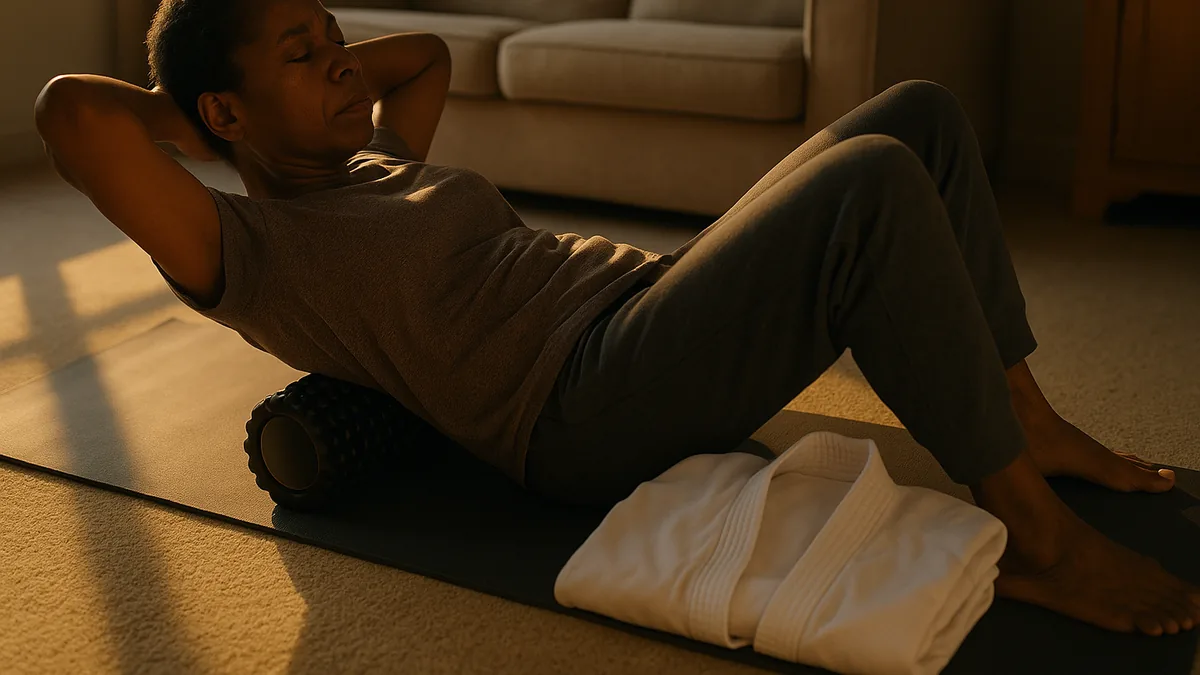
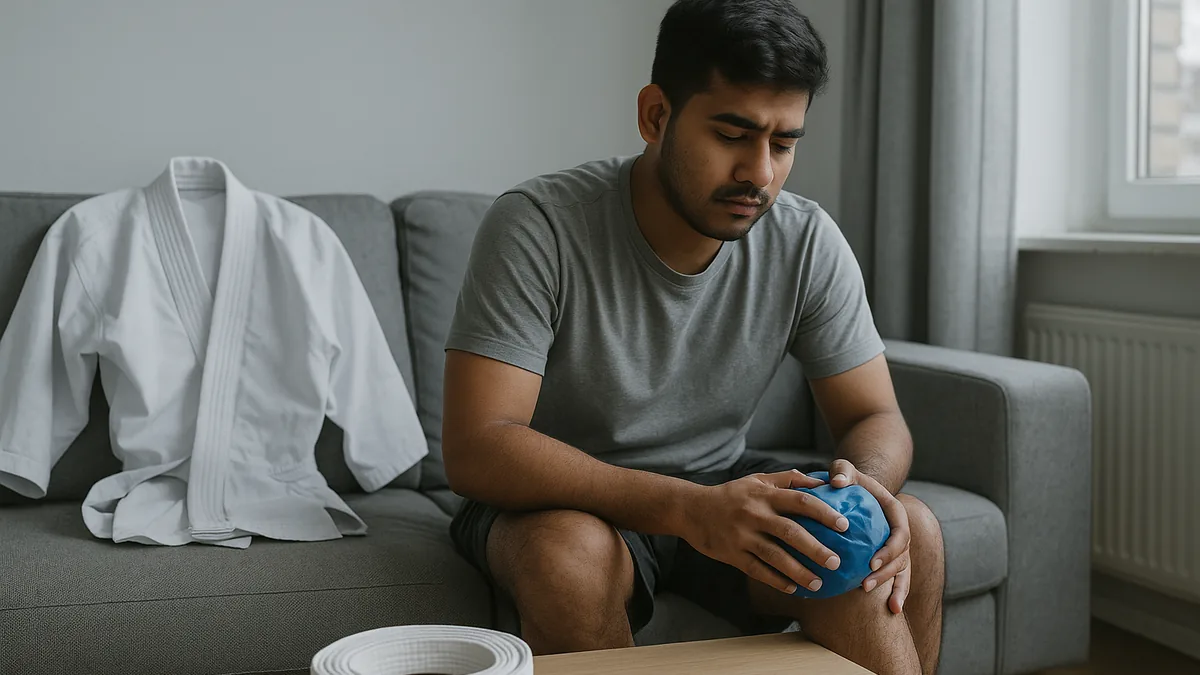
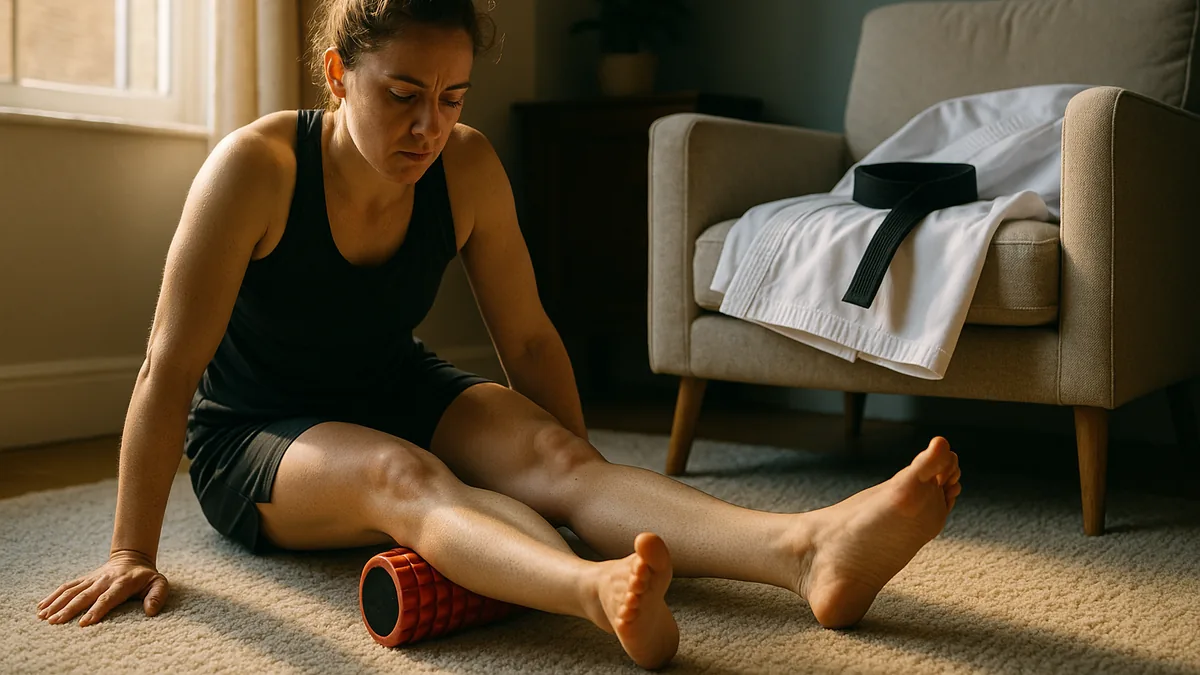
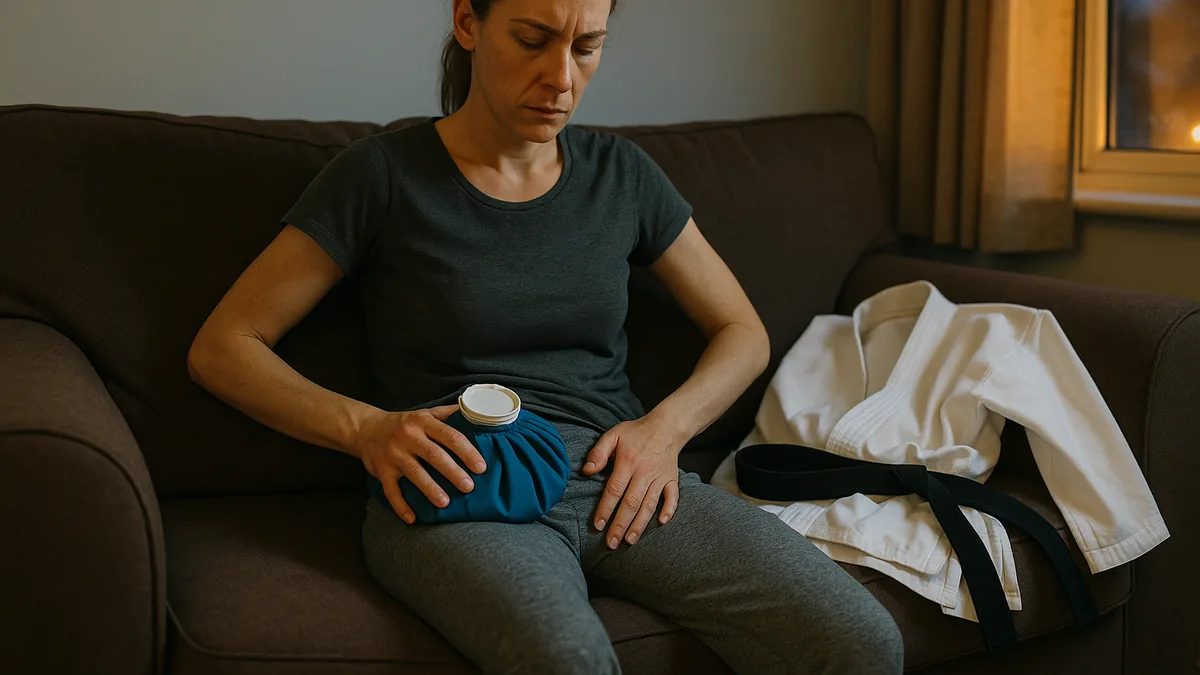
Most karate practitioners I know have trained through back pain at some point. Some of them shouldn’t have. I’ve been one of them - grinding through sessions when I should have stopped, convincing myself it was just stiffness, only to make something worse. I’ve also seen students on the other end of that spectrum, sitting out for weeks over minor muscle soreness because they didn’t know the difference. Getting this wrong in either direction costs you training time. So let me share what I’ve actually figured out over the years, what I’ve seen go wrong in students, and where I think the line is.
Why Your Back Hurts in the First Place
The back is involved in almost everything we do in karate - every punch, every kick, every stance transition. Which means when something is off technically, the back is often where you feel it first.
I’ve noticed two categories of back pain in the dojo, and they’re worth separating clearly. The first is acute - you’ve strained something, there’s a specific moment you can point to, and it hurts when you move in a particular direction. The second is chronic - a dull ache that builds over weeks or months, often worst the morning after training, and you can’t trace it to any single incident.
Chronic back pain in karate is almost always a technique problem or a posture problem. Sometimes both.
The Posture Problem Nobody Talks About Enough
The most common thing I see in students who complain of lower back pain is an excessive anterior pelvic tilt - hips tilted forward, lower back arched, glutes switched off. It looks like they’re sticking their backside out. In everyday life this is bad enough, but in karate stances it becomes a real problem.
Zenkutsu-dachi is the main culprit. When students first learn front stance, they’re told to get low and keep the front knee over the toes. What they often do is compensate by arching the lower back to maintain balance. You’ll see it constantly in early kyu grades. The hips aren’t engaged, the core isn’t braced, and all the load goes into the lumbar spine. Do that for an hour of kihon and you’ll understand why their back aches the next morning.
What I tell students is this: if you can slide your hand flat under your lower back when you’re in stance, something’s wrong. The pelvis should be neutral, almost tucked slightly. When you get it right, you’ll feel the glutes engage and the lower back actually decompress. It feels like the stance suddenly becomes more stable, which it is.
Technique Problems That Load the Spine
The other major source of back pain is rotational stress from poor mechanics.
Gyaku-zuki is a good example. The power in a reverse punch comes from hip rotation - the whole body rotating as a unit, with the fist arriving at the end of that chain. When that chain breaks down, what usually happens is the upper body rotates too early and too far, the lower body doesn’t follow, and the lumbar spine takes the shear force instead of transferring it. Do that a few hundred times in a session and the paraspinal muscles are going to let you know about it.
It took me years to understand why my instructor kept saying “rotate from the floor up, not the shoulder down.” I thought it was a power cue. It’s actually a structural one. When the rotation starts from the hip and the feet, the spine stays in a much more protected position throughout the movement. When it starts from the shoulder, you’re loading the spine in a way it doesn’t handle well under repeated stress.
Mawashi-geri is another one. I’ve seen students load up for a roundhouse kick by leaning heavily away from the kick, dumping all their weight into the supporting hip and cranking the lumbar spine laterally. The correction that makes the biggest difference here is keeping the supporting hip under the body rather than letting it drift out. It feels more restricted at first - like you can’t get the kick as high - but the spine stays neutral and the kick becomes more controlled.
Strengthening What Actually Needs to Be Stronger
Here’s my honest opinion on this: most karateka don’t do enough targeted core work, and “core work” in most dojos means sit-ups, which is probably the least useful thing you can do if your back already hurts.
The muscles that protect the lower back in karate aren’t the rectus abdominis - the six-pack muscles. They’re the deep stabilisers: the transverse abdominis, the multifidus, the obliques. These are the muscles that keep the spine stable during rotation, during stance transitions, during kicking. And they don’t get trained by sit-ups.
What I’d recommend instead:
- Dead bugs - these train the deep stabilisers without loading the spine. They feel almost insultingly easy at first. They’re not.
- Pallof press - anti-rotation core work that directly mimics the demands of punching mechanics
- Glute bridges and single-leg variations - because weak glutes are often the root cause of lower back overload, not the back itself
- Bird dogs - again, deep stabiliser work, and they teach the kind of spinal control that transfers directly to stance stability
I used to think core strength meant being able to do a hundred sit-ups. My instructor at the time trained that way and so did everyone else in the dojo. It wasn’t until I started working with a physio after a bad flare-up in my late twenties that I understood the difference between superficial strength and structural stability. The exercises above aren’t impressive-looking. They work.
Flexibility Matters, But Not the Way You Think
Tight hip flexors are a major contributor to lower back pain in karate, and they’re almost universal in adults who sit for work. When the hip flexors are tight, they pull the pelvis forward into that anterior tilt I mentioned earlier, and the lower back compensates.
I’d rather you spent ten minutes a day on hip flexor and hip mobility work than thirty minutes on hamstring stretching. The hamstrings matter, but tight hip flexors are more directly responsible for the posture problems that cause back pain in karate stances.
If you want to understand which muscles actually benefit from rolling and which don’t, foam rolling for karate is worth a read - it covers this in more detail than I can here.
The Mistakes I See Constantly
Training through nerve pain. Muscle soreness and nerve pain feel completely different, and confusing them is how people end up with serious problems. If the pain radiates - down the leg, around the hip, into the groin - stop training and get it assessed. That’s a different situation entirely from a stiff lower back. I’ve seen students try to push through what turned out to be a disc issue because they didn’t want to miss a grading. It cost them months, not days.
Warming up badly. The lower back needs time to mobilise, and a five-minute warm-up of arm circles and a few squats isn’t enough before an hour of kihon. I’ve written about this elsewhere - the warm-up injuries article goes into the mechanics - but the short version is that the lumbar spine needs progressive loading, not sudden demands. If your back is consistently worse at the start of sessions than the end, that’s a warm-up problem.
Ignoring it because it’s not “that bad.” Chronic low-grade back pain that you’ve had for months and just trained around is telling you something. It doesn’t mean stop training forever. It means something in your technique or your conditioning is wrong, and it’s going to keep getting worse until you address it. I speak from experience here - I ignored a recurring lower back issue for almost two years, convinced it was just part of training hard. It wasn’t.
Overtraining without recovery. Back pain that appears across multiple sessions without a clear technical cause is sometimes just accumulated fatigue. If you’re training six days a week and your back is constantly sore, that’s worth reading about in the context of overtraining in karate - because the fix isn’t more stretching, it’s rest.
When to Stop Training Through It
I’ll be direct: there are situations where training through back pain is reasonable, and situations where it isn’t, and the difference matters.
Keep training (with modifications) when:
- It’s muscle soreness that eases as you warm up
- There’s no radiation of pain into the legs or buttocks
- The pain doesn’t change your gait or how you hold yourself
- You can train around it by modifying specific techniques
Stop training and get it assessed when:
- Pain radiates down the leg or into the buttocks
- You have numbness, tingling, or weakness in a leg or foot
- The pain woke you up from sleep
- You had a specific impact or fall that preceded it
- It’s been more than two or three weeks and isn’t improving
That last one is the one most practitioners ignore. Two to three weeks of persistent back pain that isn’t improving with rest and basic mobility work needs a professional assessment. Not because it’s necessarily serious, but because continuing to train without knowing what you’re dealing with can turn something manageable into something that sidelines you for a long time.
Back pain has a lot in common with knee pain in that respect - if you’re unsure whether to push through or stop, the knee pain article covers the same decision-making framework and it applies here too.
Community Perspective
There’s a real split in how different dojos handle training through injury, and back pain is where it comes up most. Traditional training culture in a lot of clubs - especially those with older instructors - tends toward the “harden up and train through it” end of the spectrum. I’ve trained in dojos where admitting you had a sore back would have been seen as making excuses. I’ve also trained in more modern clubs where students sit out for what seems like minor discomfort.
My view, having been on both ends: the traditional approach produces tougher practitioners in some ways, but it also produces a lot of people in their forties and fifties with chronic injuries that were preventable. The modern approach sometimes overcorrects into unnecessary caution. What I think actually works is developing the ability to distinguish between discomfort that’s part of training hard and pain that’s telling you something is wrong. That’s a skill, and it takes time to develop - but it’s worth developing deliberately rather than just defaulting to either extreme.
Key Takeaways
- Check your pelvic position in every stance - if your lower back is arched and your glutes aren’t engaged, you’re loading the spine instead of the structure
- Replace sit-ups with anti-rotation and deep stabiliser work: dead bugs, bird dogs, Pallof press, glute bridges
- Stretch your hip flexors daily - they’re almost certainly tight and they’re almost certainly contributing to your lower back posture
- Radiating pain, numbness, or tingling is a stop sign - not a “train carefully” sign
- Two to three weeks of persistent pain that isn’t improving means get it assessed, not push harder
- Technique problems cause most chronic back pain in karate - fix the technique, not just the symptom
The weekly digest
New karate articles, once a week
One email every week with everything new on Karate Lifestyle. No spam; unsubscribe in one click.
We'll email you to confirm. See our privacy policy.