Why Karateka Over 30 Lose Flexibility Faster Than They Expect and What to Do About It
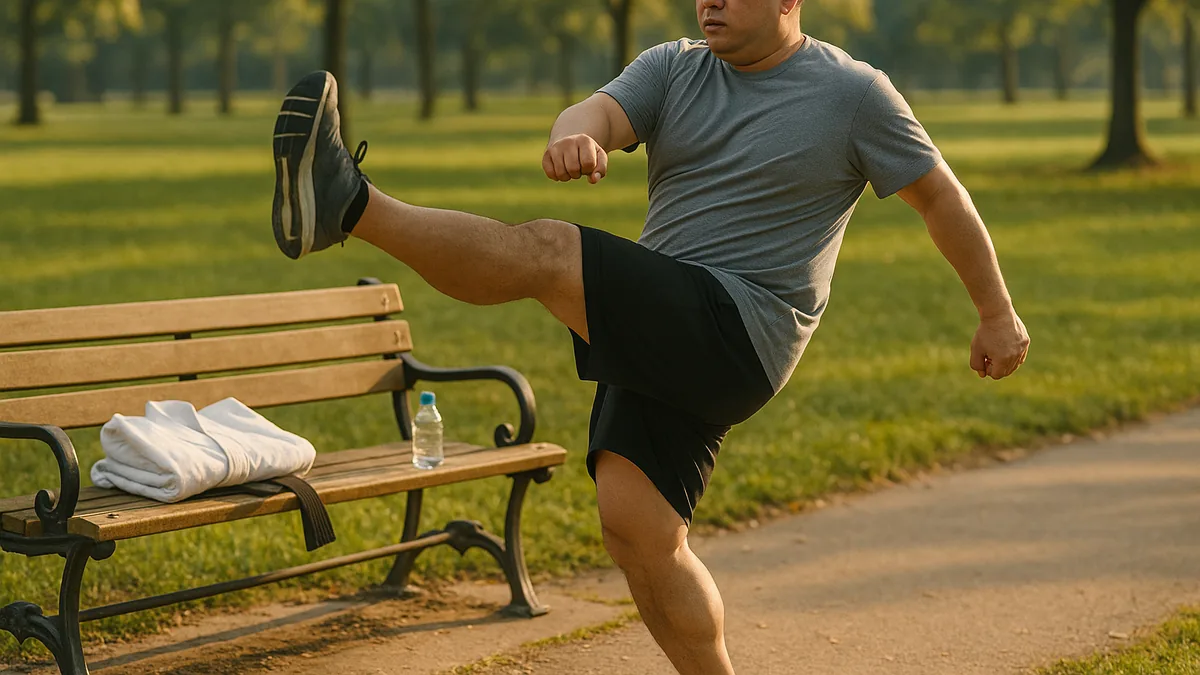
Something happens around the 32-33 mark that nobody really warns you about. You’ve been training consistently, your technique is sharper than it was at 25, your timing is better, your combinations feel cleaner - and then one session you go to throw a mawashi-geri at head height and your hip just… doesn’t get there. Not injured. Not pulled. Just stopped short, like someone quietly moved the ceiling while you weren’t looking.
That’s the moment most karateka over 30 get a rude introduction to the reality of age-related flexibility decline. And the frustrating part isn’t that it happens - it’s how fast it happens once it starts, and how unprepared most of us are for it.
Why the Drop Feels So Sudden
It’s not actually sudden. That’s the first thing I tell students when they come to me confused about why their kicks have dropped. The decline has been happening gradually for years. What changes is that you hit a threshold where the loss becomes functionally noticeable in training. Before that point, your body was compensating. After it, it can’t anymore.
I’ve noticed this pattern more times than I can count. A student in their late twenties trains hard, doesn’t stretch much beyond the class warm-up, and gets away with it because they have enough baseline range to cover the deficit. Then somewhere in their early thirties, that buffer runs out. The kicks drop, the stances feel stiffer, and getting low in shiko-dachi starts to feel like a genuine effort rather than just a position.
The underlying reason is a combination of things - reduced collagen elasticity, changes in synovial fluid production in the joints, and the gradual shortening of connective tissue that happens when you’re not actively working against it. But honestly, the bigger culprit in most karateka I’ve trained with isn’t the biology. It’s the habit gap. Most people stretch well during class and do almost nothing outside of it. At 22, that’s fine. At 35, that’s a recipe for losing range you’ll really struggle to get back.
The Warm-Up Trap
One mistake I see constantly is treating the class warm-up as your flexibility work. It isn’t. The warm-up is about raising core temperature and preparing the body for the session. The dynamic leg swings, the hip circles, the light stretching before kihon - that’s not building range, that’s accessing the range you already have. If you’re relying on that alone to maintain flexibility as you age, you’re on a slow escalator going down.
I used to think this way myself. My instructor at the time - a tough, no-nonsense Shotokan man who trained in Japan in the 80s - used to tell us to stretch after class, not before. I ignored it for years because I felt fine in training. It wasn’t until I was about 34 and realised my jodan kicks had quietly dropped to chudan that I understood what he meant. The after-class stretch, when the muscles are genuinely warm and pliable, is where you actually change tissue. The before-class stretch just gets you ready to move.
If you’re regularly getting injured during warm-ups before you’ve even started the real work, that’s a separate but related problem worth understanding - Why Karateka Get Injured in the Warm-Up (And How to Stop It Happening) covers that in detail.
What a Targeted Stretching Routine Actually Looks Like
I’d recommend splitting your flexibility work into two categories: maintenance and development. Maintenance is what keeps you functional. Development is what actually improves your range over time. Most practitioners over 30 need both, but they usually only do the first - and even then, inconsistently.
For maintenance (after every session, 10-15 minutes):
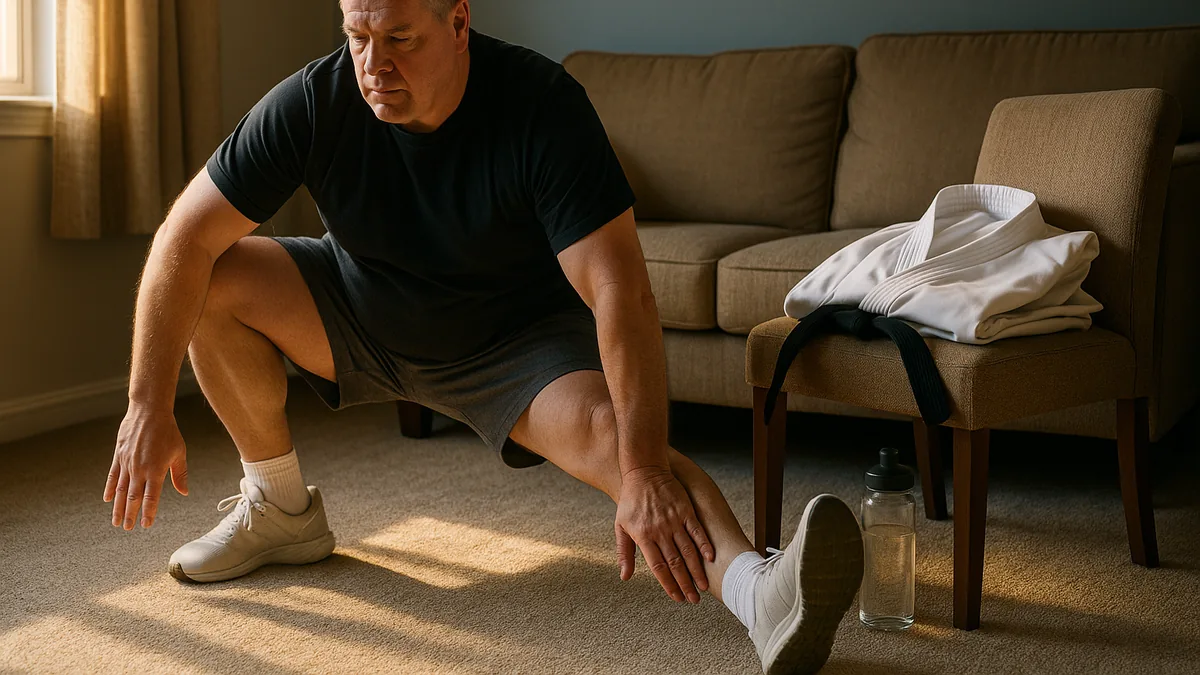
- Hip flexor stretch in a deep lunge - hold 45-60 seconds each side, not the 20-second version most people do
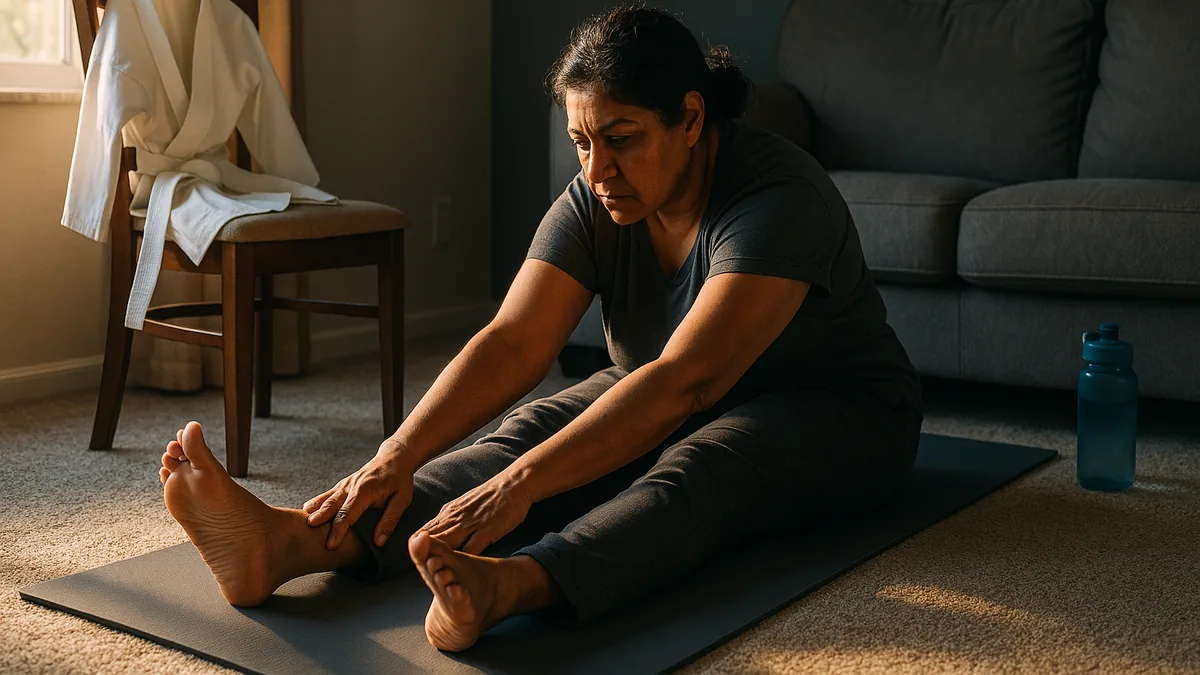
- Seated hamstring stretch with a forward fold - the key here is keeping your spine long, not rounding into it. You’ll feel the difference; rounding takes the tension off the hamstring and puts it on your lower back, which achieves nothing useful
- Pigeon pose or figure-four stretch for the glutes and piriformis - this one matters more than most karateka realise. Tight glutes kill hip mobility faster than tight hamstrings
- Standing adductor stretch - feet wider than shoulder width, slow lateral shift to each side, holding at the end range for at least 30 seconds
For development (dedicated sessions, 2-3 times per week, 20-30 minutes):
This is where you go beyond maintenance and actually try to expand range. I prefer PNF stretching for this - contract-relax cycles where you tense the muscle against resistance for about 6 seconds, then relax and push slightly deeper. It feels uncomfortable in a productive way, like you’re negotiating with the tissue rather than forcing it. You’ll feel a genuine release after the contraction phase that passive stretching rarely gives you.
The hip flexors and adductors are the priority areas for karateka. Everything in our technique - the chamber for any kick, the drive of a deep gyaku-zuki, the stability in zanshin - runs through those areas. If they’re tight, the whole system compensates, and that compensation usually shows up as lower back stiffness or knee strain before you even clock the real source.
Flexibility vs Mobility - They’re Not the Same Thing
I want to be clear about something because I see this confusion all the time: flexibility is passive range of motion. Mobility is active control through that range. You can be flexible and still have poor mobility. The distinction matters because in karate, you need both.
A student I trained with for years could do a full split on the floor but couldn’t throw a clean jodan mawashi-geri to save himself. His passive range was there. His active control wasn’t. He’d never trained his body to use that range under load and speed. When he started adding mobility work - specifically hip circles under load, leg raises held at the top, and slow controlled kicks through full range - his technique changed significantly within a few months.
If you want to understand this distinction more deeply, Mobility vs Flexibility for Karate Recovery: Why the Difference Matters is worth your time.
Consistency Beats Intensity Every Time
Here’s where I’ll take a firm position: one long stretching session per week does almost nothing. I’ve seen people do 45 minutes of deep stretching on a Sunday and then wonder why they’re not improving. Connective tissue adaptation is slow and cumulative. It responds to regular, moderate stimulus - not occasional aggressive sessions.
What actually works is shorter, consistent sessions. Ten minutes after every training session is worth more than an hour on the weekend. Twenty minutes three times a week beats ninety minutes once. The tissue needs repeated exposure to the new range to start treating it as normal. That’s the mechanism. Without that frequency, you’re just temporarily elongating tissue that springs back to its resting length within 24 hours.
I’ve also found that active recovery days are one of the best places to slot in flexibility development work. You’re not training hard, the body is in a recovery state, and gentle mobility and stretching work complements that rather than adding to the load. Most people waste their recovery days completely or train too hard on them. A 30-minute flexibility session on a light day is one of the highest-return investments you can make in your karate longevity.
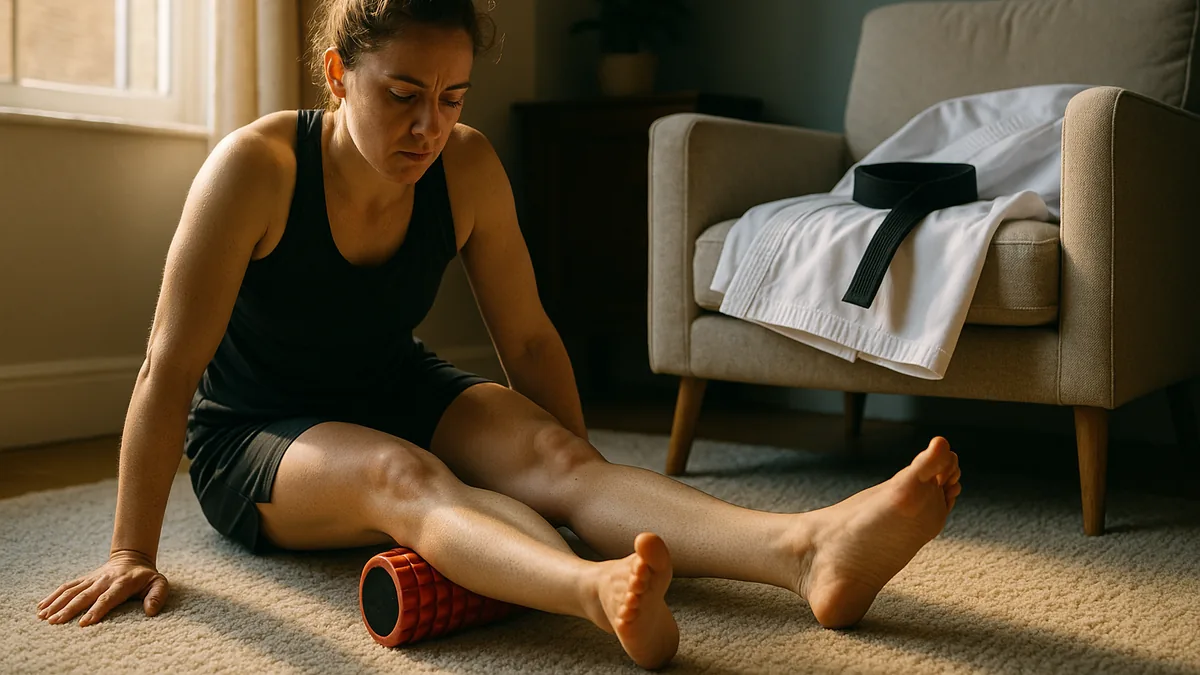
And don’t underestimate what foam rolling can do as a precursor to stretching. Releasing the fascia before you stretch means the stretch actually reaches the muscle rather than just pulling on the surrounding tissue. The quads, IT band, and thoracic spine are the areas I’d prioritise before a flexibility session.
Community Perspective
There’s a genuine split in the karate community about how much flexibility work belongs inside the dojo versus being a personal responsibility outside of it. Traditional schools often treat the class warm-up and cool-down as sufficient, and instructors from older training cultures sometimes view dedicated flexibility work as soft or unnecessary - the attitude being that if you train hard enough, everything else takes care of itself.
I disagree with that, and I think it becomes less defensible the older you get. The practitioners I’ve seen maintain excellent technique into their 40s and 50s are almost universally the ones who treat flexibility as a separate discipline rather than an afterthought. That said, I understand the traditional argument: karate training at sufficient intensity does develop functional range over time, and there’s something to be said for technique-specific flexibility that comes from actually doing the techniques repeatedly.
The compromise I’ve landed on - and what I’d suggest to anyone who trains in a more traditional environment - is to do the class as your instructor runs it, and then do your own flexibility work before you leave the dojo or when you get home. Don’t fight the culture of your dojo. Just add to it.
Key Takeaways
- The decline starts before you notice it. Don’t wait for your kicks to drop before you take flexibility seriously. Build the habit now, while you still have range to protect.
- The warm-up is not your flexibility training. It prepares you to use the range you have. Building new range requires dedicated work after sessions when tissue is genuinely warm.
- Prioritise hips and hip flexors above everything else. Adductors, glutes, and hip flexors are the bottleneck for nearly every technique in karate. If you only have time for one area, it’s that.
- Consistency over intensity. Ten minutes after every session beats an hour on the weekend. The tissue adapts to frequency, not occasional effort.
- Add mobility work alongside flexibility. Passive range you can’t actively control is useless in a kata or kumite context. Train your body to use the range you’re building.
- Use your recovery days. A 20-30 minute flexibility and mobility session on a light day is one of the most underused tools available to older practitioners.