Kata Speed vs Kata Power: Why Training Both at the Same Time Is Holding You Back
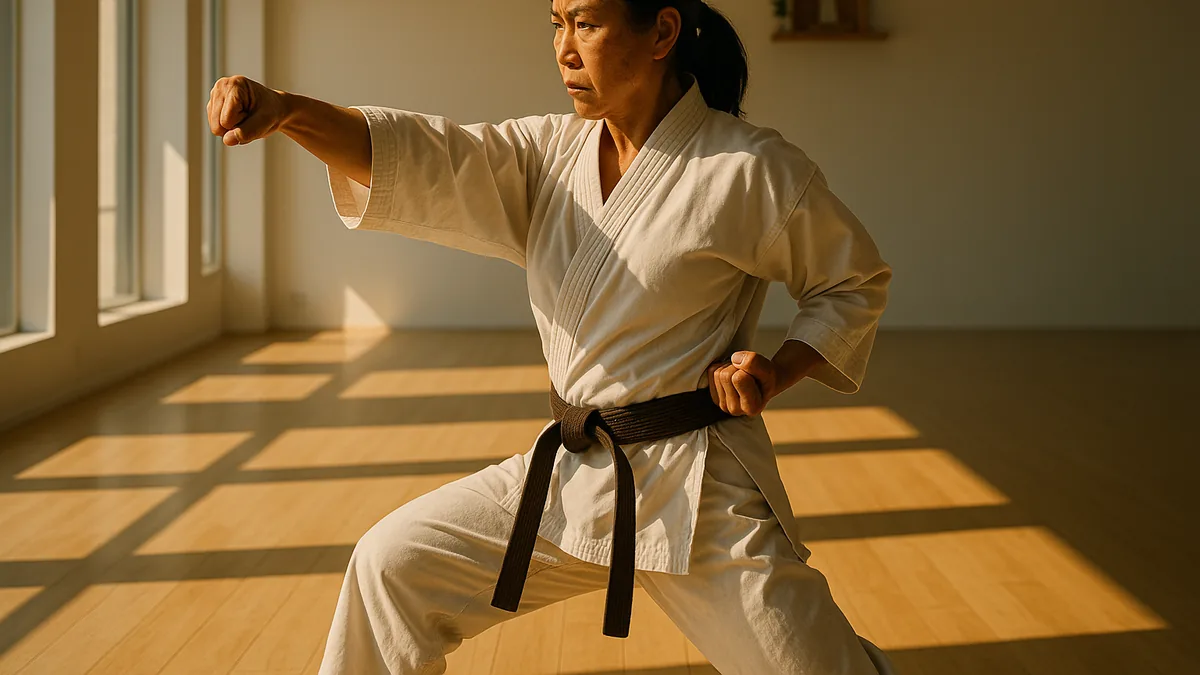
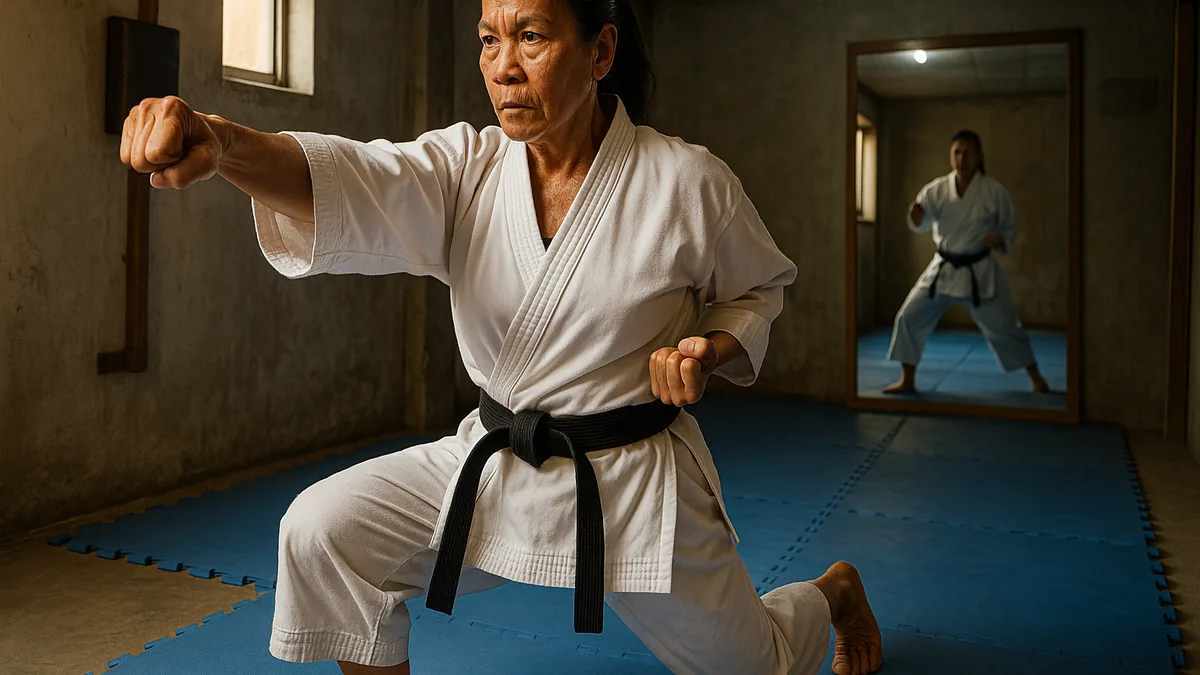
Most students train kata at one speed. They pick up the sequence at whatever pace feels natural, then repeat it until it looks roughly right, and call that “training kata.” The problem is that a single training speed teaches you exactly one thing: that speed. It does not build power. It does not sharpen timing. And it almost certainly will not fix the technical errors that are already baked into your movement.
The principle of separating speed and power work is not new or controversial. Strength and conditioning coaches have applied it for decades under the label “contrast training” - pairing high-load, low-velocity work with low-load, high-velocity explosive movement to develop both qualities without letting one compromise the other.1, 2 The underlying mechanism is post-activation potentiation: the heavy conditioning bout primes the nervous system, enhancing force and power output in the subsequent explosive set.3 The same logic applies to kata, and most dojo training ignores it completely.
Here is what actually happens when you train kata at a single moderate pace: your nervous system settles into a comfortable rhythm, your technique stops being challenged, and your performance plateaus. You get good at performing that one speed. Under pressure - a grading, a competition, a demonstration - the wheels come off because you have never actually trained the qualities that matter. If you want to understand why rhythm is a separate problem from speed, Kata Timing: Why Your Rhythm Is Wrong and How to Fix It covers that in detail. This article is about something more fundamental: the training method itself.
Why Speed and Power Cannot Be Trained Simultaneously
This is worth being direct about, because it contradicts what a lot of students assume.
The force-velocity relationship in muscle physiology describes an inverse relationship between the force a muscle produces and the velocity at which it contracts: as contraction speed increases, force output decreases.4 At very high velocities, fewer actin-myosin cross-bridges have time to bind, so less force is produced within the muscle. When you move fast, the body finds shortcuts - dropping the hip rotation slightly, abbreviating the chamber, reducing the load on the core - because those shortcuts allow faster movement. You do not notice this happening. The technique still looks like a punch. It is not the same punch.
When you train for power, the opposite happens. You slow down, you load the movement properly, you feel where the force is actually coming from. The hip drives the shoulder, the shoulder transfers to the arm, the fist arrives last. Done correctly, you feel the whole kinetic chain engage - not just your arm moving, but something that originates from the floor up. That sensation is what you are trying to preserve when you eventually move fast.
The core problem is that most students try to train both at once by going “fast but with power.” This does not work. At speed, the nervous system will always sacrifice force production for velocity.4 The two qualities need to be developed separately and then integrated - not blended from the start.
Slow Power Training: Building the Foundation
We recommend spending at least a third of your kata training time at genuinely slow speed - not cautious speed, but deliberate, loaded, mechanically correct slow movement. This is the single most underused training method in kata practice.
The Loaded Slow Kata
Why it matters: This drill forces you to feel where your technique is actually coming from. At full speed, you can fake a lot. At 20% speed with full muscular engagement, you cannot. Every weak chamber, every disconnected hip, every moment where your arm moves independently of your body becomes immediately obvious.
Setup: Clear enough space for the full kata. No mirror - mirrors encourage you to watch rather than feel. Pick a kata you know well enough to perform without thinking about the sequence. If you are still learning the pattern, this drill will not work - your attention will be on “what comes next” rather than “how does this feel.” For thoughts on getting real value from a kata you are still learning, How to Practise Kata When You Only Know One is worth reading first.
Execution:
- Begin the kata at roughly 20% of your normal speed.
- At each technique, apply full muscular tension through the movement - not at the end, but throughout. The punch does not snap out and relax; it drives with sustained force.
- Pay particular attention to the hip. At this speed, you should feel the hip rotation initiate before the arm moves. If your arm is moving first, stop and reset.
- Hold each finishing position for two seconds. Check your weight distribution, your stance depth, the position of your non-striking hand.
- Complete the full kata without rushing any transition.
What to feel for: When the hip rotation is genuinely driving the technique, you will feel the engagement across your lower back and obliques, not just your shoulder and arm. A punch that feels like it comes from your arm is not yet a karate punch. The correction that usually helps is to think of the fist as arriving last - the hip fires, the shoulder follows, the fist is the final link in the chain.
The most common mistake: Students slow down the speed but not the intention. They move slowly but passively, as if they are just marking the movements. This teaches nothing. The drill only works when you are applying genuine force through the entire range of motion. Slow and hard is the goal. Slow and soft is a waste of time.
Speed Training: Developing Explosive Execution
Speed training in kata is not about rushing. The distinction matters enormously. Rushing is what happens when students try to perform kata quickly without the underlying mechanics. Genuine speed is explosive movement that snaps through the correct path, with correct timing, and stops cleanly.
The Burst Drill
Why it matters: Most students cannot isolate explosive speed to a single technique. They speed up the whole kata, including the transitions, the chambers, and the breathing. This produces a kata that looks frantic rather than fast. The burst drill teaches your nervous system to fire a single technique explosively while keeping everything else controlled.
Setup: Stand in a natural ready position. Choose a single technique from your kata - ideally one that appears multiple times, such as a gyaku-zuki or a gedan-barai.
Execution:
- From your ready position, chamber the technique slowly and deliberately. Take two full seconds to reach the chamber position.
- Pause briefly at the chamber.
- Execute the technique as fast as you physically can - maximum speed, full commitment.
- Hold the end position for one second. Check that the technique finished where it was supposed to finish.
- Return to ready position. Rest five seconds. Repeat ten times.
What to feel for: A correctly executed burst technique feels like a release rather than an effort. The tension in the chamber loads the movement, and the execution is the snap of that tension releasing. If it feels like you are pushing the technique out, the speed is coming from muscular effort rather than elastic recoil. That is slower and less powerful than it needs to be.
The most common mistake: The finishing position collapses. Students fire the technique fast, but the endpoint is soft - the elbow drops on a punch, the blocking arm drifts off-line, the stance shifts. This happens because the nervous system has not yet learned to apply the brakes at full speed. The correction is to practise the end position in isolation first, holding it under tension, so the body knows where it is supposed to stop.
Integrating Both: The Contrast Method
Once you have spent time on each quality separately, pairing slow and fast performance is an effective way to integrate them.
The Slow-Fast Kata Pair
Why it matters: Performing a slow, loaded kata immediately before a full-speed performance is a well-grounded training approach for kata development. The slow version activates the correct muscle recruitment patterns and reminds the nervous system of the correct mechanics. The fast version then runs those same patterns at full speed - a kata-specific application of the post-activation potentiation principle that underlies contrast training in sport.3 The result is a fast kata that retains the power structure of the slow one.
Execution:
- Perform the full kata at 20 to 30% speed with full muscular engagement. This should take two to three times longer than your normal performance.
- Rest for 90 seconds. Do not rush this rest - the nervous system needs time to consolidate.
- Perform the full kata at full speed with full intent.
- Compare what you felt in each version. Specifically: did the hip initiation carry over? Did the techniques stop cleanly?
What to feel for: After a good slow-fast pair, the full-speed kata should feel more grounded than usual. The techniques should feel like they have weight behind them, not just velocity. When the timing is right, a gyaku-zuki does not feel like a fast arm movement - it feels like something that would genuinely stop a person.
Progression: Once this feels consistent, add a third performance at slow speed after the fast one. This forces you to maintain correct mechanics even when fatigued, which is the condition that matters most under pressure. For more on why kata performance degrades under pressure and how to train for it specifically, Performing Kata Under Pressure addresses exactly that.
Community Perspective
There is a genuine disagreement in the karate community about how much slow training is appropriate, and it tends to split along stylistic lines.
In Shotokan, slow kata training has a long and recognised place. Hangetsu is the clearest example: originating from the Naha-te school of Okinawa, it is one of the few kata in the Shotokan curriculum whose opening section is performed slowly with controlled breathing and sustained muscular tension - qualities shared with its ancestral relative, Sanchin. Gichin Funakoshi renamed the kata Hangetsu (Half Moon) when integrating it into Shotokan. Many Shotokan instructors treat its slow, loaded execution as foundational. In Shito-ryu and Wado-ryu dojos, the emphasis often falls more heavily on fluidity and timing, and very slow training is sometimes seen as counterproductive to the natural flow those styles value.
The competition kata world adds another layer. WKF kata competition rules require that a performance “demonstrate strength, power, and speed, as well as grace, rhythm, and balance.”5 Judges assess ten criteria including stances, techniques, transitional movements, timing, breathing, kime (focus), conformance, strength, speed, and balance.5 Elite competitors at WKF events clearly demonstrate both explosive speed and visible power. The question of how they train to achieve that is less publicly documented, but the results suggest that separating the qualities in training and integrating them for performance is the approach that works.
The opinion that shifts most consistently with experience is this: beginners think slow training is for beginners. Senior practitioners tend to think the opposite - that slow, loaded kata training is where the serious work actually happens, and that the ability to perform kata slowly with full power is a more reliable indicator of genuine understanding than the ability to perform it fast. The Difference Between a Kata You Know and a Kata You Own gets into this distinction in more depth.
Key Takeaways
- Training kata at a single moderate speed is the most common reason kata performance plateaus. It teaches you one speed and nothing else.
- Slow, loaded training and fast, explosive training develop different qualities through different mechanisms - the force-velocity relationship means that at speed the body will always sacrifice force production for velocity.4 They need to be practised separately before they can be integrated.
- The burst drill is more useful than full-speed kata repetition for developing genuine explosive speed, because it isolates the quality and forces a clean finish.
- Contrast training - slow kata immediately followed by full-speed kata - is a practical integration method for regular dojo training. We recommend at least one contrast pair per session when kata is the focus.
- The test of whether slow training is working is not how the slow kata looks. It is whether the full-speed kata starts to feel heavier and more grounded after slow work. If it does not, the slow training is passive rather than loaded.
- If your kata feels like it falls apart at speed, the problem is almost never speed itself. It is that the mechanics were never solid enough to survive at speed. Fix the slow version first.
References
Checked by the KarateLifestyle editorial team against WKF official rules documents, PubMed-indexed peer-reviewed journals, NSCA publications, sports science education sources, and primary karate association pages in October 2026. The physiology of slow-versus-fast training in kata specifically has not been directly studied; the force-velocity and contrast training citations are drawn from the broader sports science literature.
- Effects of Exercise Frequency with Complex Contrast Training on Measures of Physical Fitness in Active Adult Males. PubMed Central / Journal of Human Kinetics, 2023. Peer-reviewed study defining complex contrast training and its effects.
- The French Contrast Method - Theory and Application. Long M, Fee C, Taber C. NSCA Coach, Vol 9.4, National Strength and Conditioning Association, 2022.
- Effects of strength training on repeated sprint ability in team sports players: a systematic review. PubMed Central / Frontiers in Sports and Active Living, 2024. Defines complex/contrast training and post-activation potentiation.
- Force-Velocity Curve. Science for Sport, sports science education resource. Explains the inverse force-velocity relationship and cross-bridge mechanism.
- WKF Kata Competition Rules 2026. World Karate Federation, official rules document, Version 2026.0. Specifies judging criteria including strength, speed, balance, timing, and the ten-point evaluation list.
The weekly digest
New karate articles, once a week
One email every week with everything new on Karate Lifestyle. No spam; unsubscribe in one click.
We'll email you to confirm. See our privacy policy.