Kata Timing: Why Your Rhythm Is Wrong and How to Fix It
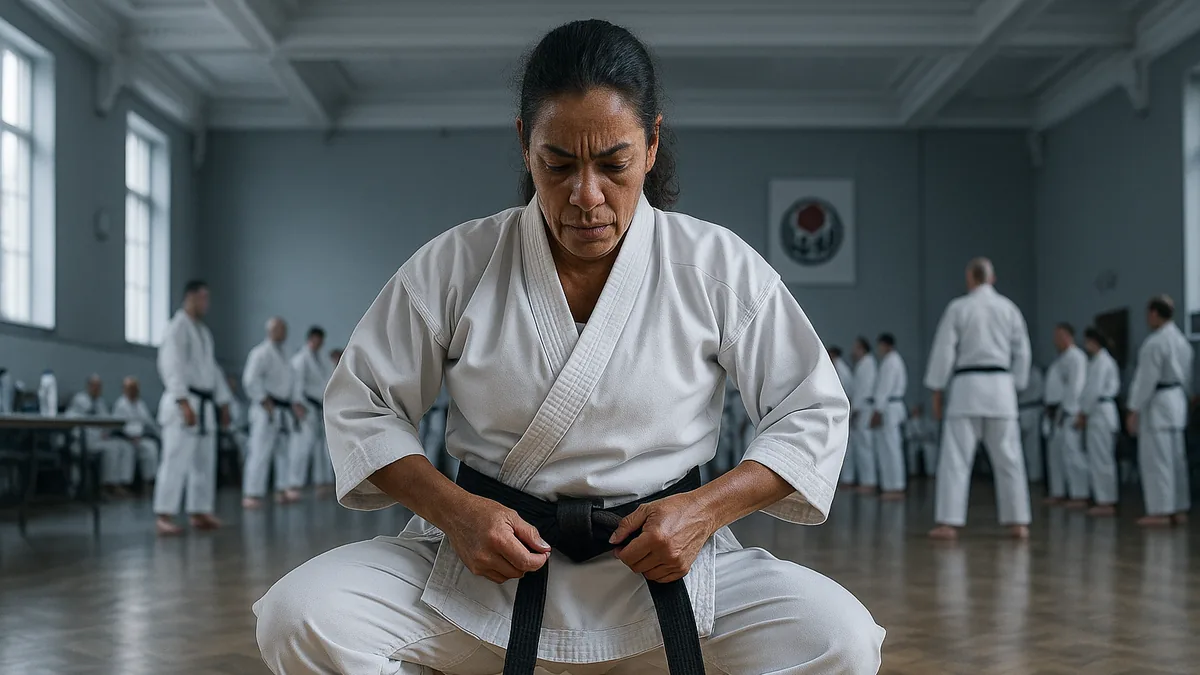
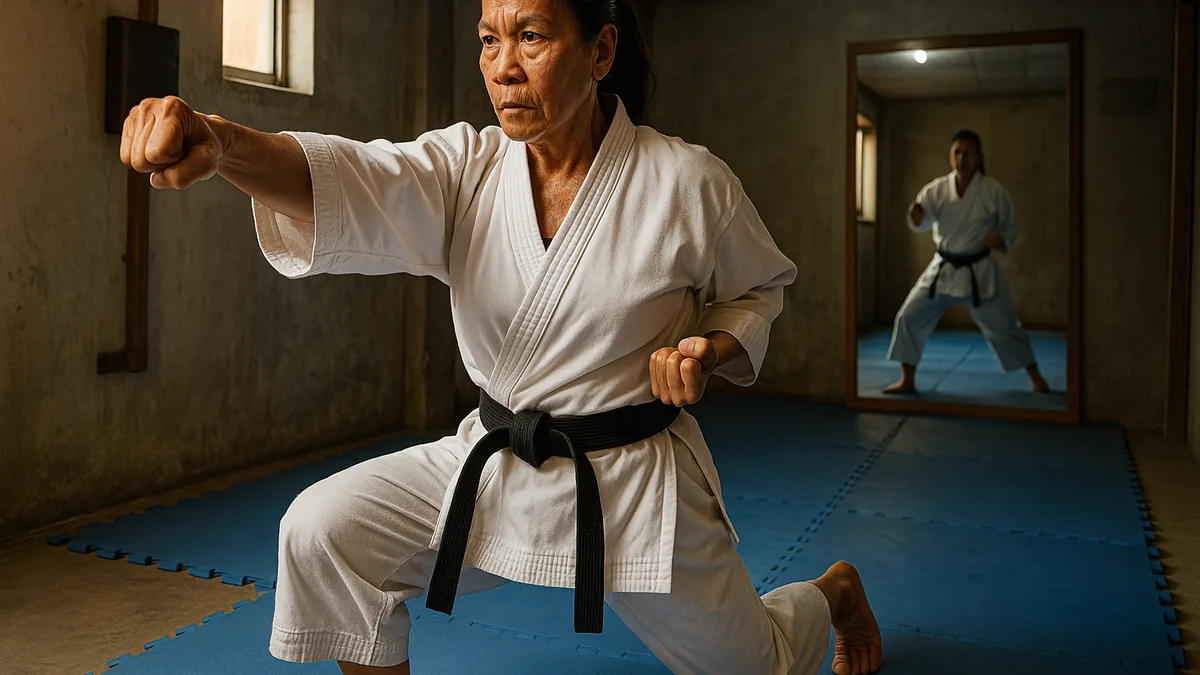
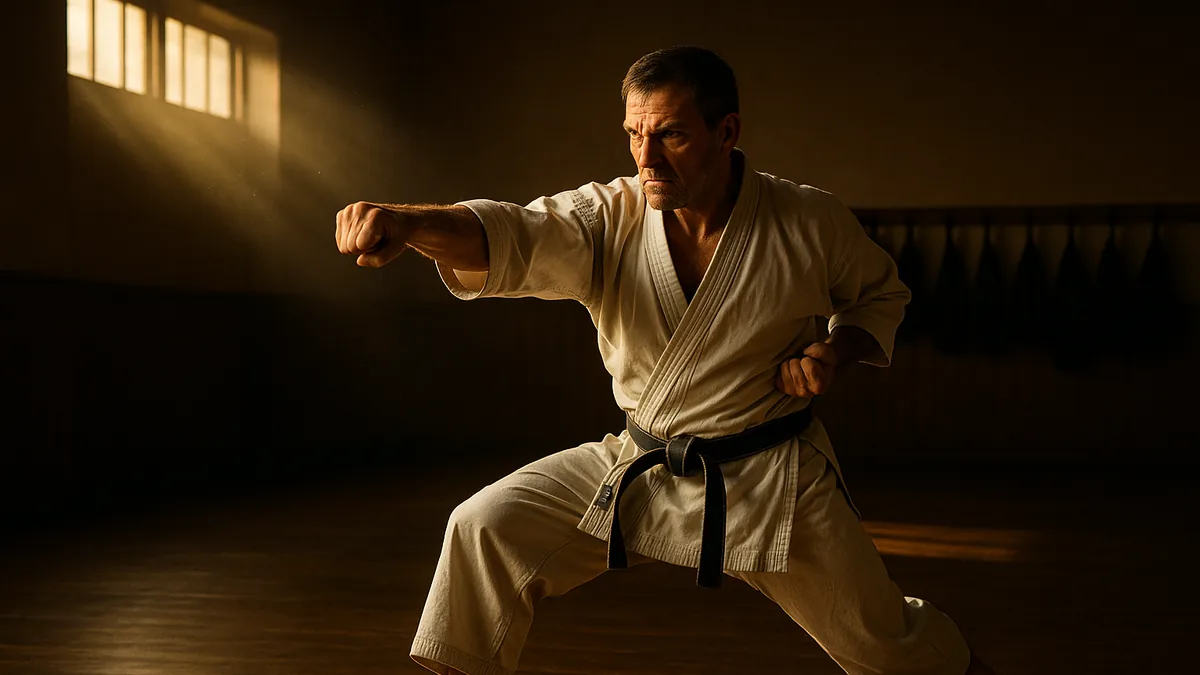
Most students perform kata like they’re counting out loud in their head. One technique, pause, next technique, pause. Everything gets the same weight, the same space between movements, the same flat energy. I’ve watched hundreds of students run through Heian Shodan and Bassai Dai and Kanku Sho with this problem, and most of them have no idea it’s happening. They think the timing is correct because the techniques themselves look right. But timing and technique are not the same thing, and you can have excellent individual techniques strung together with completely wrong rhythm and still produce something that looks mechanical and feels empty.
This is the thing I wish someone had told me in my first five years of training: kata is not a sequence of techniques. It’s a sequence of moments, and the spaces between techniques are as important as the techniques themselves.
Why Timing Is the Missing Piece
My instructor used to say that a kata performed with bad timing is like reading a sentence with all the punctuation removed. You can understand the words, but the meaning gets lost. I didn’t really get that until I started working with bunkai seriously and realised that the pauses, the accelerations, the moments of stillness - these aren’t decorative. They represent something. The fast combination represents a different situation than the single controlled strike. The held position at the end of a sequence isn’t a rest point. It’s a statement.
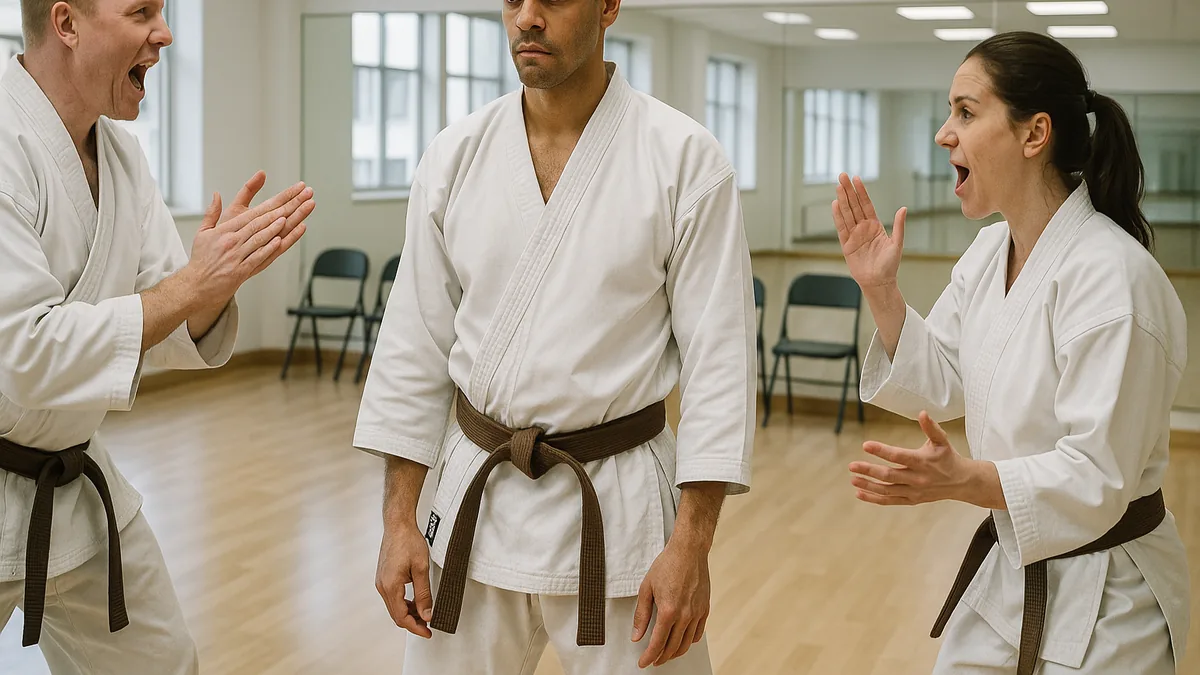
I’ve seen students who have trained for years get this wrong in the same predictable way. They treat every technique as equally weighted, which means nothing gets emphasised. Competition judges notice this immediately. More importantly, if you’re interested in what kata actually means at a practical level - and I think you should be, as I’ve written about in Hidden Techniques in Kata - the timing is where a lot of that meaning lives.
The correction that makes the biggest difference is not fixing individual techniques. It’s teaching practitioners to hear the rhythm of the kata before they perform it.
The Three Timing Errors I Correct Most Often
The Metronome Problem
This is the most common. Every technique takes the same amount of time. Block - pause - punch - pause - turn - pause. It sounds like a student counting to three between every movement. The mistake happens because beginners learn kata by counting, and some practitioners never stop counting internally. The real issue is that kata has natural rhythm variation built into it - some sequences are meant to be explosive and continuous, others deliberate and separate - and when you flatten everything to the same tempo, you lose the entire dynamic structure.
The correction: stop counting. Seriously. If you’re still counting beats in your head during kata, you’re performing kata at the level of learning it, not performing it. The first step is to perform the kata slowly enough that you don’t need a count to keep track of where you are.
The Rushed Kiai
I see students rush into their kiai points because they know something big is coming and they get tense. The technique before the kiai gets compressed, the weight shifts early, and the kiai itself comes out before the technique has actually landed. What should feel like an explosion at the end of a sequence instead feels like a stumble. The kiai should feel like a release - like something that was building finally discharging. When you rush it, there’s nothing to release.
The Dead Stop
The opposite problem. Students hit a transition in the kata - a turn, a directional change - and they stop completely. Not a controlled pause. A dead stop, like they forgot what comes next. Even if they haven’t forgotten, the energy drops to zero and has to be rebuilt from scratch. This makes every section of the kata feel disconnected from every other section. The kata becomes a collection of separate pieces rather than one continuous thing.
Drills That Actually Fix This
The Breath Mapping Drill
This is the most important drill I use for timing, and I’d put it above everything else on this list.
Why it matters: Most timing problems are breathing problems in disguise. When your breath is wrong, your timing will be wrong. When you map your breath correctly to the kata, the rhythm often corrects itself.
Setup: You need to know the kata well enough to perform it slowly without thinking about what comes next. If you’re still learning the sequence, do this drill later - you can’t focus on breath if you’re focused on remembering movements.
Execution:
- Walk through the kata at half speed.
- Notice where you’re holding your breath. Most people hold it before kiai points and before directional changes. Mark these mentally.
- Now run the kata again, this time exhaling on every technique that has intent behind it - every strike, every block, every throw. Short exhale, not a full breath out.
- The kiai is simply a louder, fuller version of this exhale. It should feel like a natural extension of what you’ve been doing throughout, not a separate event.
- Inhale during transitions and turns. These are your recovery moments.
What to feel for: When the breathing is right, you’ll feel the kata start to move you rather than you moving through it. The transitions become lighter because you’re actually breathing through them. The kiai points feel inevitable rather than forced.
What most people get wrong: They try to control the breath deliberately and it becomes another thing to count. Stop trying to control it. Just exhale on intent. The control comes from repetition, not from thinking about it.
The Slow-Fast-Slow Drill
Why it matters: This is how you learn to feel the difference between sections that should be continuous and sections that should be separated. You can’t feel rhythm variation if you’ve only ever performed at one speed.
Setup: Pick one sequence within the kata - not the whole thing. I usually start with a three-technique combination.
Execution:
- Perform the sequence at 25% speed. Every movement is deliberate, controlled, heavy.
- Perform it at full speed. Don’t think. Just do it at the pace that feels natural when you’re not holding back.
- Perform it at 25% speed again, but this time try to feel what changed at full speed. Where did the acceleration come from? Where did it resolve?
- Repeat this cycle until you can perform the sequence at full speed and still feel the weight of each technique.
What to feel for: At full speed, the techniques should still feel heavy. Not slow, but weighted. If full speed feels light and uncontrolled, the slow work hasn’t transferred yet. Keep going.
What most people get wrong: They treat the slow version as the “careful” version and the fast version as the “real” version. They’re the same version at different speeds. The intention doesn’t change.
The Silence Drill
This one feels strange the first time you do it, but it’s extremely effective for identifying dead stops.
Execution:
- Perform the kata in complete silence. No kiai.
- Listen for audible pauses - places where your movement stops and there’s a moment of silence before you start again.
- Those silences are your dead stops. They’re the places where energy is leaking out of the kata.
- Now perform the kata again, and on each of those transition points, hum quietly through the movement. Not a sound for each technique - a continuous hum through the transition itself.
- The hum forces you to keep energy moving even when your body is changing direction.
What to feel for: The transitions should feel like a river changing direction - the water keeps moving even as the course bends. You’ll know you’ve got it when the kata starts to feel like one long movement with variations rather than a series of separate techniques.
What Changes with Experience
As a white belt, I thought kata timing was about performing techniques at the right speed. By brown belt I realised it’s about controlling energy - knowing when to accelerate, when to hold, when to release. That shift in understanding doesn’t come from being told about it. It comes from performing the kata hundreds of times and slowly noticing that something is wrong even when all the techniques are correct.
Senior practitioners have a stillness between movements that beginners mistake for slowness. It isn’t. It’s control. The technique is complete before the next one begins, but the energy hasn’t stopped. There’s a difference between a pause that is dead and a pause that is loaded. You can feel it when you’re watching someone who has it, and you can feel it in your own body when you start to develop it.
This is also one of the reasons kata can look the same at brown belt as it did at yellow belt - not because the techniques haven’t improved, but because the timing hasn’t developed. If that sounds familiar, this piece on why your kata stagnates is worth reading alongside this one.
Community Perspective
There’s a genuine debate in the karate community about how much timing variation is appropriate, and it often breaks along style lines. Shotokan practitioners tend toward more deliberate, separated timing with clear pauses between sequences. Shito-ryu and Wado-ryu kata often have more continuous flow, with transitions that feel almost seamless. Neither approach is wrong - they reflect different interpretations of the same underlying principles.
What I’ve noticed is that practitioners who train in one style sometimes struggle to understand why the other approach is valid. Shotokan practitioners can look at flowing kata and think the pauses aren’t sharp enough. Wado practitioners can look at Shotokan and think the dead stops are killing the kata’s energy. The truth is that both approaches require genuine timing control - they’re just controlling different things.
The opinion I’ve formed over fifteen years is that learning to perform with deliberate separation first - really owning each technique before moving to the next - gives you a foundation that makes continuous flow easier to develop later. Going the other direction is harder. But I know instructors I respect who would disagree with that.
Key Takeaways
- Timing is not the same as speed. You can perform a kata slowly with excellent timing and quickly with terrible timing. Speed is a byproduct of good timing, not the other way around.
- If you’re still counting internally during kata, your timing will be wrong. The count is a learning tool, not a performance tool.
- The spaces between techniques are not rest points. They are part of the kata. Dead stops are energy leaks.
- Map your breath before you try to fix your timing. Most timing problems resolve when breathing is correct.
- Perform the Slow-Fast-Slow drill on individual sequences, not the whole kata. Isolate the problem before you try to fix it in context.
- If your kata timing feels comfortable, you probably haven’t pushed it far enough yet. Correct timing at full speed should feel slightly uncomfortable until it becomes automatic.
For more on developing kata beyond surface-level technique, How to Improve Your Kata covers the broader framework that timing fits into. And if you want to understand why the floor patterns of kata aren’t arbitrary - which connects directly to why certain timing variations exist where they do - Embusen: Understanding Kata Floor Patterns is worth your time.
The weekly digest
New karate articles, once a week
One email every week with everything new on Karate Lifestyle. No spam; unsubscribe in one click.
We'll email you to confirm. See our privacy policy.