The Difference Between a Kata You Know and a Kata You Own: How to Tell Where You Actually Are
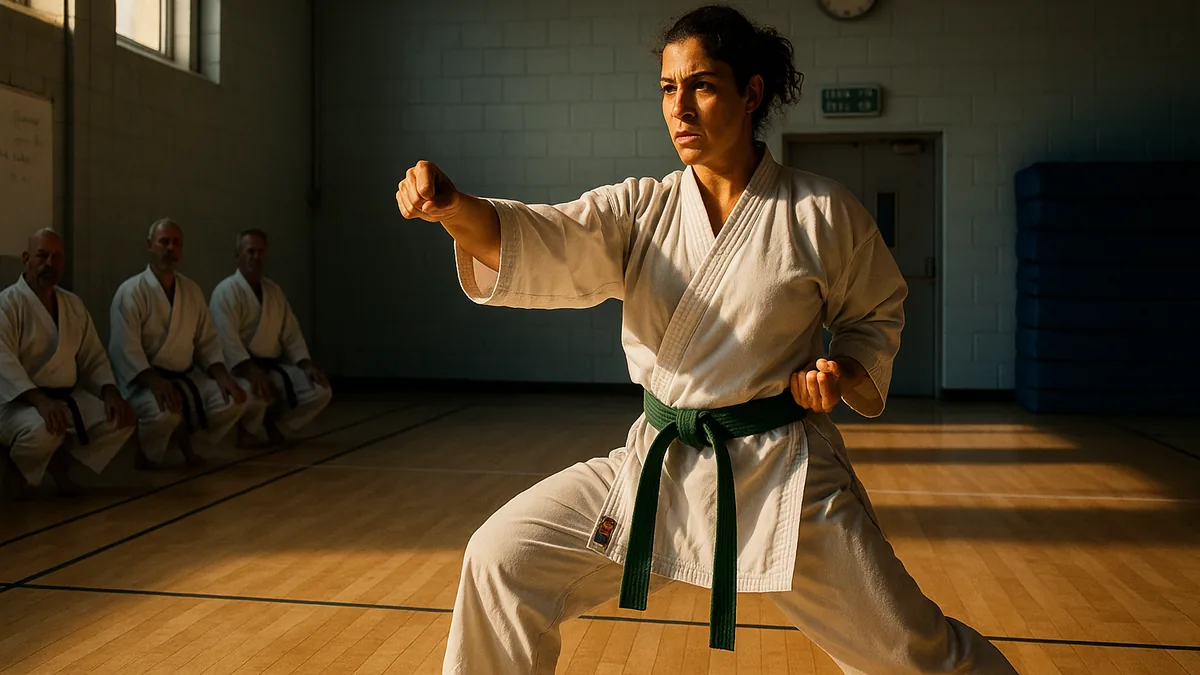
Most people performing kata are somewhere between knowing it and owning it, and they don’t realise there’s a gap. That gap is where grading panels see through you, where your bunkai falls apart, and where your kata stops being a training tool and becomes a habit you’re just maintaining.
I’ve been on both sides of this. I’ve stood in front of instructors performing kata I thought I knew, only to get corrections that made me realise I’d been rehearsing a surface impression of the form for months. And I’ve watched students do the same thing - hit every position, land every count, and still look completely hollow doing it.
Knowing a kata means you can perform it without stopping. Owning it means every movement is a decision, not a reflex.
Here’s how to tell which one you’re actually doing.
What “Knowing” a Kata Actually Looks Like
You know a kata when you can get from the opening rei to the final yame without blanking. That’s it. That’s the bar. It sounds low because it is low, and there’s nothing wrong with being at that stage - every kata starts there. The problem is when practitioners stay there for years without noticing.
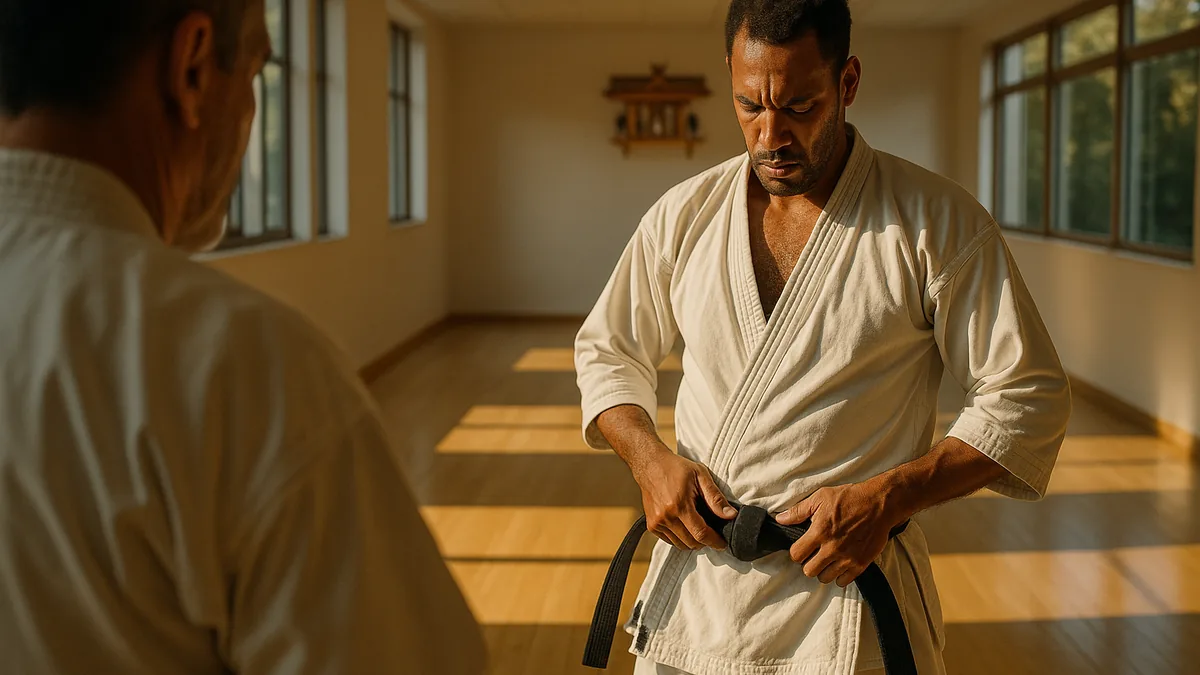
I’ve noticed that the clearest sign someone knows a kata but doesn’t own it is their eyes. They’re not looking at anything. They’re staring slightly above the horizon, running through a mental checklist: block, step, punch, turn. The body is executing, but nobody’s home. When you ask them to explain what they just did in a specific section, they’ll often mime the movement to remember it rather than describe what it’s for.
That’s not a character flaw. It’s just where you are in the process. But you should know that’s where you are.
The second sign is what happens under pressure. Put someone in front of a grading panel or a senior instructor and watch the kata change. Timing collapses, kiai disappear or come out strangled, stances get shallow. If the kata only works in familiar conditions, it’s not yours yet. You’re borrowing it from the environment.
How to Actually Evaluate Your Execution
This is where most self-assessment goes wrong. Practitioners watch themselves on video and look for whether they hit the correct positions. That’s not nothing, but it’s also not enough. If you want a structured approach to filming and reviewing your kata, this breakdown of self-assessment covers what video catches and what it misses.
What I’d add from experience is this: evaluate each movement against three questions, not one.
Can you do it without the sequence cuing you?
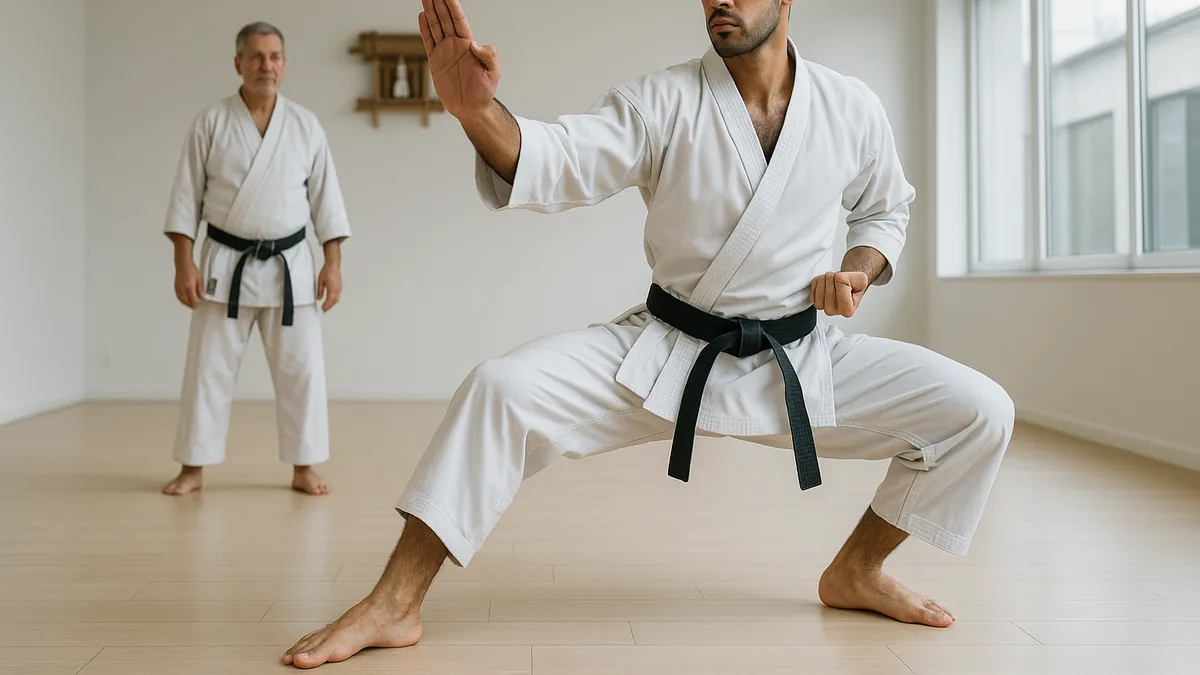
Pull a movement out of context. Stand in zanshin, then throw the technique cold. Not as part of the flow - just the movement itself, from nothing. If it falls apart without the preceding motion setting it up, you don’t own that movement yet. You own the sequence, which is different. The sequence is a mnemonic. The movement has to stand alone.
Do you know what you’re hitting?
I don’t mean a full bunkai analysis - that’s a separate conversation. But you should have at least a working answer for every technique. Not “it’s a block” but “it’s dealing with a grab from this angle” or “it’s a strike to here.” When students can’t answer this at all, it shows in the kata. The technique has no intention behind it, and intention is visible. You can see it in the eyes, in the commitment, in whether the movement ends or just stops.
Does the power come from the right place?
This is the physical sensation piece, and it’s where most intermediate practitioners get stuck. When your hip rotation connects properly through a gyaku-zuki in kata, you don’t feel it in your arm. You feel it from the floor through your hip and out through the fist. The arm is almost passive - it’s just the end of a chain. When it’s wrong, the arm does all the work and you feel the effort in your shoulder. That sensation difference is the whole thing. If you’re feeling effort in your shoulder, the movement isn’t yours yet.
Seeking Feedback That Actually Changes Something
One mistake I see constantly is practitioners treating instructor feedback as confirmation rather than information. They perform the kata, the instructor gives a correction, they nod, and then they do the same thing next class because they didn’t actually understand why the correction mattered.
What I tell students is this: when you get a correction, your job isn’t to fix it immediately. Your job is to understand why it was wrong in the first place. “Drop your elbow in the uke” is a correction. “Your elbow being high means you’re using shoulder strength instead of structure, and it’ll collapse under real pressure” is an explanation. Ask for the explanation. Most instructors will give it if you ask directly.
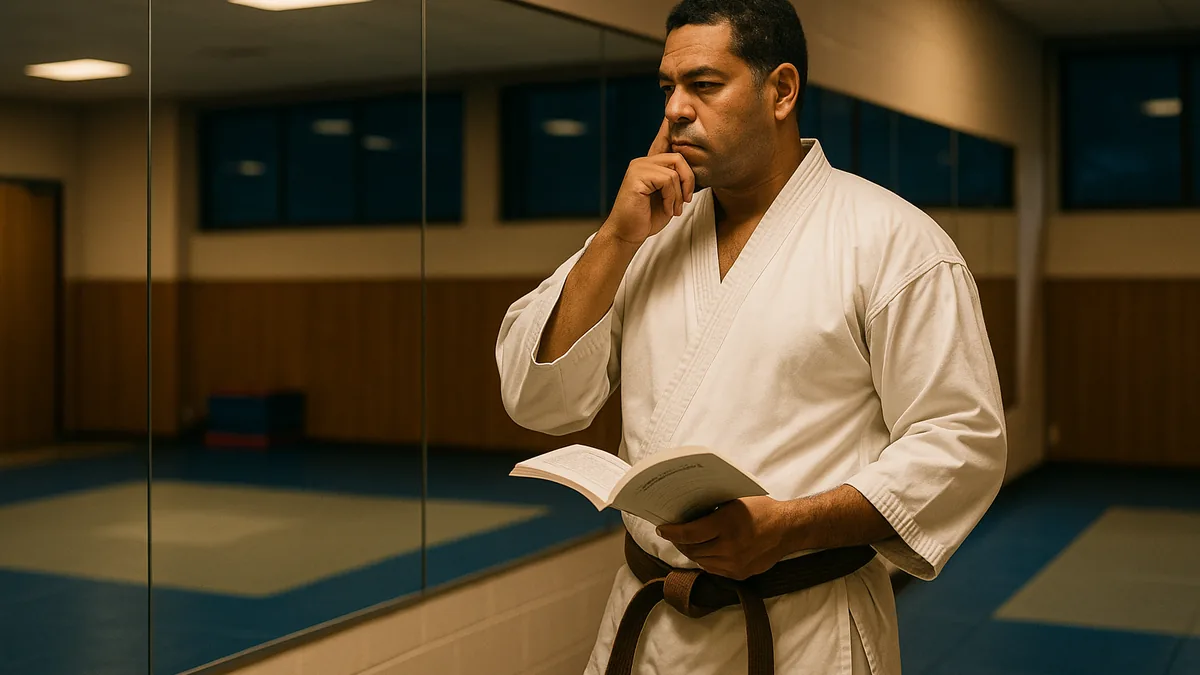
The thing that actually changed my understanding of how to use instructor feedback was a correction I got in my early brown belt years. My instructor kept telling me my transitions were slow. I kept trying to move faster. He eventually stopped me mid-kata and said, “You’re slow because you’re finishing each technique before you start moving. You should already be moving before the technique completes.” I’d heard variations of that for years. It didn’t land until he physically moved me through it - held my arm in position while my feet started moving - and I felt what he meant. The transition time disappeared because I stopped treating each technique as a full stop.
You won’t get that kind of feedback if you only perform kata for instructors during formal class time. Train in front of them during open practice. Ask them to watch a specific section. Make it easy for them to give you targeted input rather than general notes.
The Emotional Connection Problem (And Why It’s Not What You Think)
Every instructor eventually tells you to “put feeling into it.” Most students interpret this as performing with more intensity - bigger kiai, sharper snaps, more visible effort. That’s not what it means.
I used to think emotional connection to kata was about aggression. More energy, more commitment, more visible power. By brown belt I realised it’s about understanding. The emotion in kata comes from knowing what you’re doing and why. When you know that a specific movement is dealing with an opponent who’s grabbed your wrist and is pulling you off balance, the response to that situation has a quality to it. It’s not theatrical. It’s purposeful. That purposefulness reads as presence, and presence is what separates kata that feels alive from kata that feels recited.
I’ve seen this most clearly in senior practitioners performing simpler kata. Watch a 4th or 5th dan perform Heian Shodan and compare it to a 6th kyu performing the same form. The movements aren’t dramatically different in technical terms. But the senior practitioner is doing something with every single count. There’s no neutral moment. The transitions have intention. The zanshin after each technique isn’t a pause - it’s readiness.
If you want to understand what that looks like in a more complex form, the Kanku Dai breakdown gets into the specific moments where this kind of intentional presence changes the whole character of the kata.
Common Mistakes I See at This Specific Stage
These aren’t beginner errors. These are the mistakes practitioners make when they know the kata but are trying to move toward owning it.
Polishing the wrong things. I’ve watched students spend months refining their kiai timing and stance depth while their weight transfer is completely wrong. They’re working on what’s visible because that’s what gets commented on in class. The weight transfer mistake is invisible until it isn’t - until they try to apply the movement and there’s no power. Evaluate what’s structural, not just what’s aesthetic.
Performing at grading speed all the time. Grading speed is a compression of what you actually understand. It hides gaps. What I prefer - and what I’d recommend to any serious student - is slow practice that’s genuinely slow. Not controlled-fast, but slow enough that you can feel every transition, every weight shift, every moment where the power is loading and releasing. If you can’t do the kata at quarter speed without it falling apart, you don’t own it yet.
Treating the embusen as a constraint rather than information. The floor pattern of a kata isn’t arbitrary. If you’re consistently ending up off your line, it’s telling you something about your stances or your weight distribution, not just your navigation. Understanding what the embusen is actually doing changes how you read those errors.
Avoiding the kata you find uncomfortable. I’ve done this myself. There are kata I’ve trained less because they expose weaknesses I’d rather not deal with. The kata that feels awkward is the one you need. The discomfort is the gap. The shorter, simpler kata especially - practitioners skip them because they think they’ve outgrown them. You haven’t. They’re just harder to hide in.
Community Perspective
There’s a genuine split in how different dojos approach this question, and it’s worth naming directly.
Some instructors - particularly in competition-oriented environments - measure kata ownership through performance consistency. Can you hit the same score in front of three different panels? That’s a legitimate measure. Consistency under pressure is real. But I’ve trained with practitioners who score well in competition and can’t explain a single bunkai, and I find that unsatisfying. The kata becomes a performance art rather than a martial training method.
On the other side, some traditional dojos treat bunkai as the only measure of understanding, which creates its own problem - practitioners who can explain every movement but whose physical execution is weak. The explanation becomes a substitute for the training rather than a product of it.
Where I’ve landed, after training in both environments, is that ownership requires both. The body has to know it and the mind has to know it, and they have to know it at the same time. The kata should feel like a conversation you’ve had so many times you could have it anywhere, not a script you’ve memorised.
Key Takeaways
- Pull individual movements out of the sequence and perform them cold. If they collapse without the preceding technique setting them up, you own the sequence, not the movement.
- When you receive a correction, ask why the error matters - not just what the fix is. Understanding the consequence of the mistake is what makes the correction stick.
- Slow practice at genuine quarter-speed exposes gaps that performance speed hides. If the kata falls apart slowly, it’s not yours yet.
- Your emotional connection to the kata comes from understanding what you’re doing, not from performing with more intensity. Intention is visible. Effort is not the same thing.
- Pay attention to where you feel effort in your body. Effort in the wrong place (shoulder instead of hip, arm instead of core) tells you the power source is wrong, not just the position.
- The kata you avoid is the one doing the most work for you. The discomfort is the information.
If you’re working through this with limited training partners or class time, this approach to getting real value from a single kata is worth reading alongside this - the principles of deep practice apply whether you’re working with one form or ten.
The weekly digest
New karate articles, once a week
One email every week with everything new on Karate Lifestyle. No spam; unsubscribe in one click.
We'll email you to confirm. See our privacy policy.